
Introduction
Hoi An, in central Vietnam, was the sixth and final stop of our trip after Hue. We decided to get there by train to try the famous Vietnam sleeper train, and it turned out to be one of the best decisions we made on the whole trip.
This coastal city is best known for its beautifully preserved Ancient Town, where canals wind through a mix of Chinese wooden shophouses, French colonial buildings, Vietnamese tube houses, and the iconic Japanese Covered Bridge. Beyond the old streets, you’ll also find plenty of nearby beaches that are perfect for slowing down and relaxing after days of temple-hopping elsewhere in Vietnam.
After three weeks in the country, Hoi An became our favorite city, hands down. It’s the kind of place where you can easily spend three to six days without ever getting bored; there’s always another street to wander, another beach to try, or another dish to taste.
In this guide, you’ll find everything you need to plan your own trip, from the best things to do to where to eat and stay. If Vietnam is on your list, make sure Hoi An is too.


Hoi An At a Glance & Top Travel Tips
Hoi An quickly became our favorite city in Vietnam, and honestly, it’s one of the easiest places in the country to just slow down and enjoy yourself.
- The Vibe: A slow, romantic coastal town where lantern-lit canals, old wooden shophouses, and nearby beaches all sit within easy reach of each other.
- How Long to Stay: We’d recommend at least 4 nights. Anything shorter and you’ll feel like you’re rushing through what’s meant to be a place to unwind.
- Getting Around: Renting a scooter gives you the most freedom, but you really don’t need one. Most accommodations offer free bikes, and the Old Town itself is fully walkable.
- Pregnancy & Family-Friendly: Tina was between 9 and 12 weeks pregnant during our visit, and Hoi An turned out to be one of the gentlest stops on our whole trip. The Old Town is flat and easy to wander on foot, the beaches are relaxed rather than adventurous, and most activities (the lantern class, the boat ride, the tea house) involve sitting rather than hiking. If you’re traveling pregnant or with a baby, this is a good place to slow your pace down without missing out.
- Best Time to Visit: Spring (March to May) or early autumn for the best mix of good weather and manageable crowds.
- Don’t Skip: The Old Town at night once the lanterns are lit. It’s a completely different city after dark.
- Budget Tip: Many of the best experiences here (tailoring, the tea house, lantern making) are inexpensive by Western standards, but they add up fast if you do several in one trip. Pace yourself.

Getting there
Getting to Hoi An is quite easy as it is one of the main cities in Vietnam:
- By Plane: You can fly to Da Nang Airport and then organize a transfer with your accommodation to reach Hoi An, which is around 45min away (or take a Grab, the local Uber)
- By Train: You can take the train to Da Nang Train Station and then continue to Hoi An the same way, by an arranged transfer or a Grab, again around 45 minutes.
- By Bus: There are numerous buses to Hoi An. You can book bus tickets from Hanoi to Hue through local travel agencies, bus stations, or online booking platforms. Several bus companies offer this route, and options range from standard to sleeper buses
We arrived in Hoi An from Hue by Train. If you want to know more about our 1st class train journey


Moving Around
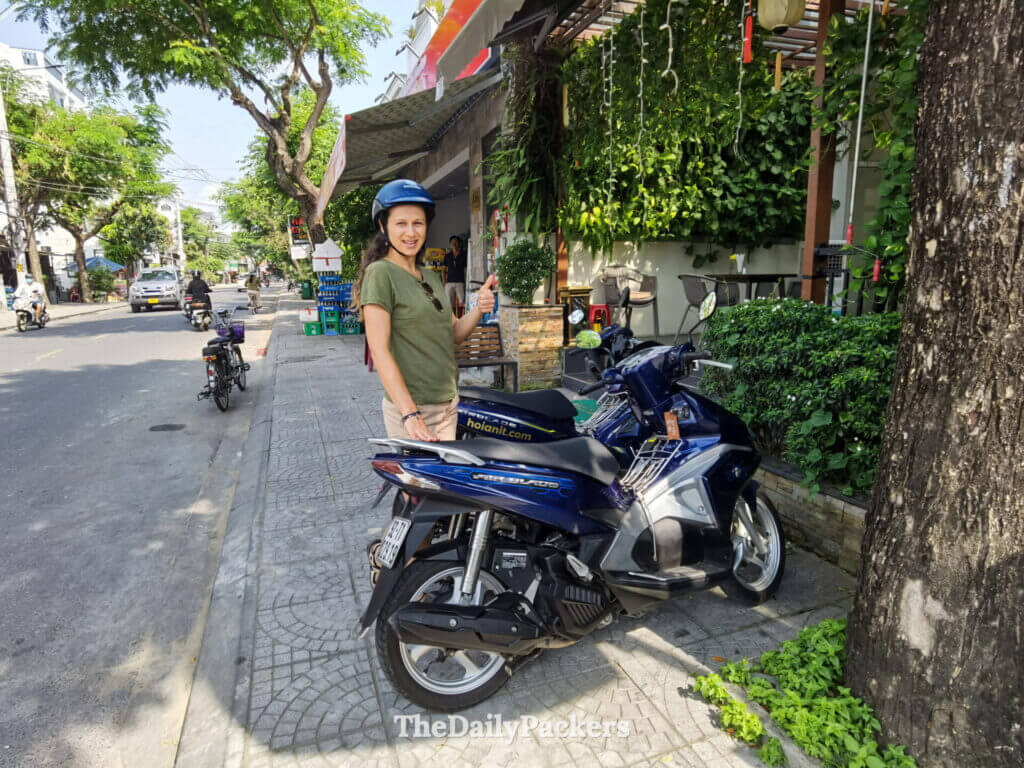
There’s plenty to do around Hoi An, so the best way to explore is by scooter. Renting one gives you the freedom to move at your own pace, whether you’re heading to the beaches, exploring rice fields, or simply hopping between the Old Town and your accommodation. Many hotels and guesthouses rent scooters at a fair price, and ours turned out to be the best one we had during our entire Vietnam trip.
If you’re not comfortable driving a scooter, don’t worry, there are other easy options. Many accommodations offer free bicycles, perfect for short rides into the Old Town or nearby villages. For longer distances, taxis and Grab are both reliable and inexpensive ways to get around.
That way, no matter your travel style, getting around Hoi An is simple and stress-free.
When to Visit
Hoi An is genuinely beautiful year-round, but if you want the best mix of good weather and atmosphere, aim for spring (March to May) or early autumn. Temperatures sit comfortably around 25–30°C, rain is rare, and it’s the perfect window for cycling through the rice paddies or wandering the lantern-lit streets without melting in the heat.
Summer (June to August) is hotter and busier, great if the beach is your main priority, but expect strong sun and bigger crowds. Late autumn brings golden rice fields but also the start of the rainy season, with occasional typhoons in October and November, so it’s a bit of a gamble.
If you can, try to time your visit with the Hoi An Lantern Festival, held on the 14th day of every lunar month. That’s when the Old Town turns completely magical.


Where to Stay
If you’re planning a trip to Hoi An, we’d recommend staying at least 4 nights. The city has so much to offer, from exploring the lantern-lit Old Town to relaxing at the beach and cycling through rice paddies, and four nights gives you enough time to soak in its charm without rushing.
Here are a few places we’d point you toward, depending on what you’re looking for:
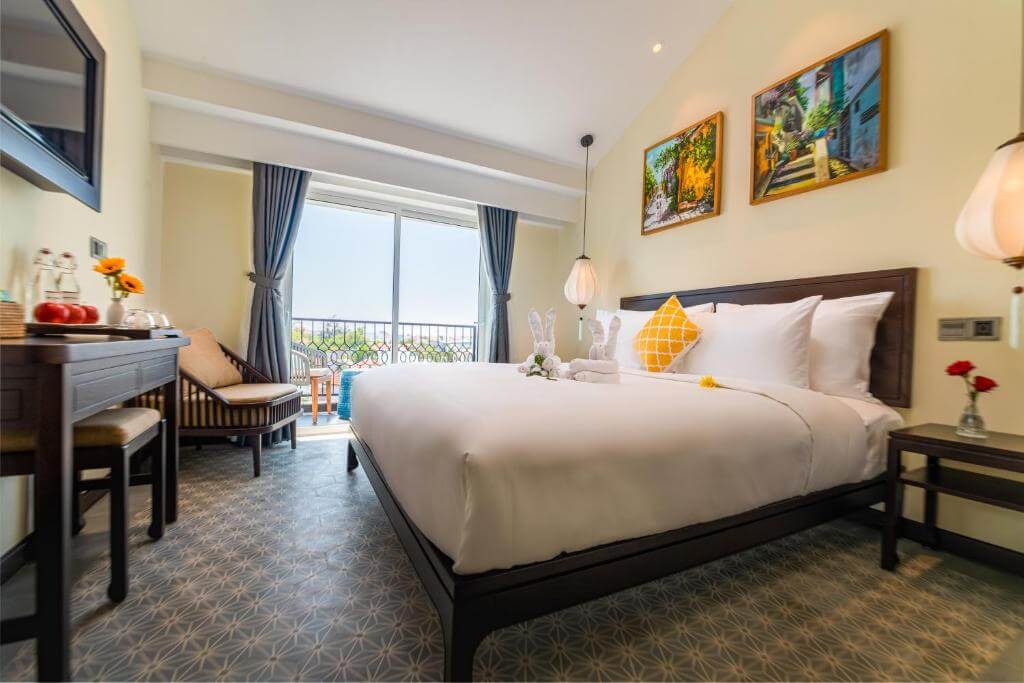
If you want something easy on the budget, Hoi An Merrily De Art Hotel is a cozy pick with modern rooms and a warm atmosphere. It’s close enough to the Old Town yet tucked away from the busiest streets, making it a nice, quiet base to explore from.
If you’d rather have a bit more comfort without going all out, Cozy Savvy Boutique Hotel is a stylish boutique stay with a pool and a genuinely great breakfast. It’s still within walking distance of Hoi An’s main attractions, so you get comfort without losing that central feel.
And if you’re looking to treat yourself, Allegro Hoi An Little Luxury & Spa delivers spacious rooms, excellent service, and a spa to unwind in after a day of exploring. Its location near the Ancient Town also makes it easy to head out for evening strolls and dinners right in the heart of Hoi An.


What to Eat
Hoi An is a foodie’s dream, one of the best places in Vietnam to try local specialties, thanks to the mix of Vietnamese flavors with international influences from its trading past. Look out for Cao Lau (a noodle dish unique to Hoi An), White Rose Dumplings, Mi Quang, and of course, banh mi.
Here are a few places we’d recommend checking out in Hoi An:
- Nu Eatery – A small but very creative spot with a modern twist on traditional dishes. Great if you want something a bit different.
- VVegan – 100% plant-based and super tasty. A great choice if you’re looking for lighter, healthier meals.
- Nourish Eatery – Our absolute favorite in Hoi An! Fresh, wholesome dishes with amazing smoothies and bowls — perfect for a healthy recharge.


Tip: Discover the best Vietnamese food with the Evening Food Tour with 7 Tastings
Best things to do in Hoi An
Stroll around the Old Town
The Old Town of Hoi An is the heart of the city and the place you’ll probably return to again and again. It’s easy to get there by bike, as most accommodations provide them for free, and once inside the town, you’ll want to slow down and explore on foot.
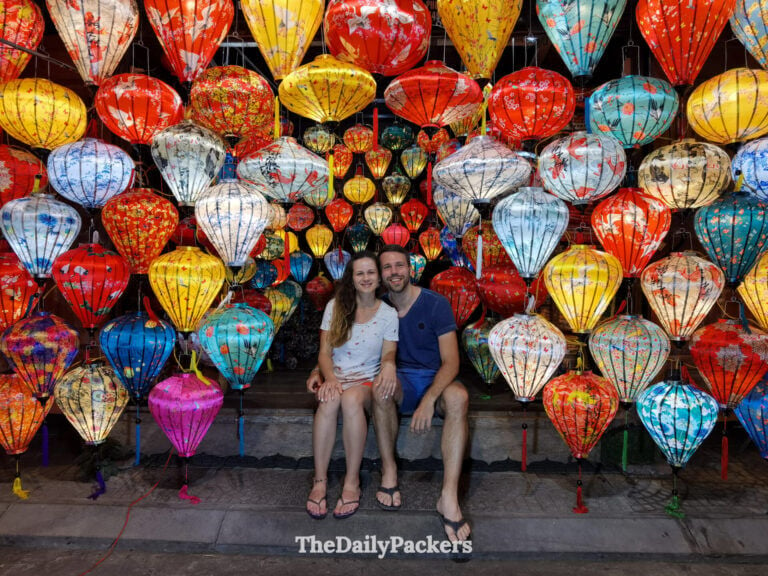
The streets are full of charm with colorful lanterns, yellow-walled houses, and little shops selling everything from handmade clothes to souvenirs. It’s also where you’ll find endless food options, from street food stalls serving local specialties to cozy restaurants and cafés tucked into old wooden houses.
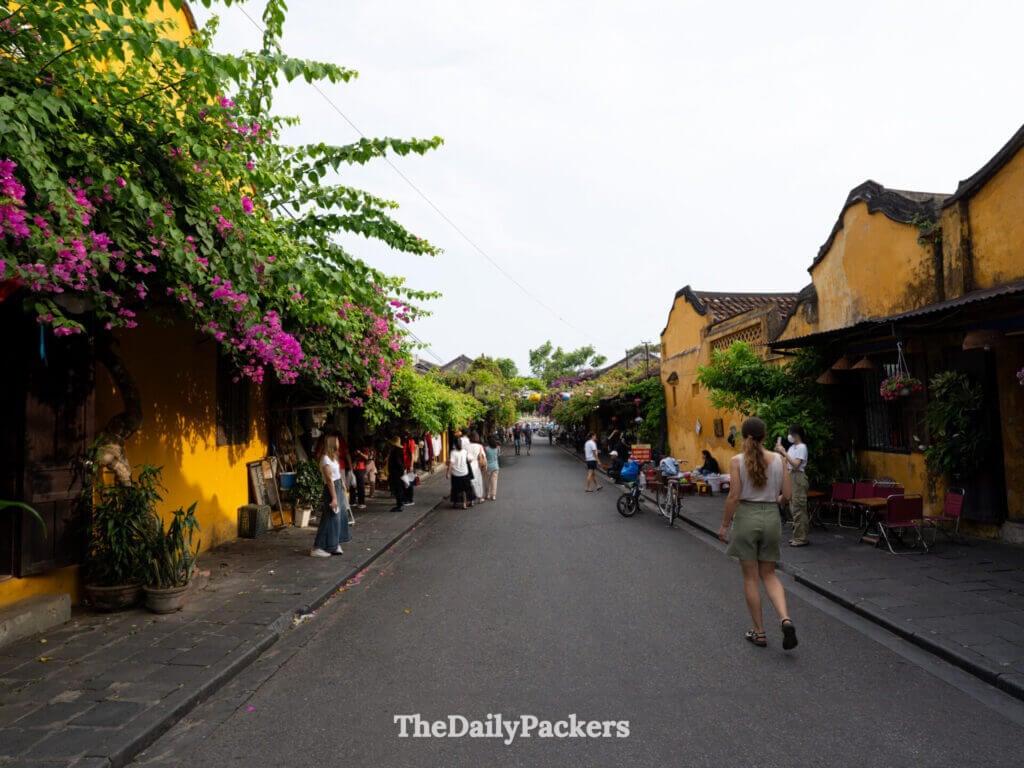
To visit the main historical sites, such as ancient assembly halls, temples, or traditional homes, you’ll need to buy a ticket that covers multiple attractions in the Old Town. If you’re keen on history and architecture, it’s definitely worth it, but if you’ve already visited a lot of temples elsewhere, simply wandering the streets is still an experience in itself.

The real magic of the Old Town happens at night. Once the lanterns are lit, the whole area comes alive with music, food, and crowds gathering by the river. It does get busy, but it’s also when Hoi An feels its most atmospheric.

Boat Ride on the Thu Bon River
One of the most charming things to do in Hoi An (and most touristy 🙂 is to take a boat ride along the Thu Bon River, especially in the evening. The town comes alive with lanterns lighting up the streets and reflecting on the water, giving the whole place a magical atmosphere.
You’ll find plenty of small wooden boats waiting along the riverbank in the Old Town, and the rides are usually run by local families. Prices depend on the duration, but you can expect around 100,000–150,000 VND for a short 20–30 minute ride. If you go at night, the price may be a little higher, but the experience is worth it.
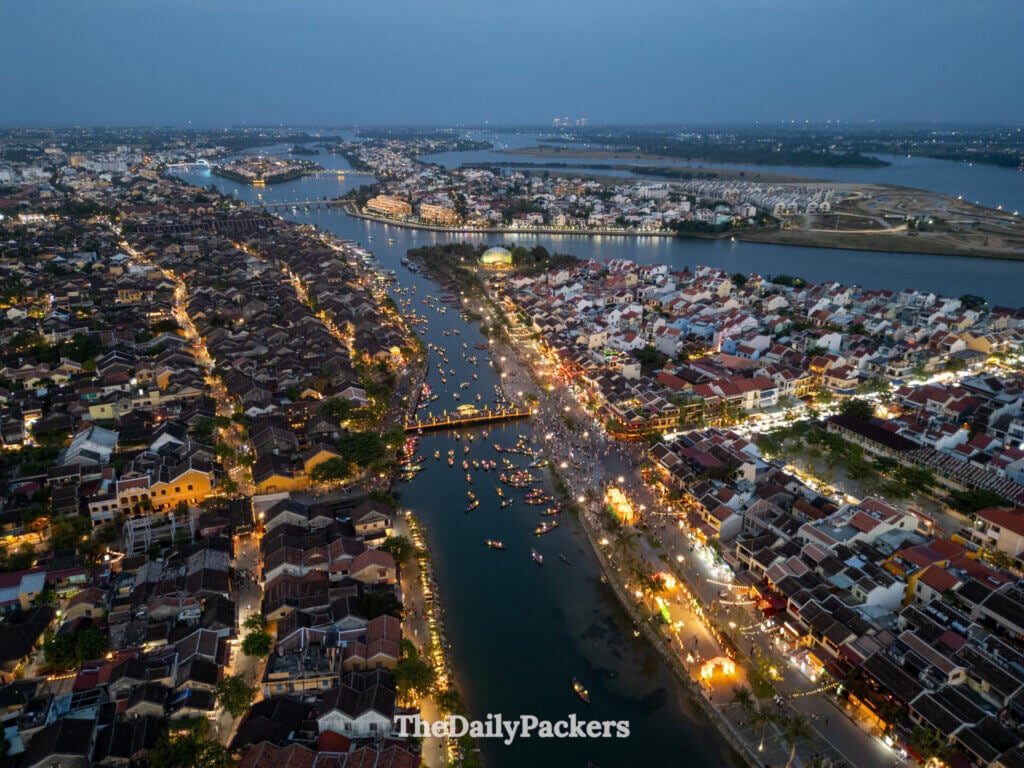
A highlight of the evening boat ride is releasing a small paper lantern into the water. Locals will sell them to you for around 10,000–20,000 VND each, and it’s said to bring good luck. Watching the river filled with floating lanterns is one of the most iconic Hoi An moments.
Daytime rides are also available, and they’re quieter, offering a peaceful way to see local life along the riverbanks, but most people prefer the magical evening setting.
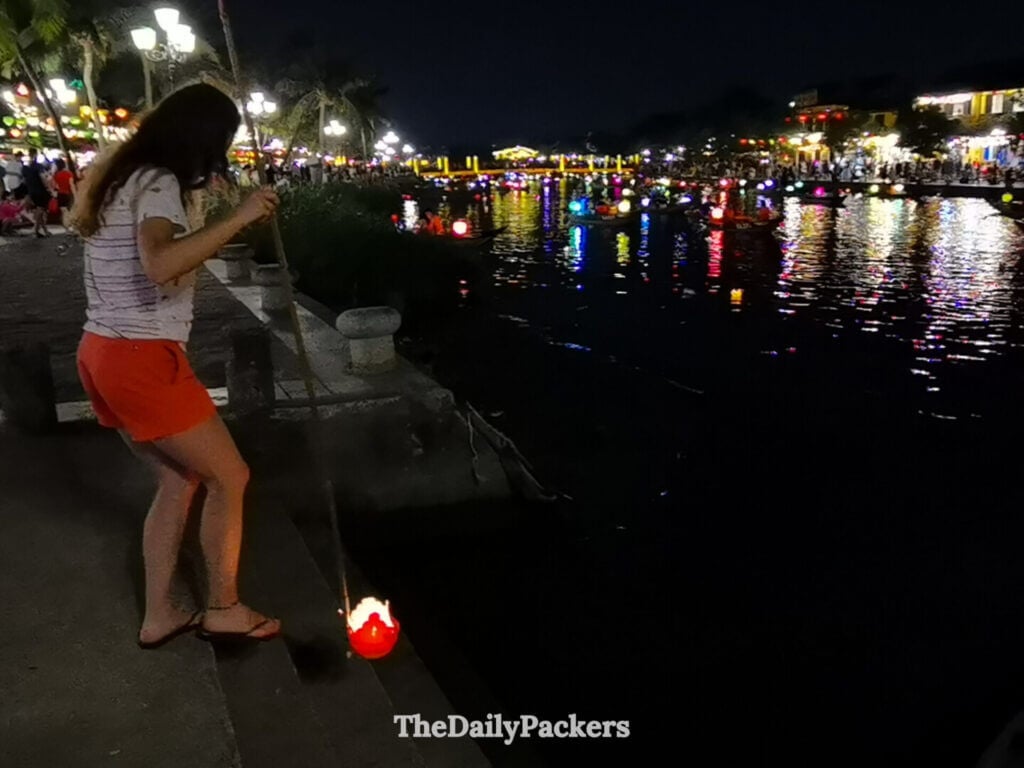
Tip: Reserve your boat tour online to avoid all the hassle of negotiating the price.
Eat at the Night Market
Just across the river from Hoi An’s Old Town, you’ll find a lively night market. This is the place to go in the evening if you want to try all sorts of street food. The stalls line both sides of the street, serving everything from grilled skewers and banh mi to fresh fruit juices and sweet snacks.
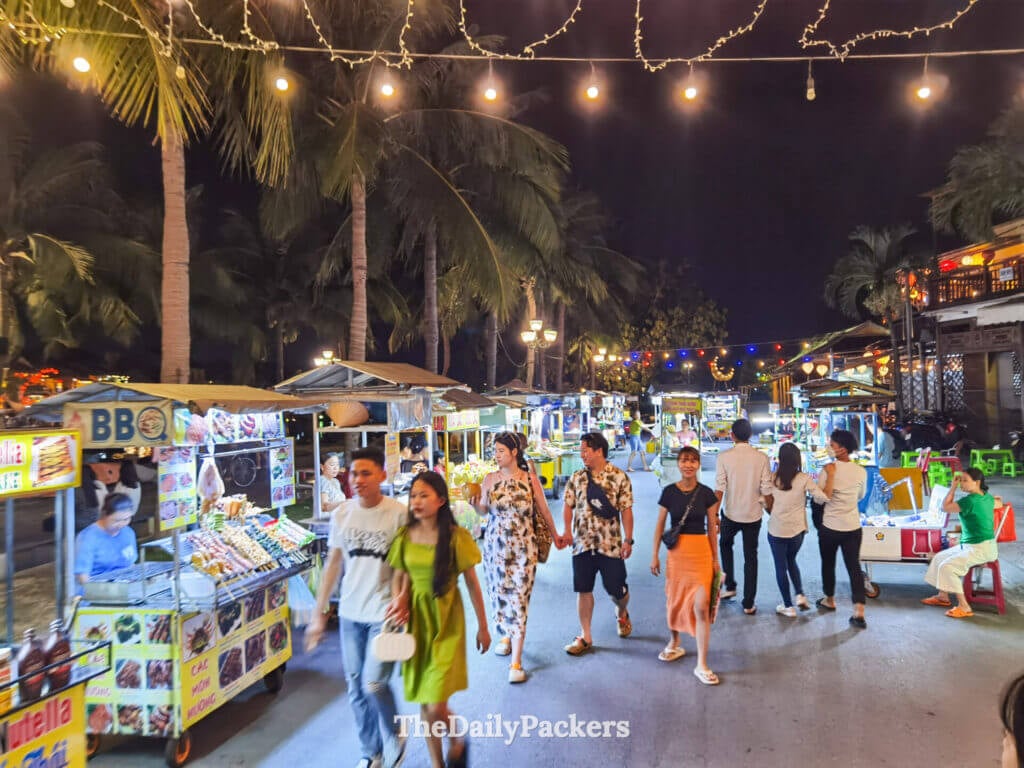
Beyond food, you’ll also find plenty of stalls selling lanterns, clothes, and souvenirs, so it’s a good spot to pick up something to take home. It can get busy, but that’s part of the fun; strolling under the colorful lantern lights with the smell of street food all around really captures the vibe of Hoi An at night.

Tip: Register for the Free Walking Tour with a Local Guide to learn more bout Hoi An
Get Tailored Clothes
One of the most popular things to do in Hoi An is to have clothes made to measure. The city is famous for its tailors, and you’ll find shops on almost every street. We decided to go to a place called Blue Eye after seeing good reviews online, and it turned out to be a great choice.
There we were welcomed by Lyly and An, with Lyly taking the lead. Tina had picked out designs for two summer dresses and two shorts that she had found online, and Lyly helped with the details to make them just right. A little touch we appreciated was that each time we visited, we were offered bottled water, which was really nice in the heat.
Prices are always negotiable, though the margin isn’t huge. For us, the final price went down slightly from 187 to 180 USD (about 4.32 million VND), which we felt was fair for custom-made clothes. Once the deal was set, we paid by card and arranged a fitting for the next day. To our surprise, Lyly later messaged us on WhatsApp to say the pieces were ready even earlier, and we could already come by in the evening to try them on.

Visit Reaching Out Tea House
One of the most unique spots that we found in Hoi An was the Reaching Out Tea House. It’s a peaceful little café where the service is provided by hearing-impaired staff, which makes the whole experience really special. The atmosphere is calm, quiet, and perfect for taking a break from the busy old town streets.

We went for a tasting session — coffee for me and tea for Tina. Each came with three cups and a small snack on the side (272,000 VND / about 11.8 USD). Everything was beautifully presented and tasted amazing, but what really stood out was just how serene it felt sitting there, sipping slowly, and watching the life of the old town pass by outside.
At the back, there’s also a small shop filled with handmade items. It was tempting to buy everything, but we kept it simple and picked up some lanterns and picture frames. If you’re looking for a meaningful place to enjoy coffee or tea in Hoi An, this is definitely one to add to your list.

Tip: Do you enjoy Vietnamese Coffee? Try the Vietnamese Coffee Culture and Coffee Making Class
Join a Lantern Making Class
Another iconic thing to do in Hoi An is to join a lantern-making class, and The Lantern Lady is a great place to try it out. Here you can pick the size, shape, and up to four different fabrics for your lantern. The best part is that the lantern is foldable, so it’s easy to pack and take with you on your travels.

We chose the medium size with a pre-made bracket, which saved time, but you can also build the bracket yourself for the full experience. The class takes place right in the owner’s yard, which gives it a really authentic, homely feel. The teacher spoke very good English, and her mother was also there helping out, which made it even more personal.
It took about an hour and a half to finish our lantern, and while it was fun, it was also surprisingly challenging — especially trying to connect the different fabrics neatly. Still, we’d absolutely recommend doing it. Not only do you get a unique souvenir, but you also get to experience one of Hoi An’s most traditional crafts first-hand.

Tip: You can book with the Lantern Lady online. Be sure to secure your spot.
Relax on Hoi An’s Beaches
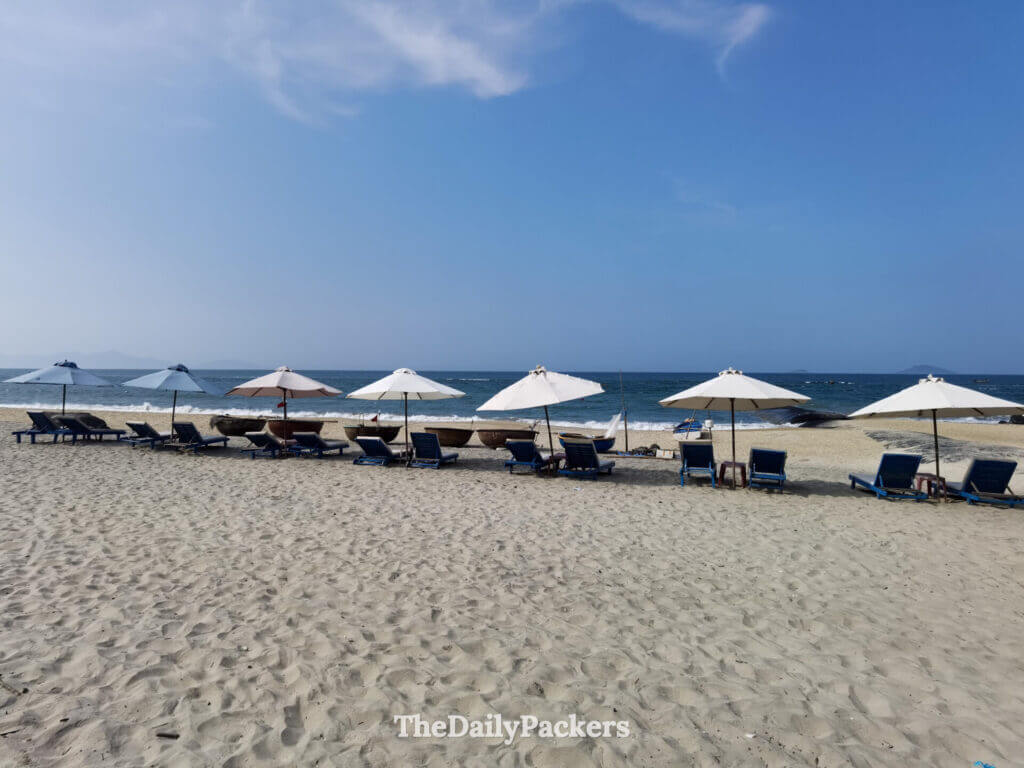
Hoi An isn’t just about the old town. Some of the best parts of your stay can be spent by the sea. Just 15 to 20 minutes away by bike, you’ll find several beaches to unwind at.
The most popular one is An Bang Beach, the biggest and closest to Hoi An. Parking right by the beach costs around 10,000 VND, and once on the sand, locals will quickly approach you with options for sunbeds and umbrellas. You can either pay about 50,000 VND per person or get chairs for free if you order cocktails, mocktails, or food from the restaurant. The water is shallow and warm, but it can have strong currents, so keep that in mind. It’s a great spot for a lazy afternoon under the sun.

If you’re looking for something quieter, head to Coconut Beach, a much smaller and more peaceful spot. There we grabbed a beer for 20,000 VND and two sunbeds — perfect for enjoying a calm stretch of sand with hardly anyone around.
Another option is Three Coconuts Beach, which turned out to be our favorite. The sunbeds here were free (though well-worn), and the vibe was much more relaxed. We spent the afternoon sipping fresh coconuts (80,000 VND for two) and chatting with a local restaurant owner who was fascinated by our drone. It was the kind of beach day that felt simple, authentic, and exactly what we needed.
Visit My Son Sanctuary
About an hour’s drive from Hoi An, the My Son Sanctuary makes for a great half-day trip. The ride itself is quite scenic, though the sun can be strong, so plan accordingly. Once at the entrance, tickets cost 300,000 VND, and from there you can either walk the 2 km to the site or hop on the free shuttle bus that runs back and forth.

Recognized as a UNESCO World Heritage Site, My Son is a cluster of partially ruined Hindu temples dating back to between the 4th and 13th centuries. It once served as the religious and political capital of the Champa Kingdom, and the influence of Indian Hinduism is still clear in the architecture and carvings that remain. While the site isn’t huge, you can wander through several smaller temple groups scattered across the lush valley, making it easy to imagine how grand this place must have been centuries ago.
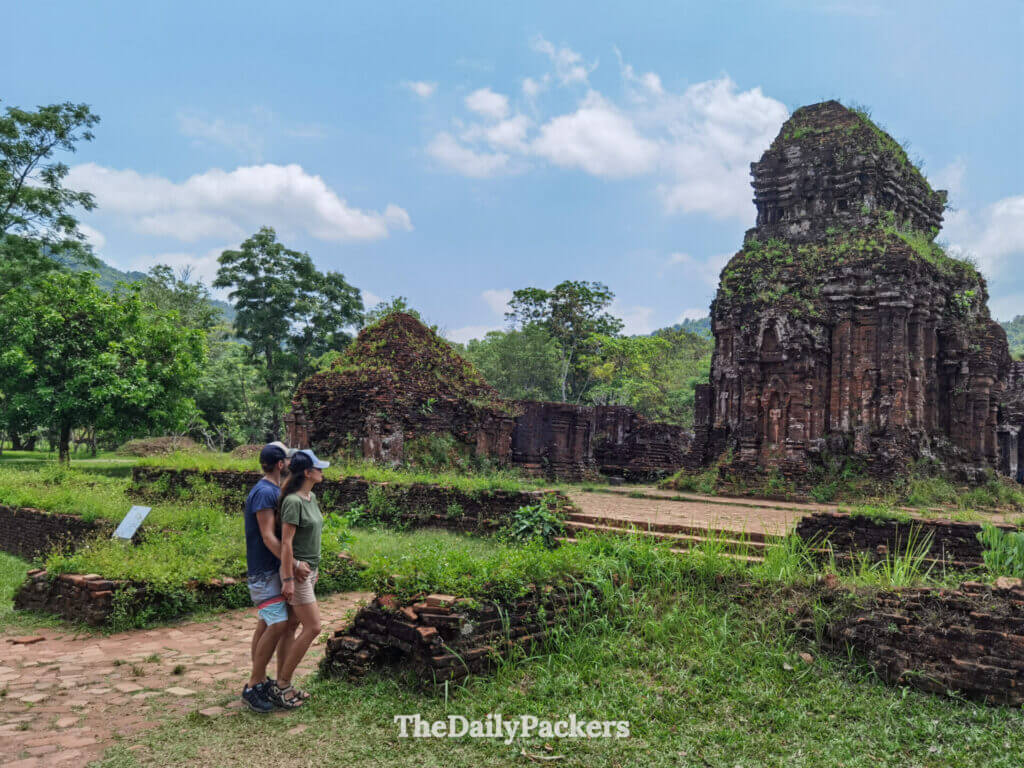
Don’t miss the traditional dance and music performance held in a small theater near the entrance — it’s a nice way to connect with the local culture before or after your visit. If you’re lucky, you might also spot wildlife around the sanctuary, like the curious monkey we came across.
On your way out, there are small shops where you can grab a cold drink. Parking for your scooter costs 5,000 VND.

Tip: Enjoy a unique experience with the My Son Sanctuary Early Morning Visit with Breakfast
Explore Thanh Ha Pottery Village
Located just a short ride from Hoi An, Thanh Ha Pottery Village is known for its traditional ceramic craft that dates back hundreds of years. On the way back from My Son Sanctuary, it makes for an easy stop to see another side of local culture.
Once inside the village, you’ll find small workshops and family-run studios where artisans shape, paint, and fire clay into everyday objects and decorative pieces. Some spots even let you try your hand at the potter’s wheel, which can be a fun experience if you’ve never done it before.
That said, the village is quite small and quiet, and depending on the time of your visit, there may not be much activity going on. While it’s a good stop if you’re curious about traditional crafts, it is better to do it with an organized tour.

Tip: To really experience the Thanh Ha Pottery village, try this workshop with locals.
Visit the Marble Mountains
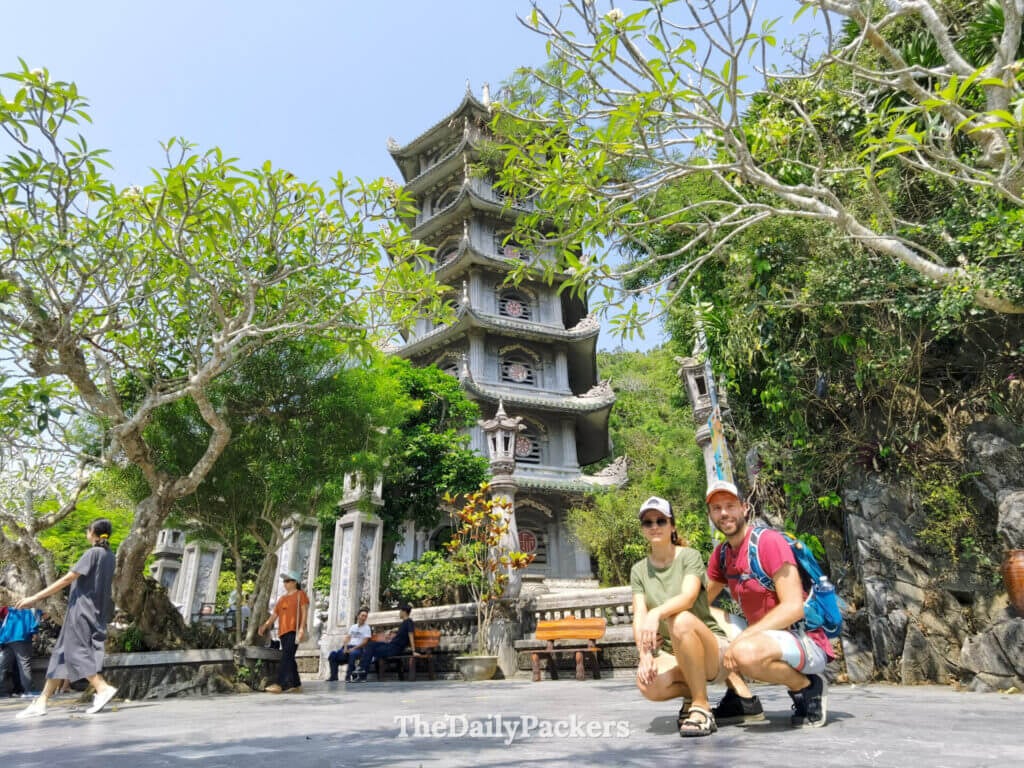
About 30 minutes by scooter from Hoi An, the Marble Mountains are one of the most fascinating places to explore in central Vietnam. This cluster of five marble and limestone peaks represents the five elements: metal, wood, water, fire, and earth. Each mountain hides caves, temples, and tunnels, with Mount Thủy being the most accessible and rewarding to climb.

Walking up the stairs, you’ll quickly come across temples tucked into the cliffs, impressive Buddhist sanctuaries, and caves filled with statues and altars. There are also a few viewpoints along the way where you can take in sweeping views over Da Nang and the coastline. Despite being a popular spot, it doesn’t feel overwhelmingly crowded, and the climb is manageable thanks to the stone stairways.

The area is also tied to Vietnam’s tradition of stone carving. While rock extraction from the mountains has been banned to preserve the site, the surrounding workshops still showcase beautiful stone sculptures made from materials sourced elsewhere.
Entrance is affordable (around 40,000 VND depending on the caves you want to visit), and parking is often free if you grab a drink from the nearby stands. It’s definitely worth the detour if you’re staying in Hoi An or Da Nang.

Tip: Take the Lady Buddha, Marble Mountains, and Am Phu Cave Tour for a hassle-free experience.
Discover Ba Na Hills SunWorld with the Golden Bridge
If you’re staying in Hoi An or Da Nang, a day trip to Ba Na Hills SunWorld is one of the most popular excursions. The park is located about 1 hour from Hoi An (40 minutes from Da Nang) and is famous for its Golden Bridge, a 150-meter-long pedestrian bridge held up by two giant stone hands that look as if they’re lifting it from the mountain. It’s one of the most photographed landmarks in Vietnam.
To get there, you’ll take one of the world’s longest cable cars, which in itself is an experience, offering panoramic views over the lush mountains and coastline. Once on top, Ba Na Hills is a mix of attractions: a recreated French village, pagodas, flower gardens, theme-park rides, and endless viewpoints. It’s a bit kitschy and very touristic, but also fun if you know what to expect.

Entrance is not cheap compared to other attractions in Vietnam (about 900,000 VND per adult, 750,000 VND per child), but it includes the cable car and access to most of the attractions inside the park. Food and drinks on-site are more expensive, so bringing a bottle of water is a good idea.
The Golden Bridge is best visited in the early morning or late afternoon when the light is softer and the crowds thinner. During midday, it can get extremely crowded with tour groups.

Basket Boat tour in the coconut forest
Just a short ride from Hoi An’s old town, you’ll find the Bay Mau Coconut Forest, also known as the Cam Thanh coconut village. This area is famous for its traditional round basket boats that local fishermen have been using for generations.
Joining a basket boat tour is a fun and unique experience. You’ll float through narrow waterways lined with dense water coconut palms while the rower shows off their impressive paddling skills. Some even spin the boats in circles for a bit of extra entertainment, while others demonstrate traditional fishing techniques.

Most tours include a chance to try paddling the basket boat yourself and sometimes even throwing the round fishing nets. Along the way, you can also spot small crabs clinging to the mangrove roots and enjoy the peaceful scenery.
The tours usually last about 45 minutes to 1 hour and cost around 150,000 – 200,000 VND per person, depending on the operator. Many guesthouses in Hoi An can organize this for you, or you can book directly at the entrance to the forest.

Watch Hoi An Memories Show & Hoi An Impression Theme Park
If you want something truly unique in Hoi An, don’t miss the Hoi An Memories Show at the Hoi An Impression Theme Park. This large-scale outdoor performance is often called the biggest cultural show in Vietnam, with over 500 actors bringing Hoi An’s history to life through dance, music, and incredible stage design.
The show is held on an open-air stage the size of a football field, with the Thu Bon River as a backdrop. It tells the story of Hoi An’s past as a bustling trading port, mixing Vietnamese traditions with international influences. Expect colorful costumes, impressive light effects, and powerful music that make it a one-of-a-kind experience.

Before the show, you can also explore the Hoi An Impression Theme Park, which recreates old streets, ancient houses, and folk activities. It’s like stepping back in time, with plenty of little performances, workshops, and photo spots scattered around.
Tickets start at around 600,000 VND per person for the regular seats, and there are upgraded VIP options if you want a better view. It’s best to book in advance as it can sell out quickly, especially on weekends.
The theme park opens in the late afternoon, and the show usually begins at 7:30 pm, making it a perfect way to end a day in Hoi An.

Day Trip to Hue from Hoi An
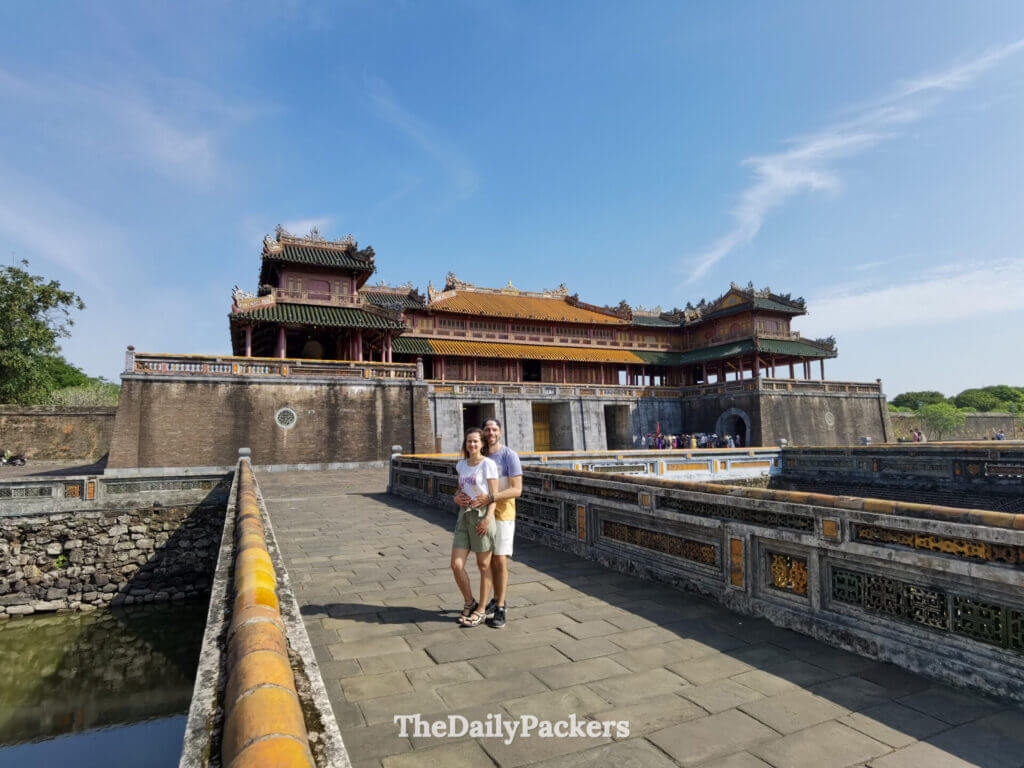
If you have extra time in Hoi An and want to add a cultural adventure, a day trip to Hue is a great option. Hue, the former imperial capital of Vietnam, is about 3 hours away from Hoi An and can be reached either by train, car, or motorbike. The journey itself is beautiful, especially if you take the scenic Hai Van Pass with its sweeping coastal views.
In Hue, the must-see is the Imperial Citadel, a UNESCO World Heritage Site where you can walk through ancient gates, temples, and palaces once home to the Nguyen emperors. Other highlights include the Thien Mu Pagoda, perched above the Perfume River, and the royal tombs of emperors such as Minh Mang, Khai Dinh, or Tu Duc, each with unique architecture blending with nature.
You can also wander through the local Dong Ba Market, a lively place to try traditional dishes like bun bo Hue (a spicy noodle soup), or just soak in the everyday life of the city.
Most people hire a driver for the day or join a guided tour, which makes it easier to cover more ground. If you’re confident on two wheels, renting a motorbike for the Hai Van Pass is a popular choice too.
A Hue day trip from Hoi An is packed but totally doable, and it gives you a deeper insight into Vietnam’s history and culture beyond the lantern-lit streets of Hoi An.


Hoi An Itinerary
Day 1:
- Check into your hotel and settle in.
- Borrow a bike from your accommodation and cycle to the Ancient Town. Wander the narrow streets, pop into boutiques, and get a first taste of Hoi An’s food scene.
- In the evening, stroll along the lantern-lit riverbanks and cross to the Night Market for street food and souvenirs.
Day 2:
- Get fitted at a local tailor for custom clothes
- Take a break at Reaching Out Tea House
- Stroll around the Old Town
- Join a lantern-making class at The Lantern Lady
- Lunch at Nourish Eatery
- Relax at the Beach
- Dinner at Vvegan
Day 3:
- Rent a scooter and head to My Son Sanctuary (UNESCO site).
- Lunch at Nourish Eatery
- Chill at the beach
- Diner in the old town
- Catch the Hoi An Memories Show in the Impression Theme Park.
Day 4
- Go explore the Marble Mountain
- In the afternoon, relax at the beach or take a basket boat ride in the Coconut Forest.
Day 5:
- Do a day trip to Ba Na Hills to see the Golden Bridge
Day 6:
- Do a day trip to Hue if you didn’t visit it on your way to Hoi An.

Read: Complete North and Central 3-week Vietnam Itinerary
What It Costs: Budgeting for 4 Days in Hoi An
Here’s a breakdown of what we spent during our 4 days in Hoi An, for two people. A quick note: our final accommodation bill bundled a few things together (the room, two transfers, and the scooter rental), so we’ve broken it down as best we can, but treat that section as an estimate rather than an exact split.
Accommodation (4 nights, paid by card, includes 3% card fee): Our final bill came to 3,801,000 VND (~158€), which covered the room, 2 airport/station transfers (700,000 VND), and our scooter rental (300,000 VND). Once those are pulled out, accommodation alone works out to roughly 2,800,000 VND (~117€) for the 4 nights.
Activities:
- Custom tailoring at Blue Eye (2 dresses + 2 shorts): 4,320,000 VND (~180€)
- Reaching Out Tea House (tasting + souvenirs): 647,000 VND (~27€)
- Lantern-making class: 300,000 VND (~12.50€)
- My Son Sanctuary entrance (2 tickets): 300,000 VND (~12.50€)
- Marble Mountains entrance (2 tickets, estimated): 80,000 VND (~3.30€)
- Beach sunbeds & extras (An Bang, Coconut Beach, Three Coconuts Beach): 200,000 VND (~8€)
- Lanterns and small souvenirs from the night market: 170,000 VND (~7€)
Food:
- Restaurant meals (Nu Eatery, Nourish Eatery x3, Vvegan x2): 2,000,000 VND (~83€)
- Coffee, snacks, and fruit stops throughout the 4 days: 410,000 VND (~17€)
Transport:
- Scooter fuel: 125,000 VND (~5€)
- (Airport/station transfers already included above in the accommodation bill)
Total for 4 days (two people): roughly 10,550,000 VND (~440€–445€), including accommodation, activities, food, and local transport.
About the authors
We are Alex and Tina, a French-Serbian couple who met in China back in 2014. We spent three incredible years there before making France our home. Our shared passion for travel has been the heartbeat of our relationship for over 12 years, taking us across 44 countries and counting.
We launched TheDailyPackers in 2019 as a way to document our adventures. In 2026, we reached a major milestone by officially turning our blog into our full-time job. While we are still growing toward financial independence through this platform, every article we write is fueled by our mission to make your voyages easier through in-depth guides, honest advice, and the lessons we’ve learned from our own mistakes.
Our journey has not been without its storms. In 2023, our world changed forever when our first son, Poppy, was stillborn on November 25th. It was, and remains, the hardest chapter of our lives. In 2025, we were blessed with our second little boy, Milo. He has since joined our traveling tribe, and you’ll be seeing him—and the reality of traveling with a little one-on the blog more and more.
We hope to inspire you to explore the world with curiosity and resilience. Thank you for being part of our story.
You may also like those related posts
Van Long Nature Reserve: Ninh Binh’s Quietest Boat Ride
Cat Cat Village: SaPa’s Most Charming Traditional Village
Tam Coc & Ninh Binh Travel Guide: Best Things to Do
Halong Bay & Lan Ha Bay Cruise: A Full 3-Day Review 2026
Climbing Mua Cave in Ninh Binh: Vietnam’s Best Viewpoint
Hanoi Train Street: How to Visit the Famous Railway Safely
Hanoi to SaPa: Luxury Van Transfer in 6h
3-Week Vietnam Itinerary: The Best of North/Central Vietnam
Pssst, did you know that…
If you purchase something through our links, we earn a small fee. However, you still pay the same. Win-win! And one day we may get to be full-time travel bloggers =)
Find Hotels with Booking.com
Do Yoga with KVY
Buy us a Coffee
Rent a car with DiscoverCars
Find Attractions with GetYourGuide
Find Flights with Expedia
Buy an eSIM with Airalo
Get insured with World Nomads
Get ready with Amazon.com