
Introduction
In April 2023, we spent three weeks exploring Vietnam, focusing on the north and center of the country rather than trying to cram in everything. Our trip started and ended in Hanoi, with stops in Sapa, Halong Bay, Tam Coc, Hue, and finally Hoi An. One thing that made this trip extra memorable: Tina was between 9 and 12 weeks pregnant, which gave a different rhythm to how we approached some of the more physical days.
The journey from Hue to Hoi An was one we’d been looking forward to since we started planning. If you’re heading the same way, you’ll first take a train to Da Nang, the closest station to Hoi An, then finish the trip by taxi. We booked our tickets just two days in advance through 12GO and chose a 1st-class four-bed sleeper cabin. The 2-person cabins were already sold out by then, but we still managed to grab the last two lower berths, ideal for taking in the views along the way.
If you’re planning your own trip from Hue to Hoi An, taking the train is not only convenient but also a great experience in itself. Here’s everything you need to know about traveling from Hue to Hoi An by 1st class sleeper train.

Hue to Hoi An: At a Glance & Top Travel Tips
- The Vibe: A scenic, slow-paced train ride hugging the coast, followed by a short taxi hop into Hoi An. It’s less about speed and more about the journey itself, especially once you hit the Hai Van Pass.
- Booking: Book through 12GO ASIA. You can choose between a 2-person cabin (most private; sells out fast), a 1st-class 4-bed cabin, a 2nd-class 6-bed cabin, or regular seats. We booked ours just two days ahead and still got the last two lower berths in the 4-bed cabin, but don’t push your luck; book earlier if you can.
- Want privacy? If you don’t want to share your cabin with strangers, you can book all 4 beds in the 1st class cabin for yourself.
- Total Journey Time: Around 3.5 to 4 hours by train from Hue to Da Nang, plus about 45 minutes by taxi to reach Hoi An.
- Food: A cart comes around with simple options like rice with tofu, pork, or chicken (around 40,000 VND a plate). It’s better than you’d expect, but pack a snack or sandwich just in case, as we did.
- The Highlight: The Hai Van Pass. The train tracks hug the mountainside with jungle on one side and the ocean on the other; it’s the best part of the whole ride.
- A Word of Warning: The toilets on board are not pleasant, dirty, and smelly. And here’s something no one tells you: the sheets and blankets aren’t changed between every ride, so don’t think too hard about it.
- Getting to the Station: A Grab from central Hue to the train station takes about 10 minutes. Build in some buffer time, trains in Vietnam tend to run a little late.
How to go from Hue to Hoi An
There are a few different ways to travel from Hue to Hoi An, depending on your budget and the kind of experience you’re looking for:
- By train: This is the option we’ll be diving into in this article, as it’s the one we chose and really enjoyed. You’ll travel from Hue to Da Nang by train and then continue to Hoi An by taxi.
- By bus: Probably the cheapest way to make the trip from Hue to Hoi An, with tickets around 250,000 VND (about 10€) per person. The ride takes roughly 3 to 4 hours.
- By motorbike or rental car: A more adventurous option is to rent a vehicle in Hue and drop it off in Hoi An. This gives you the freedom to explore along the way, including the famous Hai Van Pass — a 21 km mountain pass with some of the best coastal views in Vietnam. To reach it, just head towards An Duong Vuong – Nguyen Tat Thanh, then turn left onto the Phuoc Tuong Tunnel.
- By private taxi or car: Comfortable and direct, but also the most expensive overland option, costing up to 2.2 million VND for the trip.
- By seaplane: For something really unique, Hai Au Aviation offers seaplane flights between Hue and Hoi An. It’s by far the priciest option at around 3.5 million VND, but imagine those aerial views.
Booking the trip
Booking your Hue to Hoi An train is really simple, and the easiest way is to get your e-ticket through 12GO ASIA. The platform is straightforward, and you can easily pick your seat (or bed) in advance.
You’ll find a few different options at different price points:
- 2-person cabin – the most private choice, but it sells out fast.
- 1st class 4-bed cabin – this is the one we went for, and it was the perfect balance between comfort and price.
- 2nd-class 6-bed cabin – a bit more crowded, but still a decent choice if you’re traveling on a tighter budget.
- Regular seats – the cheapest option, though probably not ideal for a longer ride.
And here’s a little tip: if you want the privacy of a full cabin, you can book all 4 tickets in the 1st-class cabin for yourself.

From Hue to Hoi An: Step by Step
Hue Train Station
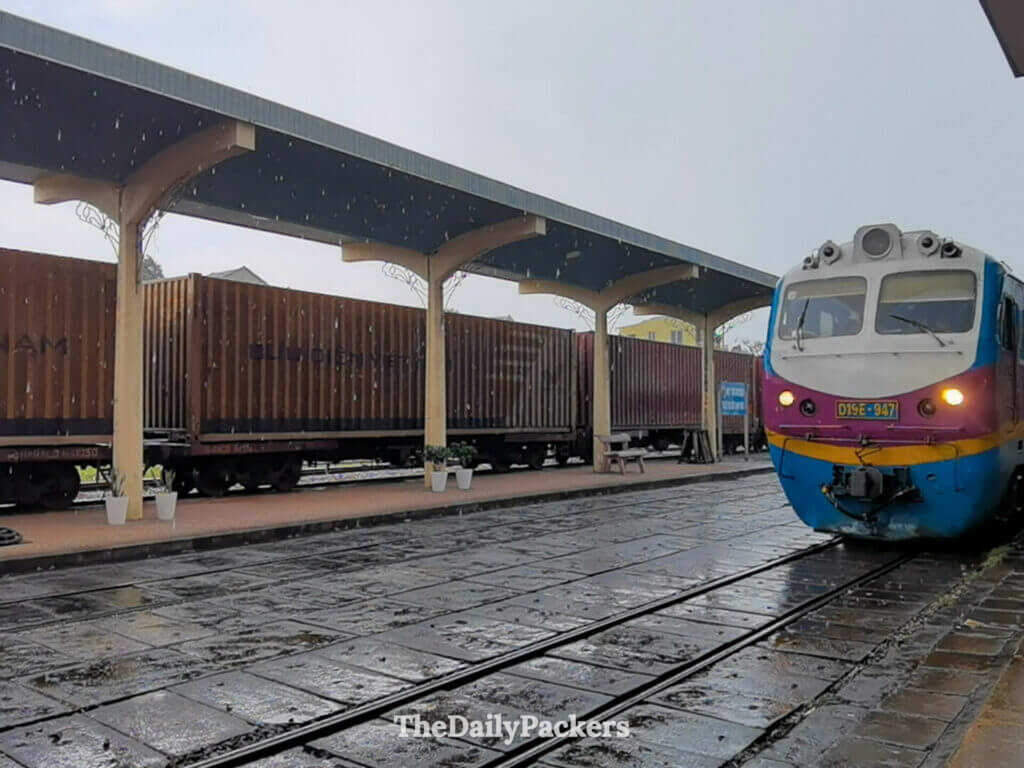
We started the day with some yoga and breakfast before packing up and heading to the station. A quick Grab from our hotel cost 33,000 VND (about 1.30€) and took roughly 10 minutes to reach Hue Train Station.
It’s best to arrive at least 30 minutes before departure. Our train from Hue to Da Nang (the SE1) was scheduled for 10:50 am, but as often happens in Vietnam, things ran a little late. The platform only opened around 10:40, and the train from Hue to Da Nang didn’t roll in until about 11:05.
There isn’t much to do at the station itself, so be prepared to just wait it out. In our case, it was pouring rain, which made boarding a bit tricky, but honestly, it added to the adventure and the journey’s atmosphere.


On Board: The Cabin
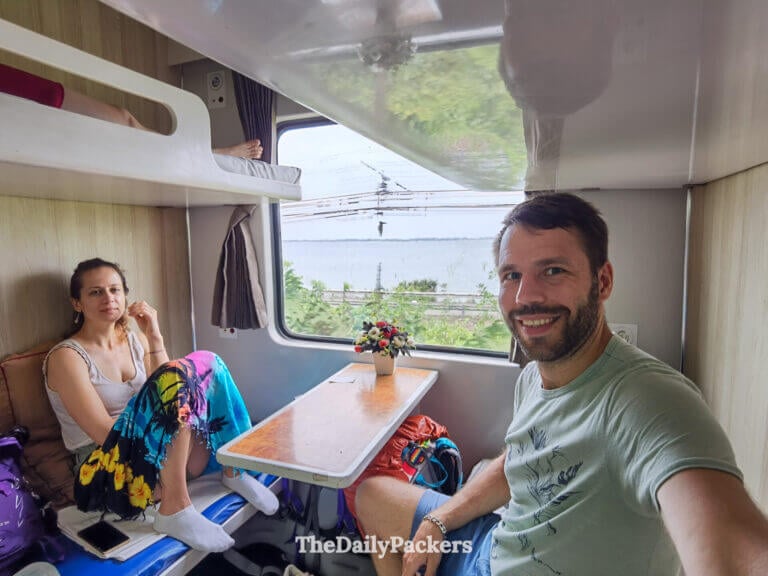
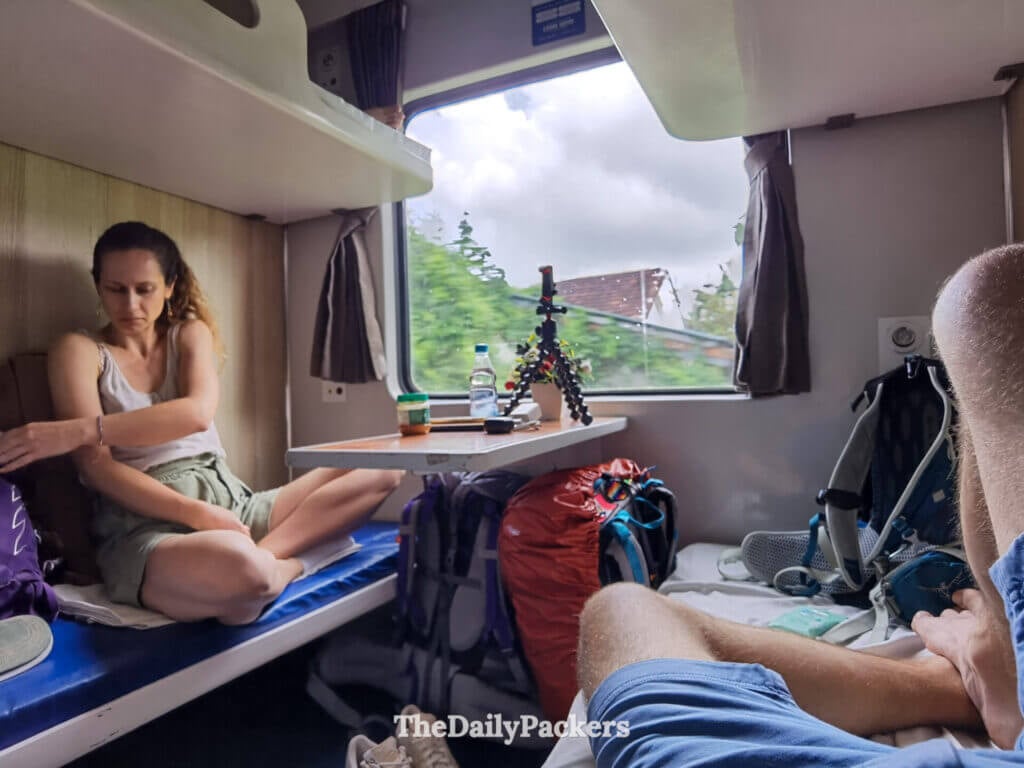
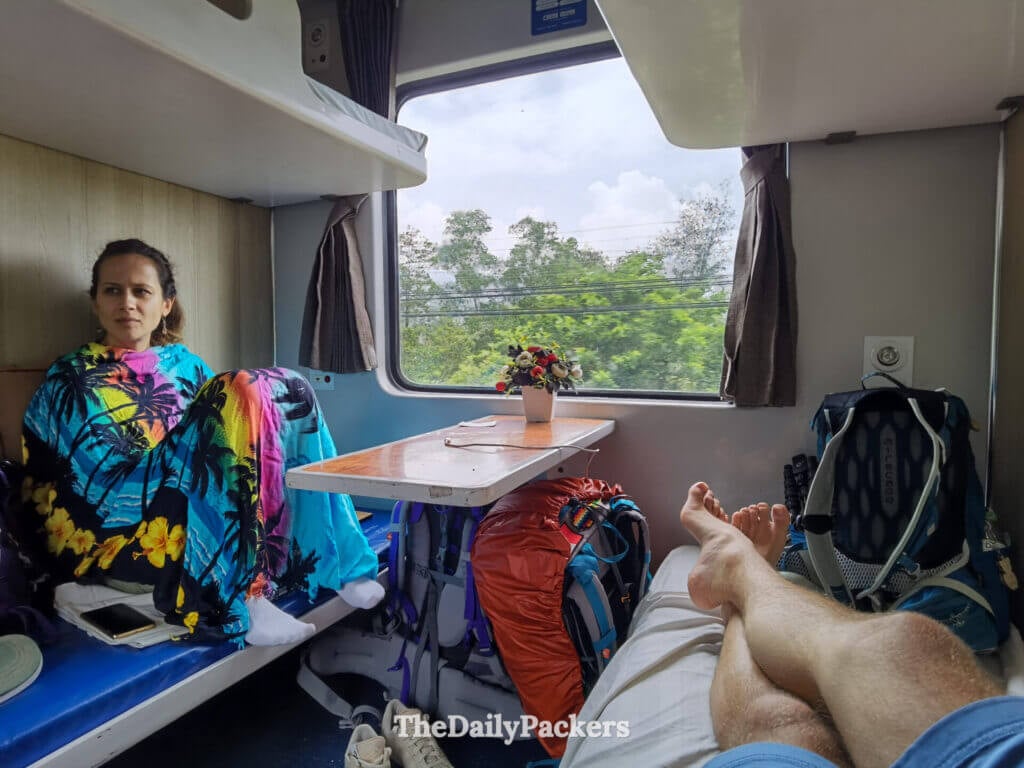
Once you step onto the train from Hue to Da Nang, you’ll find your cabin fitted with four bunk beds and a small table in the middle. Each bed comes with sheets and a blanket, plus there are two 220V outlets, a USB plug, and an individual light for each bunk. Small brackets make it easier to climb up to the top beds.
We shared our cabin with a young Vietnamese couple who spoke some English and were really friendly. They even offered us some local fruits to try, though we have to admit, they were incredibly bitter. It was a nice way to break the ice though, and it made the ride feel a lot less awkward.
Compared to the sleeper trains Tina had experienced in China, this one already felt like an upgrade. If you want a cabin to yourself, you’ll either need to book one of the 2-person cabins well in advance, or simply buy all four tickets to keep it private.
Once the train starts moving, it’s time to settle in, make your bed, and, like most people probably do, wonder just how clean the sheets and blankets really are.
Lunch
Once you’re settled in, you can relax and start enjoying the views rolling by through the window. After a little while, train staff come around with a food cart. The options are simple: rice with tofu, pork, or chicken. We went for the tofu plate (40,000 VND, about 1.60€), while Tina stuck with a peanut butter sandwich we’d packed ahead of time.
The food was actually better than expected for train service, tasty, filling, and just what you need for the journey. Not long after, the staff came back around offering yogurts and fresh fruit. Around the same time, our cabin neighbors shared some of those small, very bitter local fruits with us again. Not exactly a treat for the taste buds, but it added to the experience.
If you’re picky about food or have specific preferences, packing a sandwich or some snacks is a smart move, just in case the cart options aren’t your thing.

Exploring the Carriage
The real highlight of the ride from Hue to Da Nang is, of course, the views. Watching the coastline and mountains pass by from the window is stunning and makes the whole trip worthwhile. At some point, you might get curious like we did and wander around the carriage to see what it’s like.
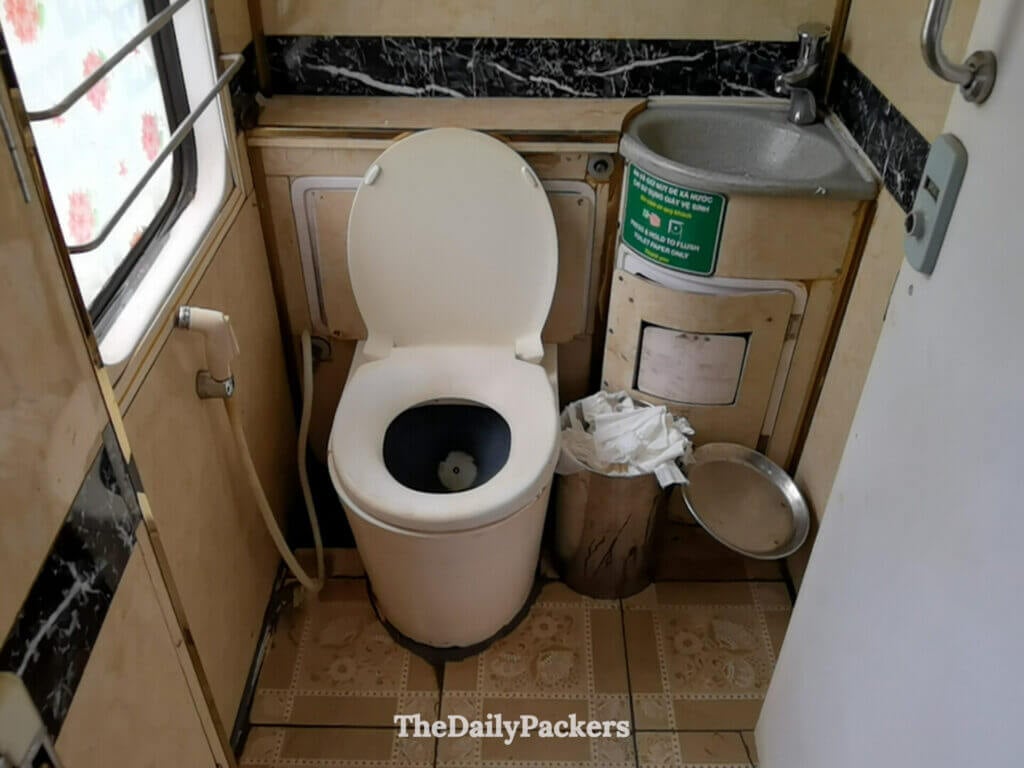
The setup is pretty straightforward: semi-automatic doors that open with a button, a water dispenser and a sink at one end, and beyond that, the toilets. To be completely honest, the toilets were a letdown, dirty and unbearably smelly. Definitely not the most pleasant part of the journey, but that’s something you just have to expect on trains in Vietnam.

Hai Van Pass
The most spectacular part of the ride comes when the train winds its way through the Hai Van Pass. The tracks hug the mountainside, with jungle on one side and sweeping views of the ocean on the other. Even with the slow pace of the train, it feels like the perfect way to soak in the scenery, easily one of the highlights of taking this route instead of flying.
We couldn’t help but wonder during the trip just how clean the sheets and blankets actually were. That question got answered right before arriving in Da Nang, when staff came around to fold them up for the next passengers. Turns out they don’t get changed after every ride, so keep that in mind when you make your bed.

Transfer to Hotel
You’ll arrive at Da Nang train station around 2 pm, and from there it’s just the final stretch to Hoi An. We arranged our transfer through our accommodation, which turned out to be both the cheapest and easiest option. Our driver was already waiting for us right outside the station, so there was no stress at all.
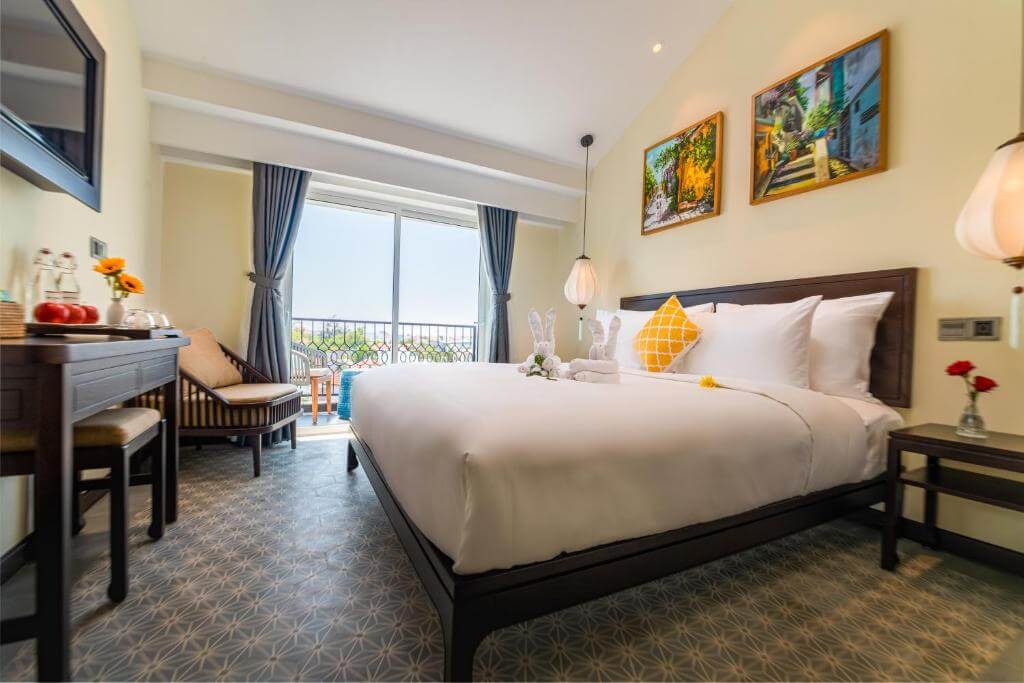
The ride takes about 45 minutes, and before you know it, you’ll be checking into your hotel in Hoi An. That marks the end of the journey from Hue to Hoi An, a smooth and scenic trip we’d genuinely recommend if you want a mix of comfort and views.



Final though
After taking the 1st class sleeper train from Hue to Hoi An, we can honestly say we enjoyed the experience. The views were beautiful, the journey was smooth enough, and it gave us a real taste of local travel in Vietnam. It’s not the most luxurious option out there, but it’s definitely worth trying at least once, especially if you want to mix a bit of comfort with a unique way of getting between the two cities.


Read: Complete North and Central 3-week Vietnam Itinerary
Where to Stay in Hoi An
Whether you’re after something budget-friendly, a mid-range boutique stay, or a bit of luxury, Hoi An has options for every kind of traveler.
- (€): Hoi An Merrily De Art Hotel
- (€€): Cozy Savvy Boutique Hotel
- (€€€): Allegro Hoi An Hotel & Spa


What No One Tells You
The sheets and blankets on board aren’t changed between every ride, they get folded up when you arrive and reused for the next passengers. Not exactly reassuring, but it’s the reality of budget sleeper trains in Vietnam.
The toilets are genuinely unpleasant, dirty and with a smell that lingers. If you’re sensitive to that kind of thing, try to use the bathroom before boarding and just tough it out for the ride.
Trains here rarely run exactly on time. Ours was scheduled for 10:50 am but didn’t actually pull in until just after 11:05, so build in some patience rather than watching the clock.
Also worth knowing: the transfer from Da Nang station to your Hoi An hotel isn’t necessarily free just because it’s “organized.” Ours cost 350,000 VND, arranged directly through our accommodation, and it turned out cheaper than booking a Grab from the station that day.
What It Costs
Here’s what we spent getting from Hue to Hoi An by train, for two people:
- Grab to Hue Train Station: 33,000 VND (~1.35€)
- 1st class sleeper train ticket (via 12GO, per person): estimated at 15€–25€, so roughly 30€–50€ for two.
- Lunch on board (tofu plate): 40,000 VND (~1.65€)
- Transfer from Da Nang Station to Hoi An hotel: 350,000 VND (~14.50€)
Total for two people: roughly 46€–66€, depending on the exact ticket price paid.

About the authors
We are Alex and Tina, a French-Serbian couple who met in China back in 2014. We spent three incredible years there before making France our home. Our shared passion for travel has been the heartbeat of our relationship for over 12 years, taking us across 44 countries and counting.
We launched TheDailyPackers in 2019 as a way to document our adventures. In 2026, we reached a major milestone by officially turning our blog into our full-time job. While we are still growing toward financial independence through this platform, every article we write is fueled by our mission to make your voyages easier through in-depth guides, honest advice, and the lessons we’ve learned from our own mistakes.
Our journey has not been without its storms. In 2023, our world changed forever when our first son, Poppy, was stillborn on November 25th. It was, and remains, the hardest chapter of our lives. In 2025, we were blessed with our second little boy, Milo. He has since joined our traveling tribe, and you’ll be seeing him—and the reality of traveling with a little one-on the blog more and more.
We hope to inspire you to explore the world with curiosity and resilience. Thank you for being part of our story.
You may also like those related posts
3-Week Vietnam Itinerary: The Best of North/Central Vietnam
Tam Coc Boat Tour: Vietnam’s Famous Ha Long Bay on Land
Thuy Tien Lake: Exploring Hue’s Forgotten Abandoned Water Park
Climbing Mua Cave in Ninh Binh: Vietnam’s Best Viewpoint
Hanoi Travel Guide: Best Things to Do in 3 Days or More
Hoi An Travel Guide: 16 Best things to do in 4 days
SaPa Travel Guide: Best Things to Do in 4 Days
Hoi An Tailor Guide: Our Experience at Blue Eye
Pssst, did you know that…
If you purchase something through our links, we earn a small fee. However, you still pay the same. Win-win! And one day we may get to be full-time travel bloggers =)
Find Hotels with Booking.com
Do Yoga with KVY
Buy us a Coffee
Rent a car with DiscoverCars
Find Attractions with GetYourGuide
Find Flights with Expedia
Buy an eSIM with Airalo
Get insured with World Nomads
Get ready with Amazon.com