
Introduction
In April 2023, we traveled for 3 weeks in Vietnam. Our original plan was to visit all of Vietnam, but as we were planning it, we decided to focus on the north and center of Vietnam. This allowed more time in both regions.
Our trip started and ended in Hanoi, the capital of Vietnam. We also spent an overnight in Hanoi as we traveled back from Sapa to Halong Bay.
Our complete trip included in this order: Hanoi, Sapa, Hanoi, Halong Bay/LanHa Bay, Tam Coc (Ninh Binh), Hue, Hoi An, Hanoi. And as always, we will make a complete itinerary of the trip.
One particular thing is that we traveled Vietnam while Tina was 9 to 12 weeks pregnant. So, it wasn’t always easy, yet we enjoyed it!
Hanoi is the capital and the second largest city in Vietnam. Hanoi’s history goes back to the third century BCE, when a portion of the modern-day city served as the capital of the historic Vietnamese nation of Âu Lạc. But today Hanoi has changed a lot since then.
Today, Hanoi offers well-preserved French colonial architecture, religious sites dedicated to Buddhism, Catholicism, Confucianism, and Taoism, several historical landmarks of Vietnamese imperial periods, and a large number of museums. The Central Sector of the Imperial Citadel of Thăng Long in Ba Dinh District was recognized as a UNESCO World Heritage Site in 2010.
In this article, we will tell our story about all the best things to do in Hanoi. So, if you too are planning a trip to Vietnam and to Hanoi, then let’s dive into these best things to do in Hanoi.

Hanoi At a Glance & Top Travel Tips
Hanoi isn’t just one neighborhood you tick off in an afternoon; it’s a sprawling capital where the magic really lives in the details: a coffee shop tucked behind a wall, a temple you stumble on by accident, a street that turns into a different world once a train rolls through. Before you dive into the best things to do in Hanoi, here’s what you should know first.
- The Old Quarter is your base, not the whole city. Most of the big sights (Hoàn Kiếm Lake, the temples, Train Street, the food scene) sit within walking distance of each other in the Old Quarter. But a few highlights, like the Ho Chi Minh Mausoleum, the Imperial Citadel, and Tran Quoc Pagoda, are a Grab ride away.
- Stroller-friendly? Mostly, yes. Hanoi is flat, which already puts it ahead of hillier cities like Sintra. The main roads and around the lake are wide enough for a stroller. The catch is the Old Quarter itself: narrow sidewalks packed with parked scooters mean you’ll be pushing on the road more often than not. If you’re traveling with a baby, a light stroller works fine for the lake and wider streets, but keep a carrier in your bag for the Old Quarter’s tighter corners.
- Download the Grab app before you land. It’s the local Uber, it’s in English, you don’t need a credit card, and you know the price before you get in. It saved us more than once, especially compared to metered taxis, which can turn into a very expensive surprise if you don’t ask for a price upfront.
- Trains passing through Train Street aren’t guaranteed. The street has been repeatedly closed off to walk-in visitors by police, so don’t build your whole day around it. Booking a spot at one of the cafés along the tracks (or a guided food tour that includes it) is the safer way to actually see a train go by.
- Bring cash, and small notes if you can. Most temples, shows, and small restaurants run on cash, and Vietnamese Dong has a lot of zeros. It’s an easy way to accidentally hand over a 100,000 note instead of a 10,000 one.
- Weather changes what you’ll want to pack. Spring and autumn are your best bets for comfortable temperatures and lower humidity. Summer is hot, humid, and rainy; winter is cooler and can get foggy, especially in the evenings.
- Sunday nights bring Hanoi’s Old Quarter alive. The weekend night market and pedestrian streets around Hoàn Kiếm Lake are worth timing your visit around if you can.
Getting there
Getting to Hanoi is quite easy; you can fly directly to its international airport. Most of the major cities have direct flights there. We personally arrived from Frankfurt directly to Hanoi using Bamboo Airways.
If you are coming from the Americas, you may have to first land in Ho Chi Minh City and then take a national flight to Hanoi.
From the airport, the best way to get to the city center is by either taxi, grab (the local Uber), or transfer. We actually tried them all; on our first transfer, we opted for a metered taxi. Little did we know that the rates are not the same and that you must ask for the final price in advance. Otherwise, you will end up with a 600 000 Dong (about 25€) bill.
Our second transfer was with a Grab (the local Uber app). This time it cost 300 000 Dong (about 12.50€) plus 40 000 (about 1.70€) for the toll gate at the airport.
And finally, we negotiated a transfer with our final accommodation for 300 000 Dong (about 12.50€). But yes, negotiated, as the first time they offered it to us it was around 420 000 Dong (about 17.50€).

Moving Around
Once you are in the old city quarter, most of the attractions can be reached on foot. But in some cases, grabbing a “GRAB” is the best option as it is not expensive at all.
We strongly recommend downloading the GRAB App, as it is easy to use, fully in English, doesn’t require credit card information, and lets you pay in cash so you know exactly how much you will have to pay.

When to Visit
Hanoi is worth visiting any time of year, but the season you pick changes the experience more than you’d think, especially if Train Street is on your list. Watching a train pass while you sip a coffee at one of the track-side cafés only works if you can actually sit outside comfortably, so the weather does matter here more than in most cities.
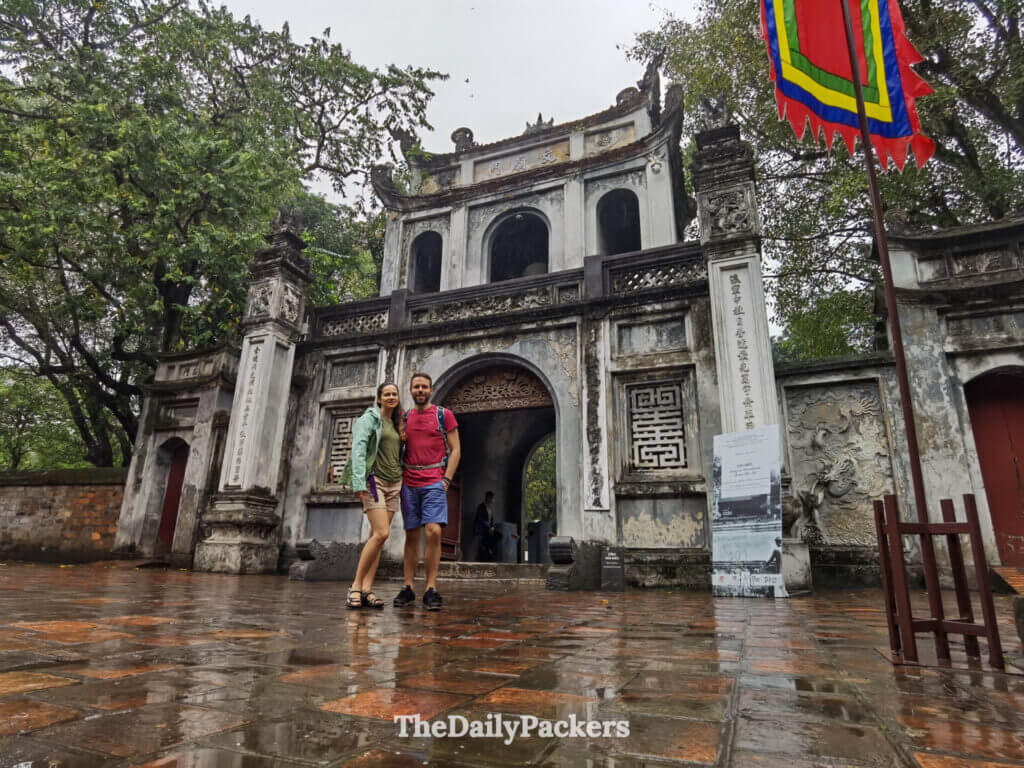
We visited in April, right at the tail end of spring, and got a real mix: a few warm, pleasant days perfect for wandering the Old Quarter, and one day that was drizzling non-stop from morning to night while we pushed through temples and museums anyway.
That’s spring in Hanoi in a nutshell, generally mild and drier than summer, but still capable of throwing a grey, damp day at you out of nowhere. If you’re planning around outdoor moments like Train Street, March and April are usually your safest bet; just don’t bank on it every single day.
Summer, from May to August, is a different story: hot, sticky, and prone to sudden afternoon downpours. It’s still a fun time to be in the city, but you’ll want to plan indoor breaks around the heat, and Train Street evenings might mean ducking under a café awning more than once.
If we’re being honest, autumn is the season we’d actually recommend. September through November tends to bring the clearest skies, milder air, and the fewest rainy surprises, which makes those long walks around Hoàn Kiếm Lake or an evening at Train Street feel a lot more relaxed. Winter, December through February, is cooler and drier too; just pack a light jacket for foggy evenings, and you’ll be fine.

Where to Stay
Three nights in Hanoi is a good amount of time; it gives you enough to see the main sights, enjoy the street food scene, and still have some relaxed moments in between.
Where you stay makes a bigger difference than we expected. We tried a couple of budget places in the Old Quarter ourselves; our Airbnb looked great in the photos and turned out to be old and damp in real life, and after that experience (plus a fair bit of research since), we’ve landed on a short list of hotels we’d actually book if we went back.
They range from simple and central to properly spoiling yourself, which matters more than you’d think in Hanoi. Between the humidity, the odd rainy afternoon, and how loud the Old Quarter can get at night, a slightly nicer room goes a long way toward making the trip feel relaxing instead of just busy.
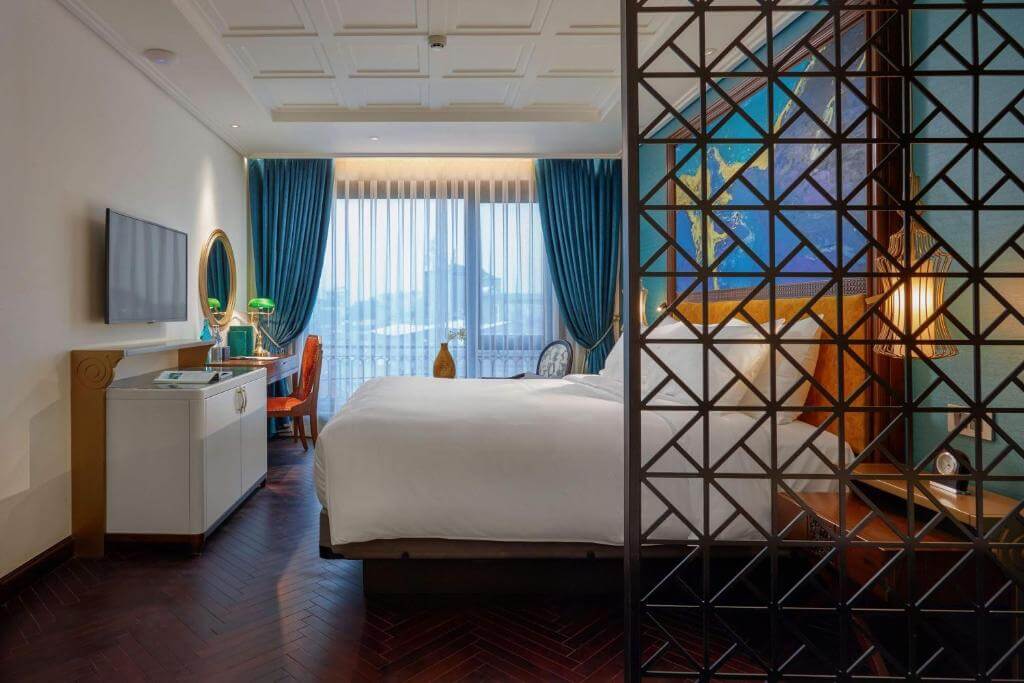
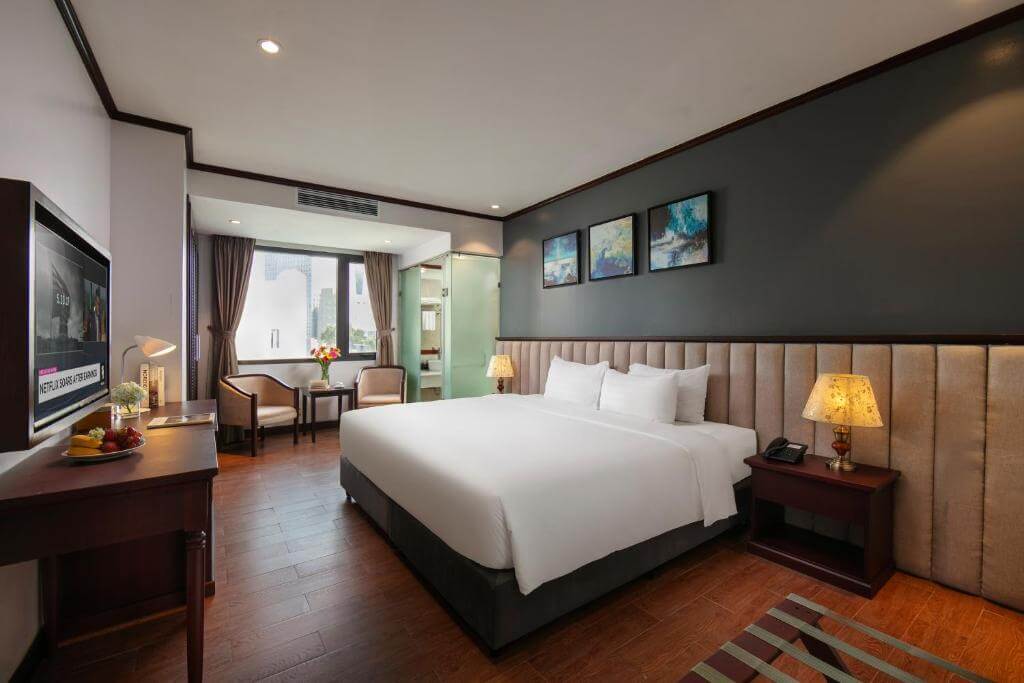
If you want something easy on the budget but still well located, La Passion Premium Cau Go sits right on Hoàn Kiếm Lake and has a rooftop bar to unwind on after a long day of walking, without the price tag of a full luxury stay. Step it up a bit with MAY DE VILLE Corner Hotel, which gives you spacious, modern rooms and a rooftop pool, just a short stroll from the lake and Train Street, ideal if you want a bit more comfort to retreat to when it’s raining outside.
And if you feel like treating yourselves, Peridot Grand Luxury Boutique Hotel is the one we’d pick: a proper 5-star stay right in the Old Quarter, with an infinity pool, spa, and multiple restaurants on site, the kind of place that turns a rainy day into an excuse to just enjoy the hotel itself.

What to Eat
You can’t really talk about Hanoi without talking about the food; it’s half the reason people fall for this city. The dish you’ll see everywhere is pho, that classic broth with rice noodles, herbs, and meat or tofu, but don’t stop there. Banh mi, the French-Vietnamese baguette sandwich stuffed with vegetables, meat or tofu, and a good sauce, makes for a perfect grab-and-go breakfast, and banh xeo, a crispy rice flour pancake folded around fresh toppings and herbs, is worth seeking out too.
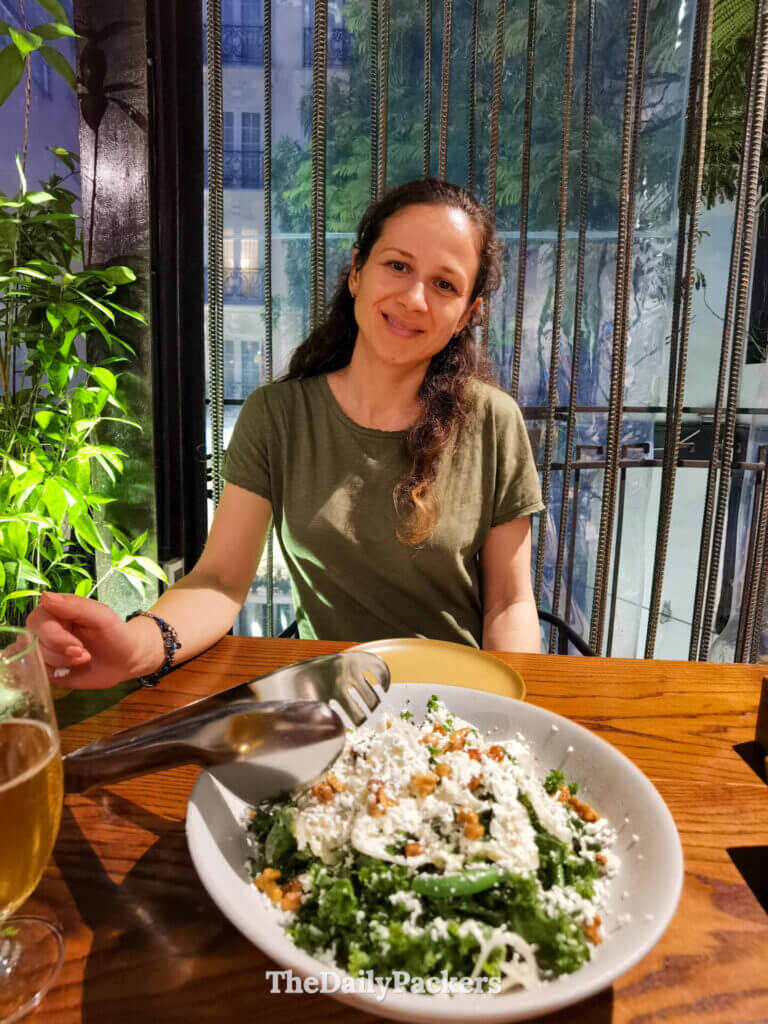
Beyond that, you’ll find endless variations built around spring rolls, fried noodles, or rice. We were vegetarian for this trip and never had trouble finding good options, though we did notice Vietnamese kitchens lean heavily on frying and deep-frying, so don’t expect everything to feel light.

The drinks are just as much a part of the experience. Egg coffee is the one everyone talks about, a strange-sounding but genuinely delicious mix of egg yolks, sugar, condensed milk, and strong coffee, served hot or cold. Iced coffee here is made by dripping medium or dark roast coffee slowly through hot water into a cup already holding condensed milk, and coconut coffee takes that same base and adds coconut milk for something richer. On top of all that, you’ll have no shortage of fresh juices, whole coconuts, and cold beers to work through as you explore.
For coffee shops, our favorites were The Note Coffee, Café Giang, Hidden Gem Coffee, Loading T Coffee, The Hanoi Social Club, Cong Café, and Railway Coffee, each with its own personality worth experiencing. And when it came to actual meals, we kept coming back to Tung’s Kitchen, Hoang’s Restaurant, 4P’s Pizza Bao Khanh, and Veggies Castle.

Tip: Book the Guided Food Tour with Train Street to be sure to enter the street
Best things to do in Hanoi
St Joseph Cathedral
Our first stop in Hanoi was St Joseph Cathedral, and the timing worked out better than we could have planned: a service was underway when we walked in, so instead of just admiring an empty church, we got to see it actually in use, incense in the air, hymns echoing off those Gothic Revival arches that so clearly took their cue from Notre-Dame in Paris.
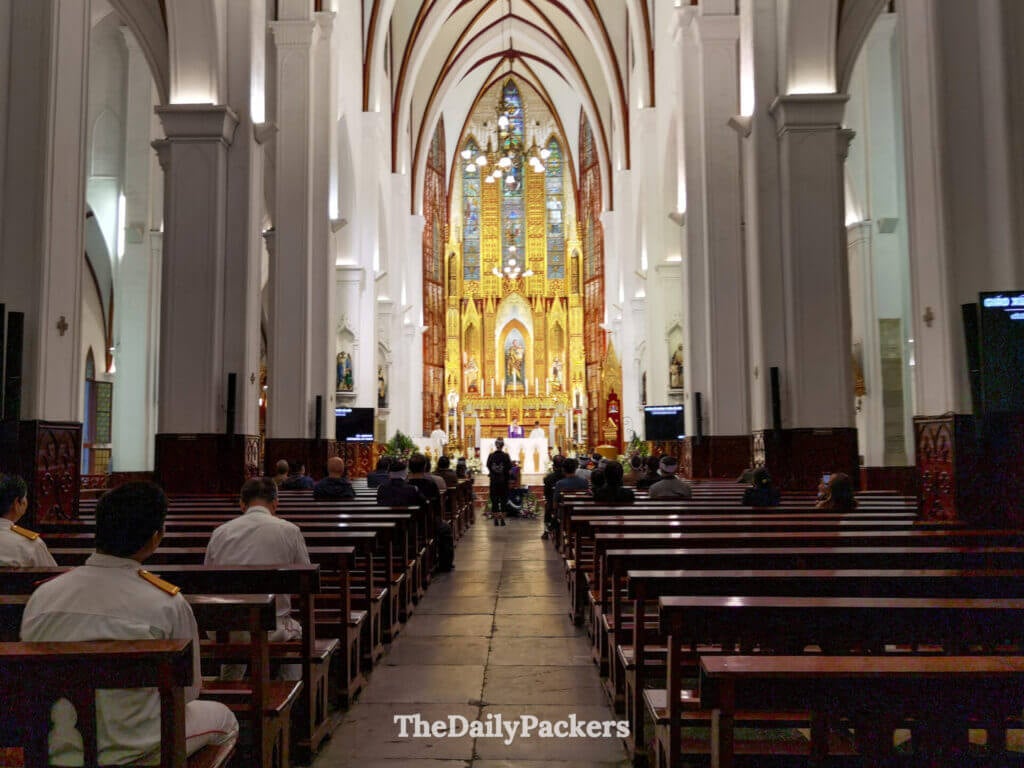
If you can, try to time your visit around 6 PM on a Sunday. The evening mass draws such a crowd that people who can’t fit inside end up standing in the street, listening to the service being broadcast outside. It’s a striking scene, faith spilling out onto one of the busiest corners of the Old Quarter, and worth seeing even if you’re not visiting for religious reasons.

Old Quarter
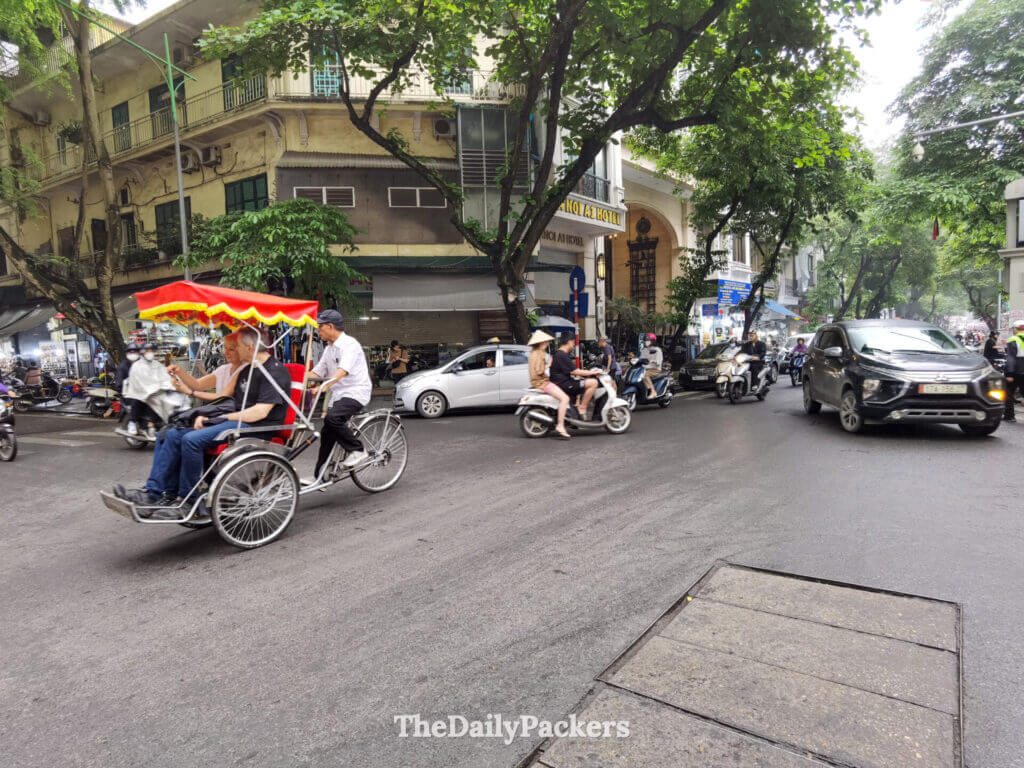
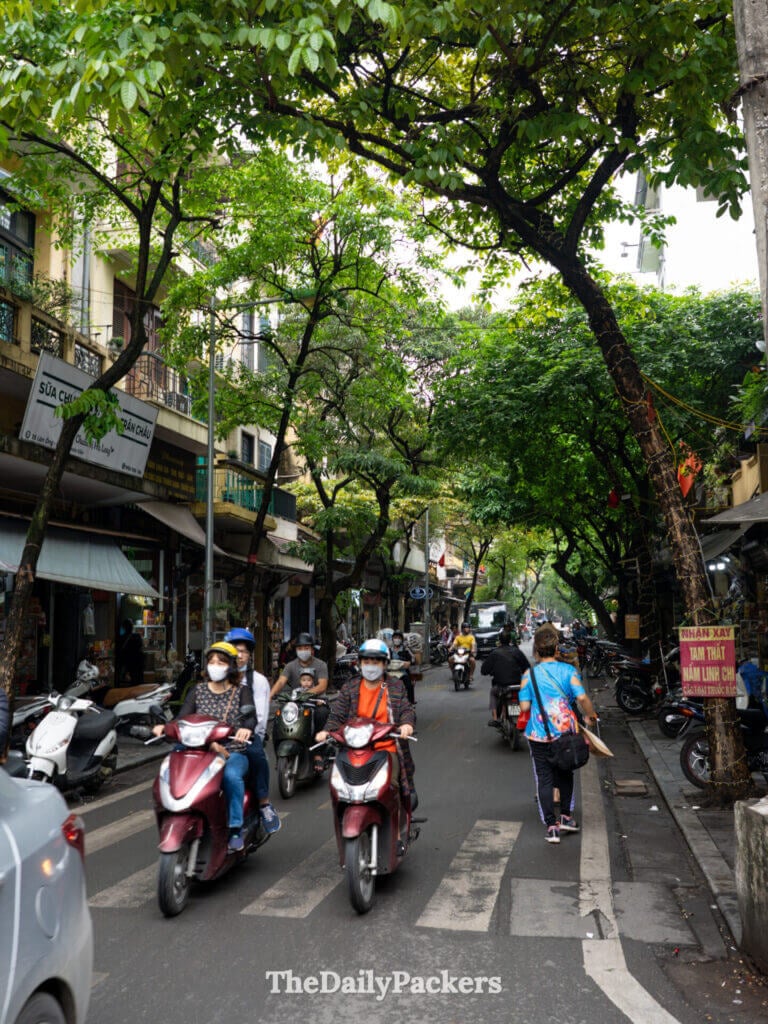
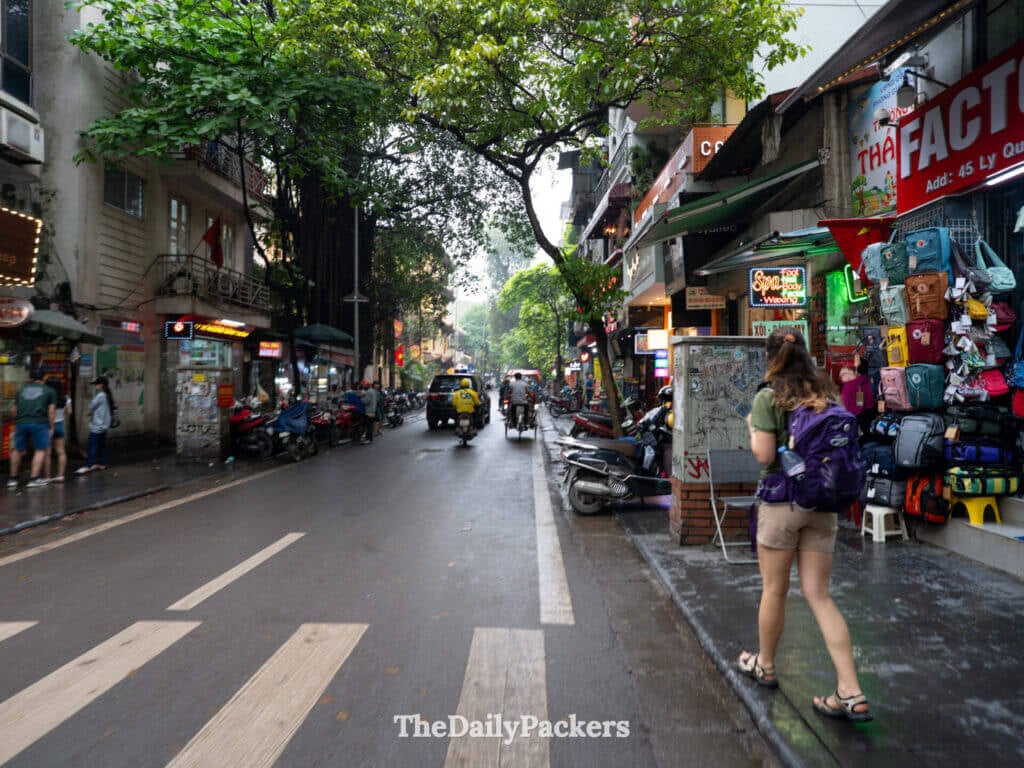
Stepping into the Old Quarter for the first time, our first reaction wasn’t culture shock; it was déjà vu. The maze of narrow streets, the constant hum of scooters, the way everyone just flows around each other without really stopping- it reminded us a lot of parts of China we’d visited before. If you’ve traveled in Asia already, you’ll probably feel the same familiar chaos. If this is your first time, give yourself a few minutes just standing at a corner to watch how it works before you dive in.
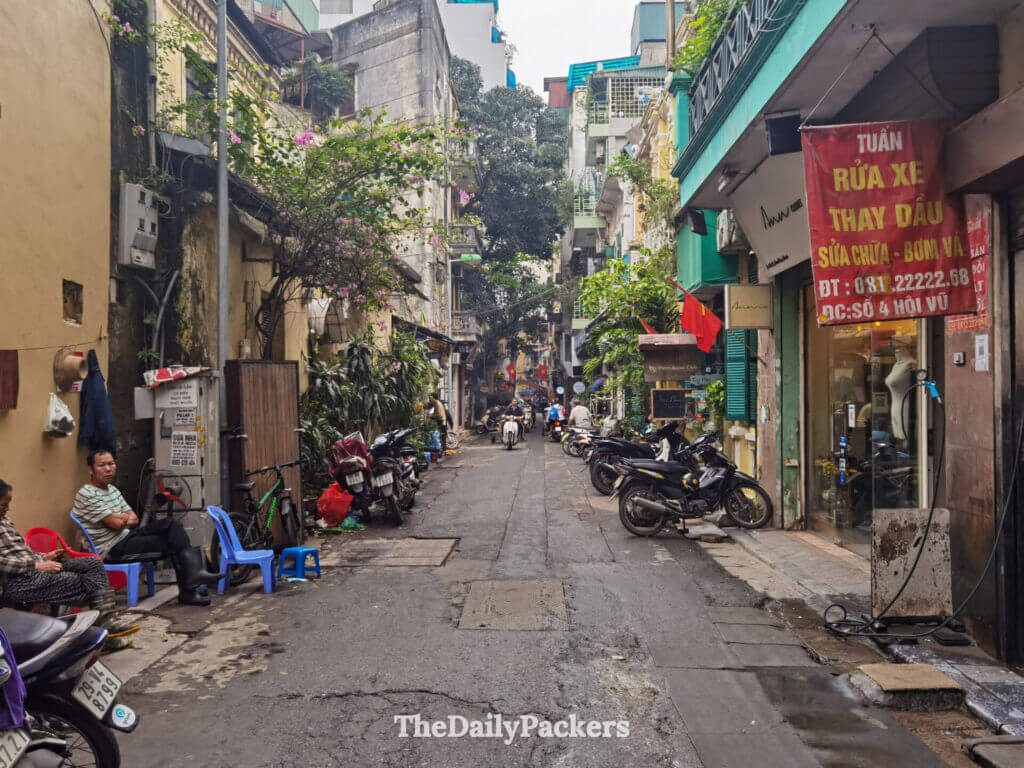
Crossing the street here is its own small rite of passage. There’s no waiting for a gap in traffic, because there won’t be one. You walk at a steady pace, the scooters flow around you, and after the first nerve-wracking crossing, you start doing it like a local without even thinking about it.
Beyond the traffic, the Old Quarter is really just 36 old streets, each one historically tied to a specific trade, all packed with shopfronts, street food stalls, tiny coffee shops, and the occasional temple tucked between buildings. It gets busy fast once the day gets going, so if you want it a bit calmer, early morning is your best window. Otherwise, just accept the energy for what it is; it’s part of the experience.
Tip: If you do not want to walk around or have to take a taxi, consider the City Sightseeing Motorbike Tour
Street Murals
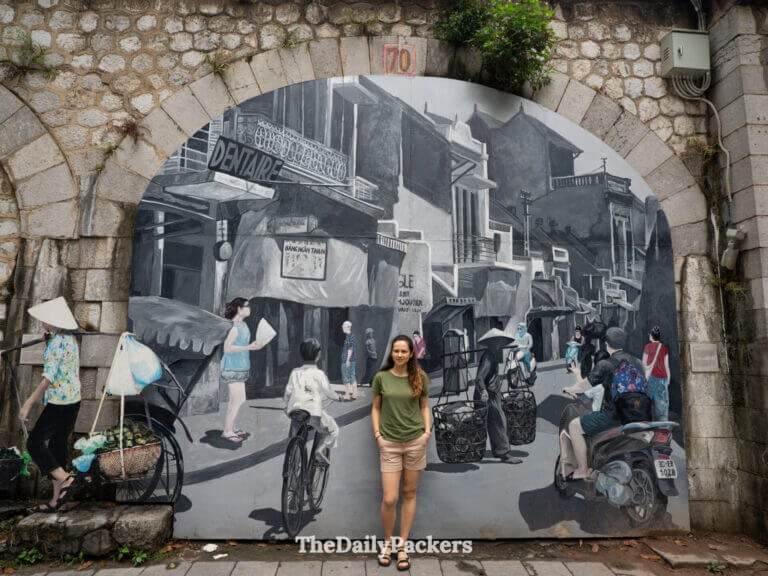
Located north of the Old Quarter, Phung Hung Street has been revived with beautiful mural paintings recalling Hanoi in the past. Opened to the public in early February 2018, it is now a favorite photo place and cultural space for city dwellers and travelers to Hanoi.

Manicure & Pedicure
After that, Tina wanted to do her nails. We stopped at Chic Nail, next to the Note coffee. It cost 170,000 Dong for a manicure. If you are in Hanoi, you should consider doing a manicure or pedicure at least once. Compared to our French price, it was so cheap.

On our last day in Hanoi, we tried another one for a manicure and pedicure this time at Aurora Nails & Spa Hanoi. This time, the salon was nicer, the staff spoke good English, and gave us lots of delicious tea. It also cost 650 000 dong, which was much more than the first time. But it was worth it.

Beer Street & Night Market
We actually walked through Beer Street twice, once in the afternoon and once after dark, and it’s genuinely a different place each time. During the day, it’s fairly sleepy: a few plastic stools out, a handful of vendors setting up, nothing much happening yet. Come back after sunset, though, and the whole street transforms. The stools fill up fast, cheap draft beer gets passed around, and the crowd is a real mix of locals, backpackers, and everyone in between, all spilling out onto the pavement.
The night market runs alongside it, weaving through the closed-off streets with stalls selling everything from clothes to souvenirs to street snacks. If you only have time for one visit, go at night; that’s when the street actually earns its name. But if your schedule allows both, seeing the contrast between the two is honestly part of the fun.
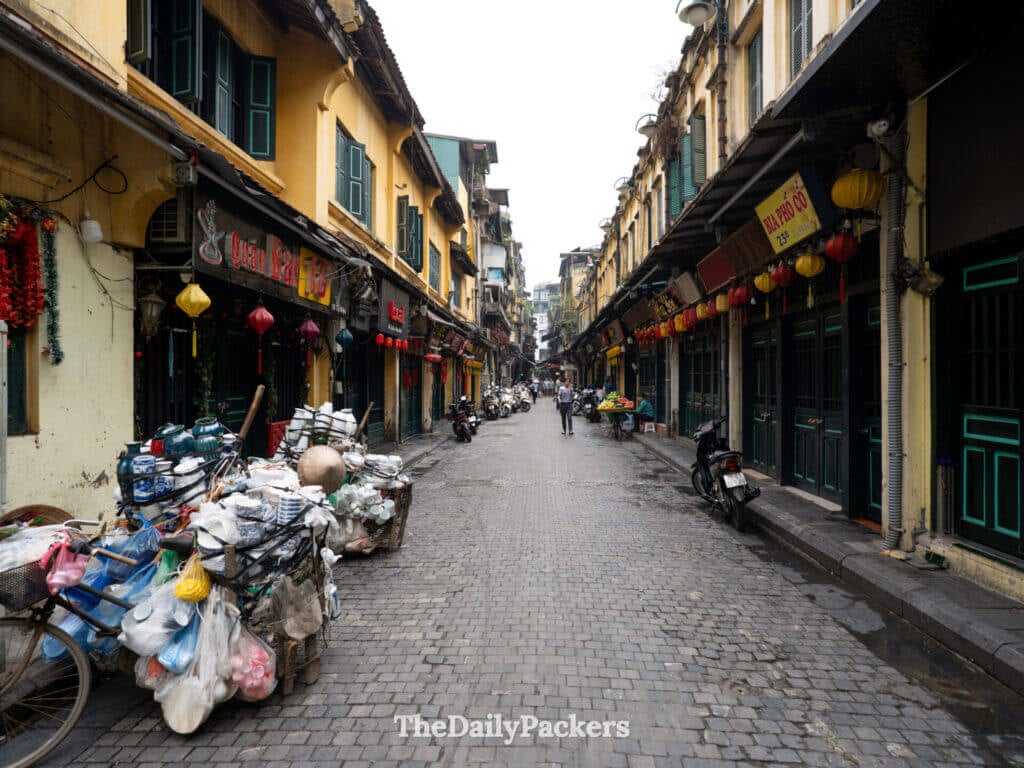
Buy some fruits from a local vendor
On the way, we bought dry mango from a little shop for 60,000 and bananas from a lady with a bike for 60,000.

Temples
Hanoi has temples tucked into nearly every corner, more than you could realistically visit in a single trip, so don’t stress about seeing them all. We actually set out to visit the Bach Ma Temple, said to be the oldest in the area, only to find it closed when we got there. Instead of backtracking, we just wandered into another one nearby that we stumbled across on the walk, no plan, no research, just curiosity.
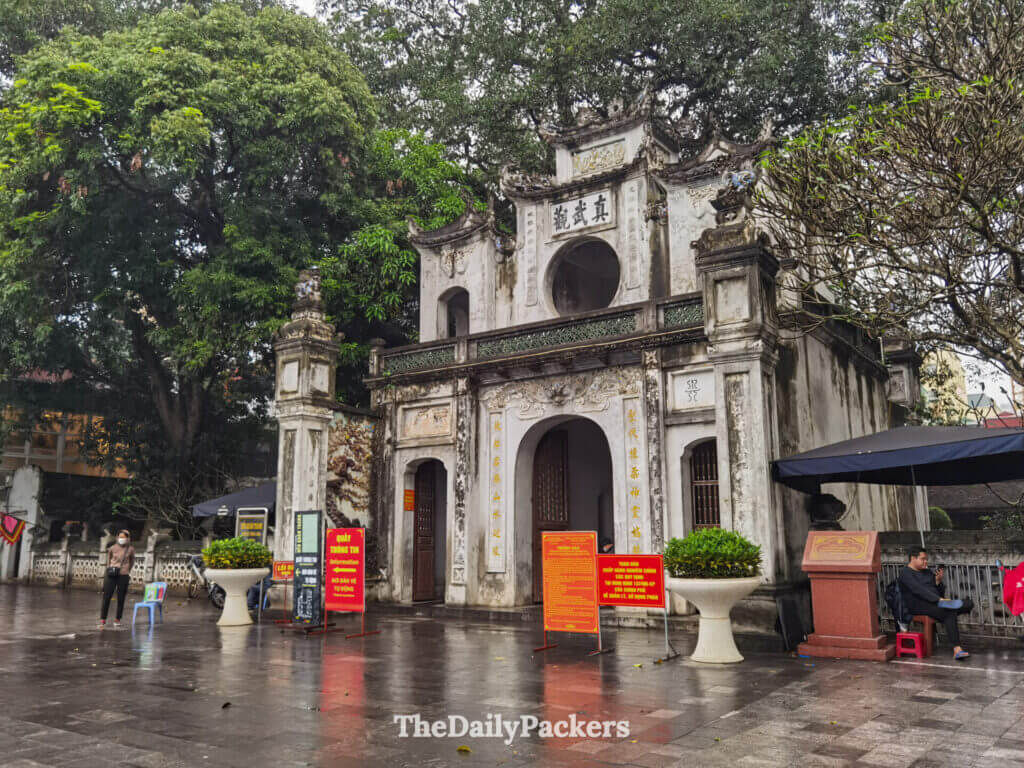
That ended up being one of our favorite moments in the Old Quarter. There was no queue, no crowd, just a quiet pocket of incense and old stone in the middle of a very loud city. If you’re walking around and a temple door happens to be open, we’d say go in. You don’t need to know the history going in, and honestly, half the charm is not knowing exactly what you’re going to find.

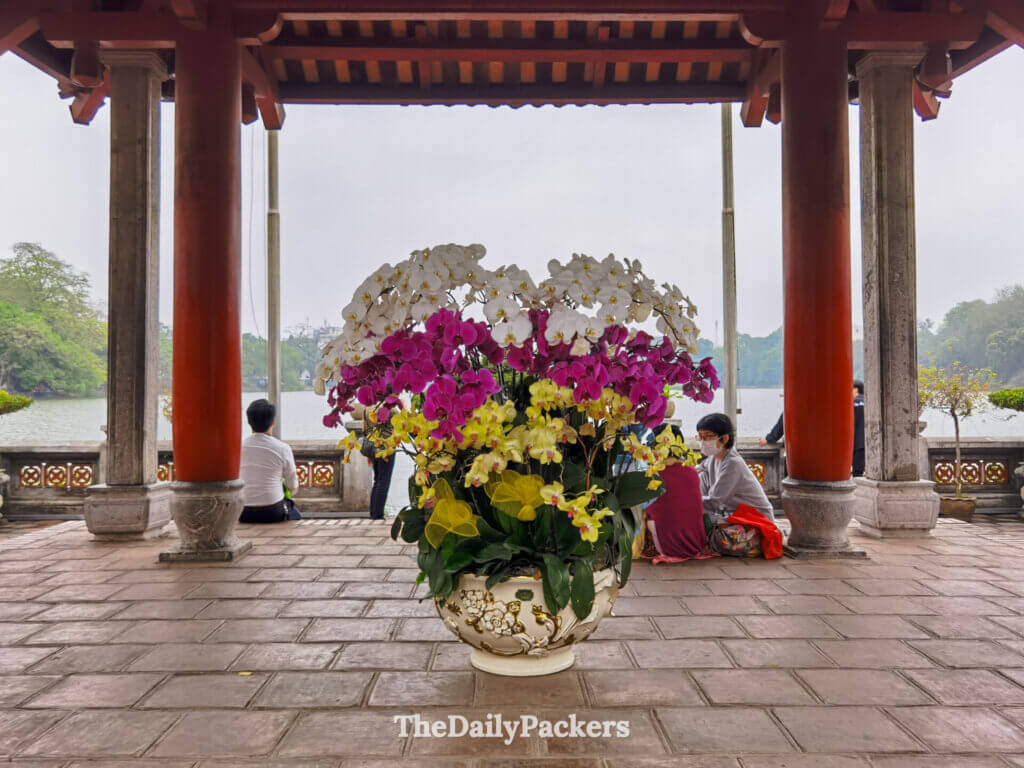
Hoàn Kiếm lake & Ngoc Son temple
Hoàn Kiếm Lake, or “Sword Lake,” is where a lot of Old Quarter life quietly circles back to. It’s not huge; you can walk the perimeter in well under an hour, but it’s the kind of spot you’ll pass multiple times a day without meaning to.
On the small island connected by a red wooden bridge sits Ngoc Son Temple, and for 60,000 VND (about 2.50€) for two, it’s an easy, worthwhile stop. We wandered in without much of a plan and ended up spending a peaceful half hour there, watching locals stop for a quick prayer on their way past, a nice contrast to the constant motion around the lake itself.
Thang Long Water Puppet Theatre
We almost treated this as a box to tick, and it turned into one of the best things we did in Hanoi. We bought our tickets earlier in the day, three seat tiers to choose from at 100,000, 150,000, and 200,000 VND, and went with the middle option so we’d be seated dead center. Arriving 15 minutes early turned out to be more than enough, though if you’re short on time, you can really walk in right before it starts.
The show itself runs 50 minutes and packs in 17 short performances, all staged on water, with puppeteers working from behind a bamboo screen you never actually see into. We lucked out with nobody sitting in front of us, which made the whole thing feel even more immersive. If you only have room for one “cultural” activity in Hanoi, we’d put this one at the top of the list.

Tip: Get the Water Puppet Show Tickets online
Train Street
From there we went to the Train Street, which was closed. All the entrances were locked down by the police. There is a way to enter, though, which is to go with a local bar owner who will smuggle you in. But walking freely at night is not permitted anymore. As we wanted to stay at the beginning of the street, we gave it up this time and will be back on our last day in Hanoi to try it out.
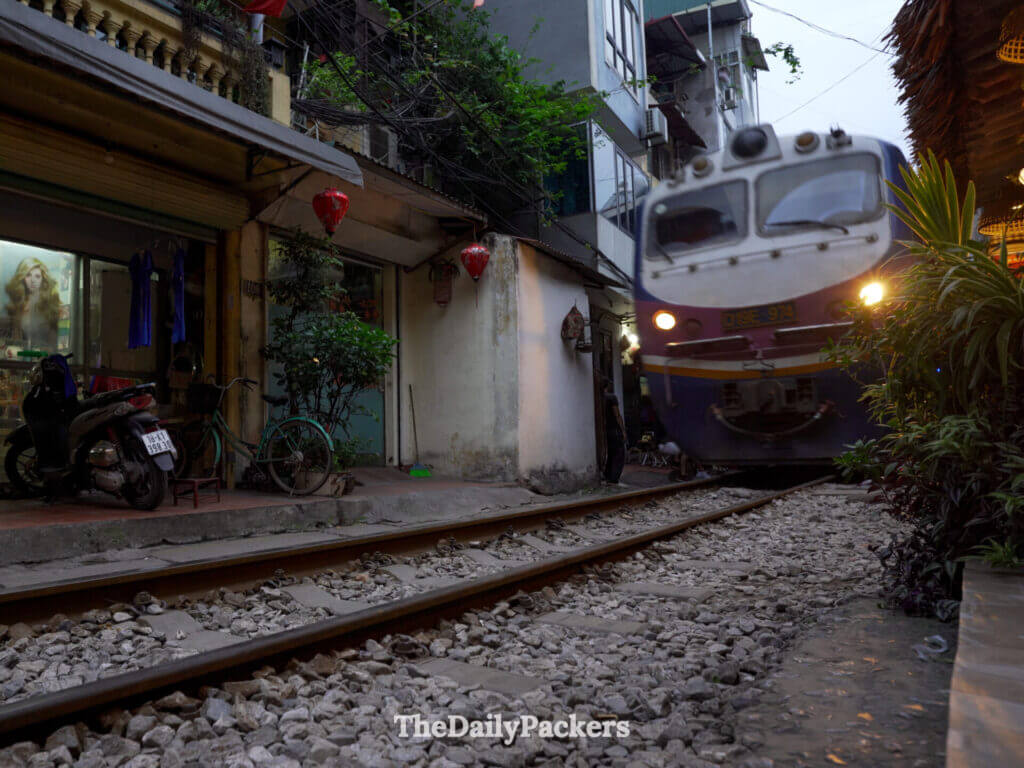
On our last day, we walked back to the Train Street. There, we called the owner of Railway Coffee, who picked us up and brought us in. Once in the coffee shop, we met a family of 3 living in Singapore, made up of an Australian father, a German mother, and their little girl.
As it was Sunday, there were trains during the afternoon. As we waited a good hour for the train, another couple from the Seychelles living in Dubai arrived. We really had a good time talking with them. And we got to see 2 trains passing. There we had 2 beers and a mango juice for 110 000

Tip: Book the Guided Food Tour with Train Street to be sure to enter the street
Temple of Literature
The Temple of Literature is a temple dedicated to Confucius and hosts the Imperial Academy, Vietnam’s first national university. While walking through it we discovered a few exhibits and 5 courtyards.
It was built in 1070 and is magnificent. The entrance of the temple was 60 000 for two. An interesting fact is that the temple is featured on the back of the 100,000 Vietnamese đồng banknote

Imperial Citadel of Thang Long
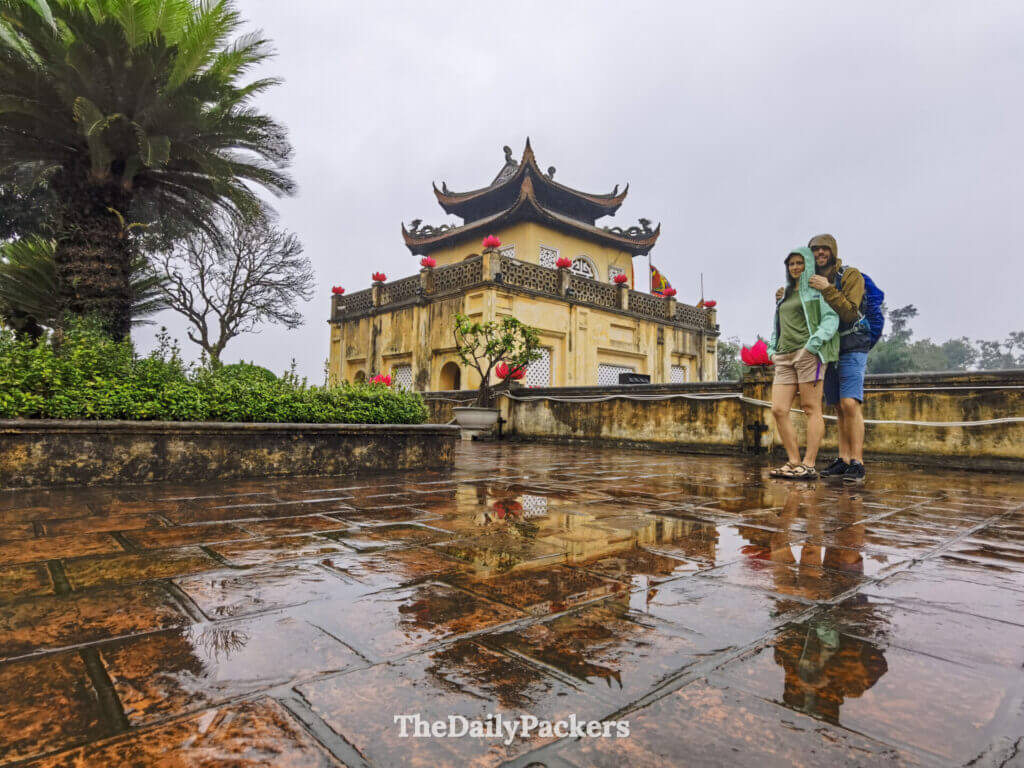
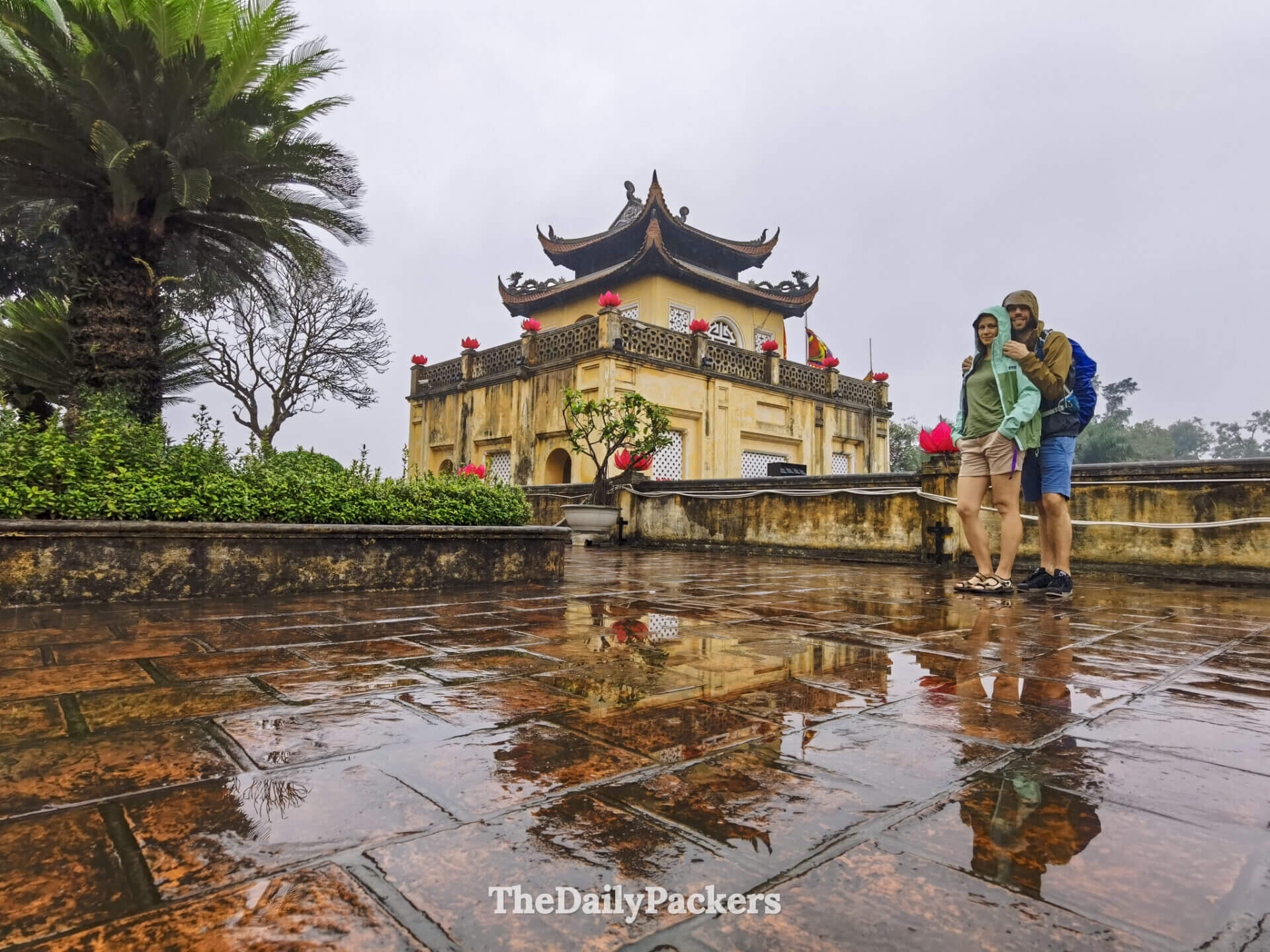
We then visited the Imperial Citadel of Thang Long. A huge historical and UNESCO World Heritage site. It has a vast history from imperial citadel to military center during the latest war. It also cost 60,000 VND and features tons of exhibits and various things to see and read.
Tran Quoc Pagoda
It sits on a small island on West Lake, connected to the shore by a short causeway, and the setting does most of the work: red rooftops, a multi-tiered tower, water on both sides, and the kind of quiet that feels rare after the Old Quarter.
It’s also, by a wide margin, the oldest Buddhist temple in Hanoi, dating back over 1,500 years, though you don’t need to know that to appreciate standing there. If you’re already out near West Lake visiting Quán Thánh Temple or the Ho Chi Minh Mausoleum area, it’s an easy add to your route, even just for a quick walk along the causeway and a few photos.

Ho Chi Minh Mausoleum
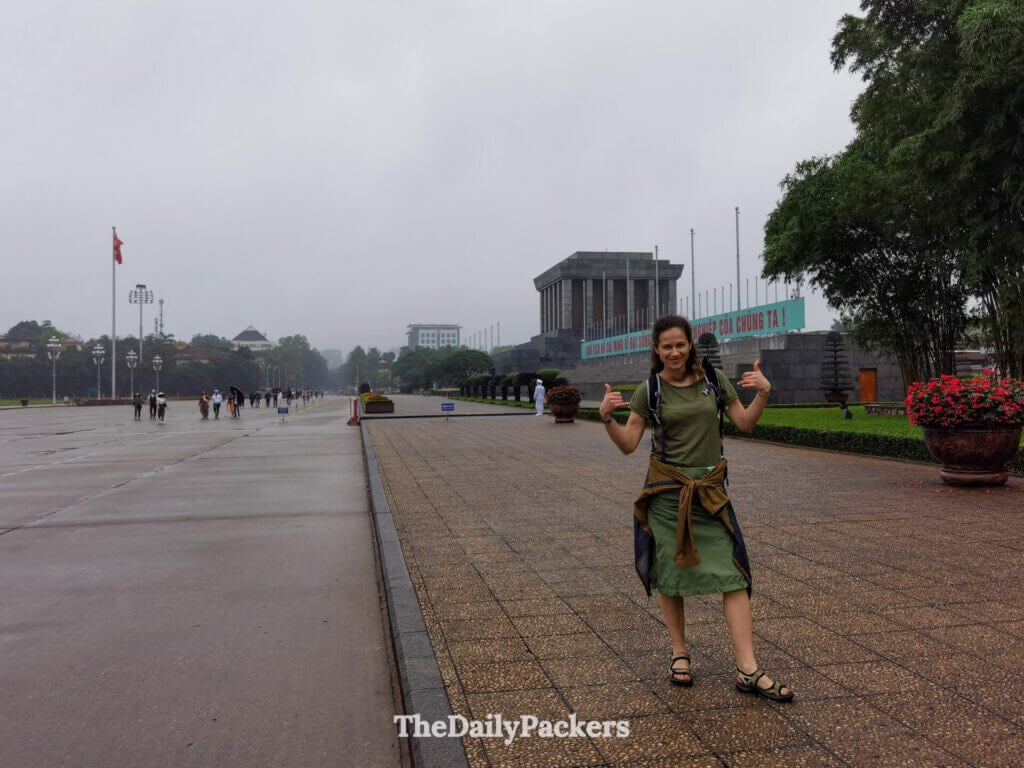
Getting into the main square here comes with a dress code: no bare legs, so when Tina realized she’d worn shorts, we improvised and tied a jacket around her waist to cover up. It worked, and it’s a good reminder to plan ahead if you’re heading here: cover your knees, and you’ll avoid the same last-minute scramble.
Once inside, the scale of Ba Dinh Square is what stays with you, the mausoleum itself, the National Assembly building, the One Pillar Pagoda, and the Ho Chi Minh Museum all within view of each other. We didn’t go into the museum this time, but even just walking the square and taking in the surrounding architecture felt like enough to understand the weight this place carries in Vietnam’s history.
More Things to Do in Hanoi (and Where to Go Next)
Three days covers the highlights, but if you have extra time in Hanoi or want to wander further off the usual path, a few more spots are worth adding: Long Bien Bridge, a rusted French-built iron bridge over the Red River that’s especially striking at sunset, the Vietnam National Museum of History, a good rainy-day option for context on everything else you’re seeing, the Opera House, worth a look even without catching a show, the Vietnamese Women’s Museum, and the Hoa Lo Prison Relic (the “Hanoi Hilton”), a heavier but important stop if you want to understand more of the country’s history.
If Hanoi has you wanting more of Vietnam, we didn’t stop there either. Our next stop was SaPa for 4 days, then Ha Long Bay for a 3-day luxury cruise, before heading to Tam Coc for 3 days (Ninh Binh), around 10 days beyond Hanoi in total.
If your schedule is tighter, all three are doable as day trips or short add-ons: this Ninh Binh, Trang An, Bai Dinh, and Mua Cave tour covers more ground in a single day than we did in 3, Ha Long Bay works as a 1-day cruise with swimming and kayaking or, better, a 2-day cruise with an overnight on the water, and you can combine both regions in one 3-day Ninh Binh, Ha Long, & Lan Ha Bay cruise. For SaPa, this 2-Day Sa Pa Ethnic Homestay Tour with Trekking is a solid pick if you’d rather not organize transport and guides yourself.
3-day Hanoi Itinerary
Day 1:
- St Joseph Cathedral
- Old Quarter
- The Note Coffee
- Street Mural
- Beer Street
- Temples
- Lunch – Hoang’s
- Hoàn Kiếm lake & Ngoc son temple
- Café Giang or Hidden Gem Coffee
- Thang Long Water Puppet Theatre
- Dinner – Tung’s Kitchen
- Train Street
Day 2:
- Temple of Literature
- Cong café
- Imperial Citadel of Thang Long
- Veggies Castle
- Tran Quoc Pagoda
- Quán Thành Temple
- Ho Chi Minh Mausoleum
- Loading T coffee
- 4P’s Pizza Bao Khanh
Day 3:
- Long Bien Bridge
- Opera House
- Lunch at the Hanoi Social Club
- Manicure & Pedicure
- Train Street
- Dinner at Pasteur Street Brewing Co

What It Costs: Budgeting for Your Trip
To give you a rough idea, here’s what our 3 nights in Hanoi cost us for two people, all in.
Our Airbnb in the Old Quarter ran us about 140€ (we’ve since switched to booking hotels through Booking.com instead, but that’s a story for another day). So, you can expect to pay from 50€ to 130€ per night.
Food was easily the cheapest part of the trip: eating out for every meal, from casual lunches to a proper pizza dinner, plus coffees and street snacks, came to around 78€ for the two of us over three days.
Add in the temples, the Water Puppet Show, and a manicure for Tina, and activities added roughly 23€, while getting around by Grab cost us another 21€ or so.
Altogether, we spent close to 265€ for three days in Hanoi as a couple, which works out to around 44€ per person, per day.
Keep in mind these are our 2023 numbers, and a couple of entrance fees (the Imperial Citadel especially) have gone up noticeably since then, so treat this as a ballpark rather than gospel. We’ll dig into a full, up-to-date cost breakdown in a separate budget article.
About the authors
We are Alex and Tina, a French-Serbian couple who met in China back in 2014. We spent three incredible years there before making France our home. Our shared passion for travel has been the heartbeat of our relationship for over 12 years, taking us across 44 countries and counting.
We launched TheDailyPackers in 2019 as a way to document our adventures. In 2026, we reached a major milestone by officially turning our blog into our full-time job. While we are still growing toward financial independence through this platform, every article we write is fueled by our mission to make your voyages easier through in-depth guides, honest advice, and the lessons we’ve learned from our own mistakes.
Our journey has not been without its storms. In 2023, our world changed forever when our first son, Poppy, was stillborn on November 25th. It was, and remains, the hardest chapter of our lives. In 2025, we were blessed with our second little boy, Milo. He has since joined our traveling tribe, and you’ll be seeing him—and the reality of traveling with a little one-on the blog more and more.
We hope to inspire you to explore the world with curiosity and resilience. Thank you for being part of our story.
You may also like those related posts
Where to Eat in Hanoi: Best Coffee Shops & Restaurants
Tam Coc & Ninh Binh Travel Guide: Best Things to Do
Hanoi to SaPa: Luxury Van Transfer in 6h
Cat Cat Village: SaPa’s Most Charming Traditional Village
Hanoi Train Street: How to Visit the Famous Railway Safely
Hoi An Tailor Guide: Our Experience at Blue Eye
SaPa Trekking: The Best Rice Terraces Hiking Guide in 2026
Van Long Nature Reserve: Ninh Binh’s Quietest Boat Ride
Pssst, did you know that…
If you purchase something through our links, we earn a small fee. However, you still pay the same. Win-win! And one day we may get to be full-time travel bloggers =)
Find Hotels with Booking.com
Do Yoga with KVY
Buy us a Coffee
Rent a car with DiscoverCars
Find Attractions with GetYourGuide
Find Flights with Expedia
Buy an eSIM with Airalo
Get insured with World Nomads
Get ready with Amazon.com