
Why You’ll Love Visiting Faro
Faro is the kind of place that surprises you, but maybe not in the way you’d expect. As the capital of the Algarve, it’s often just the airport people fly into before rushing off to the beaches. But if you take a closer look at the wider region, you’ll find a whole string of towns worth exploring, each with its own personality.
We arrived in Faro after driving over from Lagos, and honestly, we weren’t sure what to expect from this side of the Algarve. Our first stop on the way was Albufeira, a town we hadn’t really researched much beforehand. We figured it would be just another touristy beach resort. We were wrong. It turned out to be one of the prettiest towns we saw along the whole coast, and that’s saying something after weeks of driving around Portugal.
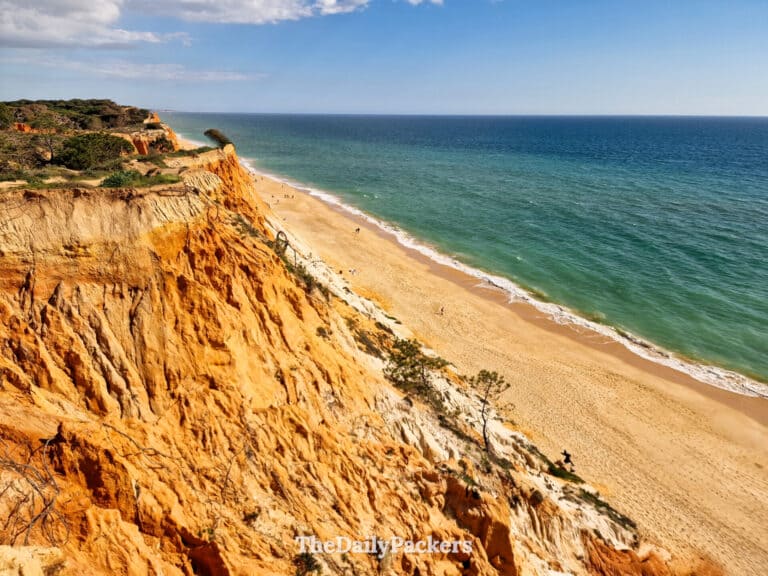
From there, you’ve got the red cliffs of Praia da Falésia, the quiet charm of Tavira, the waterfront in Olhão, and Faro’s own Old Town rounding things off. It’s less about one single “must-see” attraction and more about the rhythm of hopping between towns, each one a quick stop but worth the detour.
If you’re already road-tripping through Europe or just landing for a beach holiday, Faro makes a genuinely practical base. It’s central, it’s well connected by highway, and it puts you within easy reach of pretty much everything the Algarve has to offer.
Faro: Essential Tips & Info at a Glance
Before you map out your own Algarve road trip, here are a few things we wish we’d known ahead of time.
- You’ll need a car. This region really isn’t set up for wandering without one. We rented ours right at the airport, and it made all the difference. Public transport does exist, but you’ll be limited in how many towns you can actually reach in a day.
- The roads are easy. Good news if renting feels intimidating: the Algarve has a solid highway network, and it felt free to drive on during our trip. Getting between towns is straightforward.
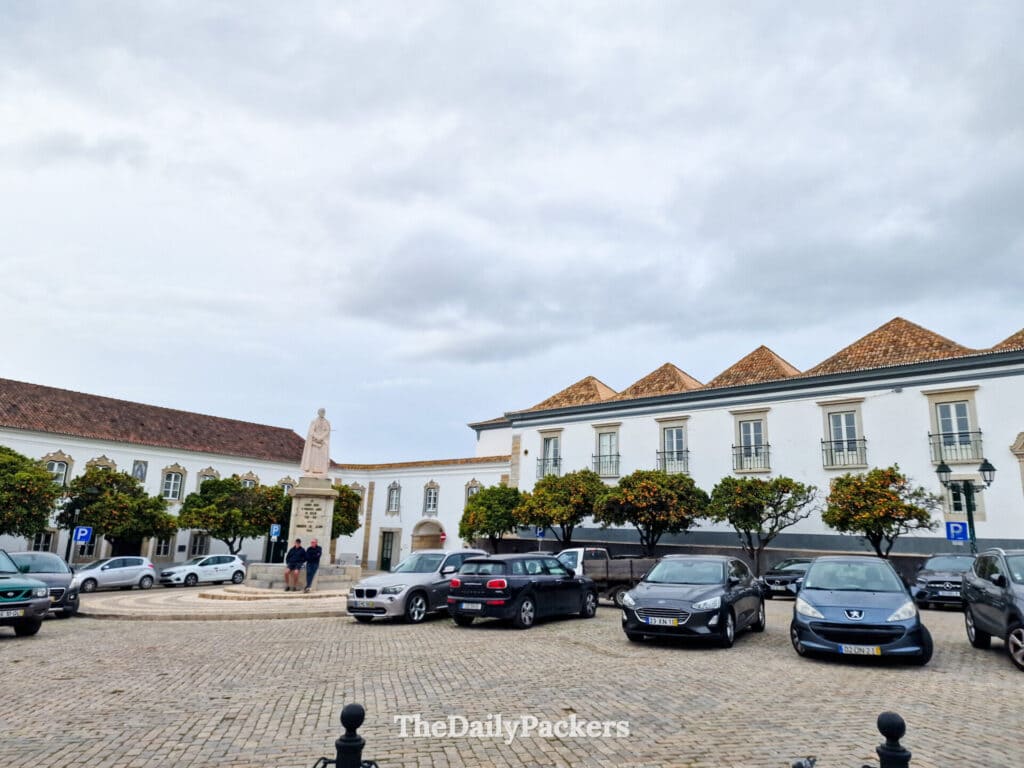
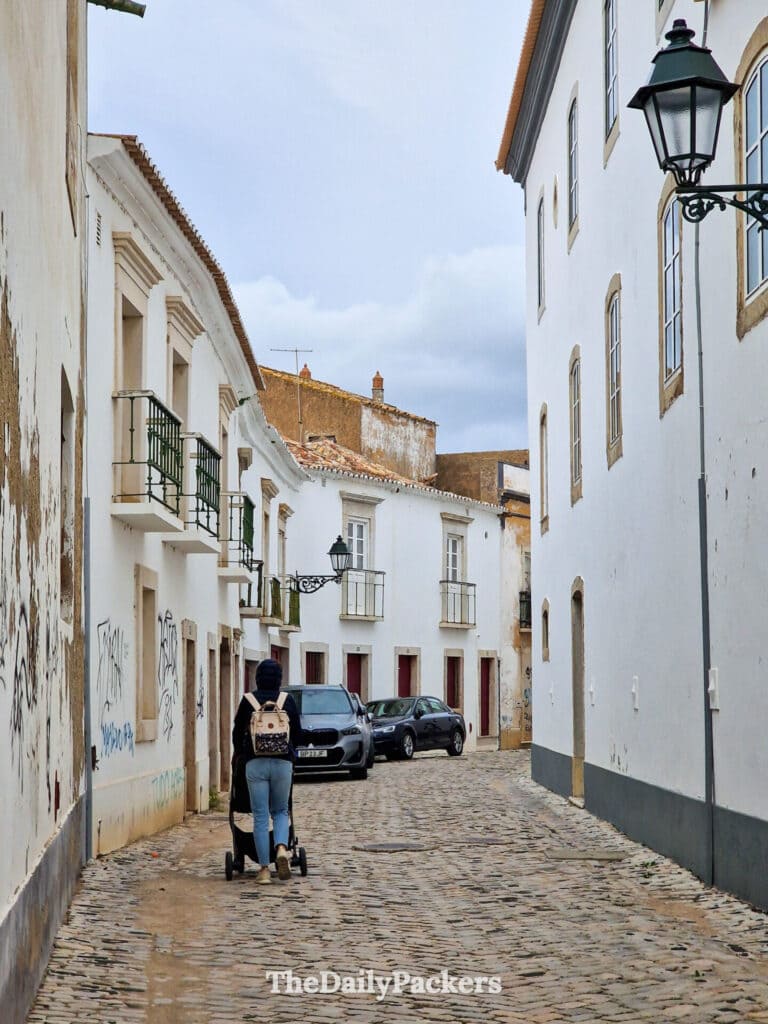
- Faro Old Town isn’t where the magic happens. We’ll be honest with you: we didn’t fall in love with it. It’s cute in parts, but cars are everywhere, and it doesn’t give you that traffic-free, lose-yourself-in-the-alleys feeling you get in other Portuguese old towns.
- Base yourself outside the city center. Because of the car situation above, we’d actually recommend finding accommodation just outside Faro’s center rather than right in it. It makes exploring the wider region so much easier.
- Wind can be an issue. We visited Faro Old Town on a particularly windy day, which didn’t help our overall impression. Check the forecast and pick a calmer day if you can.
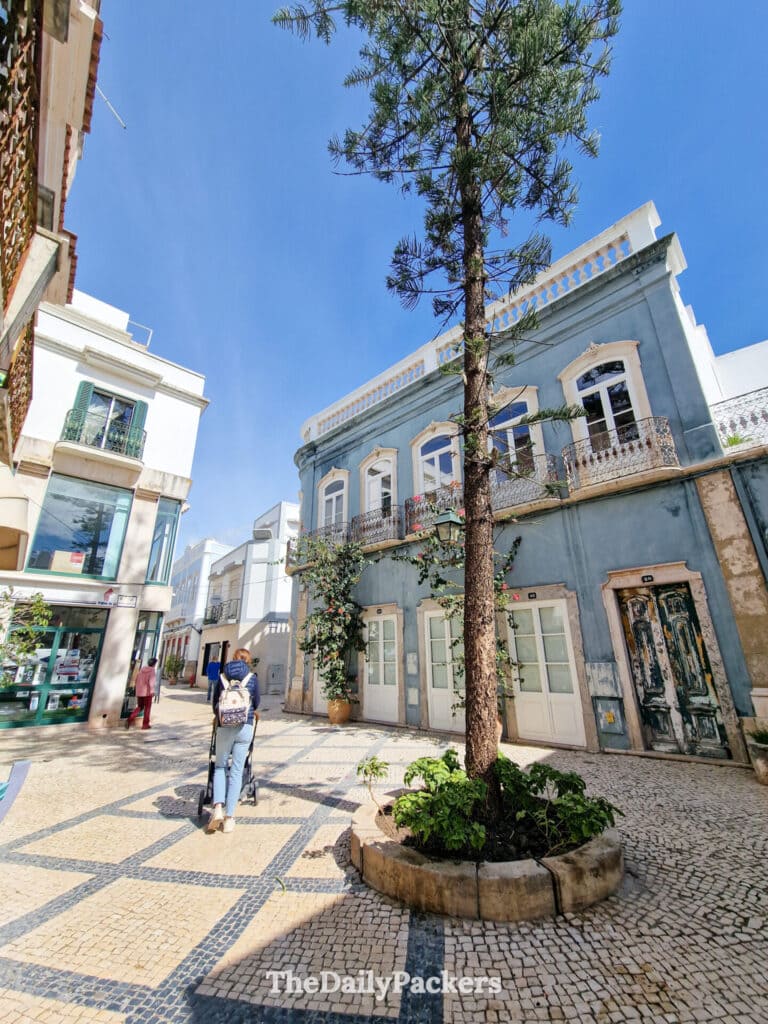
- Stroller-friendly: Albufeira’s Old Town worked surprisingly well with a stroller, even with its two levels (there are escalators on one side that helped a lot). Faro and the smaller towns are more of a mixed bag, so a baby carrier is a good backup to have with you.
- If you only have time for one Algarve town, make it Lagos. We say this with love for Faro, but out of everywhere we visited in the south of Portugal, Lagos was our favorite by far.

Best Things to Do in Faro
Faro Old Town
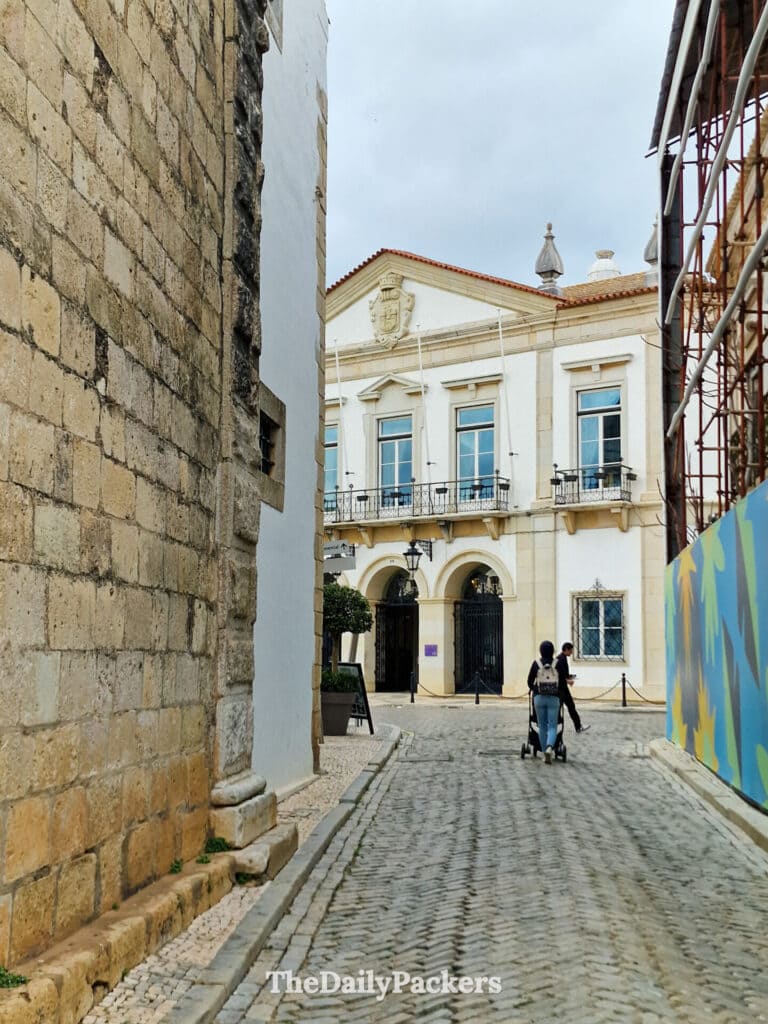
Faro’s Old Town, the Cidade Velha, is enclosed by old walls and sits right by the marina. There’s genuinely something nice about it: narrow streets, orange trees, storks nesting on the rooftops if you look up at the right moment, and a handful of cafes tucked into quiet corners where you can sit and watch the world go by.
That said, we have to be honest with you: this wasn’t our favorite stop, and it comes down to one main thing. Cars seem to be everywhere, even inside the old walls, which takes away from that peaceful, medieval feel you get in places like Óbidos or Sintra. It was also extremely windy the day we visited, which didn’t do it any favors. Without the traffic, we think this would genuinely be one of the loveliest old towns in the Algarve. As it is, we’d call it a worthwhile stop, just don’t expect to lose yourself in it for hours the way you might elsewhere.
Faro Cathedral
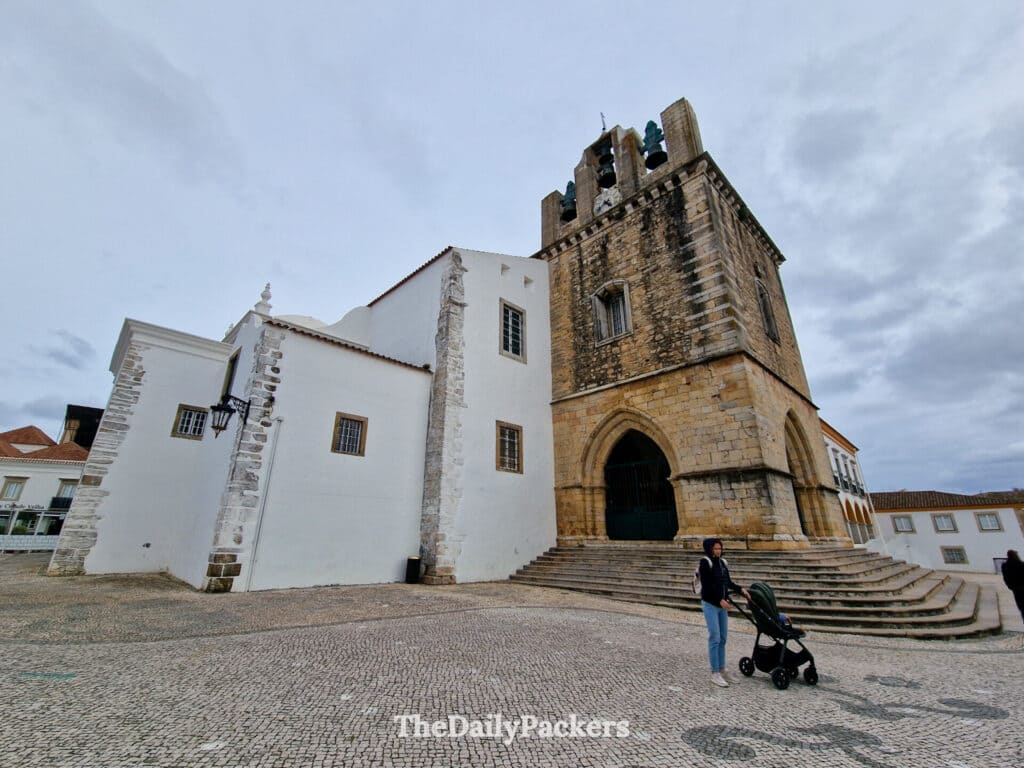
Right in the heart of the Old Town, the Sé de Faro is hard to miss. The cathedral mixes several architectural styles from different centuries, and if you climb the bell tower, you get a good view over the rooftops toward the Ria Formosa lagoon. It’s a nice way to spend twenty or thirty minutes while you’re already in the area.
Arco da Vila
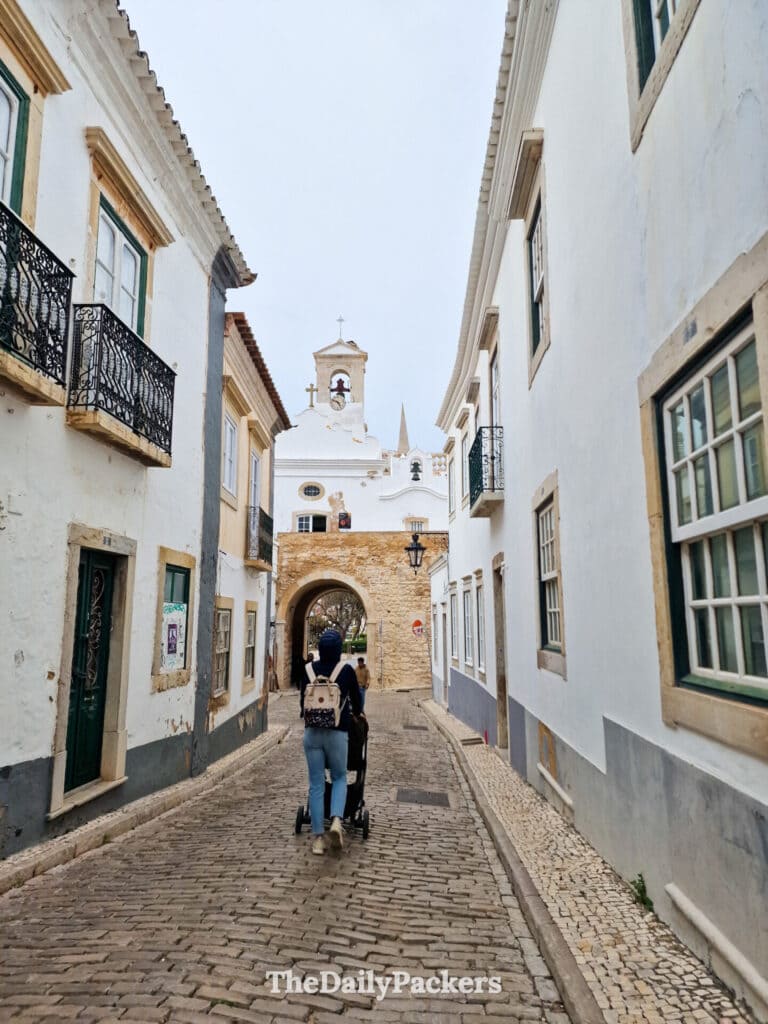
This elegant arched gateway marks the main entrance into the Old Town and is one of the more photogenic spots in Faro. Built in a neoclassical style on top of an old Moorish gate, it’s a quick but worthwhile stop as you make your way in or out of the walled center.
Albufeira
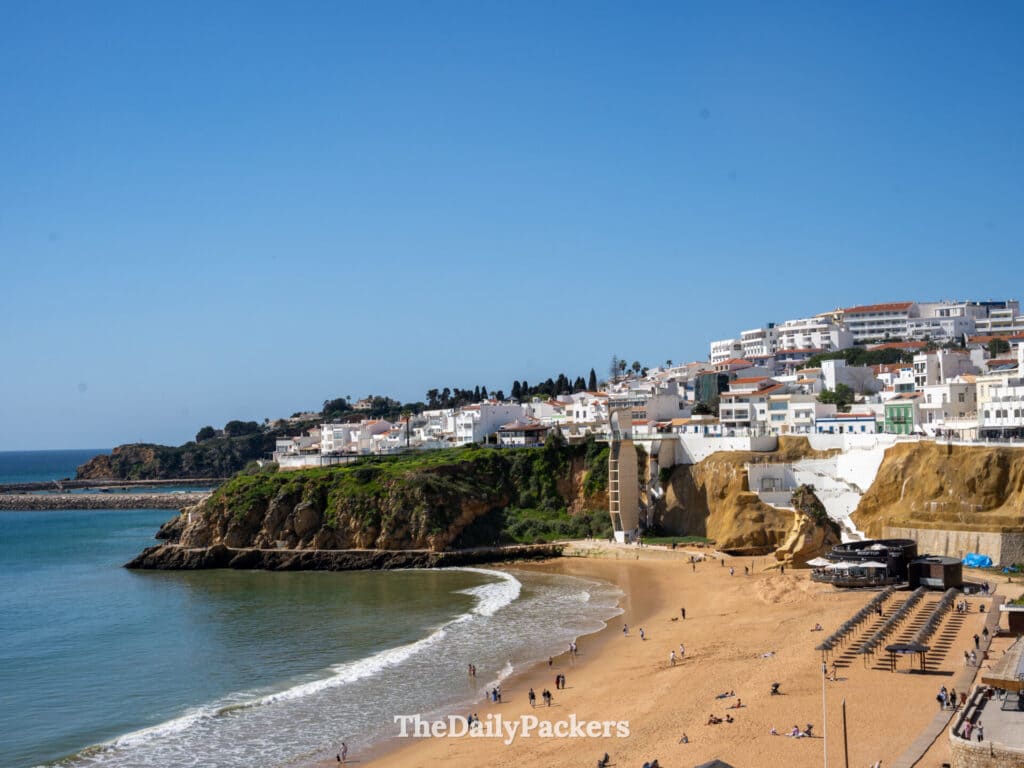
Albufeira is an easy stop to underestimate, and honestly, we almost did. We hadn’t researched it much beforehand and figured it would just be another resort town. We were wrong: it turned out to be one of the prettiest towns we saw along the entire Algarve coast.
You’ll want to spend some time just strolling without any real plan, wandering the cute little streets of the Old Town and hopping between viewpoints over the beach. One thing worth knowing: the town sits on two levels, one down by the beach and one up on the hills behind it, so you’ll be going up and down a fair bit. There are escalators on one side of town, which make it manageable even with a stroller.
Praia da Falésia
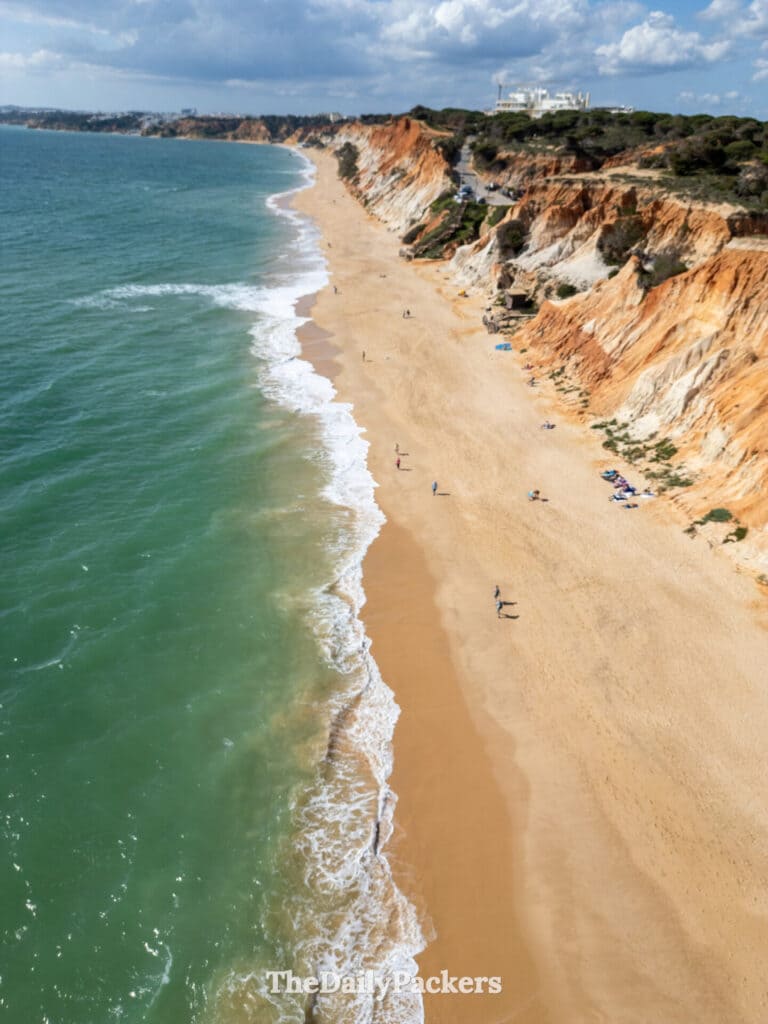
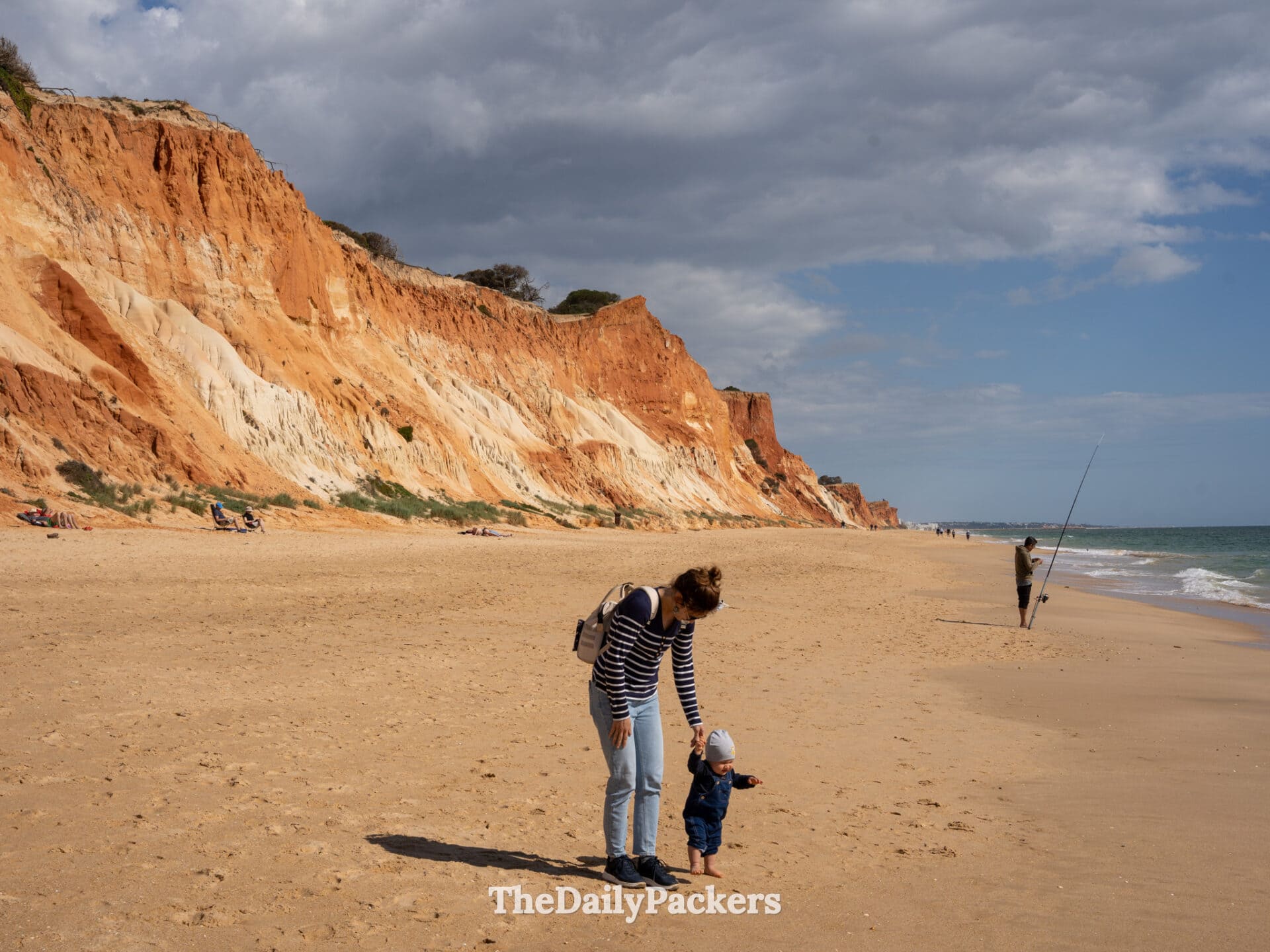
This is one of the longest beaches in the Algarve, and it can take a while to figure out exactly where to stop to see the famous red cliffs properly. Parking spots are limited, so it’s worth being patient, we got lucky finding one, and from there it’s a long, enjoyable walk along the beach.
The red color of the cliffs against the sand and sea is genuinely unique, and it’s an essential stop in the Algarve. If you want to see even more of this kind of coastline from the water, the Benagil Cave, Marinha & More Tour is a great way to explore the sea caves further along the coast.
Tavira
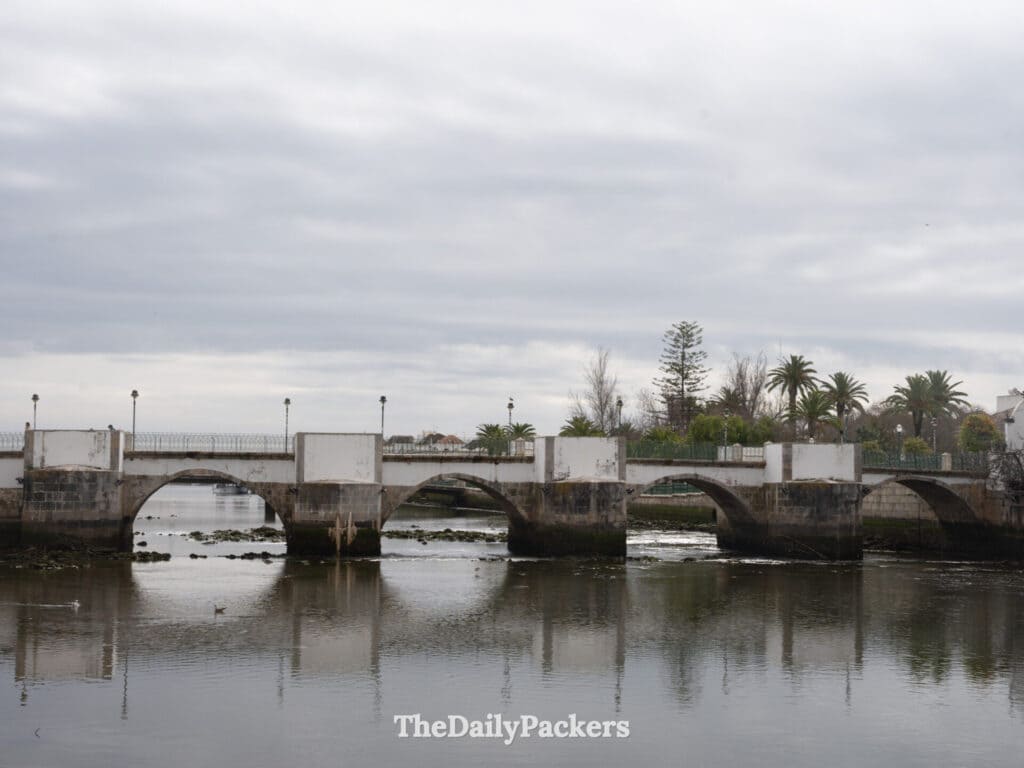
Tavira is the quickest stop on a typical road trip around the region, but don’t let that fool you into skipping it. It’s a genuinely charming little town, built along the Gilão river, with a completely different feel from the beach-town energy of Albufeira.
The Roman bridge is the town’s most photographed spot, a low stone bridge crossing the river right in the center, and it’s worth a slow walk across rather than a quick photo and go. From there, head up to Tavira’s small castle. It’s not a grand fortress, but it has a hidden garden inside its walls that makes for a peaceful little break, and climbing up onto the remaining sections of wall gives you a nice view over the rooftops and the river below. The town itself is easy to wander on foot, with plenty of quiet streets lined with traditional Portuguese tilework if you want to extend your visit beyond an hour or so.
Olhão
After parking in the underground garage, the walk along Olhão’s waterfront promenade is one of the highlights of the town. Make sure to stop by the Mercados, twin market buildings that are among the most striking architecture around.
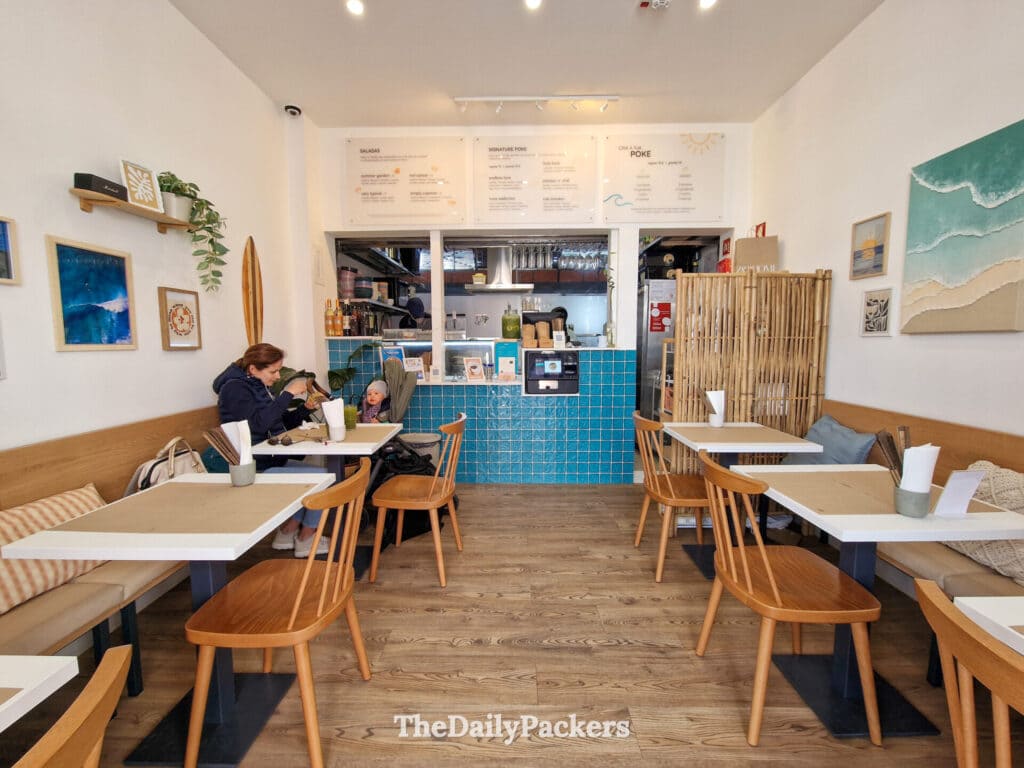
We ended up having lunch at POKE MARKET, and it was delicious and so fresh, a great pick if you’re after something quick and healthy. If you want something a bit more refined, Cestaria – Bistro de Artesão is a great second choice. The Old Town itself is cute and perfect for a digestive walk after lunch, a quick stop, but a totally worthwhile one.
If you have extra time, the Ria Formosa Faro Islands Boat Tour is a great way to see the barrier islands and lagoon system up close from the water.
More Excursion Destinations Around Faro
Of course, that’s not all. The Algarve has much more to explore. Other places you can easily reach from Faro include Lagos, the Seven Hanging Valleys trail, and plenty more. You can find more inspiration and useful tips in our comprehensive travel guide about the Algarve.
The Perfect Itinerary: How to Spend Your Days
If you want to do it on your own, here’s the plan we’d recommend for covering Faro and its surrounding towns over two days:
Day 1: Albufeira & the Red Cliffs
- Morning: Wander Albufeira’s Old Town without any fixed plan, hopping between viewpoints and taking in the beach below.
- Lunch: Grab a bite at Restaurante Mi Sombrero before heading out of town.
- Afternoon: Drive to Praia da Falésia and spend a few hours walking along the beach, taking in the red cliffs.
Day 2: Tavira, Olhão & Faro
- Morning: Start in Tavira, crossing the Roman bridge and exploring the castle and its hidden garden.
- Midday: Drive to Olhão and walk the waterfront promenade, stopping by the Mercados.
- Lunch: Eat at POKE MARKET, or Cestaria – Bistro de Artesão for something a bit more refined.
- Afternoon: Head into Faro’s Old Town to see the Cathedral and Arco da Vila, then wander the walled center at your own pace.
If the weather turns, as it did for us, don’t hesitate to head back to your accommodation for a break in the late afternoon and return to Faro Old Town once things calm down a bit.
The Best Time to Visit: Weather & Local Events
Faro and the Algarve enjoy one of the mildest climates in Portugal, which is part of why the region is such a popular escape almost year-round.
Summer, from June to August, is peak season. The weather is reliably hot and sunny, perfect for beach days at Praia da Falésia or boat trips around the Ria Formosa, but you’ll be sharing the coastline with a lot of other visitors, and prices for accommodation climb accordingly.
If you want a better balance, aim for spring (May to June) or early autumn (September to October). The weather is still warm enough for the beach and for wandering around towns like Tavira and Olhão, but the crowds thin out considerably, and you’ll find better rates on hotels.
One thing worth factoring in regardless of when you go: the wind. We visited Faro Old Town on a windy day, and it genuinely affected how much we enjoyed the visit. Check the forecast before you plan your Old Town walk, and if it looks blustery, consider swapping it for an indoor stop or saving it for a calmer day.

How to Get to Faro
Faro has its own international airport, Faro Airport (FAO), which makes it the most straightforward gateway into the region if you’re flying in directly. It’s well connected to plenty of European cities, especially during the warmer months.
If you’re road-tripping around Portugal like we were, you’ll more likely be arriving by car rather than by plane. In that case, Lisbon or Porto are the main gateways into the country, and from either city, it’s a comfortable drive down to the Algarve on well-maintained highways.
Whichever way you arrive, we’d strongly recommend renting a car, ideally at the airport you land in. The Algarve region is easy to drive, with a solid highway network that seemed to be free of tolls during our trip, and having your own wheels is really the only way to comfortably cover Albufeira, Praia da Falésia, Tavira, and Olhão in a couple of days.

Getting Around the City Like a Local
Here’s the honest truth about getting around Faro and the wider Algarve: you really need a car. This isn’t a region built around easy public transport between towns, and without your own vehicle, you’ll end up limiting yourself to whatever’s reachable by bus or train, which cuts out a lot of what makes this part of Portugal worth visiting.
Public transportation does exist between the main towns, and it’s a workable option if you’re only planning to stick to Faro itself or make a single day trip. But if you want the freedom to string together a day like Albufeira in the morning and Praia da Falésia in the afternoon, or Tavira, Olhão, and Faro all in one go, a car is really the only practical way to do it.
Once you’re actually in the towns themselves, walking is the way to go. Albufeira, Tavira, Olhão, and Faro’s Old Town are all compact enough to explore on foot, and most have parking (including underground garages, like the one we used in Olhão) right at the edge of the historic centers, so you can park once and wander from there.

We recommend to rent a car through Discover Cars with free cancellation. Book your rental car here.
Where to Stay
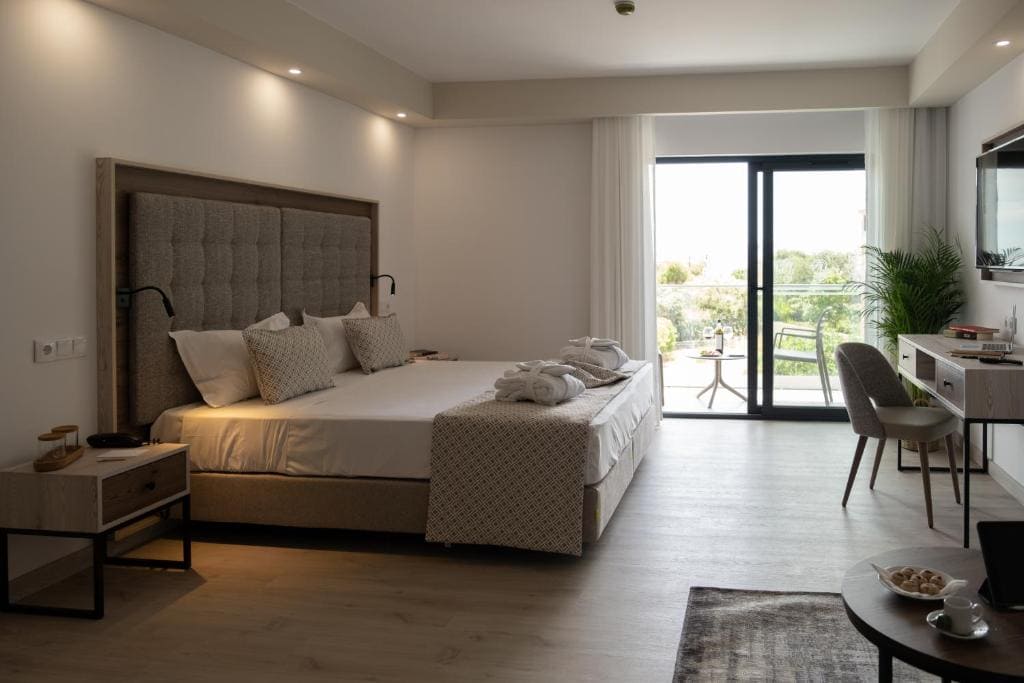
Given that you’ll really want a car to explore this region properly, we’d recommend not basing yourself right in Faro’s city center. Between the traffic in the Old Town and the fact that most of the best spots (Albufeira, Praia da Falésia, Tavira, Olhão) are a drive away regardless, you’re better off finding accommodation somewhere nearby that gives you easy access to the highway.
We stayed two nights in the area, which was enough time to comfortably cover the itinerary above without feeling rushed. Here are a few options in and around Faro depending on your style and budget:
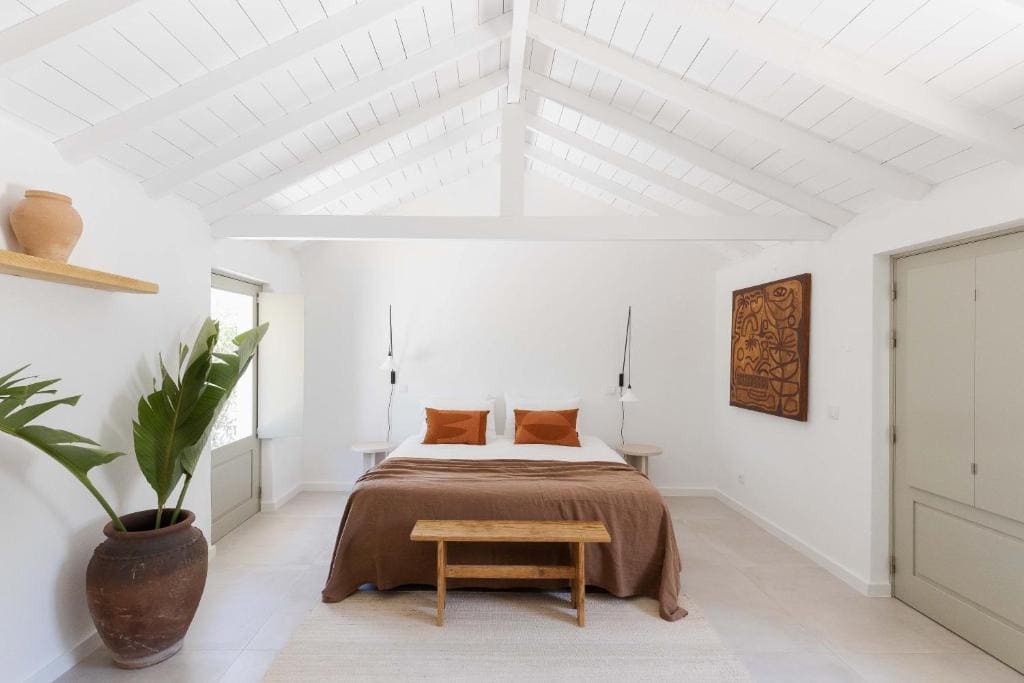
Âmago – Casa Lenta: A calm, design-led guesthouse that’s a great pick if you want something intimate and a bit off the beaten path rather than a big hotel.
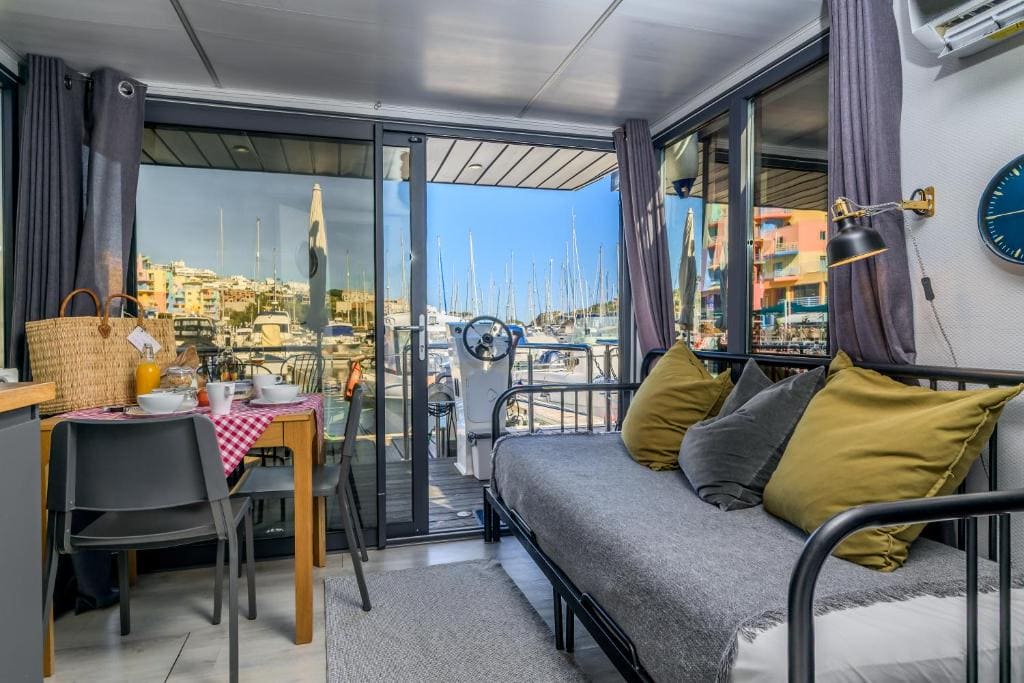
The Homeboat Company Albufeira: If you want to base yourself closer to Albufeira instead, this is a fun and unusual option, floating accommodation right on the water. A memorable stay if you don’t mind something a little different.
Ria Formosa Guest House: Tucked near the lagoon, this is a solid choice if you want easy access to Olhão and the Ria Formosa boat tours while still being close enough to Faro for your Old Town visit.

Where to Eat
Restaurante Mi Sombrero, Albufeira: A solid stop if you’re spending the morning wandering Albufeira’s Old Town and want a proper sit-down meal before heading off to Praia da Falésia.
ATO Restaurante, Faro: A good option if you’re based in or near Faro’s Old Town and want something a bit more refined for dinner after a day of driving around.
POKE MARKET, Olhão: This is where we had lunch during our day trip, and it was delicious and so fresh. Right along the waterfront, it’s an easy stop after wandering past the Mercados. If you want something a touch more refined, Cestaria – Bistro de Artesão is a great second choice in the same town.
What No One Tells You
Faro’s Old Town looks lovely in photos, but nobody really mentions the cars. You’ll be walking through what should feel like a quiet, historic center, and instead you’re dodging traffic at almost every turn. It’s not a dealbreaker, but it’s worth knowing before you go in expecting a car-free, medieval-town experience like you’d get elsewhere in Portugal.
This is also exactly why we wouldn’t recommend staying right in Faro’s city center. It’s not that the Old Town isn’t worth a visit, it’s a decent stop, just not one you need to build your whole base around. Basing yourself just outside the center, closer to the highway, makes exploring the rest of the region so much easier.
Wind is another thing to watch for. We happened to visit on a particularly gusty day, and it really took the shine off our Old Town walk. If you can, check the forecast and pick a calmer day for that particular stop.
Finally, don’t underestimate how long Praia da Falésia actually is. Finding the right spot to see the red cliffs can take a bit of driving around, and parking isn’t abundant, so build in some extra time rather than assuming you’ll pull up right where you want to be.

What it Costs: Budgeting for Your Day
To help you plan, here’s a look at what we spent while exploring Faro and the surrounding towns.
Accommodation came to €224.60 for two nights in the Faro area. On the food side, lunch at Rutz set us back 28.50€, while our stop at POKE MARKET in Olhão came to 32€ plus an extra 6.90€. Groceries added up to 25.35€ for the stay. Fuel was one of our bigger expenses, coming in at 72.60€, with prices around 1.599€ per liter at the time.
Altogether, it’s a manageable budget for a couple of days covering this much ground, especially considering how many towns you’re able to squeeze in between Albufeira, Praia da Falésia, Tavira, Olhão, and Faro itself. Fuel will likely be your biggest variable cost given how much driving is involved, so it’s worth factoring that in if you’re planning a similar route.
About the authors
We are Alex and Tina, a French-Serbian couple who met in China back in 2014. We spent three incredible years there before making France our home. Our shared passion for travel has been the heartbeat of our relationship for over 12 years, taking us across 44 countries and counting.
We launched TheDailyPackers in 2019 as a way to document our adventures. In 2026, we reached a major milestone by officially turning our blog into our full-time job. While we are still growing toward financial independence through this platform, every article we write is fueled by our mission to make your voyages easier through in-depth guides, honest advice, and the lessons we’ve learned from our own mistakes.
Our journey has not been without its storms. In 2023, our world changed forever when our first son, Poppy, was stillborn on November 25th. It was, and remains, the hardest chapter of our lives. In 2025, we were blessed with our second little boy, Milo. He has since joined our traveling tribe, and you’ll be seeing him—and the reality of traveling with a little one-on the blog more and more.
We hope to inspire you to explore the world with curiosity and resilience. Thank you for being part of our story.
You may also like those related posts
Batalha Monastery: Everything you need to know
University of Coimbra: A Complete Guide to Portugal’s Historic Soul
2 Days in Sintra, Portugal: The Definitive 2026 Travel Guide
Livraria Lello Porto: The World’s Most Beautiful Bookstore
Estrada da Praia: The Ultimate Algarve Coastal Road Trip
Best Things to Do in Aveiro & Costa Norte: Is it Worth It?
Alcobaça Monastery: Everything You Need to Know
Moorish Castle Sintra: Everything you need to know
Pssst, did you know that…
If you purchase something through our links, we earn a small fee. However, you still pay the same. Win-win! And one day we may get to be full-time travel bloggers =)
Find Hotels with Booking.com
Do Yoga with KVY
Buy us a Coffee
Rent a car with DiscoverCars
Find Attractions with GetYourGuide
Find Flights with Expedia
Buy an eSIM with Airalo
Get insured with World Nomads
Get ready with Amazon.com