
Introduction
When we were planning our drive from Coimbra to Óbidos, we quickly realized how many incredible stops there are along the way. Between Tomar, Fátima, Batalha Monastery, and Alcobaça, it can get a bit overwhelming to choose where to spend your time. We actually managed to fit Batalha, Alcobaça, and Nazaré into one very full day, but we wouldn’t recommend adding anything else if you want to actually enjoy it!
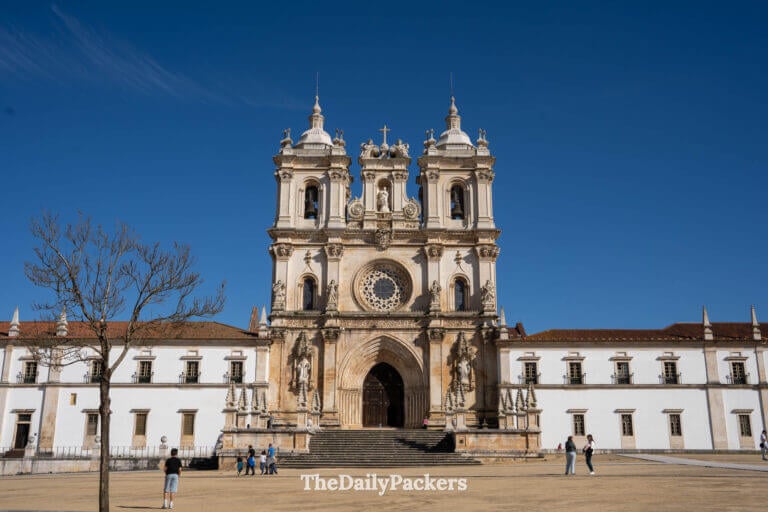
The Alcobaça Monastery (or the Abbey of Alcobaça) is a place we are really glad we didn’t skip. It was founded in 1153 by Portugal’s first king and was the very first Gothic building in the country. Today, it’s a UNESCO World Heritage site and a “white jewel” in the Portuguese landscape.
While it feels a bit more understated than the grand Batalha, it has a charm that is completely its own. Whether you are visiting as a day trip from Porto or Lisbon, or just passing through like we did, you’ll find that this monastery holds some of the most unique surprises in Europe.
From a kitchen so large you won’t believe it, to a church you can actually step into for free, here is everything you need to know for your own visit.
Why Visit Alcobaça Monastery
If you are wondering if it’s worth adding another religious site to your list, the answer is a definite yes. The Alcobaça Monastery is much more than just a church; it is a massive complex that lets you step back into the daily life of Cistercian monks.
Here are a few reasons why you should make the stop:
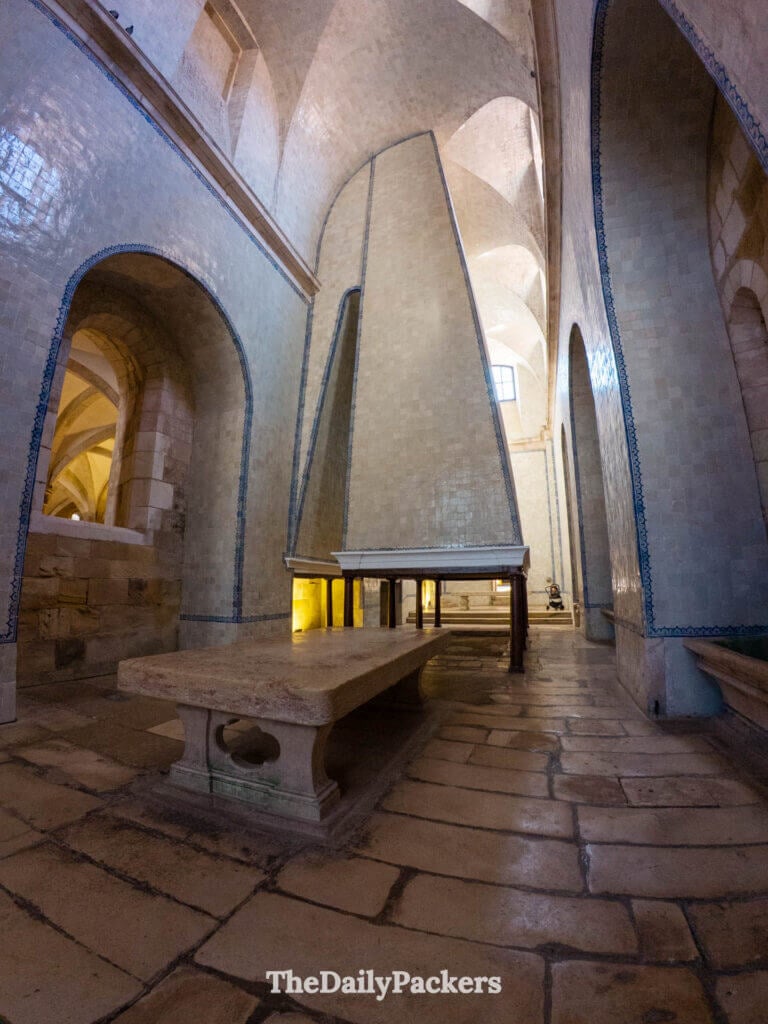
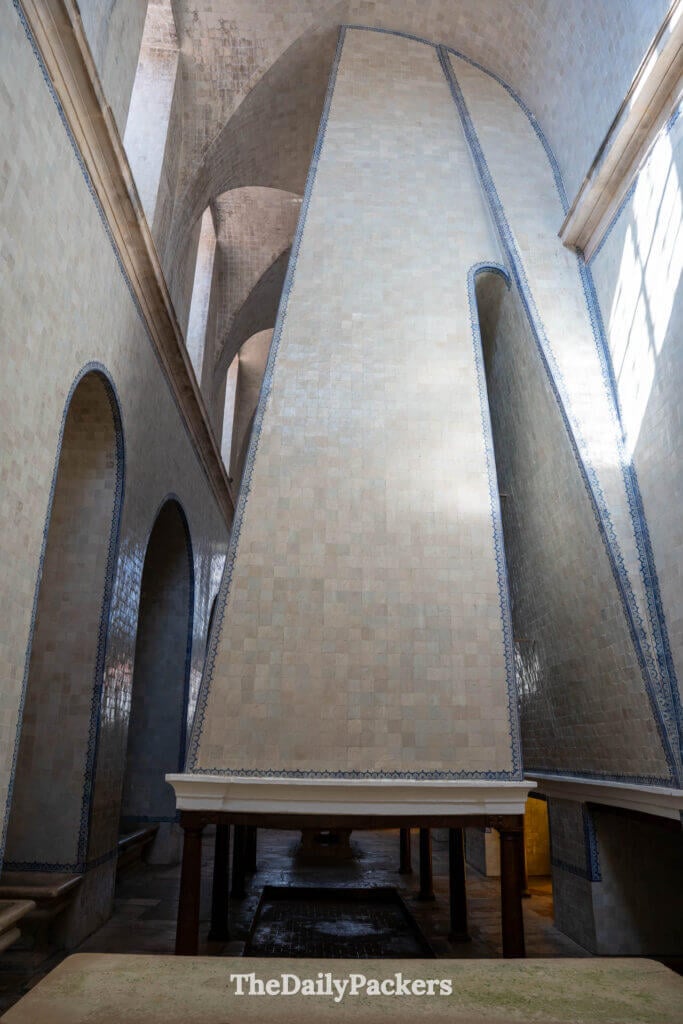
- The Massive Kitchen: This was the highlight for us! The Alcobaca monastery kitchen is famous for its tiled walls and a chimney so huge that it looks like it belongs in a giant’s house. They even had a diverted branch of the Alcoa River running through the kitchen so the monks could have fresh fish delivered straight inside.
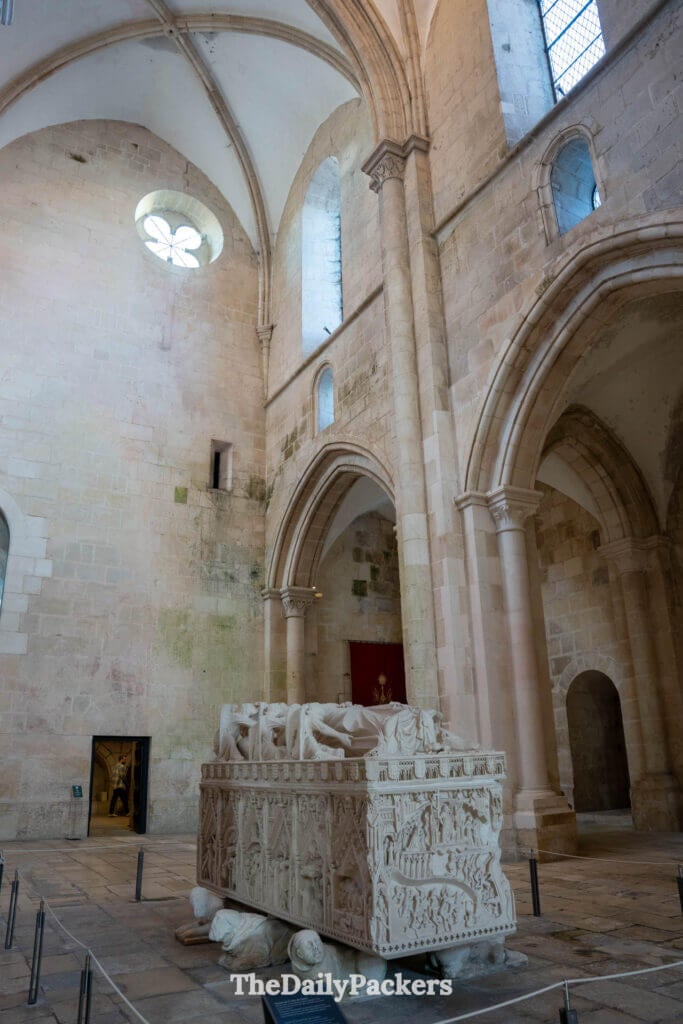
- The Royal Tombs: Inside the church, you’ll find the beautifully carved tombs of King Pedro I and Inês de Castro. Their tragic love story is like the Portuguese version of Romeo and Juliet.
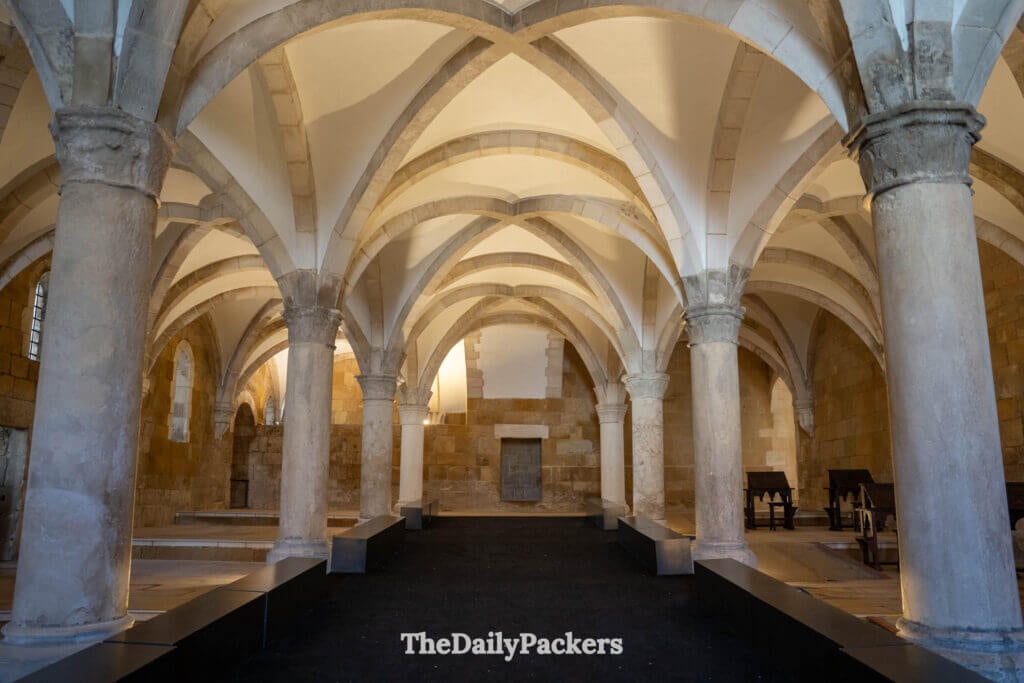
- Unique Architecture: As the first Gothic building in Portugal, it features a strikingly simple and elegant design. It lacks the heavy gold you see in many other European churches, which makes the building’s scale feel even more impressive.
- Free Access to the Church: Unlike many other UNESCO sites, you can actually enter the main church of the Abbey of Alcobaça for free. This makes it a great stop if you are on a budget but still want to see some world-class history.
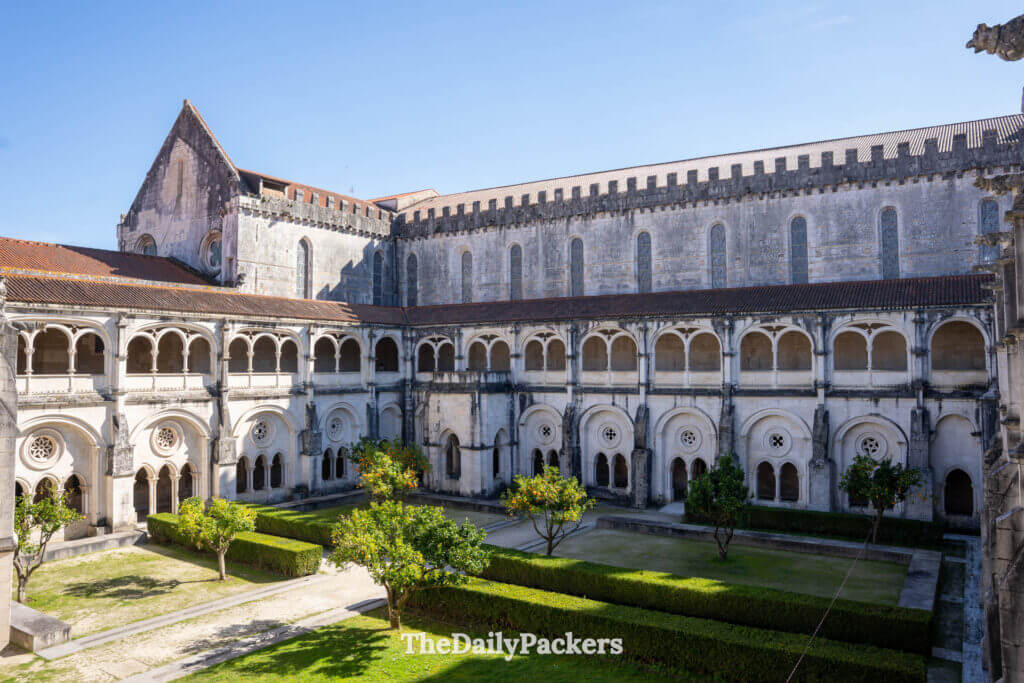
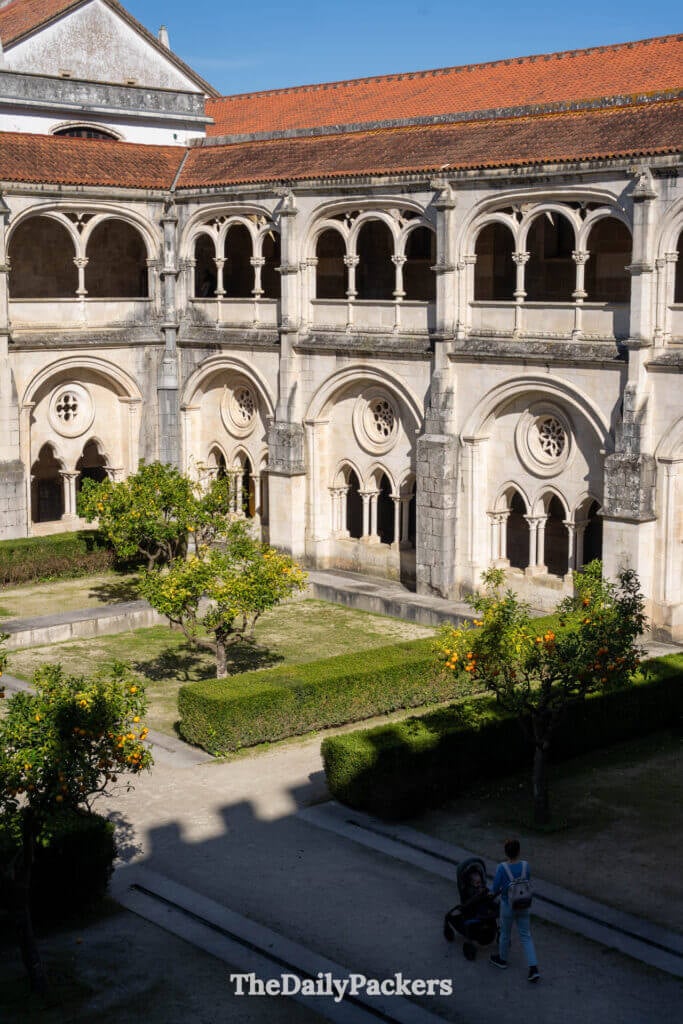
- The Cloisters: The “Cloister of Silence” is incredibly peaceful and well-preserved. You can walk through different levels, giving you a great view of the structure from every angle.
While we found the Batalha Monastery to be a bit more “grand” and breathtaking overall, Alcobaça feels more intimate and offers a better look at how the monks actually lived.
How to get there
The Alcobaça Monastery is located in the heart of the town of Alcobaça, about 120 km north of Lisbon and 215 km south of Porto.
Address: Praça 25 de Abril, 2460-018 Alcobaça, Portugal
Getting there by car is the most flexible option, and this is how we visited:
- From Lisbon, it takes about 1.5 hours via the A8 motorway.
- From Coimbra, it’s a quick 1-hour drive.
- If you visited Batalha, it’s only 25 minutes away.
- From Nazaré, its only 15min.
There is plenty of parking around the town center, just a short walk from the monastery entrance.
If you aren’t renting a car, you can take a Rede Expressos bus from Lisbon (Sete Rios station) or Porto. The bus station in Alcobaça is within walking distance of the monastery.
Many people visit Alcobaça as part of a “Three Monasteries” tour (including Batalha and Tomar). While such a tour is great if you don’t want to drive, it can feel a bit rushed. If you have your own wheels, you can take your time as we did and choose the stops that fit your pace.
When to visit
Since the Alcobaça Monastery is primarily an indoor experience, you can visit year-round without worrying too much about the weather outside. That said, the time of day and the specific season will definitely change the atmosphere of the cloisters and the church.
As usual, arriving as soon as it opens at 9:00 AM is your best bet to have the place to yourselves. Most of the large tour buses coming from Lisbon or Porto tend to arrive mid-morning, so if you get there early, you’ll have the church and the Alcobaça monastery kitchen almost to yourself.
If you aren’t an early bird, another great time is late afternoon, about an hour and a half before closing.
However, all of this is only true during the high season. We visited it in the afternoon at the beginning of March, and it was pretty much empty. While this isn’t the time of the year we would recommend visiting Portugal, it was great for visiting the Alcobaça Monastery
How to Visit
We decided to visit the Alcobaça Monastery as part of a busy road trip day, tucked between our morning at Batalha Monastery and an afternoon in Nazaré. If you are coming from Coimbra, it’s a very natural stop on your way south toward Óbidos.
We started our visit with the main monastery complex. This is where you really get to see the “behind the scenes” of monk life, including the dormitory and the room where they used to copy books.

But the absolute standout for us was the Alcobaca monastery kitchen. It’s massive, and standing under that giant chimney makes you realize just how much work went into feeding the community here.
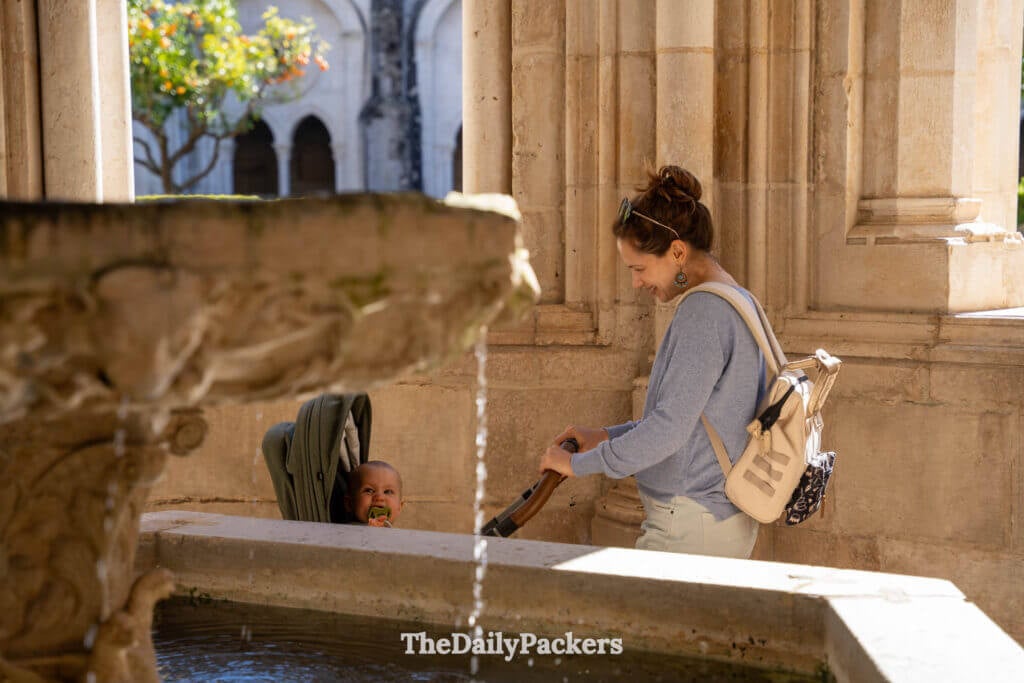
One thing we quickly realized, though, is that the monastery isn’t very stroller-friendly. There are plenty of uneven floors and stairs to navigate while exploring the different levels of the cloisters.
If you are traveling with a little one like we were, we highly recommend leaving the stroller in the car and using a baby carrier instead. It will make your life much easier!
After exploring the ticketed areas, we headed into the main church. It’s grand and quiet, but we found one chapel at the end particularly moving. It houses several tombs, including some of infants, which was quite triggering for us as it reminded us of our stillborn son. It’s a beautiful, somber space, but something to be aware of if you are sensitive to that kind of history.

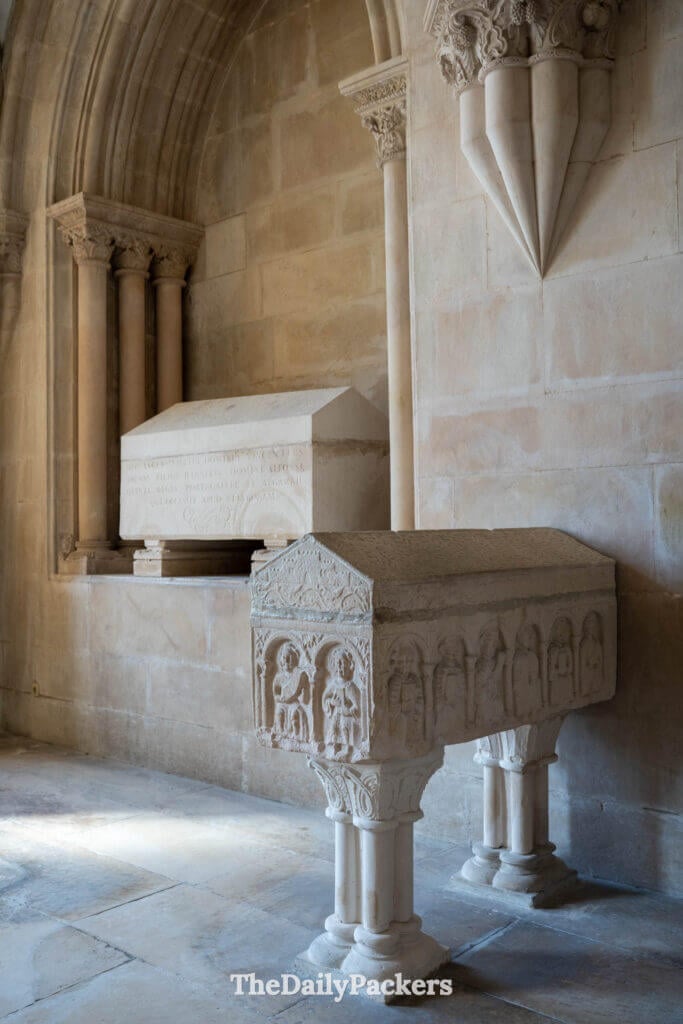
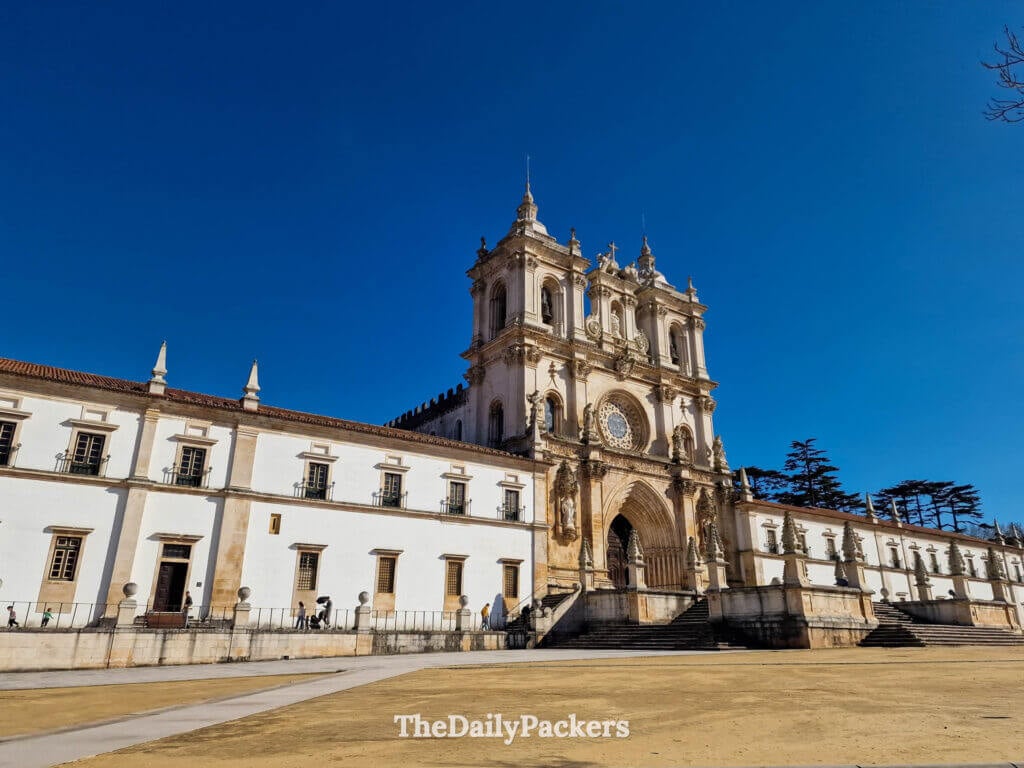
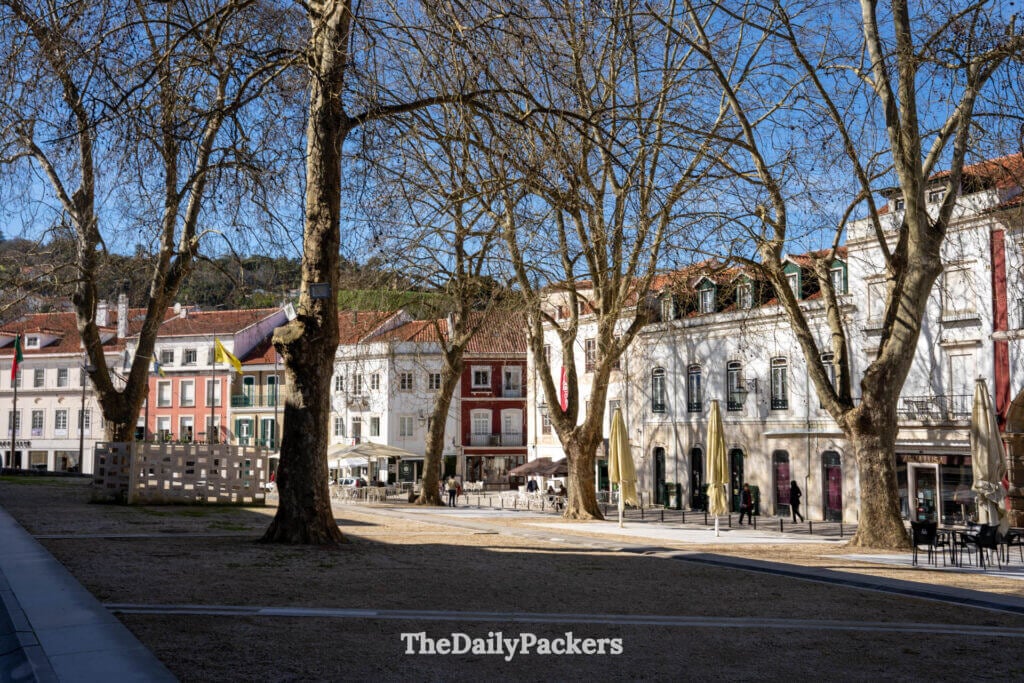
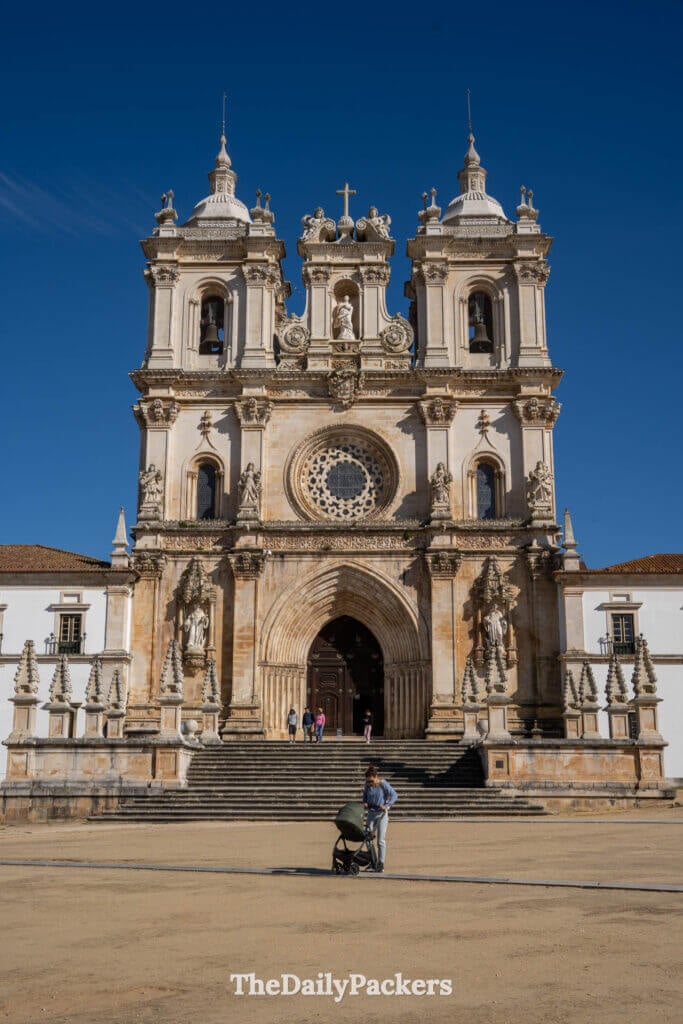
We ended our visit by heading outside to the main square. After being inside the cool, dim stone rooms, coming out to that “wow” view of the front façade under the bright sun was the perfect way to finish. The scale of the exterior is truly breathtaking and easily one of the best photo spots in town.
Tickets & Opening Hours
Planning your budget and timing for the Alcobaça Monastery is pretty straightforward, but there are a few tricks to getting the best price.
Opening Hours
The monastery has two main seasons for its operating hours. From April to October, you can visit between 9:00 AM and 6:30 PM. During the quieter winter months, from November to March, it closes slightly earlier at 5:30 PM. Just keep in mind that the ticket office usually stops selling entries 30 minutes before the doors close. The monastery is closed on major holidays like January 1st, Easter Sunday, May 1st, and Christmas Day.
Ticket Prices & Family Discounts
A standard adult ticket to visit the full monastic complex, including the Alcobaça monastery kitchen and the cloisters, costs 15€. If you are planning to visit other sites like Batalha Monastery or the Convent of Christ in Tomar, you might want to ask about combined tickets to save a bit of money.
However, our best tip is for those traveling as a family. We found out they offer a family ticket at half price! We only paid 15€ for the three of us (two adults and a baby). When you get to the ticket office, make sure to mention exactly who is in your group, even if you have a small baby, to see if you qualify for this discount. It’s a significant saving, but they don’t always advertise it clearly.
The Free Church Access
If you are on a very tight budget or short on time, remember that the main church part of the abbey of Alcobaça is actually free to enter. You can walk through the massive nave and see the royal tombs without buying a ticket. There are two separate entrances: one for the ticketed monastery and one specifically for the free church.
Is it Worth It?
If you are trying to decide whether to visit both Batalha and the Alcobaça Monastery, our honest take is that while Alcobaça is lovely, Batalha Monastery feels much grander and more breathtaking. If you truly only have time for one, Batalha is the one that will likely leave you with that “jaw-dropping” feeling.
However, we certainly don’t regret visiting Alcobaça. The abbey of Alcobaça has a much more “lived-in” feel. Seeing the dormitory and the incredible Alcobaça monastery kitchen gives you a much better sense of the monks’ daily life than the more ceremonial vibe of Batalha.
Plus, the fact that you can see the main church for free makes it an easy win if you are just passing through and want a quick dose of history without a full commitment.
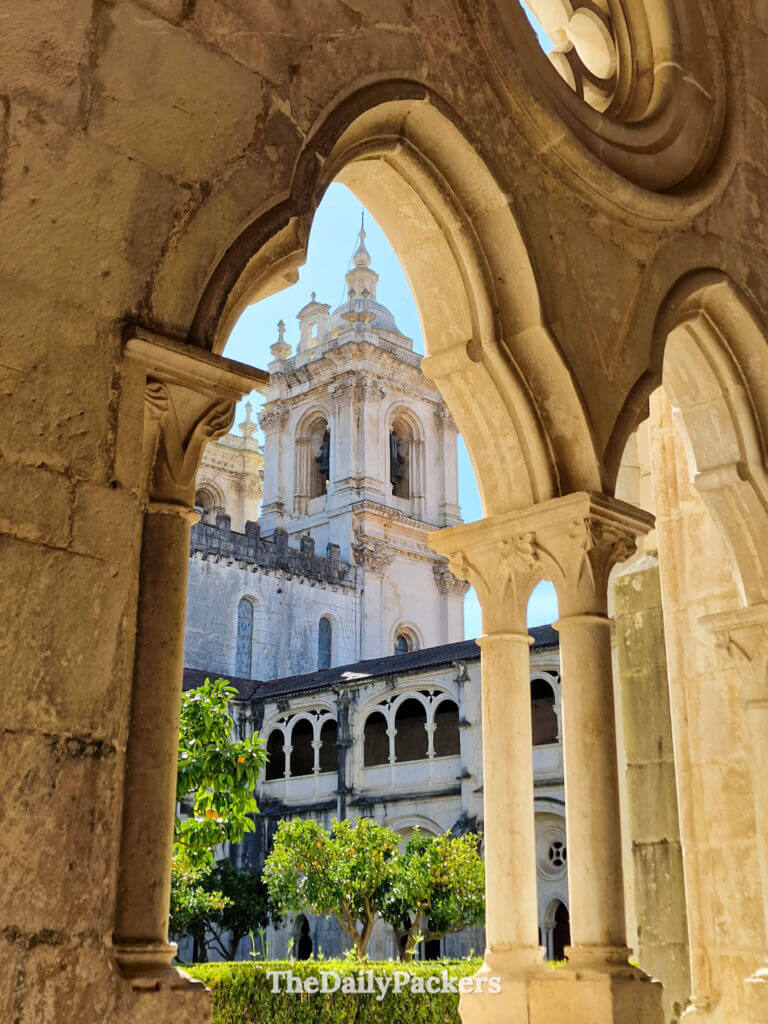
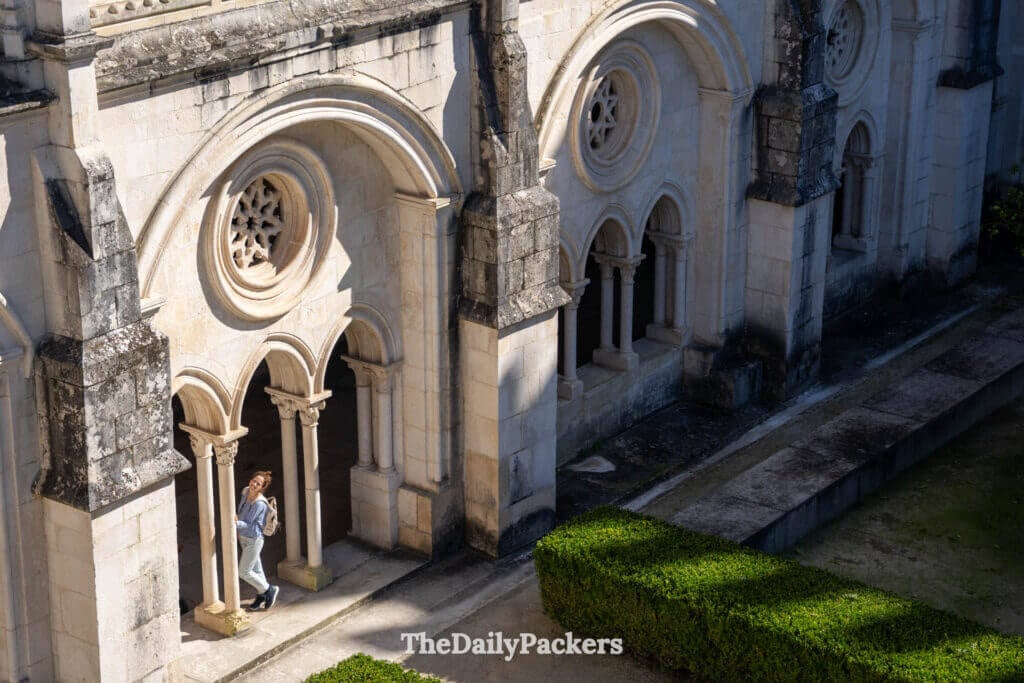
The cloisters are also a highlight. We loved that you can explore one of them completely, up, down, inside, and out, while the other offers a beautiful perspective from the terrace. If you appreciate architecture that is simple, clean, and atmospheric, you will find it very much worth the stop.
Travel Tips
To make your visit go as smoothly as possible, here are a few things we learned while on the ground:
- Ditch the Stroller: As we mentioned, this isn’t the place for wheels. Between the ancient stone steps and the multi-level cloisters, a baby carrier is your best friend here.
- Layer Up: Even in the summer, the inside of the monastery can be surprisingly cool and damp. If you are sensitive to the cold, bring a light sweater.
- The “Half-Price” Mention: Don’t just look at the board and pay full price. Explicitly tell the staff at the ticket office if you are a family (e.g., “we are two adults and a baby”) to ensure you get that 50% discount.
- Hike for the View: If you have a bit of extra energy after your visit, you can hike up to the Castelo de Alcobaça. It’s a bit of a climb, but it gives you a fantastic panoramic view of the town and the monastery from above.
- Respect the Silence: Especially in the church and the cloisters, sound carries. It’s a place that naturally invites a whisper, which only adds to the experience.

Where to stay
If you have the time, staying overnight in Alcobaça is a great way to experience the town after the day-trippers have left. The town has a very peaceful, authentic vibe in the evening that you just don’t get during the busy midday hours.

For a truly once-in-a-lifetime experience, you can actually stay inside the monastery complex itself at the Montebelo Mosteiro de Alcobaça Historic Hotel. This 5-star hotel was built into one of the monastery’s cloisters (the Rachadouro Cloister) and was designed by the famous architect Souto de Moura. It is a stunning mix of 12th-century history and modern luxury.
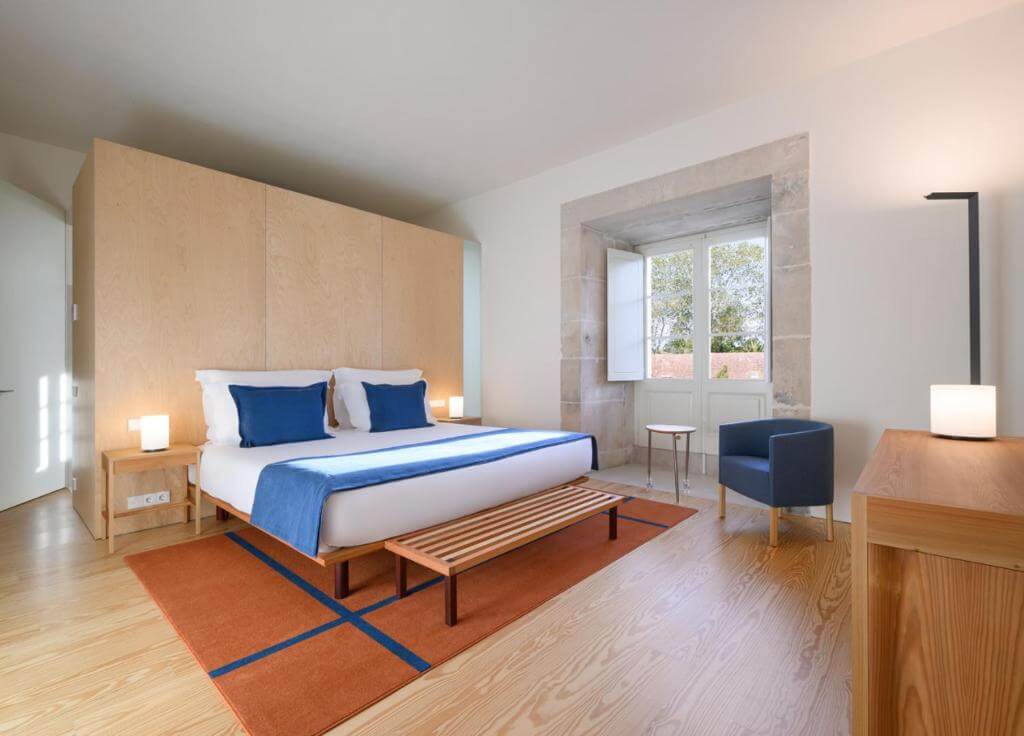
We actually stayed overnight in a converted monastery once in Elvas, and it was one of the most memorable nights of our travels. There is something incredibly special about sleeping within walls that have seen centuries of history.

About the authors
We are Alex and Tina, a French-Serbian couple who met in China back in 2014. We spent three incredible years there before making France our home. Our shared passion for travel has been the heartbeat of our relationship for over 12 years, taking us across 44 countries and counting.
We launched TheDailyPackers in 2019 as a way to document our adventures. In 2026, we reached a major milestone by officially turning our blog into our full-time job. While we are still growing toward financial independence through this platform, every article we write is fueled by our mission to make your voyages easier through in-depth guides, honest advice, and the lessons we’ve learned from our own mistakes.
Our journey has not been without its storms. In 2023, our world changed forever when our first son, Poppy, was stillborn on November 25th. It was, and remains, the hardest chapter of our lives. In 2025, we were blessed with our second little boy, Milo. He has since joined our traveling tribe, and you’ll be seeing him—and the reality of traveling with a little one-on the blog more and more.
We hope to inspire you to explore the world with curiosity and resilience. Thank you for being part of our story.
You may also like those related posts
Sasbachwalden: Hiking Alde Gott panorama tour, Germany, 2025
Corsica Travel Budget: How Much Does a Trip Cost?
Machu Picchu: How to Plan the Perfect Trip to Peru’s Icon
Eguisheim Christmas Market: Beauty and the Beast’s real village
How to get from Puerto Natales to Ushuaia by bus
Nazaré: Chasing the Giant Waves of Portugal
Ravalet Castle: Cherbourg’s Hidden Gem in Normandy
19 Best Things to do in Brussels, Belgium, in 1 to 3 days
Pssst, did you know that…
If you purchase something through our links, we earn a small fee. However, you still pay the same. Win-win! And one day we may get to be full-time travel bloggers =)
Find Hotels with Booking.com
Do Yoga with KVY
Buy us a Coffee
Rent a car with DiscoverCars
Find Attractions with GetYourGuide
Find Flights with Expedia
Buy an eSIM with Airalo
Get insured with World Nomads
Get ready with Amazon.com