
Introduction
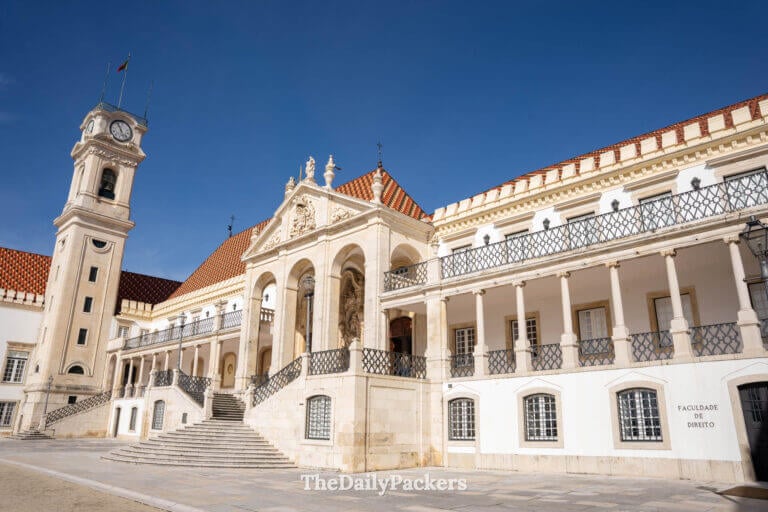
Perched high on a hill overlooking the Mondego River, the University of Coimbra isn’t just a school; it’s the beating heart of the city. Founded in 1290, it’s one of the oldest universities in continuous operation in the world and a UNESCO World Heritage site.
When you first arrive, the sheer scale of the place can be a bit overwhelming. We actually got completely lost the first time we stepped onto the campus! We walked right into the main square, only to realize that the ticket office was tucked away outside the main area. To help you avoid that same confusion, we’ve put together this guide to make sure you know exactly where to go and what to see.
Why visit?
If you are traveling through central Portugal, Coimbra is a must, and the University is the star of the show. You’ll see students walking around in their traditional black capes (which actually inspired J.K. Rowling for Harry Potter!), giving the whole place a scholarly, slightly magical vibe.
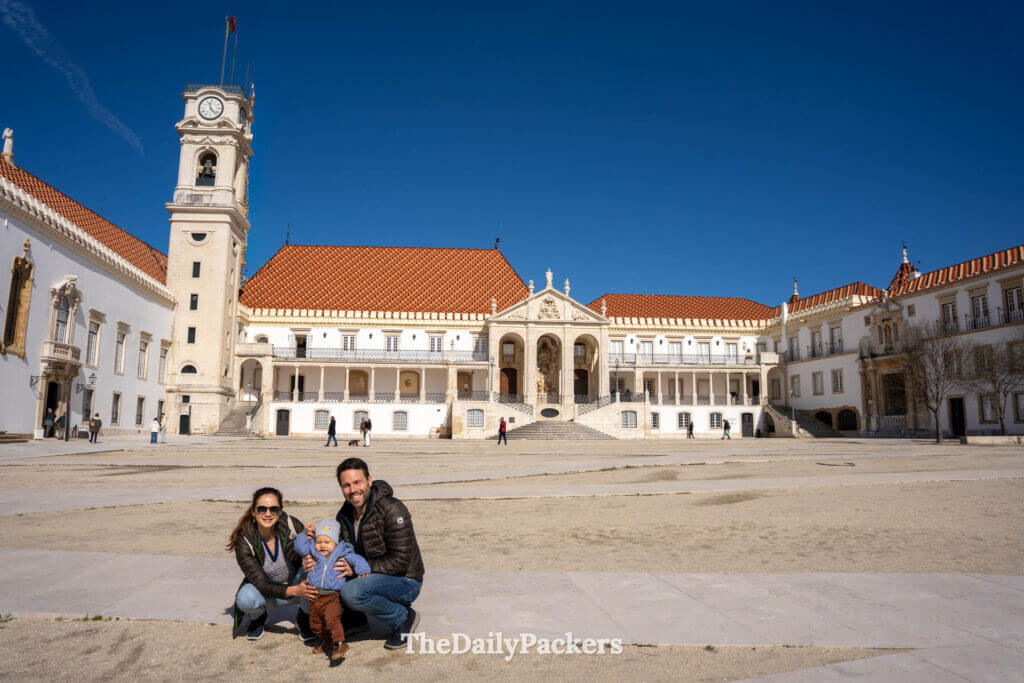
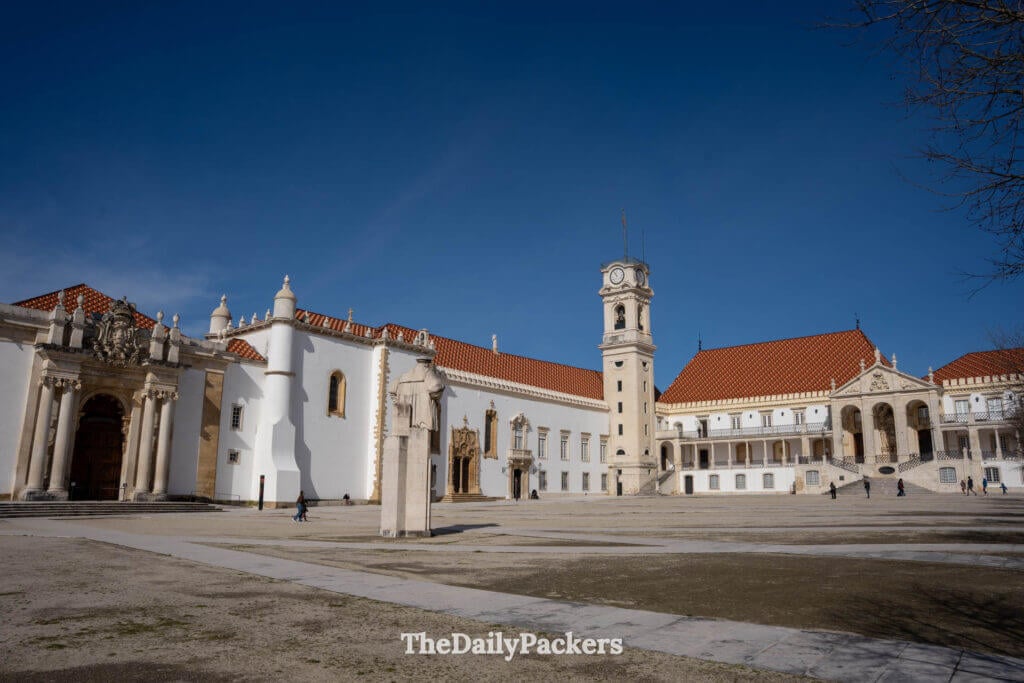
Even if you don’t buy a ticket, you can access the inner courtyard of the University of Coimbra for free. Standing there is breathtaking; on one side, you have the grand, sun-drenched facade of the Palace of Schools, and on the other, a stunning panoramic view of the city’s terracotta roofs stretching down to the river. But to really experience the “wow” moments—like the gold-leafed Joanina Library or the royal throne room—you definitely want to head inside.
How to get there
Because the University of Coimbra sits at the highest point of the city, getting there requires a bit of planning. If you are already in the city center, you can walk up the hill, but be warned: the streets are steep and paved with traditional limestone that can be quite slippery. It usually takes about 15 minutes of climbing, which we think is the most scenic way to arrive, as you pass through the old “Almedina” gate.
However, if you want to save your energy for the visit itself, we recommend taking a local bus or a quick taxi. Bus line 28 is the most convenient as it drops you off right at the University of Coimbra. We strongly advise against driving your own car all the way to the top. The streets are incredibly narrow, directions are tricky, and parking is almost non-existent near the Palace of Schools. It’s much better to leave your car in a garage down by the river and use public transport or your own two feet to reach the campus.


We recommend to rent a car through Discover Cars with free cancellation. Book your rental car here.
When to visit
The best time to visit the University of Coimbra is during the academic year when the campus is buzzing with students. Since this is an active university, not just a museum, seeing the students in their daily routines is part of the magic.
You’ll notice many of them wearing the “Traje Académico,” a traditional uniform with a long black cape. It’s actually the tradition that inspired the Hogwarts robes in Harry Potter! It’s a very proud part of their culture; you might see capes with small tears at the bottom, which are traditionally made by family or close friends, so the student “carries” them through their studies.

If you visit in May, you’ll catch the peak of this tradition during the “Queima das Fitas” (Burning of the Ribbons) festival. This is when the city is loudest and most colorful as students celebrate the end of the year.
If you prefer a quieter experience, the summer months (July and August) are much calmer, as students are on break. The buildings remain open for tours, but you’ll lose that unique scholarly atmosphere.

Just a heads-up, if you are exploring the campus: the Colégio de São Jerónimo and the Department of Architecture are currently closed to the public due to their condition, so you might see some areas fenced off during your walk.

How to Visit
When we arrived at the University of Coimbra, we were immediately struck by how grand the place is. We spent quite a bit of time just standing in the inner courtyard (the Pátio das Escolas). It’s a huge open square with the historic palace on one side and a ledge on the other, offering a perfect view of the city and the river below.
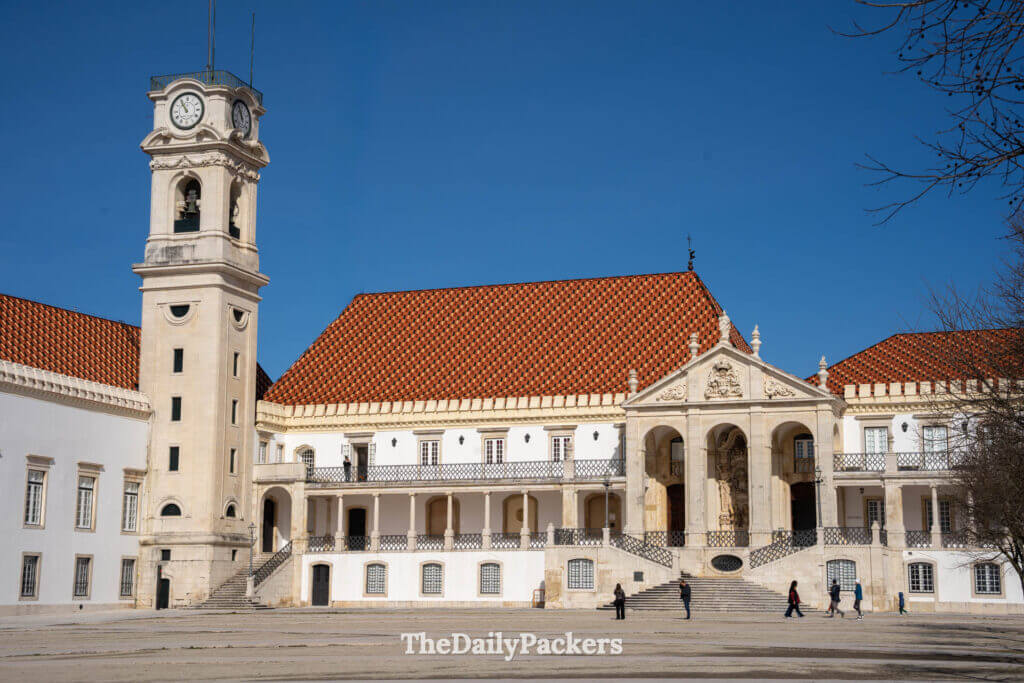
To be honest, we were a little confused at first because we didn’t realize the main ticket office is actually located outside the courtyard, between the Physics and Chemistry departments. Once we got our tickets, we followed a specific order that worked really well for us.

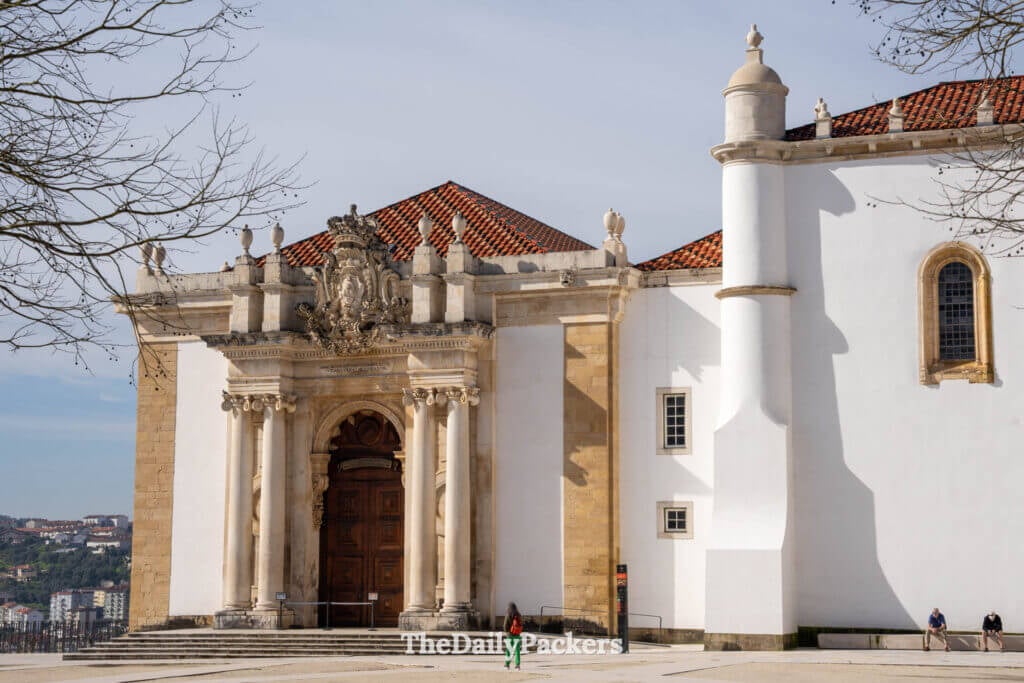
We started with the Joanina Library because you are assigned a strict time slot. Entering through the Academic Prison on the lower floor felt like stepping back in time. The upper level is absolutely incredible, it’s filled with gold decorations and thousands of ancient books. (But photos are not allowed)
One of the coolest things we learned is that a colony of bats lives inside the library! They actually help protect the books by eating insects at night. There are information frames at every level to explain what you are looking at, which was super helpful.

From there, we walked through the Royal Palace. The Throne Room is massive and beautifully decorated; we were both really impressed by the detail on the ceilings. The path naturally leads you to St. Michael’s Chapel. It’s a small but stunning space with a huge organ and colorful tiles.

After the main historical buildings, we skipped the campus canteen and found a gem around the corner: Nau Coffee. It has a great local vibe, the brunch is amazing, and the staff was so friendly—they even spent time playing with Milo while we enjoyed our specialty coffee.

After lunch, we headed to the Chemistry Laboratory. It’s a shorter visit, but it honestly feels like you’ve walked into a 1700s science lab.

Finally, we visited the Science Museum. If you are traveling with kids like we were with Milo, this is a lifesaver. It’s very interactive and “super fun,” as Milo would say!

Plus, there is a complete section that feels like walking into a super old part of the university. We even questioned if we should be there.

We actually started our visit with a slow walk through the Botanical Garden. Since it’s free and right there, it was the perfect way to let Milo run around a bit before the main event of the day.



Tickets & Opening Hours
Getting your tickets for the University of Coimbra can be a bit tricky if you don’t know where to look. As we mentioned, the ticket office isn’t inside the main palace area; it’s a separate kiosk located just outside. You can also buy them online in advance, which we highly recommend to save time.
We suggest getting the “Joanina Library + University + Science Museum” ticket. It costs 16,50€ per person (babies are free) and is actually valid for two days. This is great because it covers a lot: the Baroque Library, St. Michael’s Chapel, the Royal Palace, the Chemistry Laboratory, and the various cabinets of the Science Museum.
Important things to keep in mind for your tickets:
- The Time Slot: The time printed on your ticket is specifically for your entry to the Joanina Library. You must be there on time! You can visit all the other spaces (like the Palace or the Museum) whenever you like, before or after that slot, during the two-day validity period.
- Entry Limits: Access to the Library is limited to 50 people every 20 minutes, so that time slot is very important.
- Sunday Mass: If you plan to visit on a Sunday, remember that St. Michael’s Chapel closes between 11:45 AM and 2:00 PM for mass.

The main tourist sites of the University of Coimbra (Palace of Schools, Chemistry Lab, and Academic Museum) are open every day from 9:00 AM to 6:00 PM. Just note that the last admission for the Library is at 5:40 PM, and for the other spaces, it’s 5:45 PM.
The Botanical Garden has slightly different hours:
- Summer (April – Sept): 9:00 AM to 8:00 PM
- Winter (Oct – March): 9:00 AM to 5:30 PM
The University of Coimbra is closed on main bank holidays, so check the calendar if you are visiting during a festive season.

Is it Worth It?
In short: absolutely. Even if you aren’t a big “museum person,” the University of Coimbra is one of those rare places where the history is so grand it feels like a movie set.
The price might seem a bit high compared to other Portuguese monuments, but when you realize the ticket covers five or six different historical sites and is valid for two days, it’s actually a great deal. The Joanina Library alone is worth the entry fee, it is easily one of the most beautiful rooms we have ever seen in our travels. Plus, seeing the active student life and those iconic black capes adds a layer of “living history” that you just don’t get in a standard museum.
If you want to dive deeper, you can even take a guided tour to hear all the secret student legends!
Travel Tips
To make the most of your day at the University, here are a few things you should keep in mind:
- Wear comfortable shoes: We can’t stress this enough. Coimbra is built on a steep hill, and the university grounds are covered in cobblestones and ancient stone stairs. Leave the fancy shoes for dinner and stick to sneakers.
- Bring water and a hat: The main courtyard (Pátio das Escolas) is a vast open space with very little shade. In the summer, the sun reflects off the white stone buildings, and it can get incredibly hot.
- Silence is key: Remember that you are in a working university. While the tourist areas are designated, you’ll often pass by classrooms or students studying. Keep your voice down, especially near the library.
- Pro-Tip on the Bats: When you enter the Joanina Library, look closely at the tables. They are covered with decorative leather covers at night to protect them from the bat droppings! It’s a quirky detail that makes the “bat story” feel very real.
- The “Secret” View: Most people take photos from the main courtyard ledge, but if you walk towards the Physics department, you can often find quieter corners with equally stunning views of the Mondego River.

Where to stay
If you want to stay close to the action in Coimbra and near the University of Coimbra, staying in the Alta (Upper Town) or the Baixa (Lower Town) is your best bet.
Entre Ruas Apartments: We absolutely loved staying here. The location is right on the main street, so you’re in the middle of all the action. Despite the central spot, the sound isolation was fantastic; we could see the students playing music from the window, but slept in total peace. Plus, they have parking, which is a rare and precious find in the center!
Sapientia Boutique Hotel: This is a stunning option if you want to be right next to the University. It’s elegant and has a beautiful rooftop with views over the Mondego River.
Solar Antigo Luxury Coimbra: This guest house is housed in a historic building and retains all that old-world charm, with stone walls and traditional decor. It’s a very romantic spot if you don’t mind the climb!


About the authors
We are Alex and Tina, a French-Serbian couple who met in China back in 2014. We spent three incredible years there before making France our home. Our shared passion for travel has been the heartbeat of our relationship for over 12 years, taking us across 44 countries and counting.
We launched TheDailyPackers in 2019 as a way to document our adventures. In 2026, we reached a major milestone by officially turning our blog into our full-time job. While we are still growing toward financial independence through this platform, every article we write is fueled by our mission to make your voyages easier through in-depth guides, honest advice, and the lessons we’ve learned from our own mistakes.
Our journey has not been without its storms. In 2023, our world changed forever when our first son, Poppy, was stillborn on November 25th. It was, and remains, the hardest chapter of our lives. In 2025, we were blessed with our second little boy, Milo. He has since joined our traveling tribe, and you’ll be seeing him—and the reality of traveling with a little one-on the blog more and more.
We hope to inspire you to explore the world with curiosity and resilience. Thank you for being part of our story.
You may also like those related posts
Roussillon: Discovering Provence’s Stunning Red Village
19 Best things to do in Sarajevo, Bosnia, in 1 day or more
10 Travel Documentaries to Inspire Your Next Adventure
Haarlem, A Perfect 1-Day Trip from Amsterdam, Netherlands
Hiking in Tierra del Fuego National Park: The Ultimate Guide
11 best things to do in SaPa, Vietnam, in 4 days or less
Cusco Itinerary: How to spend 6 magical days in Cusco, Peru
15 Best things to do in Hue, Vietnam, in 2 days or more
Pssst, did you know that…
If you purchase something through our links, we earn a small fee. However, you still pay the same. Win-win! And one day we may get to be full-time travel bloggers =)
Find Hotels with Booking.com
Do Yoga with KVY
Buy us a Coffee
Rent a car with DiscoverCars
Find Attractions with GetYourGuide
Find Flights with Expedia
Buy an eSIM with Airalo
Get insured with World Nomads
Get ready with Amazon.com