
Introduction
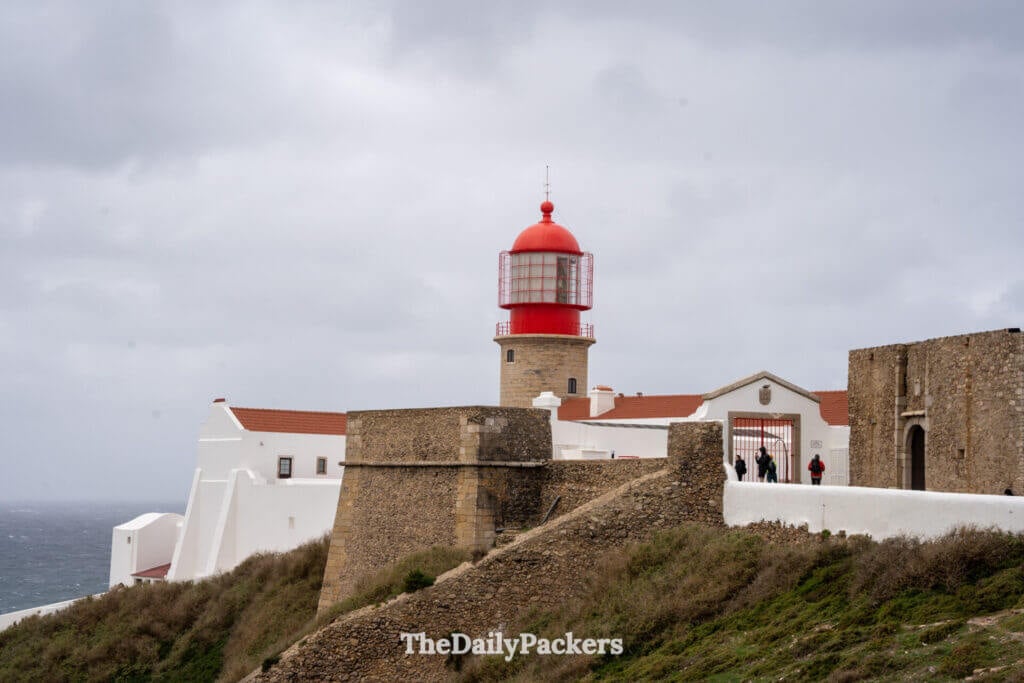
The wind at Sagres hit us before we’d even finished walking through the gate, strong enough that we had to hold onto Milo’s hat and lean into it a little. That’s Sagres for you: raw, exposed, and sitting right at the edge where Portugal simply runs out of land. You’ve probably already seen photos of Cabo de São Vicente, the dramatic lighthouse just a few minutes down the road, but the fortress itself deserves just as much of your time.
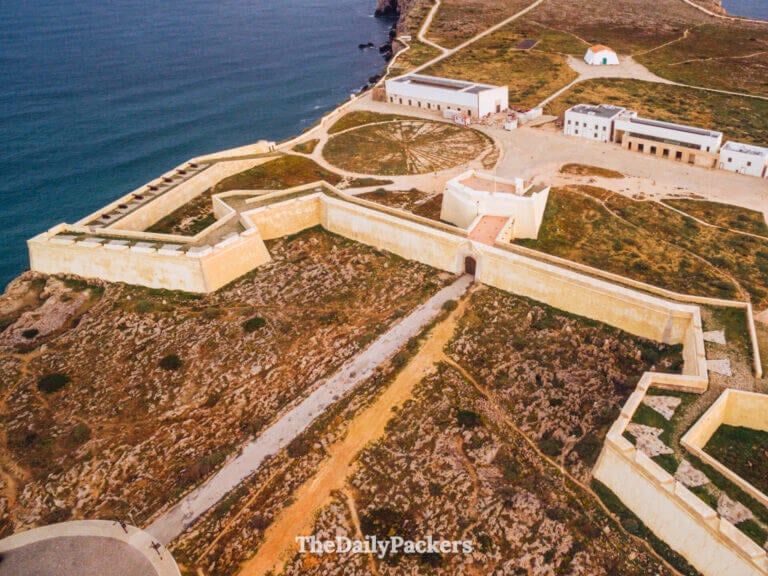
Fort Sagres isn’t a castle in the fairytale sense. There are no colorful towers or grand halls waiting for you here. What you get instead is history stripped down to its bones: old stone walls, a mysterious compass rose carved into the ground, and views over the Atlantic that make you feel like you’ve reached the actual edge of the world. This was Henry the Navigator’s base, the place where Portugal’s Age of Discoveries quietly took shape.
If you’re coming from Lagos or exploring the wider Algarve region, Sagres Fortress in Portugal is an easy addition to your itinerary and a nice contrast to the beaches and cliffs you’ll see elsewhere on this coast.
Why visit?
You might be wondering why a mostly empty fort, with no colorful palace and no elaborate interior, is worth the drive out to the tip of the Algarve. Here’s the thing: Sagres Fortress isn’t about grand architecture. It’s about the setting and the story behind it.
This promontory was where Henry the Navigator built his “Vila do Infante” back in 1443, and where he lived out the rest of his life until his death in 1460. Sailors and mapmakers are believed to have studied and planned voyages from this exact spot, voyages that would go on to shape the Age of Discoveries. Standing on the ramparts, looking out at the same ocean they stared down centuries ago, gives you a kind of perspective that’s hard to get anywhere else in Portugal.
Then there’s the “wind rose,” a huge compass-like structure carved into the ground, uncovered by accident back in 1921. Nobody fully agrees on what it was originally used for, and that mystery is honestly part of the appeal.
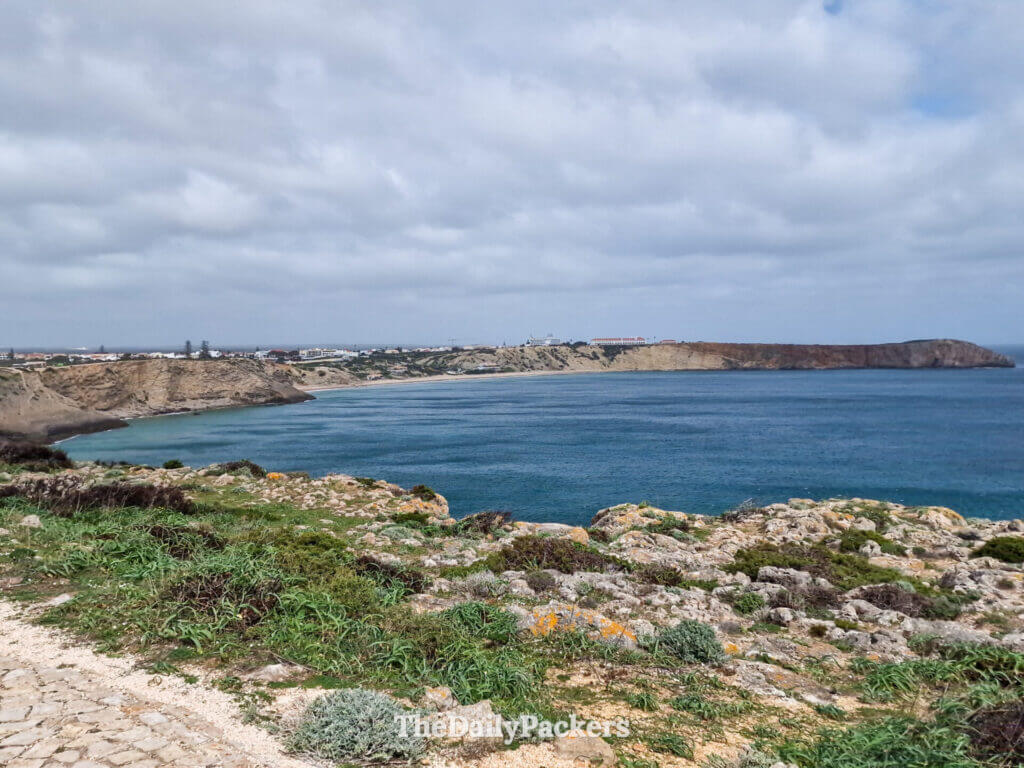
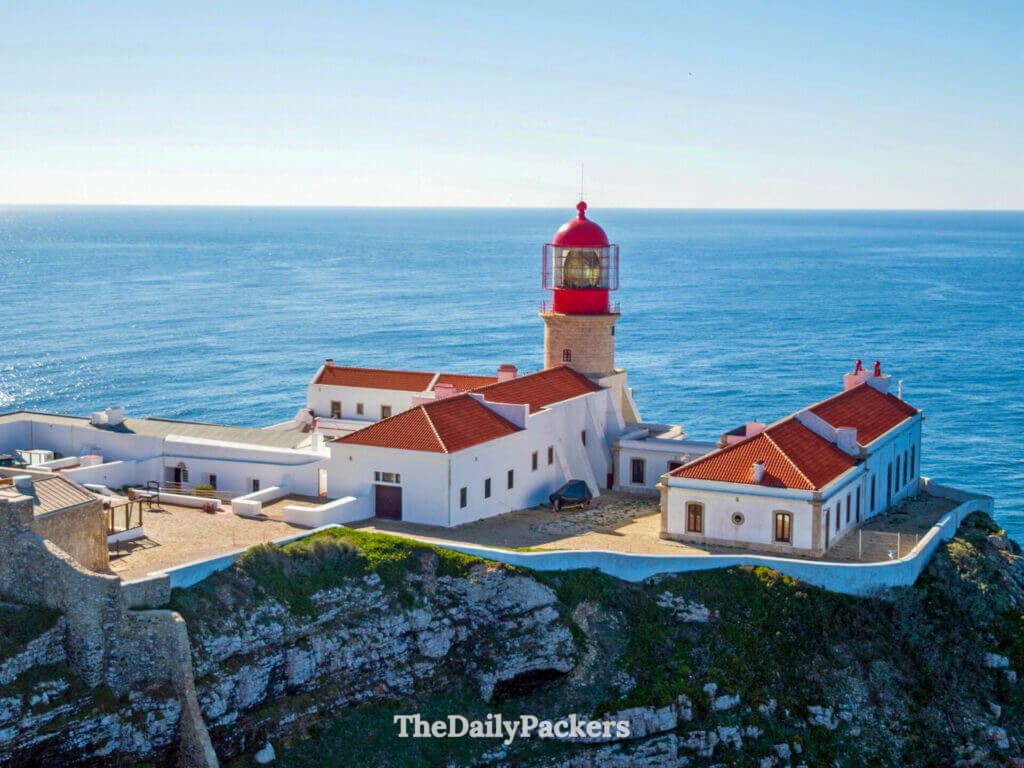
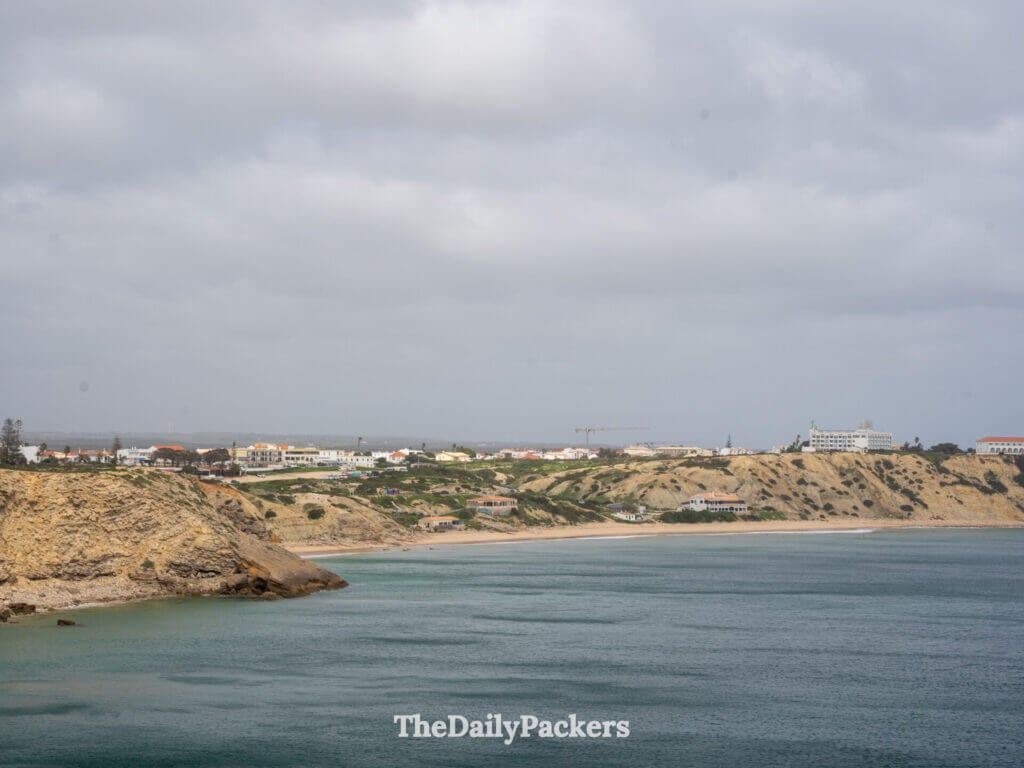
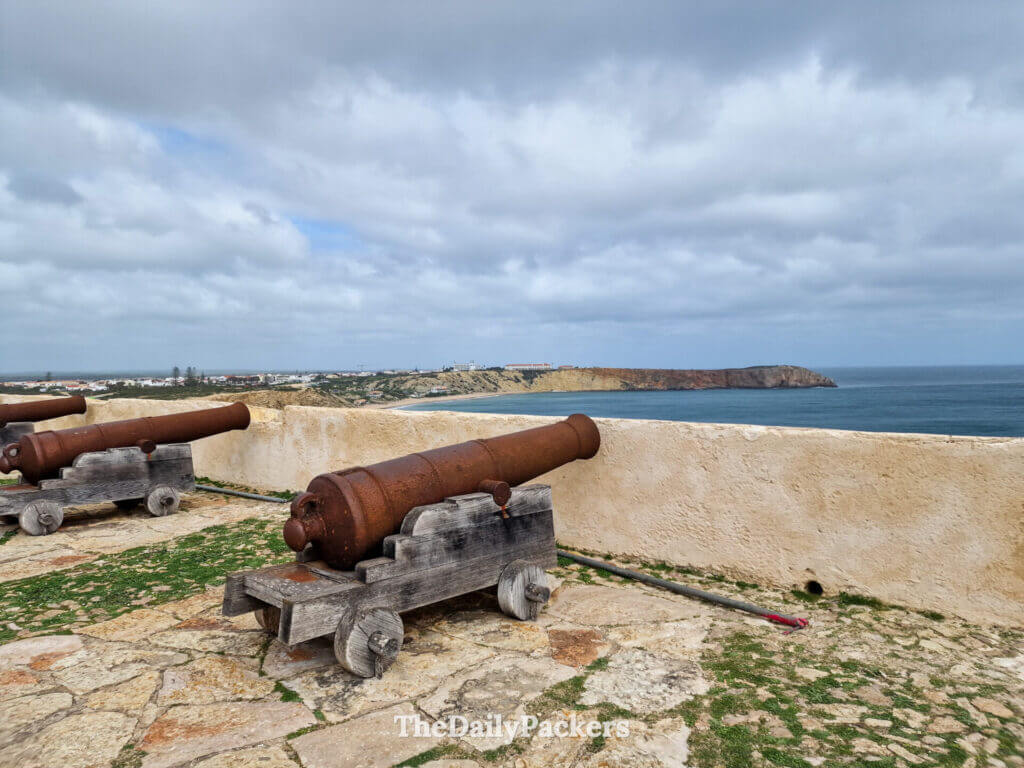
Beyond the history, the walk itself is worth it. The fortress covers the entire tip of a rocky peninsula, so you’re basically surrounded by cliffs and ocean on three sides as you make your way around. You’ll get views of Cabo de São Vicente on one side and a long stretch of Algarve coastline dotted with beaches on the other. Add in the small museum, the little church, and the lighthouse at the far end, and you’ve got a couple of hours that feel both historical and scenic without ever feeling rushed or crowded.
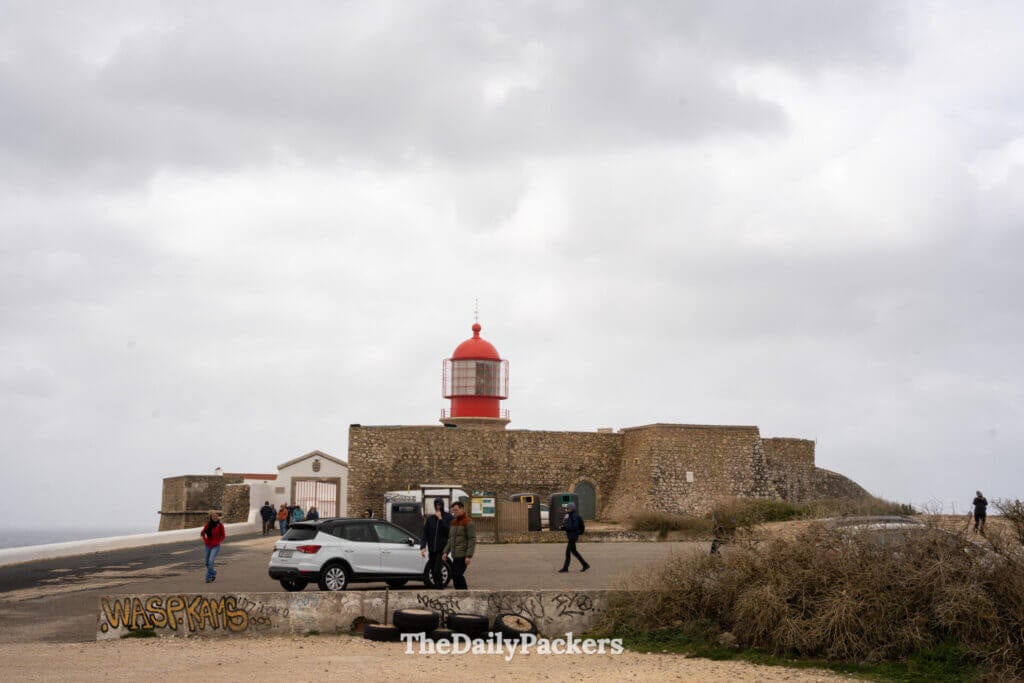
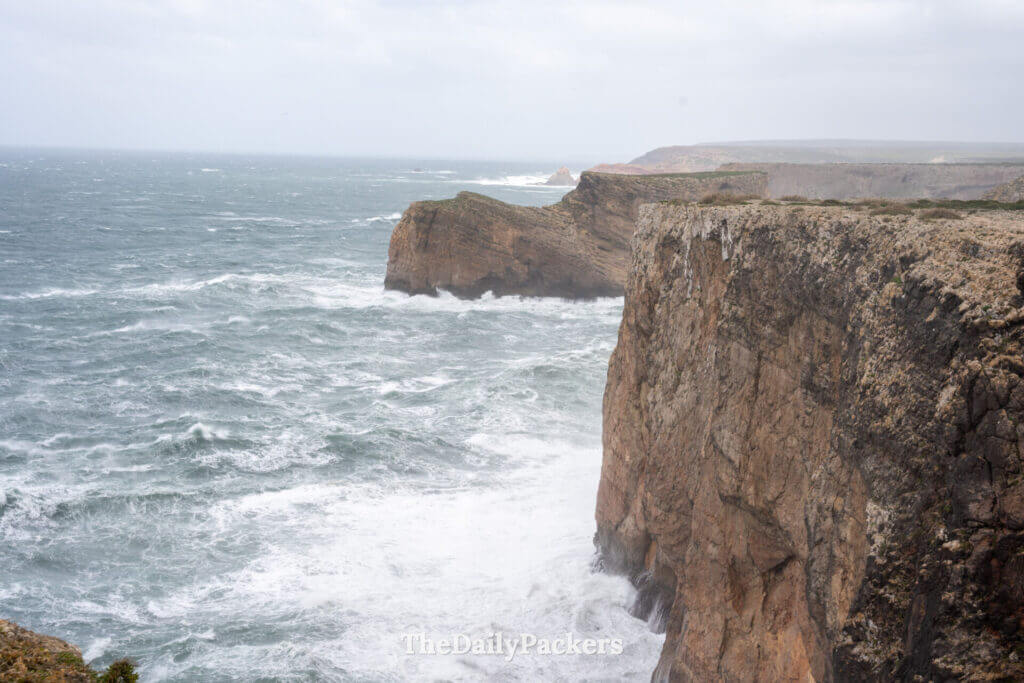
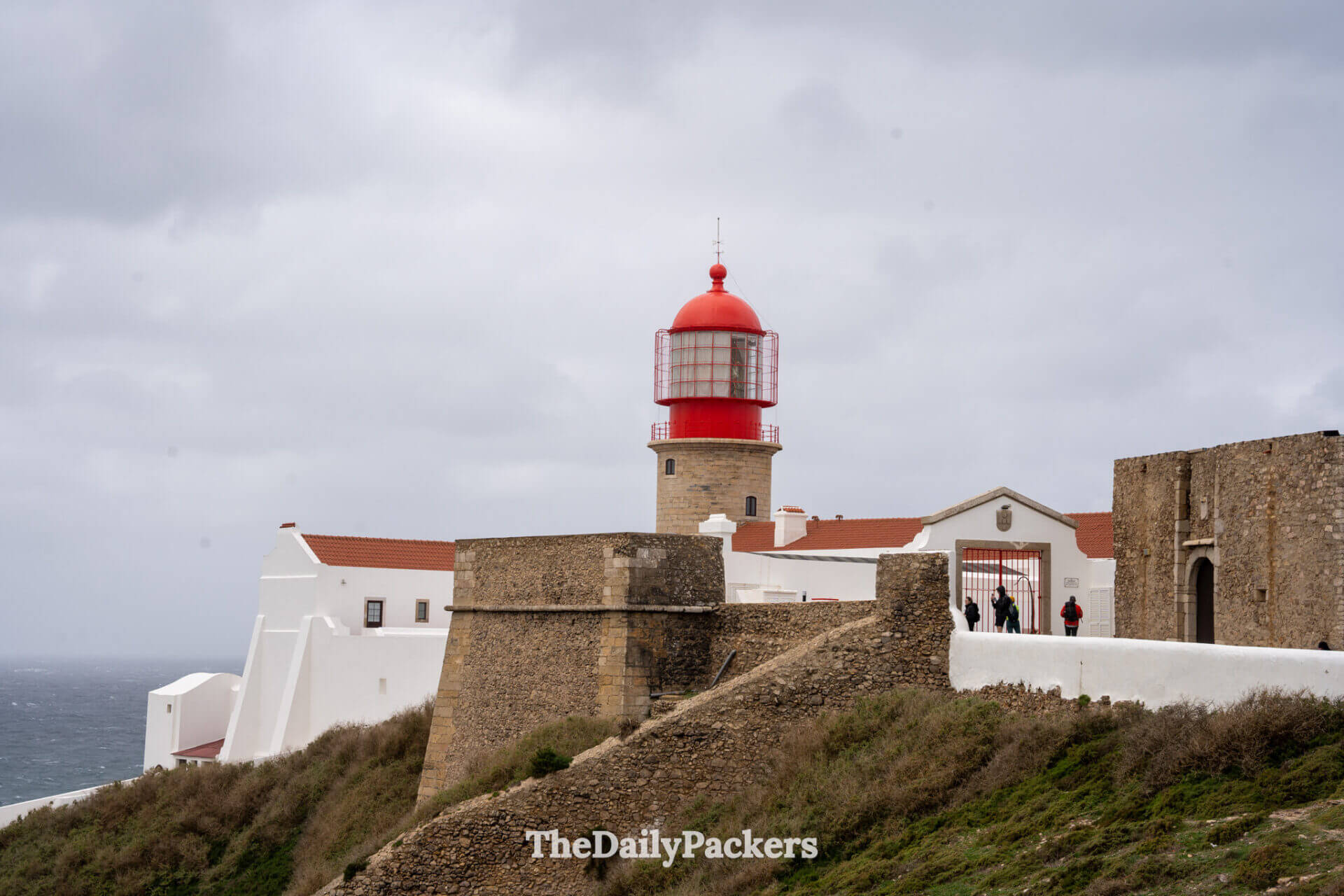
Pair it with Cabo de São Vicente. Once you’re done at the fortress, it’s worth continuing just a few minutes further to Cabo de São Vicente, the actual southwestern tip of mainland Europe. The cliffs there drop 75 meters straight into the Atlantic, and it’s one of the best sunset spots in the entire Algarve. The interior building and museum are currently closed to the public, but the cliffs and grounds are open 24/7 and completely free, so it’s an easy add-on regardless of timing. If you have been to Cabo da Roca, the westernmost point of Europe, you may see similarities.
If you’re already planning time in Europe around Lagos and the wider Algarve, Sagres fortress and Cabo de São Vicente together make for one of the most rewarding half-days you can spend on this stretch of coast.
How to get there
Getting to Sagres Fortress is quite simple, especially if you’re already based in Lagos or driving along this stretch of the Algarve coast. From Lagos, you just follow the signs toward Sagres, and the drive takes you along a scenic stretch of road that gives you a nice preview of the rugged coastline you’re about to explore.
It’s a straightforward drive with no tricky turns or confusing detours, which is a nice change of pace if you’ve already dealt with the parking chaos of Sintra or the winding roads in Óbidos.
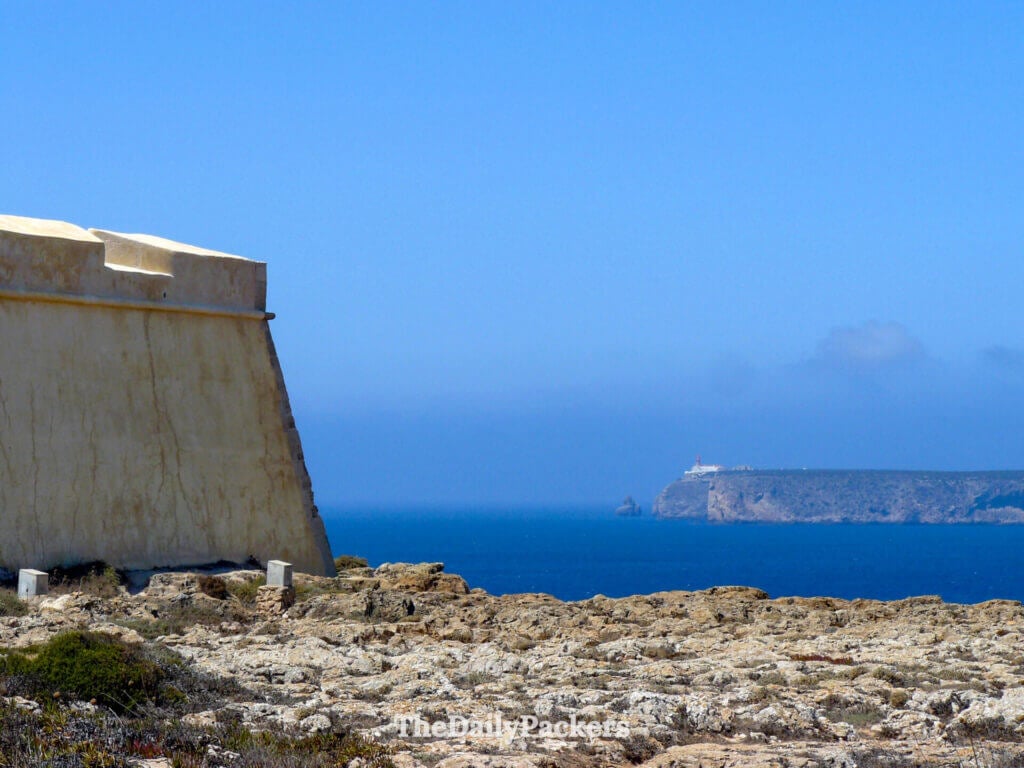
Once you arrive, parking is free, and there’s a lot right by the entrance, so you won’t need to worry about circling around looking for a spot. From the parking area, it’s just a short walk to the main gate.
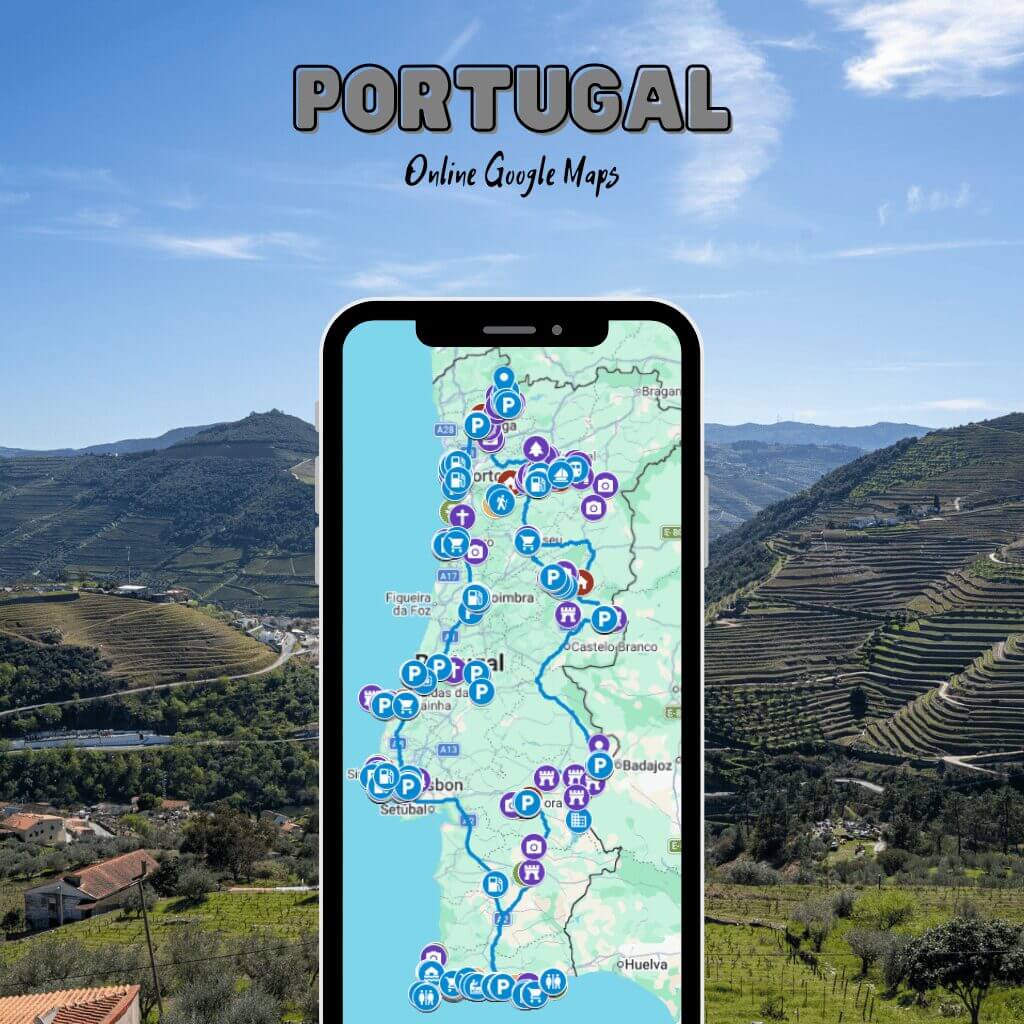
If you don’t have a car, getting here without one is a bit more of a challenge since public transport options in this part of the Algarve are limited. Having your own rental car really is the easiest way to explore Sagres, Cabo de São Vicente, and the rest of this corner of Portugal at your own pace.
When to visit
Sagres sits right on the coast where the Atlantic meets the Algarve, and that location comes with a very specific personality: wind. We visited in April, and it was blowing so strongly that our visit turned into a bit of a workout. If you’re sensitive to wind or traveling with little ones, this is genuinely something to plan around rather than something you can just push through.
Season matters too. Spring and early autumn tend to give you decent weather without the peak summer heat, which can feel intense out here with so little shade. Summer brings more visitors, especially since Sagres is a popular base for surfers, but the site is spread out enough that it rarely feels overcrowded.
Whatever time of year you go, our best advice is simple: check the wind forecast before you leave, and pack layers even if the rest of the Algarve is warm. The exposed cliffs here create their own microclimate, and what feels mild in Lagos can feel a lot rougher once you’re standing on the ramparts of the fort.

We recommend to rent a car through Discover Cars with free cancellation. Book your rental car here.
How We Visited: Our Experience
After a good lunch at Laundry Lounge Sagres, we headed straight for the fortress. The ticket office is actually inside the main gate, so you walk through the entrance first and buy your tickets just after, which felt a little backwards the first time but makes sense once you’re there. The moment we stepped back outside, the wind hit us properly. We’d read that Sagres could get windy, but this was another level, one of the strongest we experienced in Portugal, and we visited in April, so it wasn’t even peak season for it.
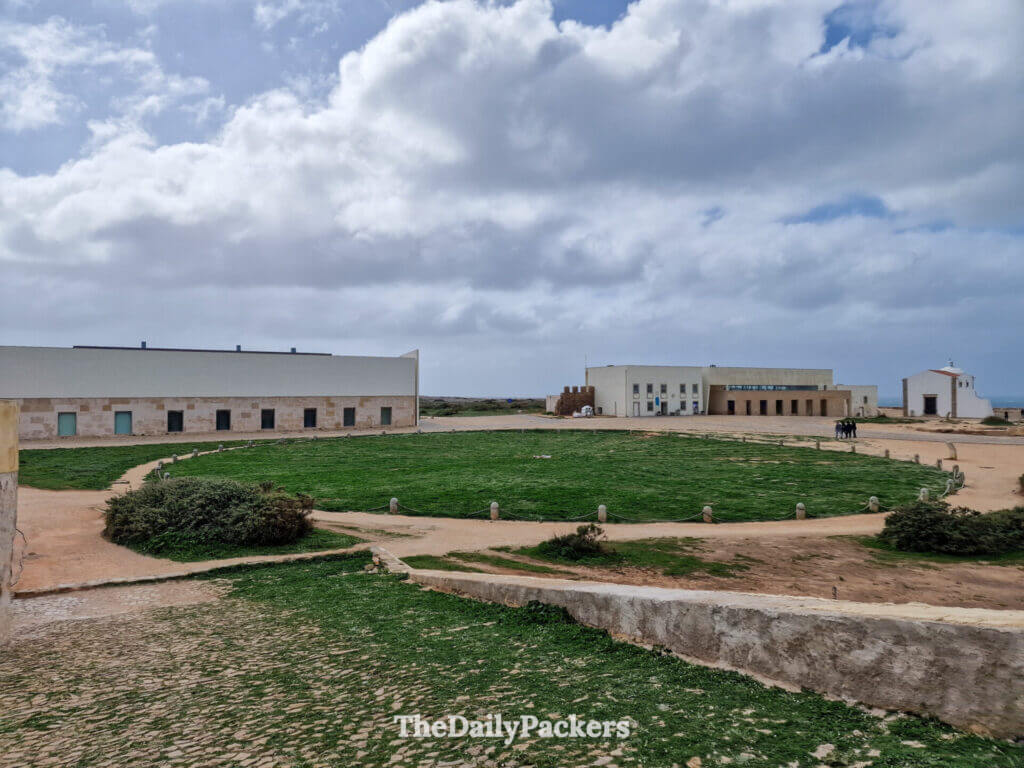
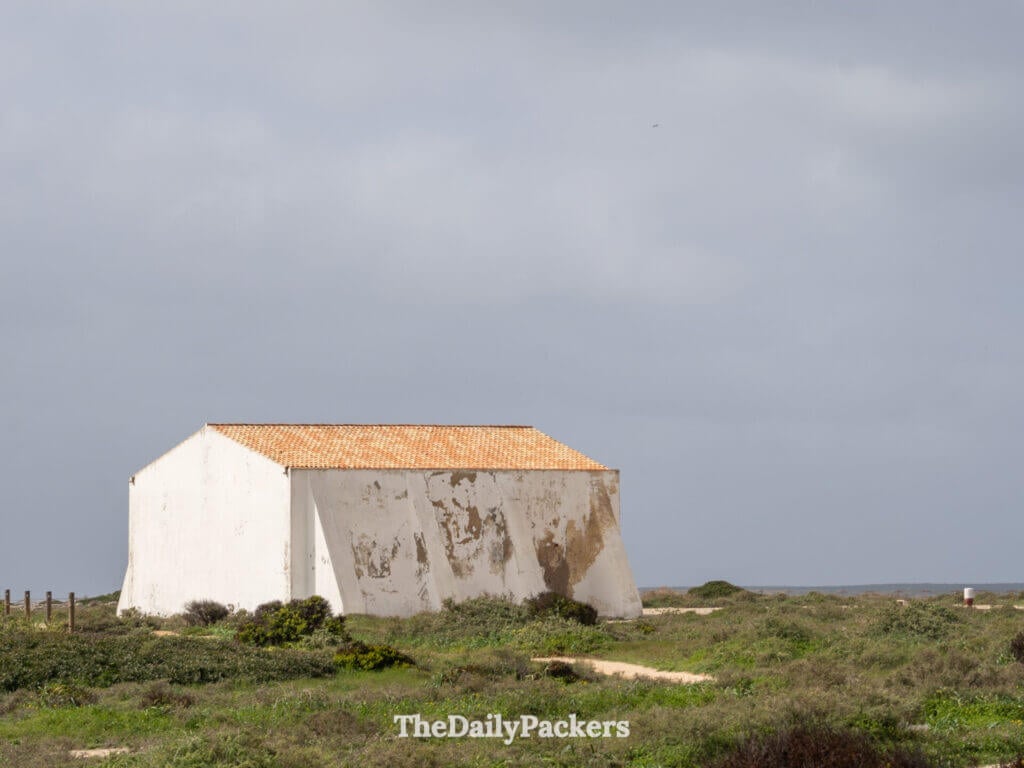
With our family ticket in hand, we started at the beginning of the site and popped into the small church, Igreja de Nossa Senhora da Graça. It’s modest, nothing that will blow you away, but it’s worth a quick look since it’s right there. From there we headed into the museum, Centro Expositivo do Promontório do Sagres, which turned out to be a nice surprise. It’s genuinely interesting, and honestly a perfect shelter from the wind if you’re traveling with a baby or just need a break from the gusts outside.
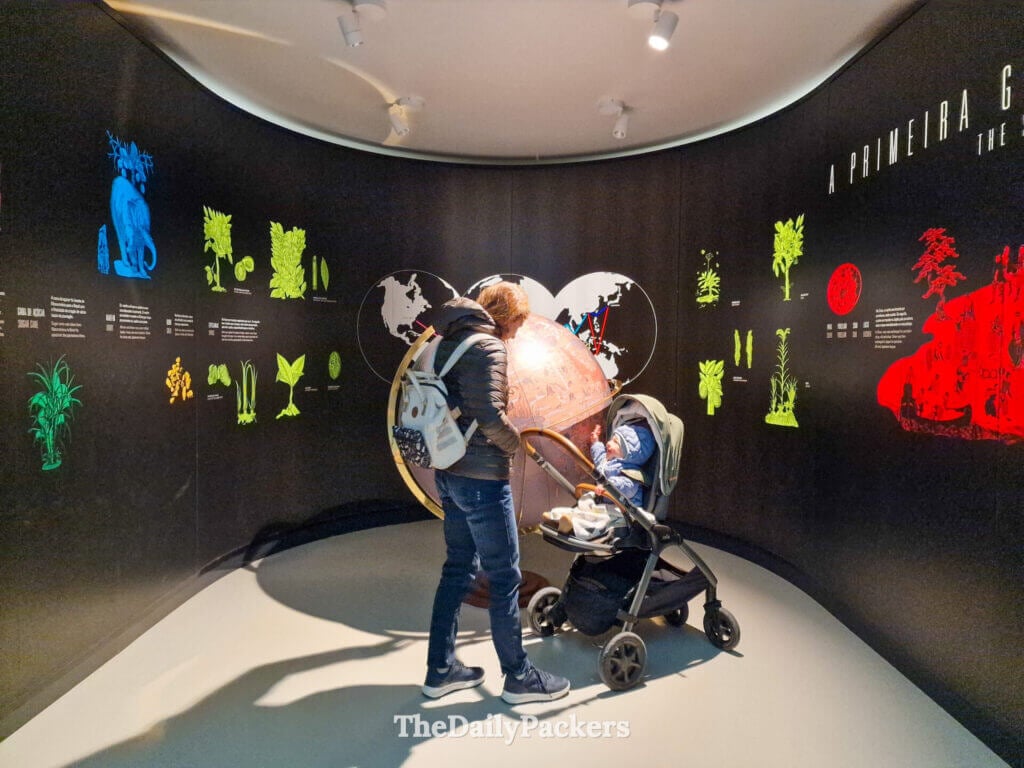
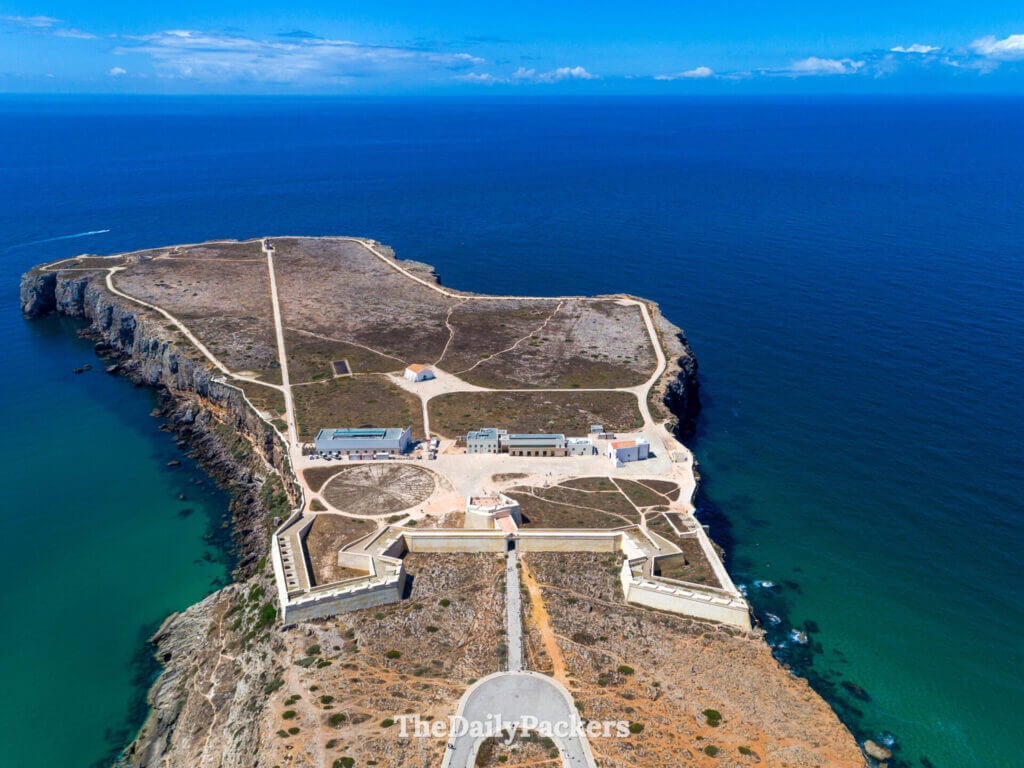
This is actually where Tina decided she’d had enough of the wind and headed back to the car with Milo, while I carried on exploring solo. Not wanting to leave them waiting too long, I picked up the pace but still made sure to walk all the way to the far end of the fortress. What makes Sagres fortress interesting is its layout: it sits on the very tip of a rocky peninsula, with the entrance cutting across the base and the entire point of land enclosed within the walls. It genuinely feels like you’re walking to the edge of something.
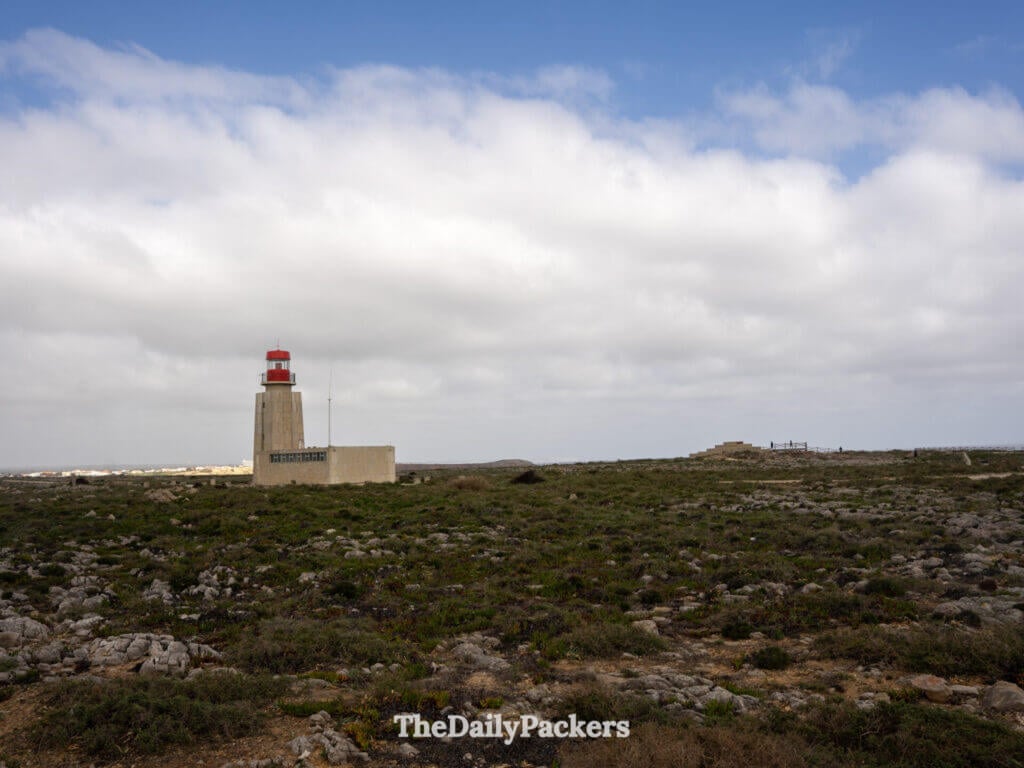
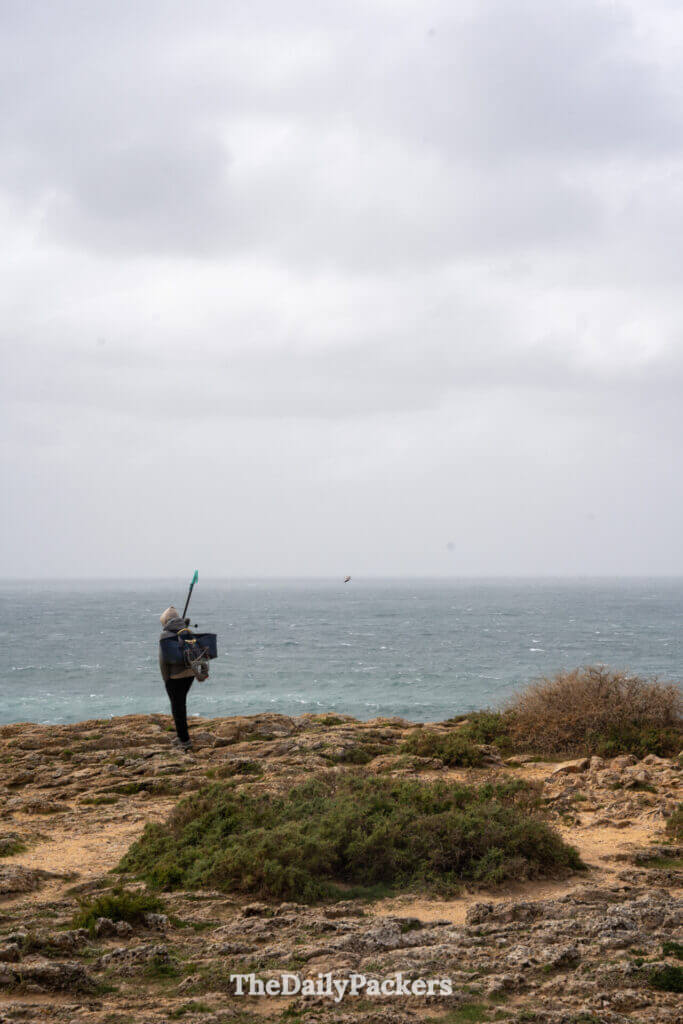
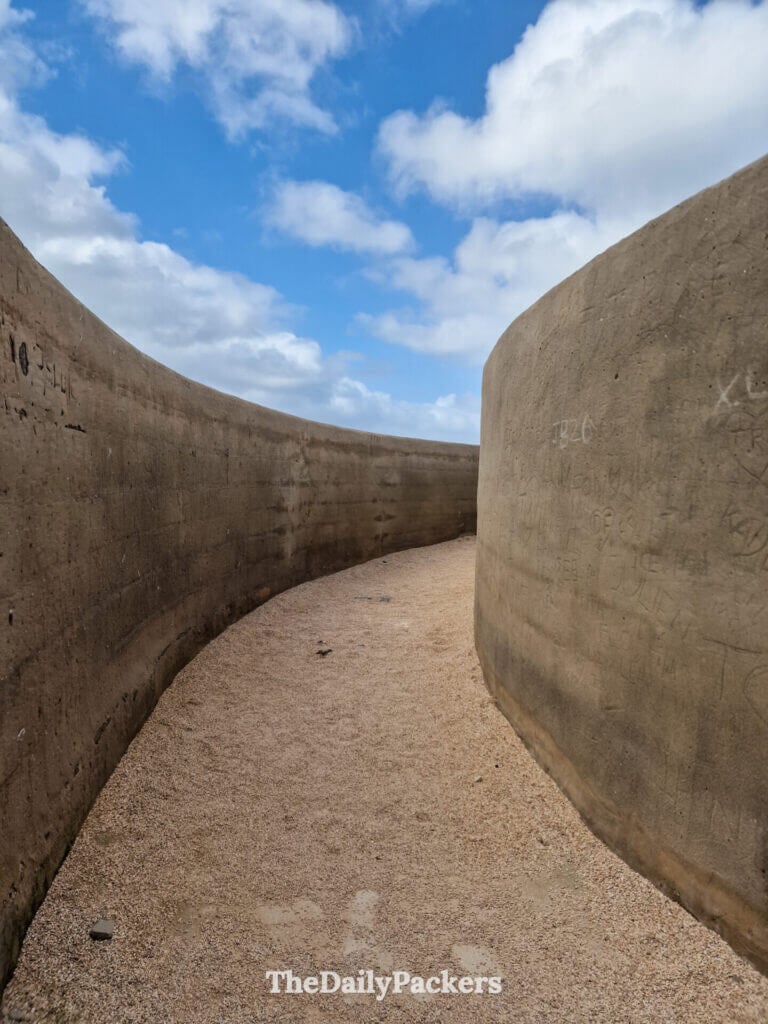
Along the way to the lighthouse at the far end, I spotted a few local fishermen casting their lines despite the wind, which honestly left me confused about how they managed it. Near the lighthouse, you’ll find A Voz do Mar, a circular tiled maze you can walk through. It’s a small detour, but a fun one, and the viewpoints scattered along this whole stretch are worth slowing down for.
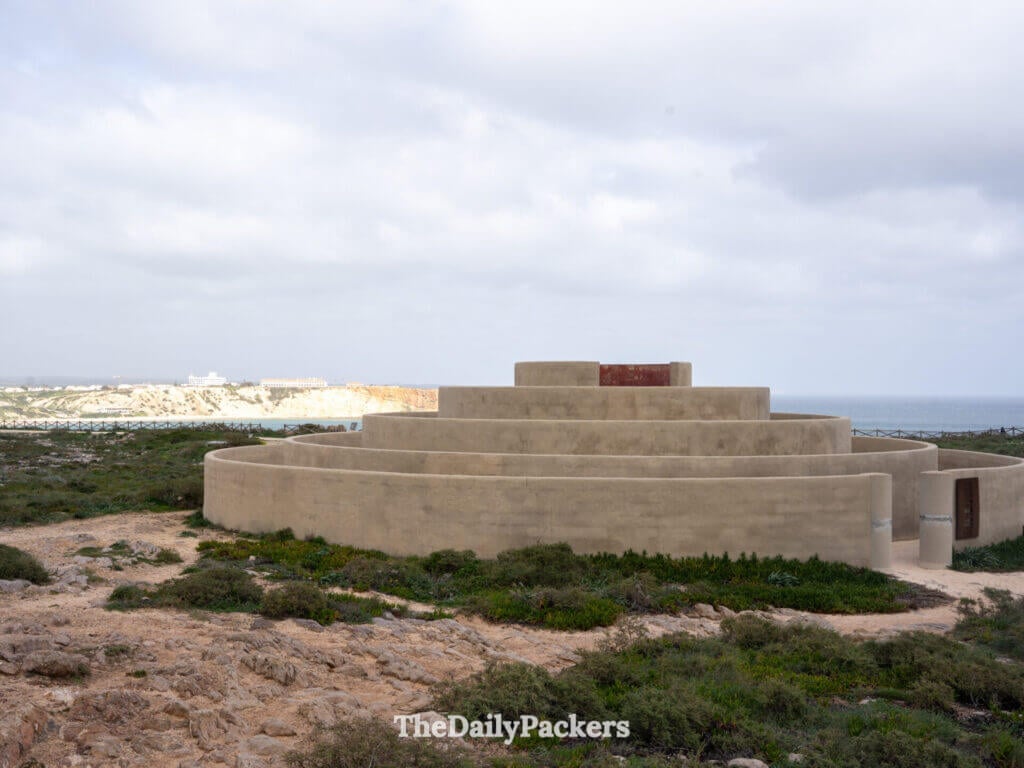
Walking back toward the main entrance along the other side of the peninsula, the views change completely. One side looks out toward Cabo de São Vicente, while the other gives you a long look at the Algarve coastline and its endless string of beaches. Before heading out, make sure to walk along the ramparts, the actual walls of the fortress, where you’ll find the wind rose etched into the ground.
From there, we drove on toward Cabo de São Vicente. It’s a short drive, and while the interior building and museum are currently closed to the public due to operational issues, the cliffs and grounds themselves are open 24 hours a day and completely free to visit. What we can confirm firsthand is the wind: it was so strong that we could actually feel salty sea spray in the air from the waves crashing 75 meters below. There’s a free parking lot on-site, though it fills up quickly around sunset, and a few local food trucks parked just outside the walls if you want a snack with your view.
On the way, we also passed Forte de Beliche, a small fort that looked like it would have been worth a stop, but it was completely closed and seemingly abandoned.
Tickets & Opening Hours
Sagres fortress is open daily from 9:30 AM to 5:30 PM, with last entry at 5 PM, so you’ve got a solid window to explore without feeling rushed.
Entry costs 10€ per adult, and there’s a family discount available, we paid 10€ total for three of us, which made it an easy, budget-friendly stop. Parking right by the entrance is free, so you won’t have any extra costs to factor in there.
Since the site is entirely outdoors and exposed to the elements, keep an eye on the weather and wind forecast before heading over, and try to arrive earlier in the day if you can, both for calmer conditions and a quieter experience.
Is it Worth It?
Honestly, yes, and it doesn’t take much time or money to find out for yourself. At 10€ a ticket, with free parking and a couple of hours needed to see it properly, Sagres fortress is one of the easier “yes” decisions you’ll make on an Algarve road trip.
Where this stop really earns its place, though, is in how well it pairs with what’s around it. You get the history and the walk at the fortress, then a few minutes down the road you’ve got Cabo de São Vicente for sunset and dramatic cliffs, completely free.
If you’re already driving out toward Cabo de São Vicente, which most people are, adding the fortress to your route barely costs you extra time or money, and gives you a lot more depth than the cliffs alone.
What to Bring & Pro-Tips
Layer up, seriously. Sagres has its own microclimate thanks to its exposed position on the coast, and the wind here can be relentless even when the rest of the Algarve feels calm. A windbreaker or light jacket will save you a lot of discomfort.
Stroller vs. baby carrier. The fortress grounds are walkable and mostly flat, so a stroller can technically work. That said, with the wind we experienced, a baby carrier felt like the more practical choice, especially for the walk out toward the lighthouse and back.
Use the museum as a wind break. If the gusts get too intense, the Centro Expositivo do Promontório do Sagres is a great spot to duck into. It’s interesting on its own, and a welcome bit of shelter if you’re traveling with little ones.
Check the wind forecast before you go. This isn’t just about comfort, strong gusts can make the walk along the ramparts and cliffside paths feel a lot more intense than expected.
Don’t rush the walk to the lighthouse. The path out to the far end of the peninsula is one of the best parts of the visit, with viewpoints along the way and a good chance of spotting local fishermen doing their thing despite the conditions.
Combine with Cabo de São Vicente. It’s just a short drive further and makes a natural next stop after the fortress, especially if you want to see even more dramatic coastal views and feel the sea spray in the air on a windy day.
Where to stay
Since Sagres fortress is such an easy drive from Lagos, basing yourself there gives you a great mix of comfort and convenience for exploring this end of the Algarve.
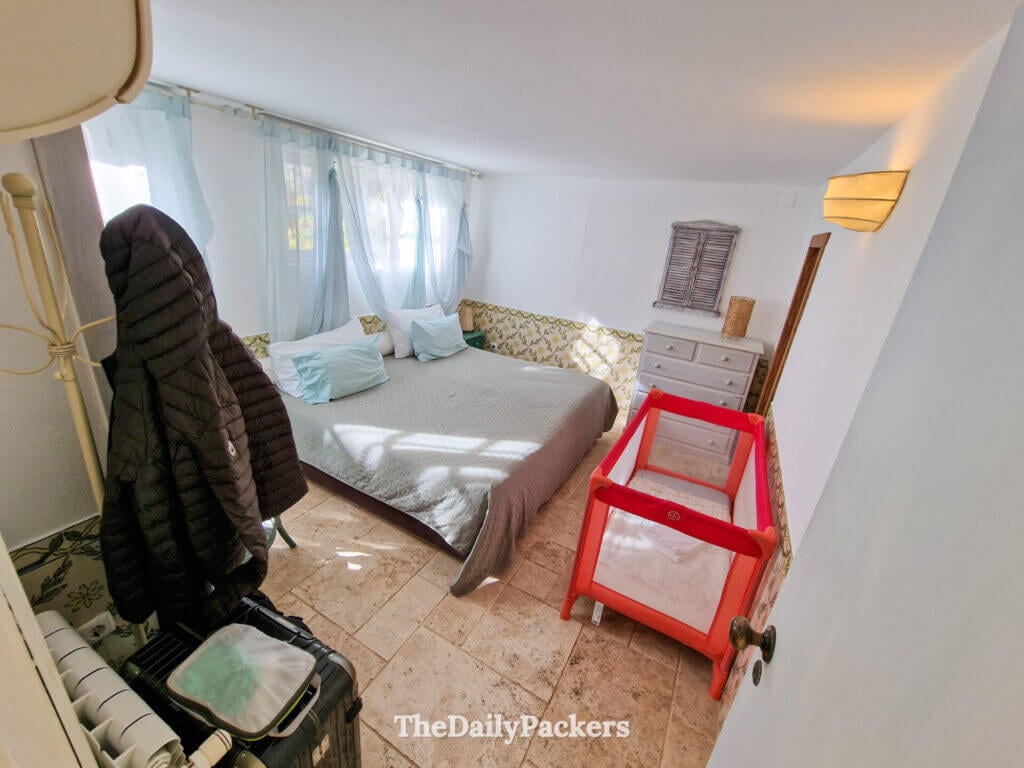
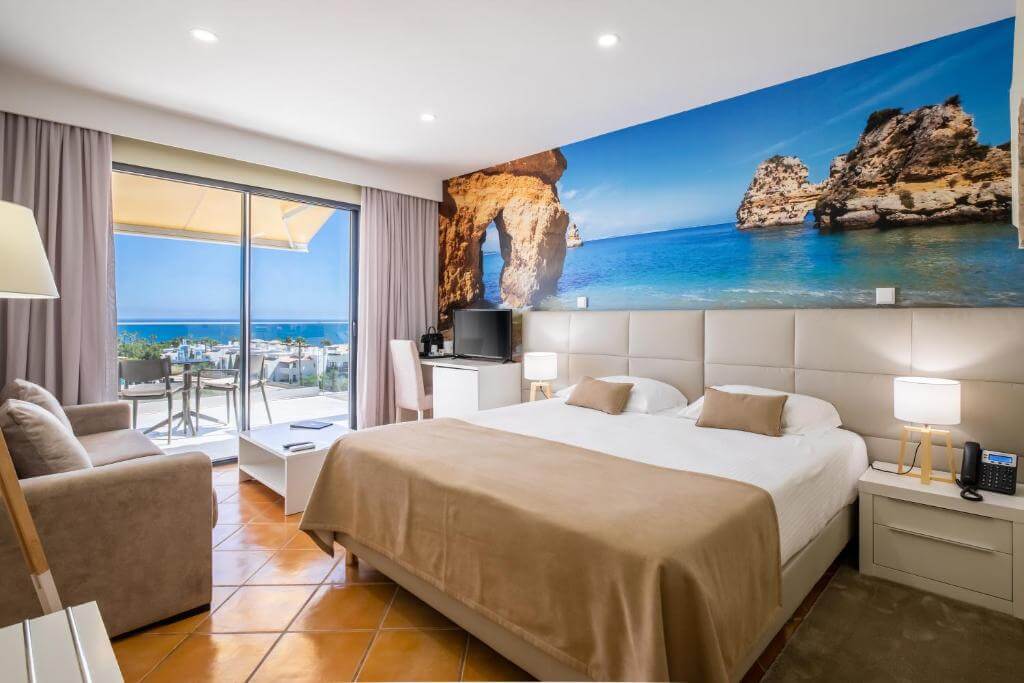
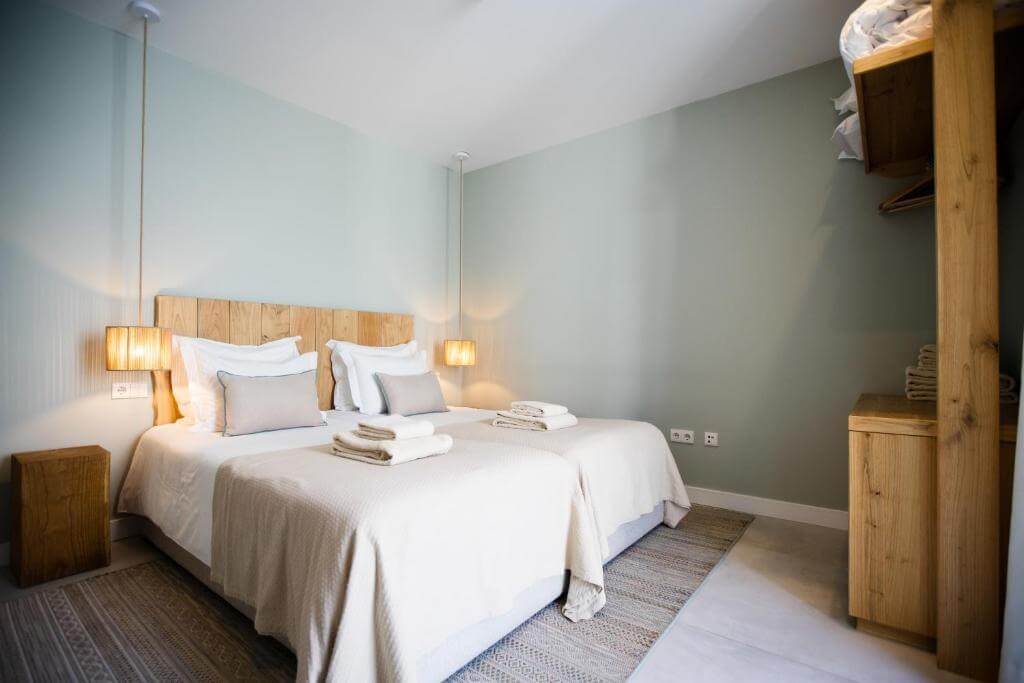
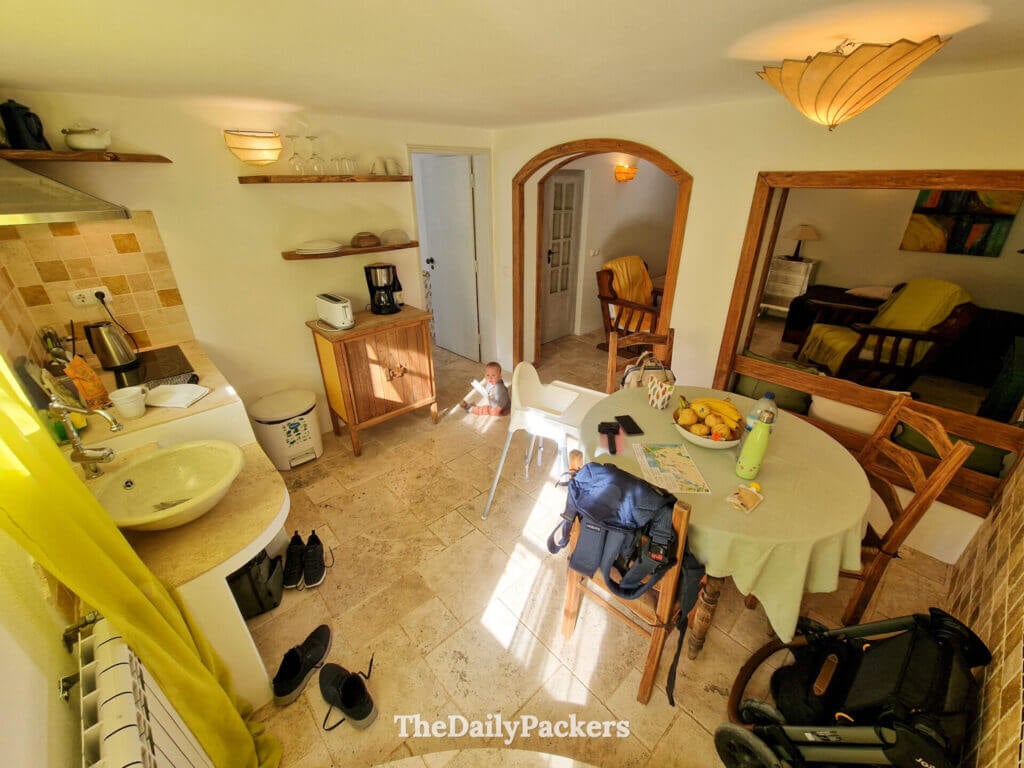
Uma Casa à Beira Sol: This is where we stayed, and we genuinely loved it. It’s a cozy boutique hotel with spacious rooms, and the original design gives you the feeling of staying in a real Portuguese home rather than a generic hotel. Milo loved it too, which is always a good sign when you’re traveling with a baby.
Lagos Atlantic Hotel: If you’re looking for something a bit more luxurious, this is a solid pick. It offers a more polished, upscale stay while still keeping you close to Sagres and the rest of the Algarve coast.
Casa Margô: These boutique apartments offer excellent value for money, making them a great option if you want a bit more space or flexibility without stretching your budget.
Wherever you choose to stay, Lagos makes an easy base for day trips out to Sagres, Cabo de São Vicente, and the wider Algarve region.

About the authors
We are Alex and Tina, a French-Serbian couple who met in China back in 2014. We spent three incredible years there before making France our home. Our shared passion for travel has been the heartbeat of our relationship for over 12 years, taking us across 44 countries and counting.
We launched TheDailyPackers in 2019 as a way to document our adventures. In 2026, we reached a major milestone by officially turning our blog into our full-time job. While we are still growing toward financial independence through this platform, every article we write is fueled by our mission to make your voyages easier through in-depth guides, honest advice, and the lessons we’ve learned from our own mistakes.
Our journey has not been without its storms. In 2023, our world changed forever when our first son, Poppy, was stillborn on November 25th. It was, and remains, the hardest chapter of our lives. In 2025, we were blessed with our second little boy, Milo. He has since joined our traveling tribe, and you’ll be seeing him—and the reality of traveling with a little one-on the blog more and more.
We hope to inspire you to explore the world with curiosity and resilience. Thank you for being part of our story.
You may also like those related posts
Albufeira Travel Guide: Best Things to Do & See in 2026
Lagos Travel Guide: Top Attractions & Tips
Obidos Travel Guide: 11 Best Things to Do in A Medival City
18 Best Things to do in Lisbon, Portugal, in 3 to 4 days
Seven Hanging Valleys Trail: The Complete Hiking Guide
Livraria Lello Porto: The World’s Most Beautiful Bookstore
Nazaré: Chasing the Giant Waves of Portugal
Faro Travel Guide: Best Things to Do in the Algarve
Pssst, did you know that…
If you purchase something through our links, we earn a small fee. However, you still pay the same. Win-win! And one day we may get to be full-time travel bloggers =)
Find Hotels with Booking.com
Do Yoga with KVY
Buy us a Coffee
Rent a car with DiscoverCars
Find Attractions with GetYourGuide
Find Flights with Expedia
Buy an eSIM with Airalo
Get insured with World Nomads
Get ready with Amazon.com