

Introduction
In August 2021, we made a one-month road trip from France to Serbia, passing through Slovenia, Croatia, and Bosnia & Herzegovina. On the way back, we decided to cut the drive in half and stop for a night in Budapest.
We only had one day to explore the city—yes, it was intense, but also incredible. Even with just 24 hours, we managed to see a lot, and that’s what this “Best Things to Do in Budapest” article is based on: our own short but packed itinerary.
Budapest is not only Hungary’s capital but also its most populous city, with over 1.7 million people spread across 525 km². It’s the 9th largest city in the European Union.
One thing to know right away: Budapest is actually two cities—Buda and Pest—separated by the Danube River. They were united in 1873, but both sides still keep their own distinct charm.
The city’s roots go far back. It started as a Celtic settlement before becoming a Roman town. The Hungarians arrived around the 9th century, and the Mongols sacked it in the 13th. Buda was rebuilt but later fell under Ottoman rule. Eventually, Budapest became the co-capital of the Austro-Hungarian Empire before becoming what it is today: a vibrant, historical, and beautiful capital worth exploring—even in just one day.

Here are all your accommodation options in Budapest.
Getting there
Budapest is easy to reach from many European cities, whether you’re coming by plane, train, car, or bus.
- By Plane: Budapest Ferenc Liszt International Airport (BUD) is located about 16 km southeast of the city center and is well connected with most major European cities. From the airport, you can take a taxi (around 30–35€), an airport shuttle, or a bus (bus 100E goes directly to the city center).
- By Train: Budapest has three main international railway stations: Keleti, Nyugati, and Déli. If you’re coming from cities like Vienna, Bratislava, Prague, or Zagreb, train travel is an easy and scenic option.
- By Bus: FlixBus and other European bus companies offer regular and affordable routes to Budapest. The main bus terminal is Népliget, a bit outside the center but well-connected by metro.
- By Car: That was our case — we arrived by car from Serbia, stopping here for the night before continuing on our way to France. Highways into Budapest are well maintained, but do keep in mind you’ll need to buy a vignette (toll sticker) to drive on Hungarian motorways.
If you’re road tripping like us, Budapest is a great stop to break up a longer journey and get a taste of Hungary’s capital.

Street parking
Street parking is available but highly regulated. Budapest is divided into several zones with different rates and time limits. Most zones require payment from Monday to Friday, 8am to 8pm, and parking is free on weekends (but still often full). You’ll find parking meters on the sidewalks, and you can usually pay by card or with a Hungarian parking app like Simple.
Rates range from 300–600 HUF/hour (approx. 0.75€–1.50€ / $0.80–1.60), depending on the zone.
Underground & Public Parking Garages
For short visits, the best option is to use one of the many underground parking garages, especially around the tourist areas. They are more secure and easier than street parking. Some good central options include:
- Parkolóház Bazilika – next to St. Stephen’s Basilica
- Erzsébet Parking Garage – near Deák Ferenc Square
- Mammut Mall Parking – on the Buda side, near public transport
- WestEnd Mall Garage – big and convenient, near Nyugati train station
Rates usually start at 300–400 HUF/hour (~0.80€ / $0.85), with daily max between 4,000–6,000 HUF (10–15€ / $11–16).
Park & Ride (P+R)
If you’re staying outside the center or arriving by car just for the day, use a Park & Ride facility. You can leave your car safely at a metro station and take public transport in. Popular ones:
- Köbánya-Kispest (M3 line)
- Örs vezér tere (M2 line)
- Újpest-városkapu (M3 line)
These are often free or cost very little — a great low-stress option.

We recommend to rent a car through Discover Cars with free cancellation. Book your rental car here.
Moving Around
Getting around Budapest is easy and affordable — the city has one of the best public transport systems in Europe.
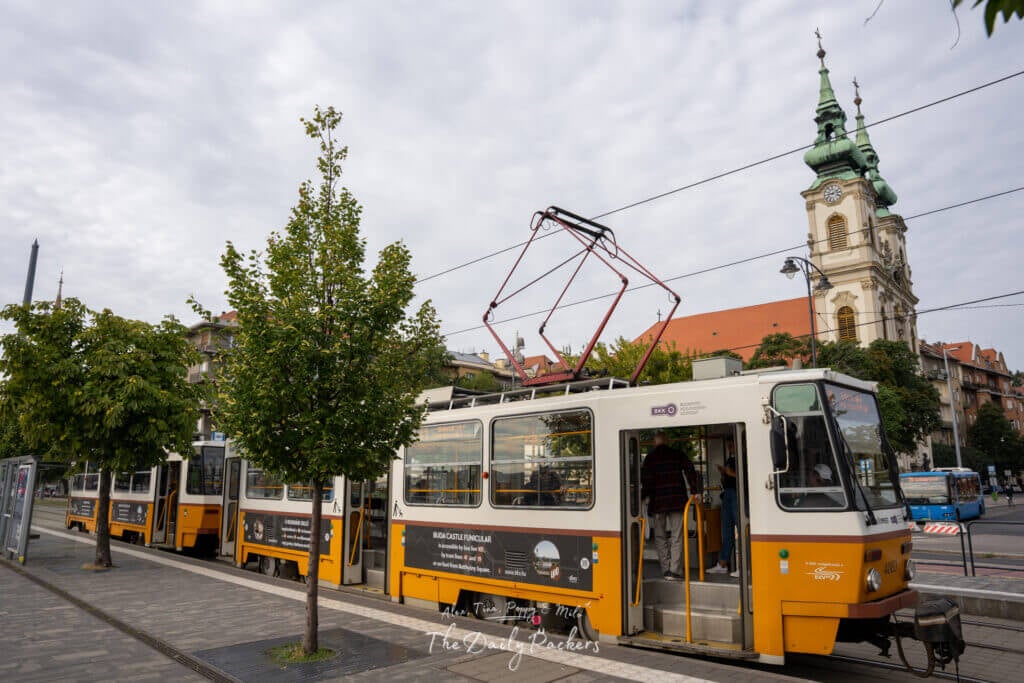
By Metro, Tram & Bus: The city’s public transport network includes 4 metro lines, countless tram routes (tram 2 along the Danube is a must!), and an extensive bus system. A single ticket costs 350 HUF (about 0.90€ / $1), or you can buy a 24-hour pass for 2,500 HUF (approx. 6.40€ / $7). All tickets must be validated before boarding.
By Foot: If you only have a day or two, the best way to explore is by walking — especially in the center where most landmarks are close. We walked a lot between Buda and Pest, crossing the bridges and soaking in the views.
By Bike or E-Scooter: You’ll see a lot of locals on bikes or using apps like Lime or MOL Bubi to rent e-scooters and city bikes. It’s a fun way to explore the flatter parts of the city like Pest.
By Taxi or Bolt: Taxis are available but be sure to use licensed companies or ride apps like Bolt (preferred by locals). Avoid taxis waiting in front of tourist spots — they often overcharge.
Tip: If you’re staying longer than a day, a Budapest Card could be worth it — it includes free public transport and discounts on museums and attractions.


When to Visit
Budapest is a year-round destination, and each season brings its own charm to the Hungarian capital. Whether you’re in the mood for long sunny walks by the Danube, cozy evenings in thermal baths, or strolling through festive Christmas markets — Budapest has something for every traveler, no matter the time of year. Here’s what to expect each season:
Spring (March to May): Spring is a fantastic time to explore Budapest. The city starts to bloom, the parks turn green, and the days get longer.
Expect 10–20°C (50–68°F) in April and May, with fewer crowds and milder weather — perfect for walking around the city or taking a boat on the Danube.
Summer (June to August): Summer is the high season, and for good reason. The city is buzzing with festivals, cafés spill out into the streets, and the nightlife is in full swing. Temperatures range between 25–35°C (77–95°F) and can feel hot, especially with the summer crowds. It’s ideal if you want energy, open-air baths, and events — but book accommodation early.
Autumn (September to November): Autumn is another great time to visit. The weather is still pleasant, and the fall colors add charm to the city’s architecture. September often stays warm at 20–25°C (68–77°F), while November cools down to around 5–10°C (41–50°F). It’s a more peaceful time to enjoy Budapest without the crowds.
Winter (December to February): Budapest in winter is cold and often snowy — expect -5 to 5°C (23–41°F). But it has its magic too. Christmas markets light up the city, thermal baths feel even more relaxing, and there are fewer tourists. It’s the coziest season, especially if you like festive lights and warm comfort food.
Recommendation:: Visit in late spring (May) or early autumn (September) for the perfect balance of weather, smaller crowds, and a relaxed vibe — ideal for enjoying both sides of the Danube without the summer heat.

Tip: A cool way to get around is the City Sightseeing Hop-On Hop-Off Bus
Where to Stay
Here’s where to stay in Budapest if you’re visiting for a quick stop or planning to spend a few days soaking up the city. One night will let you cover the highlights, but 2 or 3 nights is ideal to enjoy it without rushing.
(€) Corvin Residence Apartments – Great value in a central location, perfect for short stays with everything you need close by.
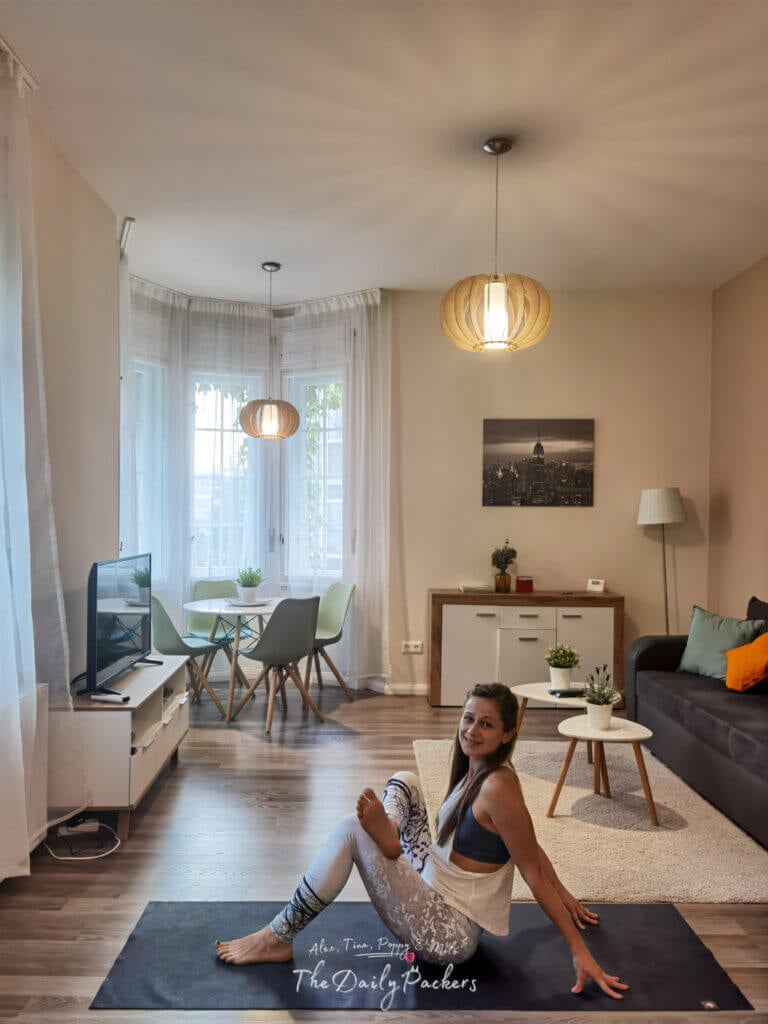
(€€) Christine Apartment close to the Buda Castle – A cozy and comfortable option near one of the city’s main landmarks, ideal if you’re planning to explore Buda on foot.
(€€€) Four Seasons Hotel Gresham Palace Budapest – A luxury experience in a stunning Art Nouveau building right by the Chain Bridge. Worth it if you’re looking to treat yourself.
Here are all your accommodation options in Budapest.
What to eat
Hungarian cuisine is rich, hearty, and deeply comforting — full of paprika, slow-cooked meats, and deep flavors. Budapest is the best place to dive into this traditional food culture, whether you’re grabbing a quick street snack or sitting down in a cozy local tavern. Here are some of the best things to try while you’re there.
- Gulyás (Goulash): A hearty meat and vegetable soup spiced with paprika, often considered Hungary’s national dish.
- Lángos: Fried dough topped with sour cream and cheese, sometimes with garlic or other savory toppings. A street food classic.
- Pörkölt: A slow-cooked meat stew (often pork or beef) seasoned with paprika and served with noodles or dumplings.
- Töltött káposzta (Stuffed Cabbage): Cabbage leaves filled with minced pork and rice, simmered in tomato sauce.
- Halászlé (Fisherman’s Soup): A spicy river fish soup made with paprika, commonly found in riverside towns and local restaurants.
- Dobos Torte: A famous layered sponge cake with chocolate buttercream and a caramel top.
- Kürtőskalács (Chimney Cake): A sweet pastry cooked on a spit, rolled in sugar, and often dusted with cinnamon or nuts.
- Drinks to try: Unicum (a herbal liqueur), Pálinka (fruit brandy), and Hungarian wines like Tokaji or Bull’s Blood (Egri Bikavér).
Budapest is also increasingly friendly to plant-based eaters, with many modern restaurants and cafes offering vegan Hungarian takes or international dishes.
Things to do in Budapest
Admire the Views from Fisherman’s Bastion
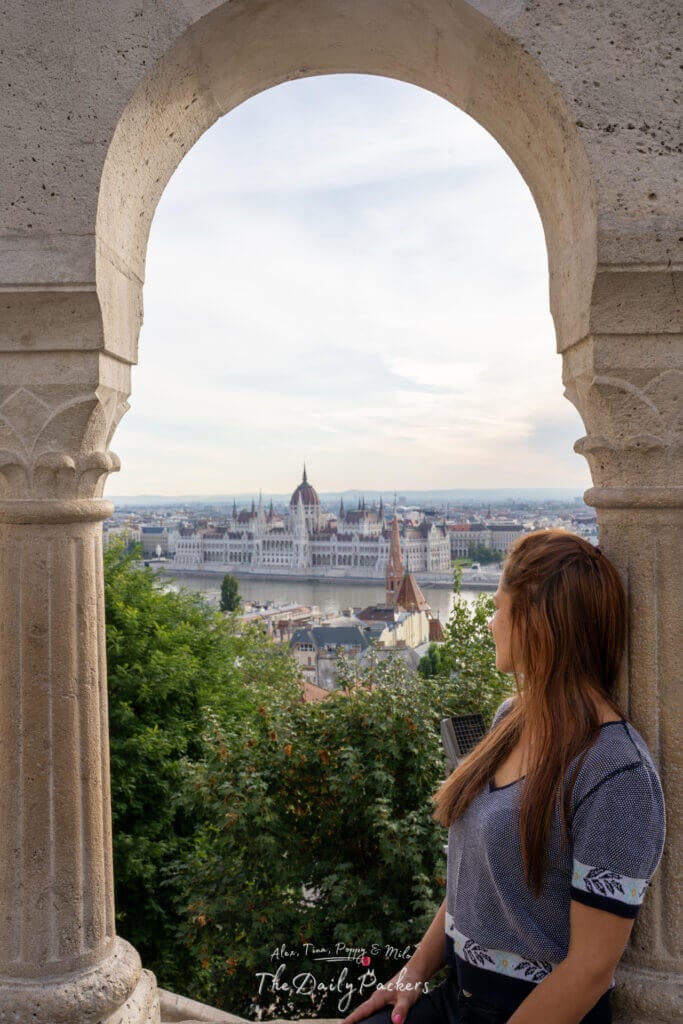
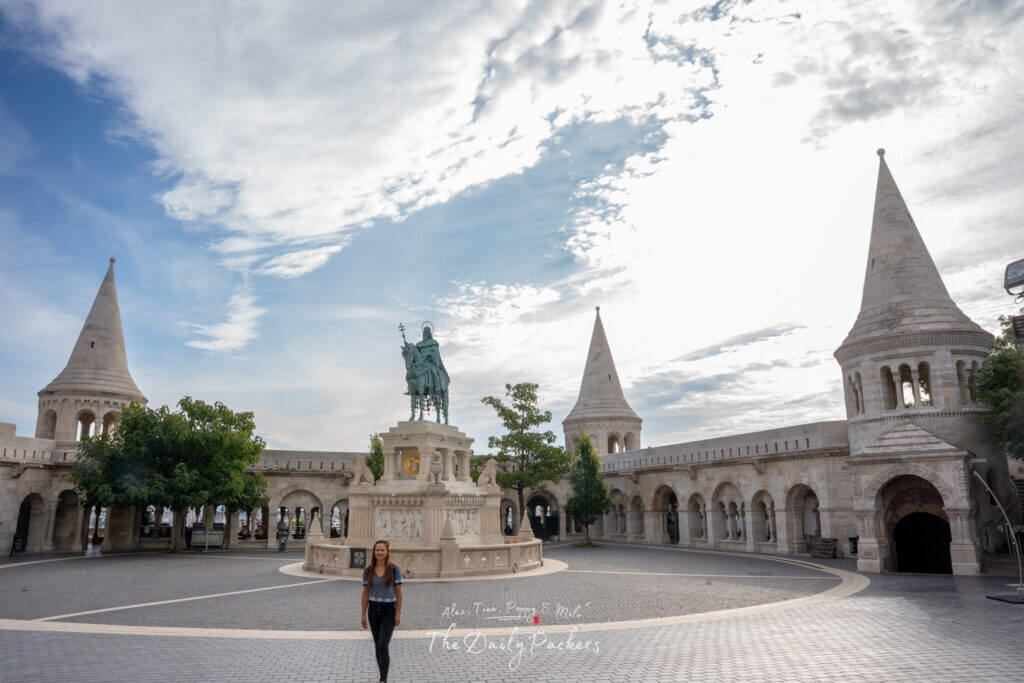
Begin your Budapest itinerary with one of its most iconic spots. Early morning is the best time to visit the Fisherman’s Bastion — before the crowds roll in.

The neo-Gothic terrace was built in the 19th century as a lookout and offers some of the best panoramic views of the city, especially over the Parliament and the Danube.

It’s the perfect place to get a feel for the beauty of Budapest before heading down into the busier streets.

Tip: If you have time take a cruise on the danube
Buda Explore Buda Hill
Wander through the historic Buda Hill, home to some of the most iconic landmarks in the city. In addition to the Fisherman’s Bastion, you’ll find Matthias Church with its colorful tiled roof, the Vienna Gate offering views and a glimpse into the city’s past, and the ruins of the Church of Saint Mary Magdalene.
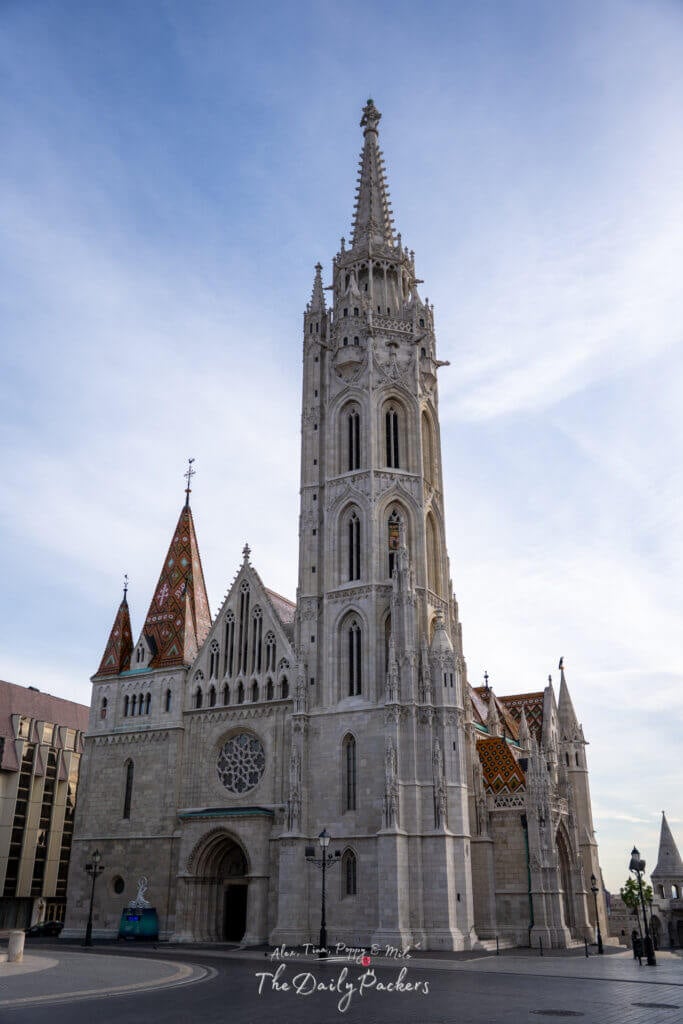
The cobbled streets, quiet courtyards, and scenic viewpoints make this area one of the most charming parts of Budapest.

Here are all your accommodation options in Budapest.
Walk Through Buda Castle
Perched on the southern edge of Buda Hill, Buda Castle is a grand historical complex dating back to 1265. While it houses the Hungarian National Gallery and the Budapest History Museum, you don’t need to go inside to appreciate its beauty.

Stroll through the courtyards, admire the views over the Danube, and take a look at the old funicular that climbs the hill. It’s a great place to soak up the royal atmosphere without needing to rush through exhibitions.

Tip: Try out this guided tour: Buda Castle Walk with Saint Stephen’s Hall
Cross the Iconic Chain Bridge
To make your way from Buda to Pest, head toward the Széchenyi Chain Bridge — one of Budapest’s most recognizable landmarks. If it’s open, walking across gives you beautiful views of the Parliament and the river. If it’s still under construction or you’d prefer a scenic ride, hop on tram 16 or 41 and connect with metro line 2 to cross the Danube while still enjoying views along the way.

Admire the Hungarian Parliament Building
No visit to Budapest is complete without seeing its most iconic landmark: the Hungarian Parliament Building. This massive neo-Gothic masterpiece sits right along the Danube and is the seat of Hungary’s National Assembly.
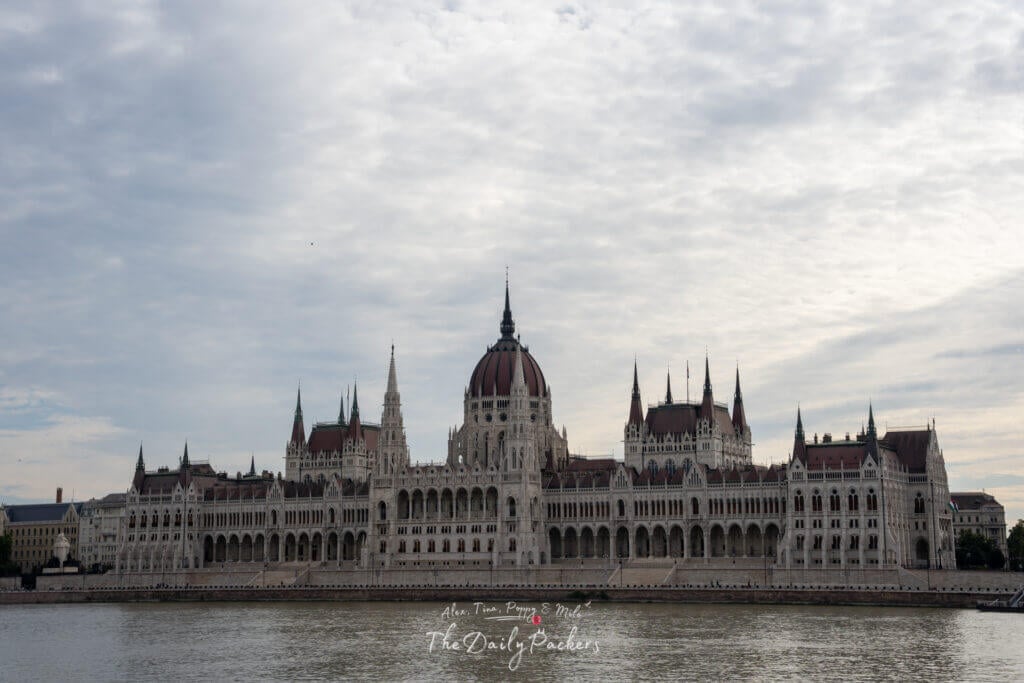
You can simply admire it from outside or, if planned in advance, join a guided tour to explore the opulent interior. Booking ahead is recommended, especially in high season.
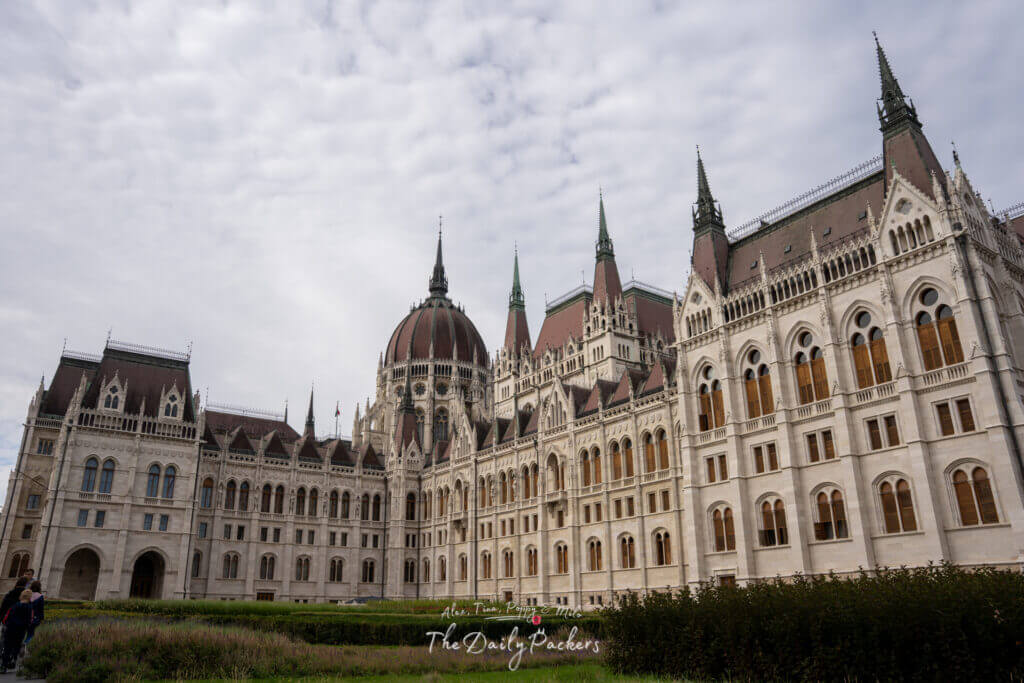
Tip: Be sure to buy tickets in advance, they sold out pretty quickly.
Reflect at the Shoes on the Danube Bank
A short walk south from the Parliament along the Danube brings you to one of Budapest’s most moving memorials. The Shoes on the Danube Bank honors the Jews who were executed during World War II by Arrow Cross militiamen. Victims were ordered to remove their shoes before being shot into the river. The cast iron shoes left behind on the riverbank are a powerful and emotional tribute.
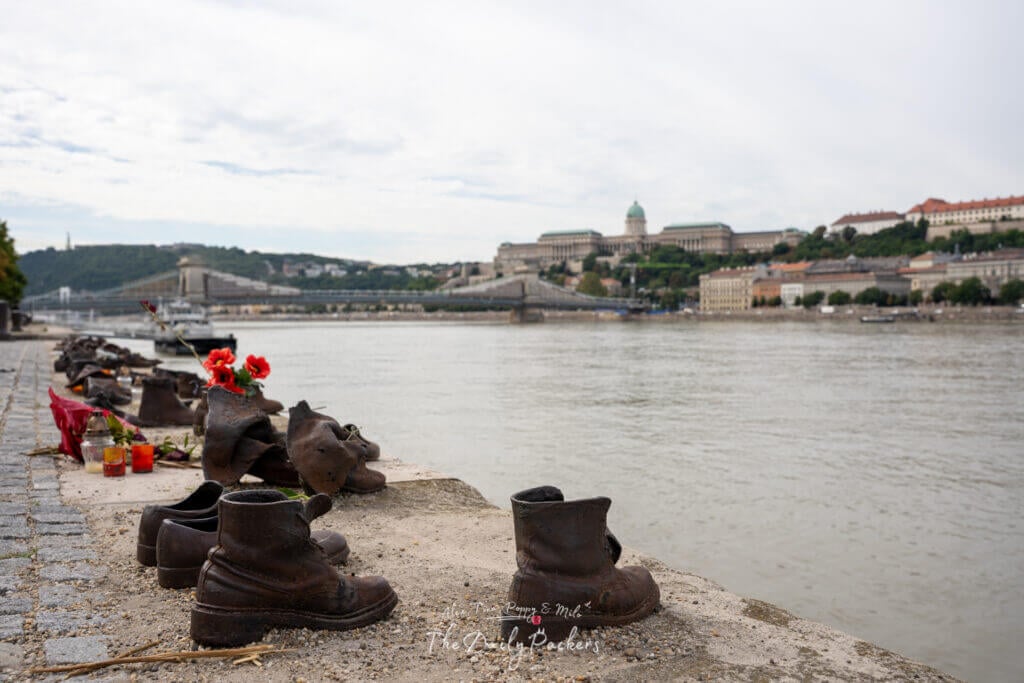
Here are all your accommodation options in Budapest.
Visit St. Stephen’s Basilica
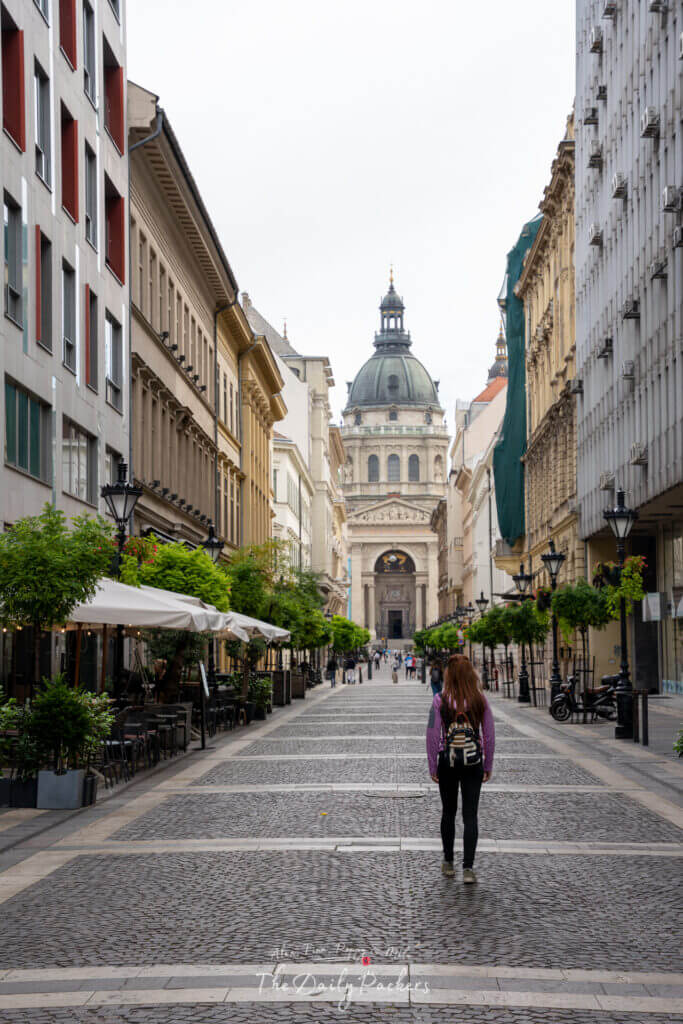
As you continue into the historic center of Pest, St. Stephen’s Basilica rises majestically among the city streets. Named after Hungary’s first king, whose mummified right hand is preserved inside, the basilica is one of the country’s largest churches. Step inside to admire its ornate interior (entry is not free, a small fee applies), or climb the dome for one of the best panoramic views over Budapest.

Tip: You can buy tickets online: St. Stephen’s Basilica Entry with Terrace Option
Admire the Hungarian State Opera
On your way up north, you can make a quick stop to admire the state Opera. (At our time there, it was being renovated.) From there, take the Metro 1 to As you make your way north through the city center, stop by the Hungarian State Opera House. Even if you don’t go inside, the building’s neo-Renaissance façade is worth a look. When we passed by, it was still under renovation, but the exterior was already stunning. From here, hop on Metro line 1 — the oldest metro line in continental Europe — and ride toward Heroes’ Square.’ Square

Visit Heroes’ Square
Heroes’ Square (Hősök tere) is one of Budapest’s grandest and most symbolic public spaces. Dominated by the towering Millennium Monument, the square features statues of the Seven chieftains of the Magyars and other key figures from Hungarian history. At the center, the Memorial Stone of Heroes commemorates those who gave their lives for the country — though it’s often mistakenly called the Tomb of the Unknown Soldier. It’s a powerful spot that captures the spirit of Hungary’s past.

Wander Around Vajdahunyad Castle
Right behind, you will find thecity park and the Vajdahunyad Castle (which is a copy of the Hunyad Castle, in Hunedoara, Romania). Built in 1896 as part of the Just behind Heroes’ Square lies the peaceful City Park and the picturesque Vajdahunyad Castle — a charming mix of architectural styles built for Hungary’s Millennial Exhibition in 1896.
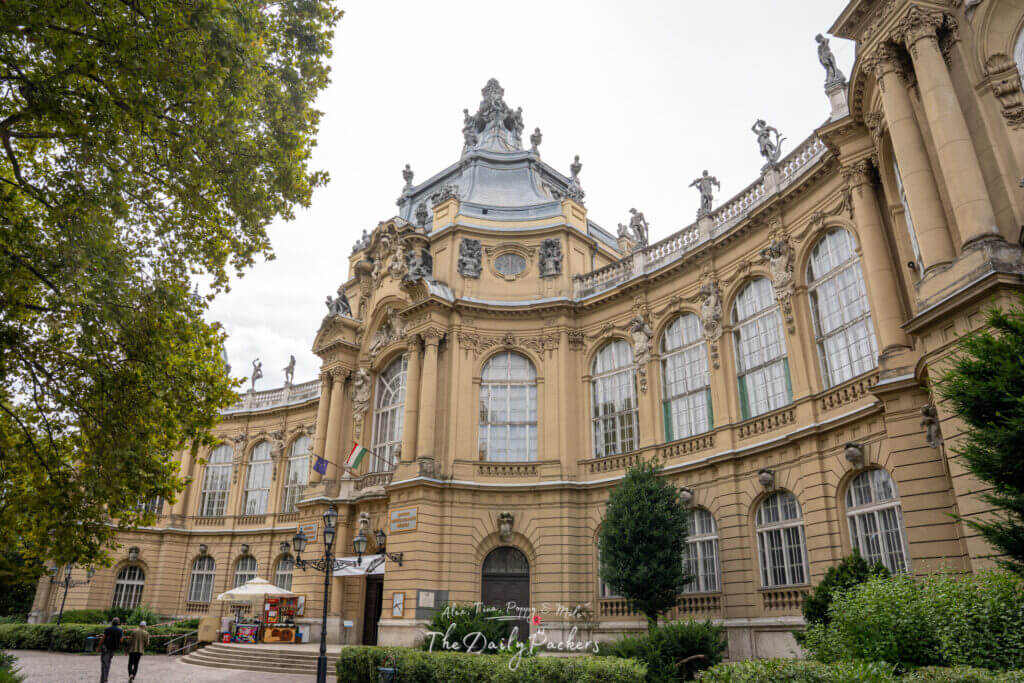
The design is inspired by several iconic buildings across the Kingdom of Hungary, including a replica of Hunyad Castle in Romania. The castle’s setting by the lake makes it a perfect place for a stroll, and if you’re curious to go inside, it now houses the Hungarian Agricultural Museum. Exhibition which celebrated the 1,000 years of Hungary since the Hungarian Conquest of the Carpathian Basin in 895.
Tip: If you have time take a cruise on the danube
Relax (or peek) at Széchenyi Thermal Bath
Budapest is famous for its thermal waters, and the Széchenyi Thermal Bath is the largest and most iconic in the city — and in all of Europe. Fed by two natural hot springs, it’s known for its stunning neo-baroque architecture and relaxing atmosphere.

If you have the time, it’s worth spending a few hours soaking in the outdoor pools. But if you’re only in Budapest for a day, a quick look from the outside still gives you a glimpse of why it’s such a beloved local spot.

Tip: Enjoy the Széchenyi Spa Full Day with Optional Tasting
Dohány Street Visit the Dohány Street Synagogue
Back in the city center, make a stop at the Dohány Street Synagogue — also known as the Great Synagogue. It’s the largest synagogue in Europe and the second largest in the world, with space for up to 3,000 worshippers. More than just a religious site, it also houses the Jewish Museum and a Holocaust memorial in the garden. If time allows and the site is open, it’s well worth stepping inside to understand a significant part of Hungary’s history and Jewish heritage.

Central Explore the Central Market Hall Hall
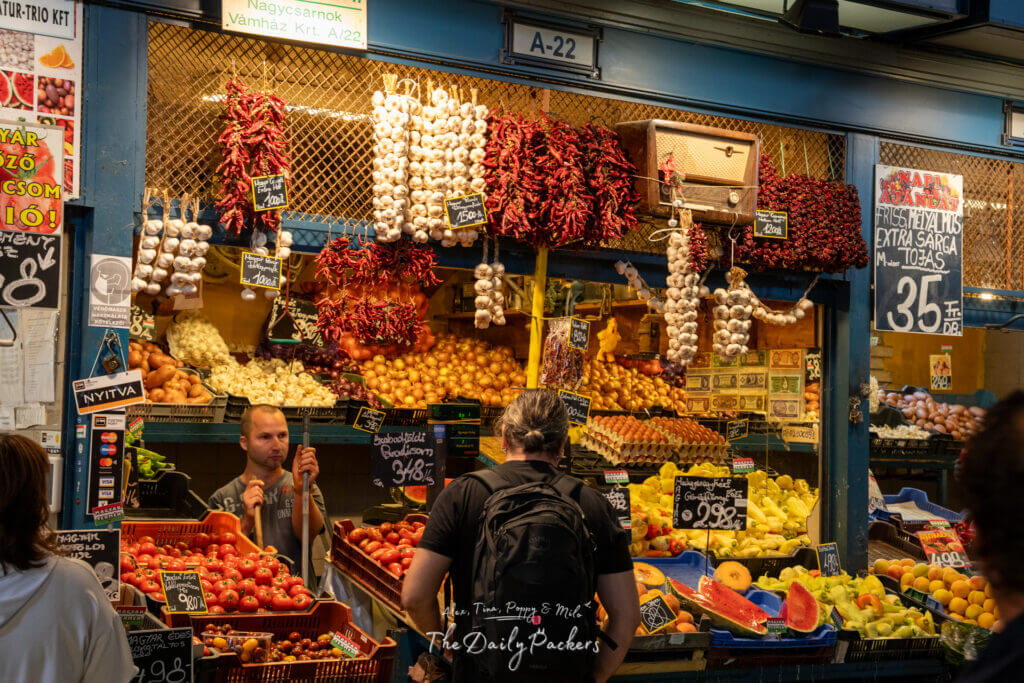
If you love local markets as much as we do, the Central Market Hall is a must. Built in 1897, it’s the largest and oldest indoor market in Budapest. The architecture alone is worth a look, but the real joy is wandering among the colorful stalls.

You’ll find everything from paprika and sausages to local crafts and souvenirs — perfect for a taste of Hungarian life or grabbing a last-minute gift.
Walk by Gellért Thermal Bath
Located at the foot of Gellért Hill, this iconic bathhouse is one of Budapest’s most famous — especially for its Art Nouveau interior. While we didn’t stop for a soak, it’s worth passing by to admire the building.
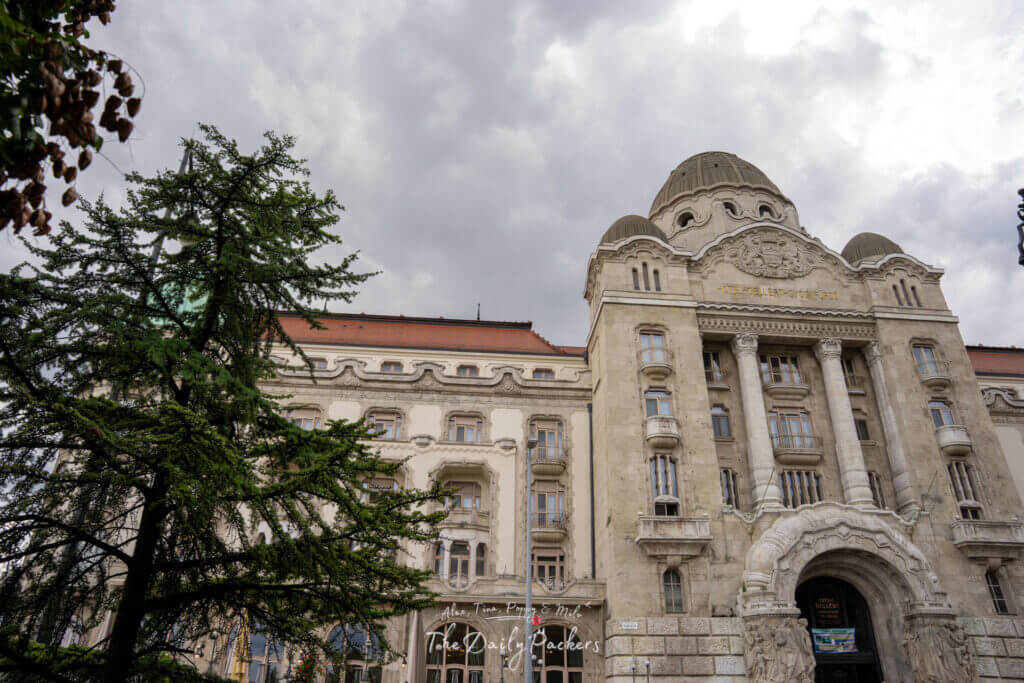
If you’re staying longer in the city, this could be a great spot to come back to for a relaxing break.

Cross Elisabeth Bridge
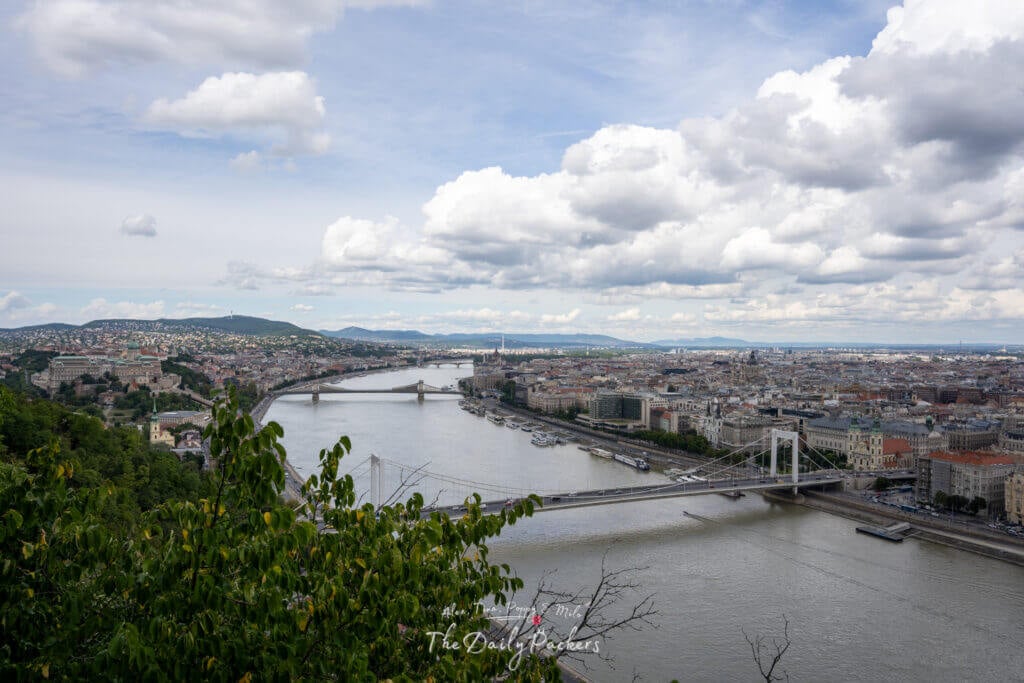
Head back to the Buda side by walking over the Elisabeth Bridge. This elegant white suspension bridge spans 290 meters across the Danube and offers beautiful views of both riverbanks. It’s a lovely way to wrap up your loop around Budapest’s most iconic landmarks.

Tip: If you have time take a cruise on the danube
Hike Gellért Hill
Wrap up your day with a peaceful climb up Gellért Hill. It’s one of the best spots in Budapest for panoramic views over the Danube, especially at sunset. At the top, you’ll find the Liberty Statue, a striking monument commemorating those who died for Hungary’s freedom, and the Citadella, a 19th-century fortress built after the 1848 revolution.
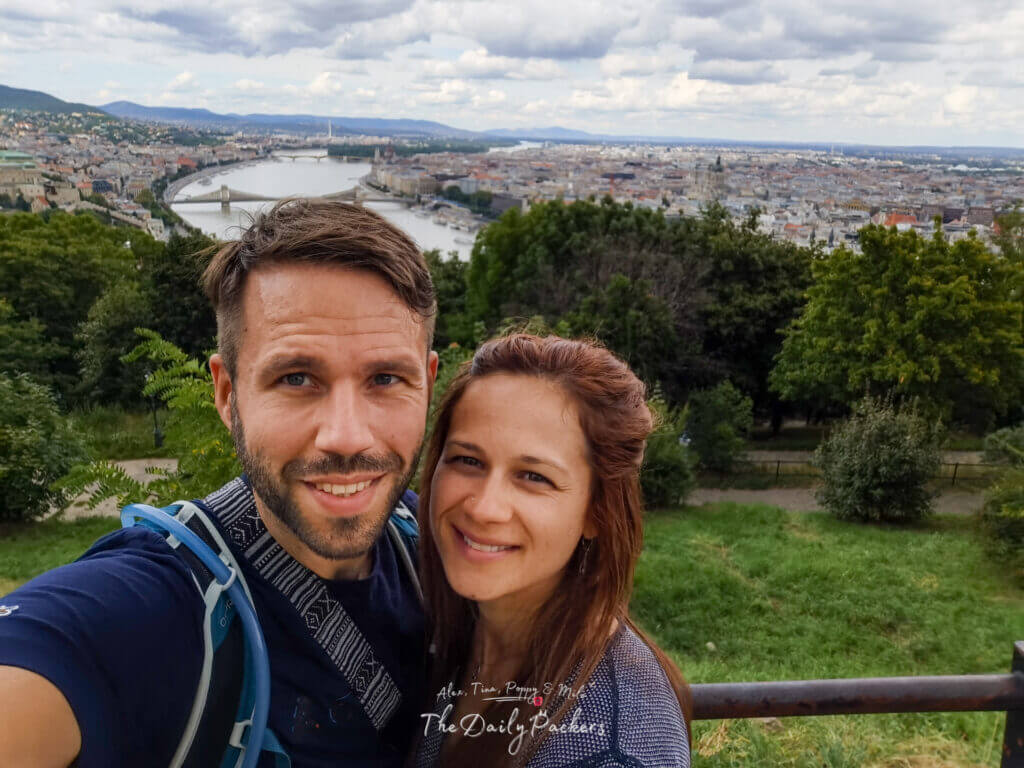
It’s the perfect way to end your Budapest adventure.
Budapest Itinerary
First Evening (Arrival Day): Stroll through the charming streets of Buda Hill and soak in the panoramic views from the Fisherman’s Bastion. It’s the perfect way to start your visit, especially if you arrive late in the afternoon.
Day 1 — Explore the Best of Both Sides
- Admire the early morning calm from Fisherman’s Bastion
- Wander around Buda Hill and visit Matthias Church, Vienna Gate, and Church of Saint Mary Magdalene
- Walk through the courtyards of Buda Castle and spot the old funicular
- Cross the Danube via Széchenyi Chain Bridge
- Marvel at the Hungarian Parliament Building
- Pause at the Shoes on the Danube Bank memorial
- Visit St. Stephen’s Basilica and its stunning interior (entry fee applies)
- Snap a photo of the Hungarian State Opera
- Ride Metro 1 to Heroes’ Square and explore the surrounding statues
- Wander through Vajdahunyad Castle in City Park
- Peek inside the Széchenyi Thermal Bath, even if you don’t soak in
- Discover the Dohány Street Synagogue (Europe’s largest synagogue)
- Browse the stalls at the Central Market Hall
- Stop by the exterior of Gellért Thermal Bath
- Cross back into Buda via the Elisabeth Bridge
- Climb Gellért Hill for the sunset at the Liberty Statue and Citadella
Day 2 — Dive Deeper or Slow Down
- Start with coffee at a local café in Pest’s Jewish Quarter
- Tour the Hungarian National Museum or House of Terror Museum, depending on your interests
- Relax in one of the city’s thermal baths — we recommend returning to Széchenyi or visiting Gellért Bath this time
- Cruise the Danube (day or evening) for a unique view of both riverbanks
- Shop for souvenirs at the Gozsdu Courtyard and nearby boutiques
- Snack on traditional street food like Lángos or Chimney Cake
- Walk through Andrássy Avenue and check out the architecture
- Watch the city light up from Fisherman’s Bastion or the Danube promenade
Here are all your accommodation options in Budapest.
About the authors
We are Alex and Tina, a French-Serbian couple who met in China back in 2014. We spent three incredible years there before making France our home. Our shared passion for travel has been the heartbeat of our relationship for over 12 years, taking us across 44 countries and counting.
We launched TheDailyPackers in 2019 as a way to document our adventures. In 2026, we reached a major milestone by officially turning our blog into our full-time job. While we are still growing toward financial independence through this platform, every article we write is fueled by our mission to make your voyages easier through in-depth guides, honest advice, and the lessons we’ve learned from our own mistakes.
Our journey has not been without its storms. In 2023, our world changed forever when our first son, Poppy, was stillborn on November 25th. It was, and remains, the hardest chapter of our lives. In 2025, we were blessed with our second little boy, Milo. He has since joined our traveling tribe, and you’ll be seeing him—and the reality of traveling with a little one-on the blog more and more.
We hope to inspire you to explore the world with curiosity and resilience. Thank you for being part of our story.
You may also like those related posts
Terracotta Army: Xi’an’s Unmissable Ancient Wonder
20 Best things to do in Bonifacio, Corsica in 3 days
10 best things to do in Singapore, in 3 days for first timers
Soomaa National Park: Estonia’s Best national park in 2025
14 Best Things to do in Prague, Czech Republic, in 3 days
Lorient La Base:The Complete Submarine Guide
18 best things to do in Bariloche, Argentina, in 5 days
Dambulla Cave Temple: Sri Lanka’s most unique temple
Pssst, did you know that…
If you purchase something through our links, we earn a small fee. However, you still pay the same. Win-win! And one day we may get to be full-time travel bloggers =)
Find Hotels with Booking.com
Do Yoga with KVY
Buy us a Coffee
Rent a car with DiscoverCars
Find Attractions with GetYourGuide
Find Flights with Expedia
Buy an eSIM with Airalo
Get insured with World Nomads
Get ready with Amazon.com