

Introduction
On our road trip through Morocco, one of the places we were most excited about was Essaouira, and it didn’t disappoint. After spending time inland, arriving at the Atlantic coast felt refreshing, with sea breezes, ocean views, and a more laid-back vibe than the big cities.
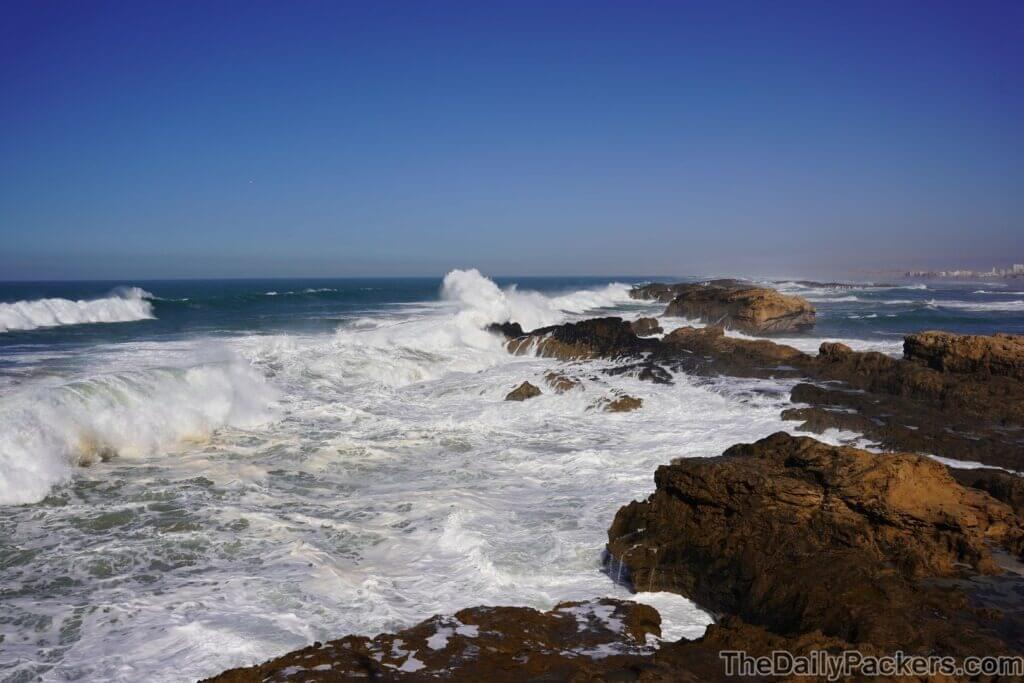
Essaouira is a historic port town with a medina protected by 18th-century ramparts, the Skala de la Kasbah. You can still walk along the fortified walls lined with old brass cannons while watching the waves crash against the rocks. The city is also famous for its wide crescent beach, shaped by strong Alizée trade winds, which makes it a hotspot for surfing, windsurfing, and kitesurfing.
We loved the mix of relaxed seaside atmosphere and vibrant medina life, where narrow alleys are filled with art galleries, colorful shops, and plenty of cafés to linger in.
In this article, you’ll find the best things to do in Essaouira and why this coastal stop is one you shouldn’t miss on your trip to Morocco.


Read: Our complete 2-week Morocco Road Trip Itinerary
Getting there
Essaouira is well-connected, so getting there is fairly easy whether you’re coming from Marrakech, Casablanca, or further north.
- By car – Driving is one of the best ways to reach Essaouira, especially if you’re on a road trip. From Marrakech it’s about 3 hours, from Casablanca around 5 hours, and from Rabat closer to 6. The road is in good condition, and parking near the medina is simple with guarded lots available.
- By bus – CTM and Supratours both run direct buses to Essaouira. From Marrakech, the ride takes about 3h30, and from Casablanca it’s around 6h. Buses are comfortable and reliable, making this a good option if you don’t have a car.
- By plane – Essaouira has a small international airport with seasonal flights from Europe. From the airport, it’s only a 20-minute taxi ride into town.
- As a day trip – If you’re based in Marrakech, you can also visit Essaouira on a day trip. Many organized tours include transport, a guided walk through the medina, and free time to enjoy the beach or seafood before heading back in the evening.
We drove down from Rabat, spending a night in Casablanca along the way. This made the journey more relaxed and gave us the chance to see different parts of the country before reaching the coast.


Moving Around
Essaouira is a small and walkable city, so you won’t need any transportation once you’re there. The medina is car-free, and wandering its narrow alleys is the best way to experience it. From the ramparts to the harbor and the beach, everything is within easy walking distance.
If you want to explore outside the city—whether it’s a surf spot along the coast, a small Berber village, or the surrounding countryside—you’ll need either a rental car or to join a local tour. Petit taxis are also available for short trips within town, but for most visitors, your feet will take you everywhere you need to go.


We recommend to rent a car through Discover Cars with free cancellation. Book your rental car here.
When to Visit
Thanks to its location on the Atlantic coast, Essaouira enjoys a mild climate year-round, making it a great destination in any season. Still, each time of year has its own vibe.
- Spring (March – May): Spring is one of the best times to visit. Temperatures range from 15°C to 22°C (59°F to 72°F), with plenty of sunshine and a lively medina atmosphere. It’s warm enough for long walks by the sea without being hot.
- Summer (June – August): Even in summer, Essaouira stays cooler than inland Morocco, with highs around 22°C to 26°C (72°F to 79°F). The strong trade winds make it popular for kitesurfing and windsurfing, though they can feel a bit much if you’re looking for calm beach days.
- Autumn (September – November): Autumn is another excellent season, with temperatures between 16°C and 24°C (61°F to 75°F). The weather is pleasant for sightseeing, and the sea is at its warmest, making it perfect for swimming.
- Winter (December – February): Winter is mild, with highs around 15°C to 18°C (59°F to 64°F). Rain is more common, but the medina feels peaceful and the cooler weather is still comfortable for exploring.
Tip: Spring and autumn are the best times to visit Essaouira for warm but not windy days. If you’re into water sports, summer is perfect. It is also the perfect place to escape the heat in Marrakech.


Where to Stay
Essaouira has plenty of charming riads and guesthouses, most of them set inside the medina or just by the ocean. Staying in a riad here means you’re within walking distance of everything, with the bonus of rooftop terraces and sea views.
Here are a few places to consider:
- (€) Dar Halima – A welcoming guesthouse that’s also part restaurant and art gallery, offering a cozy stay with lots of character.
- (€€) Riad Bab Essaouira – A stylish mid-range riad inside the medina, perfect if you want comfort without losing the traditional atmosphere.
- (€€€) Riad Perle D’Eau – A beautiful riad right by the ocean, with elegant rooms and a rooftop terrace overlooking the waves.
We stayed two nights in Essaouira, which felt just right. One full day to explore the medina and ramparts, and another to simply relax, wander at a slower pace, and enjoy the sea breeze.


Here are all your accommodation options in Essaouira
What to Eat
Moroccan food is rich, flavorful, and full of tradition, and Essaouira is no exception. You’ll find all the classics here:
- Tajine – Slow-cooked vegetables, sometimes with chicken or lamb, prepared in the traditional earthenware pot.
- Couscous – Steamed semolina topped with vegetables, chickpeas, and sometimes meat, often served on Fridays.
- Harira – A hearty tomato-based soup with lentils and chickpeas.
- Moroccan Salad – Varies from place to place but usually includes fresh vegetables like tomatoes, carrots, and peas.
Of course, you can’t leave Essaouira without trying its seafood, fresh from the Atlantic and grilled right on the spot at the harbor or served in local restaurants.
Alcohol is not widely available in Morocco and can only be found in licensed bars or restaurants, but you’ll always be able to enjoy Morocco’s most traditional drink: mint tea. Served everywhere and at any time of day, it’s a ritual as much as a refreshment.
During our stay, we mostly had breakfast and dinner in our accommodation, but we also recommend:
- Restaurant KHMISSA – A small, local spot with tasty traditional dishes.
- Mandala Society Essaouira – A modern café serving original food and creative drinks.
- La Coupole Essaouira Beach – A great choice for a romantic dinner by the ocean.


Check our Google Map of Morocco
Best things to do in Essaouira
Medina of Essaouira
The heart of the city is its medina, a UNESCO World Heritage Site and one of the most charming in Morocco. Unlike the bustling and sometimes overwhelming medinas of Fes or Marrakech, Essaouira’s feels laid-back and easy to navigate.

As you wander through the narrow streets, you’ll find al fresco cafés perfect for a break, buzzing alleyways filled with indie art galleries, and plenty of shops selling rugs, spices, ceramics, and local crafts. It’s a place where you can take your time, browse, and simply enjoy the atmosphere without feeling rushed.

Check our Google Map of Morocco
City Walls
On the edge of the medina, you can climb the 18th-century city walls for a short walk and wide views over the Atlantic. From up here, you’ll see the waves crashing against the rocks, the old cannons lined up along the ramparts, and the seagulls gliding overhead. It’s a great spot to pause and take in the coastal setting that makes Essaouira so unique.

Just below the walls, you’ll also find small shops and stalls, many of them selling local crafts. It’s a quieter area to browse and makes for a pleasant stroll before heading back into the medina.
Here are all your accommodation options in Essaouira
Place Moulay Hassan
On the way to the port, you’ll pass through Place Moulay Hassan, the main square of Essaouira. This wide, open space was created after the demolition of the old Bab Laâchour gate and part of the former imperial palace, Dar El Makhzen.
Today, the square feels lively and open, surrounded by cafés and restaurants with terraces overlooking the sea. It’s a popular gathering spot, especially in the evenings when both locals and travelers come here for a stroll before sunset. From the square, it’s just a short walk to the harbor and the seafront ramparts.

Bab El Marsa
To reach the port of Essaouira, you’ll pass through Bab El Marsa, also known as the Port of the Navy. This historic gate, built from sandstone, once served as the main entrance between the medina and the bustling harbor.
Walking through it today, you still get a sense of its importance, as fishermen, vendors, and visitors all cross here on their way to the sea. It’s a simple but atmospheric gateway that connects the old town with the life of the port.
Here are all your accommodation options in Essaouira
Puerto Essaouira
Stepping through Bab El Marsa brings you to the Port of Essaouira, a traditional 18th-century fishing harbor that’s still one of Morocco’s 14 main fishing ports. With its iconic blue boats lined up in the water, it’s one of the most photographed spots in the city and a true emblem of Essaouira.
That said, the port isn’t as picturesque up close as it might look in photos. It can be smelly, a bit chaotic, and not the cleanest place to wander for long. Still, it’s worth a quick visit for the atmosphere, the sight of fishermen unloading their catch, and to snap that classic shot of Essaouira’s blue boats.

Check our Google Map of Morocco
Sqala du Port d’Essaouira & Borj El Barmil
Just behind the fish market, you’ll find the Sqala du Port, an 18th-century artillery platform built to defend Essaouira from attacks by sea. From here, cannons once protected the harbor, and today the spot offers one of the best views of the city’s ramparts and the Atlantic waves crashing against the walls.
On the platform stands the Borj El Barmil, a round stone tower that forms part of the old fortifications. Climbing up gives you a sweeping view over the port, the fishing boats, and the medina beyond. It’s a must-stop if you want that postcard view of Essaouira.

Here are all your accommodation options in Essaouira
Marché aux Poissons
As you wander back through the medina toward Bab Doukkala, you’ll come across a small square known as the Marché aux Poissons. Despite the name, you won’t actually find fish being sold here anymore, but the space clearly shows signs of its past use as a local market.
Today, it’s just another quiet corner of the medina, worth passing through on your way to explore more of Essaouira’s streets and hidden squares.


Tip: We use the DJI Action 4 to film our vlogs — compact, durable, and perfect for capturing every adventure.
Bab Doukkala
And then found our way to Bab Doukkala. One of the main gate of the old city.
One of the main gates of the old city is Bab Doukkala, and passing through it gives you another perspective on Essaouira’s medina. From here, you can easily loop back into the narrow streets and continue exploring.
Along the way, make sure to stop by one of the many local sweet shops. We found an amazing one and picked up a selection of Moroccan pastries for 90 MAD—perfect to snack on as you wander. To end the day, we headed to Mandala Society, a modern café with a cozy vibe and a view over the main street, where two mint teas cost us 50 MAD. It was the ideal spot to slow down and soak in the atmosphere before wrapping up our time in Essaouira.

We recommend to rent a car through Discover Cars with free cancellation. Book your rental car here.
Plage d’Essaouira
To finish the day, you can leave the medina and walk along the Plage d’Essaouira, the city’s long crescent-shaped beach. It’s the perfect place to unwind and watch the sunset over the Atlantic, with the waves rolling in and the silhouettes of kitesurfers in the distance.
For dinner, we stopped at La Coupole, a restaurant with a beautiful terrace overlooking the ocean. It felt a little fancier than most of the places we’d eaten before, but the setting made it special. We ordered a tabbouleh salad and grilled vegetables, and, for the first time on our trip, we found alcohol on the menu—so we tried a local beer.

Dar Baba Diali
For our stay in Essaouira, we decided to go for something completely different and chose Dar Baba Diali, a guesthouse tucked away in the middle of nowhere. It took us about 30 minutes to drive there, half of it on a dirt road, but once we arrived, it felt worth the effort.
We were warmly welcomed by the owner, Said, and his dog Igor, before being shown to our room. Over a pot of tea in the living room, Said shared stories about Moroccan traditions, including how cats are considered sacred in Islam—mentioned in the Quran as clean animals—while dogs are seen as unclean, meaning people must wash or change before prayer if they touch them.
We also spent some time chatting with Abdeldjebbar, who helps run the house. He was a little harder to understand but his passion for football quickly came through.
If you’re looking for a unique guesthouse experience outside the city, Dar Baba Diali is the place. Remote, quiet, and personal—it felt more like staying with friends than at a hotel.

Here are all your accommodation options in Essaouira
Goat Tree
On the road between Essaouira and Marrakech, you might spot the famous goat trees. These argan trees with goats perched in their branches have become a well-known sight, but the reality is that they’re more of a tourist attraction than a natural phenomenon.
In truth, the goats aren’t climbing the trees on their own to eat. Farmers often place them there for visitors to take photos, and if you stop, you’ll notice they’re not really feeding. It’s actually illegal for goats to be left in the argan trees, since the trees are fragile and protected. Farmers can face fines of around €150 per goat (and even €500 per camel).
So while the goat trees might look quirky from the roadside, it’s good to know the background before stopping. If you want to support the local economy more sustainably, you’re better off visiting an argan oil cooperative instead.

We recommend to rent a car through Discover Cars with free cancellation. Book your rental car here.
More things to do in Essaouira
If you have extra time in Essaouira and want to go beyond the medina, ramparts, and port, here are a few more places worth checking out:
- Gallery Kasbah – A contemporary art gallery showcasing Moroccan and international artists. It’s a nice stop if you want to see a different creative side of the city.
- Bayt Dakira – A cultural space dedicated to the history of Jewish life in Essaouira. It’s set inside a restored synagogue and offers an insightful look into the city’s multicultural past.
- Sidi Mohammed ben Abdallah Museum – Housed in a 19th-century riad, this museum displays traditional crafts, musical instruments, and historical objects from Essaouira and the region.
Beyond strolling the medina and enjoying the ramparts, Essaouira is also a great place for outdoor activities. Thanks to its coastal setting, you’ll find plenty of ways to add some adventure to your stay:
- Surf Lessons – With strong Atlantic winds and consistent waves, Essaouira is one of Morocco’s top surf spots. Beginners can take lessons right on the main beach, while experienced surfers can head further down the coast.
- Sand Dunes: Half-Day Quad Bike Tour – Just outside the city, the dunes and forest trails are perfect for a quad biking adventure. A half-day tour is a fun way to see the landscapes around Essaouira from a different angle.
- 1-Hour Horse Ride – Riding along the beach at sunset or through the nearby dunes is a memorable experience. Several stables are offering short rides or longer excursions for all levels.
Essaouira Itinerary
Day 1:
- Arrive in Essaouira
- Visit of Essaouira
Day 2
- Option 1: Chill at a unique guesthouse
- Option 2: More of Essaouira
Read: Our complete 2-week Morocco Road Trip Itinerary
About the authors
We are Alex and Tina, a French-Serbian couple who met in China back in 2014. We spent three incredible years there before making France our home. Our shared passion for travel has been the heartbeat of our relationship for over 12 years, taking us across 44 countries and counting.
We launched TheDailyPackers in 2019 as a way to document our adventures. In 2026, we reached a major milestone by officially turning our blog into our full-time job. While we are still growing toward financial independence through this platform, every article we write is fueled by our mission to make your voyages easier through in-depth guides, honest advice, and the lessons we’ve learned from our own mistakes.
Our journey has not been without its storms. In 2023, our world changed forever when our first son, Poppy, was stillborn on November 25th. It was, and remains, the hardest chapter of our lives. In 2025, we were blessed with our second little boy, Milo. He has since joined our traveling tribe, and you’ll be seeing him—and the reality of traveling with a little one-on the blog more and more.
We hope to inspire you to explore the world with curiosity and resilience. Thank you for being part of our story.
You may also like those related posts
18 Best things to do in Split, Croatia, In 2 to 9 days
Cost to Travel in the Baltic States, Our 2022 Budget Breakdown
11 best things to do in SaPa, Vietnam, in 4 days or less
Cost to Travel in the Maldives, Our 2024 Budget breakdown
15 Best things to do in Carcassonne, France, in 1 day
Hue to Hoi An: 1st Class Luxury Sleeper Train experience
10-day Andalusia Itinerary: The best of the south of Spain
Sapa Trekking: The Best Rice Terraces Hiking Guide in 2025
Pssst, did you know that…
If you purchase something through our links, we earn a small fee. However, you still pay the same. Win-win! And one day we may get to be full-time travel bloggers =)
Find Hotels with Booking.com
Do Yoga with KVY
Buy us a Coffee
Rent a car with DiscoverCars
Find Attractions with GetYourGuide
Find Flights with Expedia
Buy an eSIM with Airalo
Get insured with World Nomads
Get ready with Amazon.com