

Introduction
Hue, in central Vietnam, was our fifth stop after Tam Coc. We flew there directly, which saved us the long bus or train ride and meant skipping the famous caves of Phong Nha — something we don’t regret at all.
Hue is a city steeped in history, once the imperial capital of Vietnam under the Nguyen Dynasty from 1802 to 1945. Its palaces, temples, and tombs earned it a UNESCO World Heritage status, and the mix of culture and scenery makes it an unmissable stop on any Vietnam itinerary.
In this article, we’ll take you through the best things to do in Hue and share what made our time there so memorable.

Read: Complete North and Central 3-week Vietnam Itinerary
Getting there
Reaching Hue is quite easy, as it is one of the main cities in Vietnam.
From Hanoi:
- Flight: You can book domestic flights from Noi Bai International Airport (HAN) in Hanoi to Phu Bai International Airport (HUI) in Hue. Multiple airlines operate this route, including Vietnam Airlines, Bamboo Airways, and VietJet Air. It takes 1.5 to 2h.
- Train: You can book train tickets from Hanoi to Hue at Hanoi Railway Station or on 12Go Asia. There are different types of train services, with various levels of comfort and prices. However it can take up to 15 hours.
- Bus: You can book bus tickets from Hanoi to Hue through local travel agencies, bus stations, or online booking platforms. Several bus companies offer this route, and options range from standard to sleeper buses. It takes up to 16 hours.
From Tam Coc:
- Flight: You can first take a van to Hanoi airport and then a plane from Hanoi to Hue. This is the option we did.
- Train: You can first get to Ninh Binh railway station and there get on a train to Hue. The journey can take up to 12h or more.
- Bus: You can also take a bus, which can take between 10h and 14h if everything goes well.
To get to the city, you can easily get a Grab but be aware that you may need to walk out of the airport for that.
Moving Around
Getting around Hue is quite easy, and you’ll find different options depending on how you like to travel.
The most popular way is by scooter, which gives you the freedom to explore the city and its surroundings at your own pace. Rentals are affordable (around 150,000–200,000 VND per day), and many shops or even your accommodation can arrange one for you. Just keep in mind that traffic can feel a bit chaotic if you’re not used to riding in Vietnam.
If you prefer something more relaxed, taxis and Grab (the local Uber) are widely available and convenient for short distances. They’re cheap, reliable, and a good option if you don’t feel comfortable on two wheels.
For a slower and more authentic experience, you can also explore parts of the city by bicycle. Many hotels and homestays provide them for free or at a small cost, and cycling through the quiet streets or along the Perfume River is really pleasant.
Another option is to book guided tours for the main attractions, especially if you want transport included and a bit of background history at each stop.
That said, if you’re up for it, we’d recommend the scooter — it’s by far the best way to enjoy Hue and the countryside around it.

When to Visit
Hue has a tropical climate with two main seasons, but depending on what you’re looking for, each time of year offers a different vibe.
- Spring (March – May): This is one of the best times to visit Hue. Temperatures range between 22°C and 28°C (72°F – 82°F), the weather is warm without being too hot, and the skies are generally clear. Perfect for exploring the Imperial City, pagodas, and the countryside on a scooter.
- Summer (June – August): Hue can get very hot and humid in summer, with temperatures often reaching 34°C (93°F). It’s also the sunniest season, so if you don’t mind the heat, you’ll enjoy bright days and good conditions for sightseeing. Just make sure to plan your visits early morning or late afternoon, and keep hydrated.
- Autumn (September – November): Autumn is pleasant with temperatures between 23°C and 29°C (73°F – 84°F). It’s a beautiful time to visit, but keep in mind that this is also the start of the rainy season, so sudden downpours are common. Bring a light raincoat if you’re visiting during these months.
- Winter (December – February): Hue’s winters are cooler compared to the rest of Vietnam. Temperatures can drop to 16°C (61°F) at night and hover around 20°C (68°F) during the day. It’s also the rainiest period of the year, so some days can feel quite grey and damp. Still, it’s a quiet season with fewer tourists.
Overall, the best time to visit Hue is from March to May, when the weather is at its most comfortable for sightseeing and outdoor activities.

Where to Stay
You don’t really need more than two nights in Hue, but having a good base makes the visit a lot more enjoyable. Whether you’re looking for something budget-friendly, central, or a quiet retreat, Hue has some nice options.
- (€): The Purple Hue BnB: A cozy and colorful BnB, perfect if you’re on a budget but still want a comfortable stay. It’s located in a central area, making it easy to walk to restaurants and cafes. The staff is warm and helpful, and the place has a very homely feel.
- (€€): White Lotus Hue Hotel: If you want something a bit more modern without going over budget, this hotel is a great choice. Spacious rooms, good breakfast, and a central location close to the Perfume River make it a convenient base for exploring Hue.
- (€€€): Pilgrimage Village Boutique: For a more luxurious stay, this boutique resort outside the city offers a peaceful atmosphere surrounded by gardens and greenery. It has a pool, spa, and beautiful villas, which makes it a perfect spot if you want to combine sightseeing with relaxation.


Here are all your accommodation options in Hue
What to Eat
Hue is considered one of the food capitals of Vietnam, and it’s easy to see why. The city has a long royal history, and many dishes were once served to emperors of the Nguyen dynasty. The food here is often spicier compared to the north and has a strong balance of sweet, sour, salty, and umami flavors.
- Nook Eatery: Our favorite spot in Hue. A cozy place with a mix of Vietnamese and Western dishes, great for when you want variety. The food is fresh, the vibe is super chill, and it’s a nice place to hang around a bit longer.
- Nina’s Cafe Restaurant: A family-run restaurant that feels authentic and welcoming. Portions are generous, prices are fair, and it’s a good spot to try some local dishes in a relaxed setting.
- Roaster: If you’re more in the mood for a drink, Roaster is the place to go. They serve excellent coffee, cocktails, and cold beers, perfect for an afternoon break or a night out.


Tip: if you want to know more about the food, this food tour is good choice
Best things to do in Hue
Walk Along Nguyen Dinh Chieu Street
One of the nicest ways to ease into Hue is by walking down Nguyen Dinh Chieu Walking Street. It runs along the Perfume River and feels calm compared to the busier streets in town. You’ll find trees for shade, a few little cafés to grab a drink, and some shops if you feel like browsing.
In the evening, it gets even better with lanterns lighting up the street and locals gathering around food stalls. It’s the kind of place where you don’t really need a plan—just wander, take in the riverside views, and enjoy the slower pace before diving into the main sights of the city.

Here are all your accommodation options in Hue
Explore the Imperial Citadel
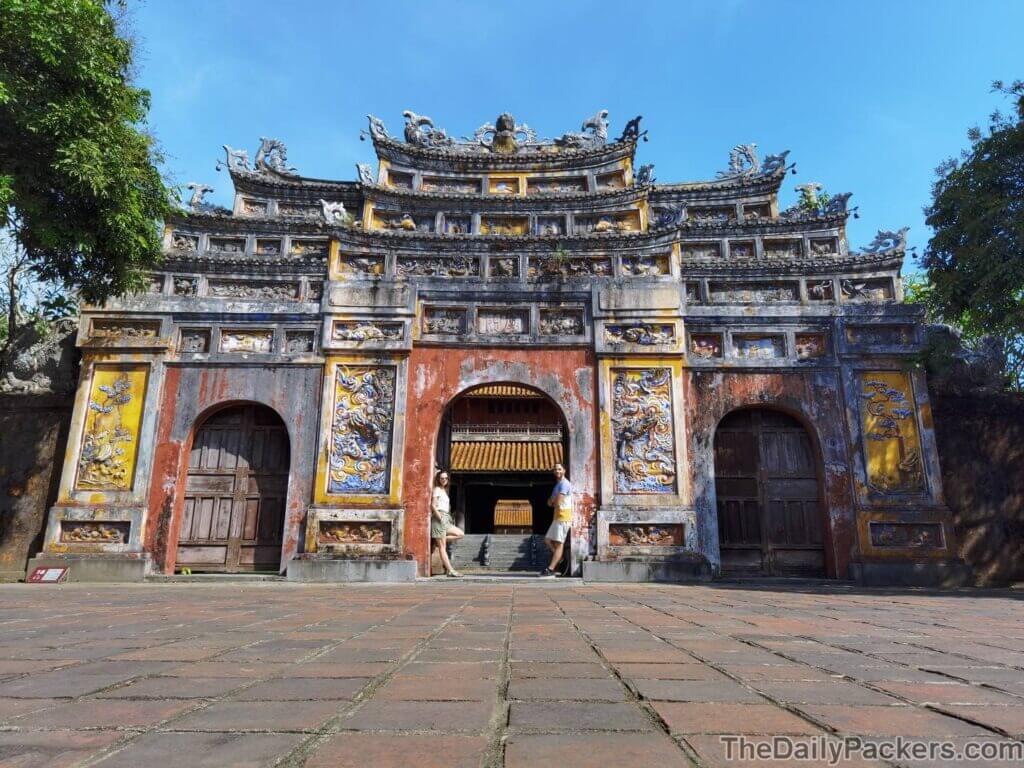
The Imperial Citadel is the highlight of Hue and a UNESCO World Heritage Site. Once the imperial capital of Vietnam during the Nguyễn dynasty, it was built in 1803 under Emperor Gia Long and became the seat of emperors for over a century. Inside, you’ll find palaces where the royal family lived, shrines, gardens, and villas that once housed mandarins.
The site is massive, and you’ll want a few hours to explore properly—plan at least 2 to 4 hours. We spent nearly 2h wandering around and still felt like we only scratched the surface.
Entrance tickets for the citadel cost 200,000 VND per person (around 8€), or you can get a combo ticket for 580,000 VND (about 23€), which includes access to the citadel plus several royal tombs.
It’s definitely worth taking your time here. Inside the citadel there’s even a small shop where we found a couple of magnets (50,000 VND) to add to our travel collection.

Tip: To understand the citadel, take the Imperial and Forbidden City Guided Tour
Visit Dong Ba Market
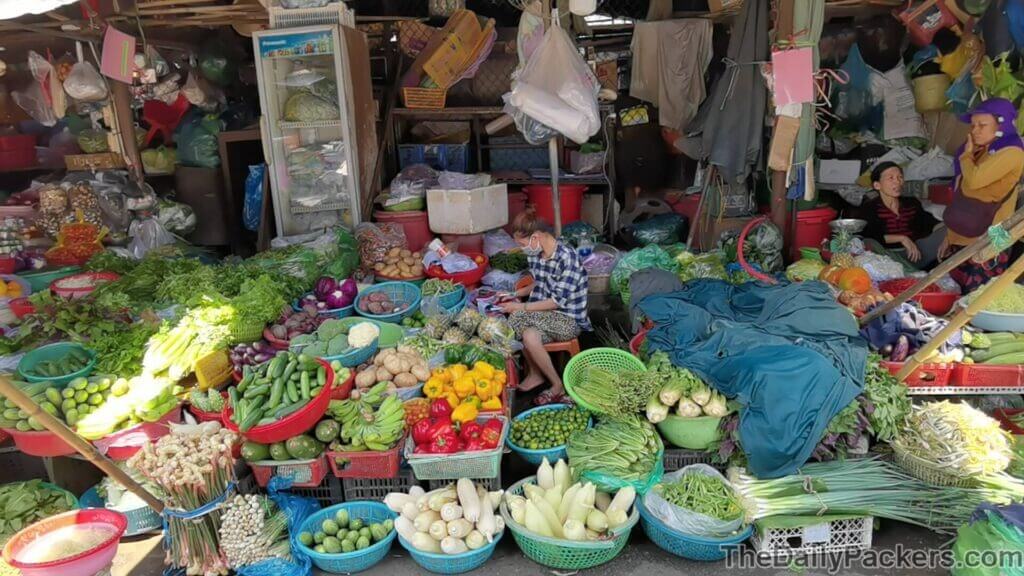
No trip to Hue is complete without a stop at Dong Ba Market, the city’s busiest and most famous market. Spread across several floors and alleys, you’ll find everything from fresh produce and spices to clothes, souvenirs, and street food stalls. It’s one of those places where you really feel the pulse of the city.
That being said, the market can be intense. Some sections are quite smelly, especially where fish and meat are sold, so be prepared. Still, it’s worth a wander for the atmosphere alone, and you can always pick up some fresh fruit or small snacks for the road.
If you’re looking for something more comfortable afterwards, there’s also a Co.op Mart supermarket nearby, a good spot to stock up on snacks or essentials—it’s one of the better supermarkets we found in Vietnam.

Check our Google Map of Vietnam
Visit Thien Mu Pagoda
One of the most iconic landmarks in Hue is the Thien Mu Pagoda, perched right on the banks of the Perfume River. It’s easily reached by scooter, and the ride itself is a joy—Hue is surprisingly organized and calm compared to other Vietnamese cities, making the drive a highlight on its own. Parking is available for about 10,000 VND.
The site is famous for its seven-story Phước Duyên Tower, which has become an unofficial symbol of Hue. Beyond the tower, you’ll find a peaceful temple complex with beautiful gardens and views over the river. The pagoda also carries a lot of cultural and spiritual significance, often mentioned in local poems and folk songs, making it one of the must-see attractions in Hue.

Tip: The Hue City Highlights Trip by Car & English Speaking Driver includes this pagoda and the citadel
Explore the Temple of Literature
Not far from the pagoda, you can also stop by the Temple of Literature in Hue. Unlike its famous counterpart in Hanoi, this one is mostly in ruins today, with only a few structures left standing. It’s a quiet spot, less visited by tourists, and while it won’t take long to see, it gives a glimpse into Hue’s scholarly past.

Check our Google Map of Vietnam
Visit Tu Dam Pagoda
While in Hue, you can also stop by Tu Dam Pagoda, one of the city’s important Buddhist temples. The site is calm and welcoming, with a beautiful pagoda and peaceful courtyards to wander around. It’s smaller and less busy than Thien Mu, but it still gives you a great glimpse into the spiritual side of Hue. A nice stop if you’re exploring the city by scooter or looking for a quiet moment away from the crowds.

Visit the Hue Archdiocese Cathedral
One of the more surprising landmarks in Hue is the Hue Archdiocese Cathedral, also known as Phủ Cam Cathedral. Built in the mid-20th century, it serves as the main cathedral of the Roman Catholic Archdiocese of Hue. What makes it especially interesting is its unusual design — a blend of modern concrete architecture with elements that echo traditional Vietnamese style.
The cathedral sits on a small hill, so when you get close, you can really appreciate its bold structure and stained-glass details. It’s quite different from the historic pagodas and temples you’ll see around the city, which makes it a nice contrast to add to your visit. Even if you only stop by for a short while, it’s worth it to see this unique side of Hue’s cultural and religious mix.

Here are all your accommodation options in Hue
Explore An Dinh Palace
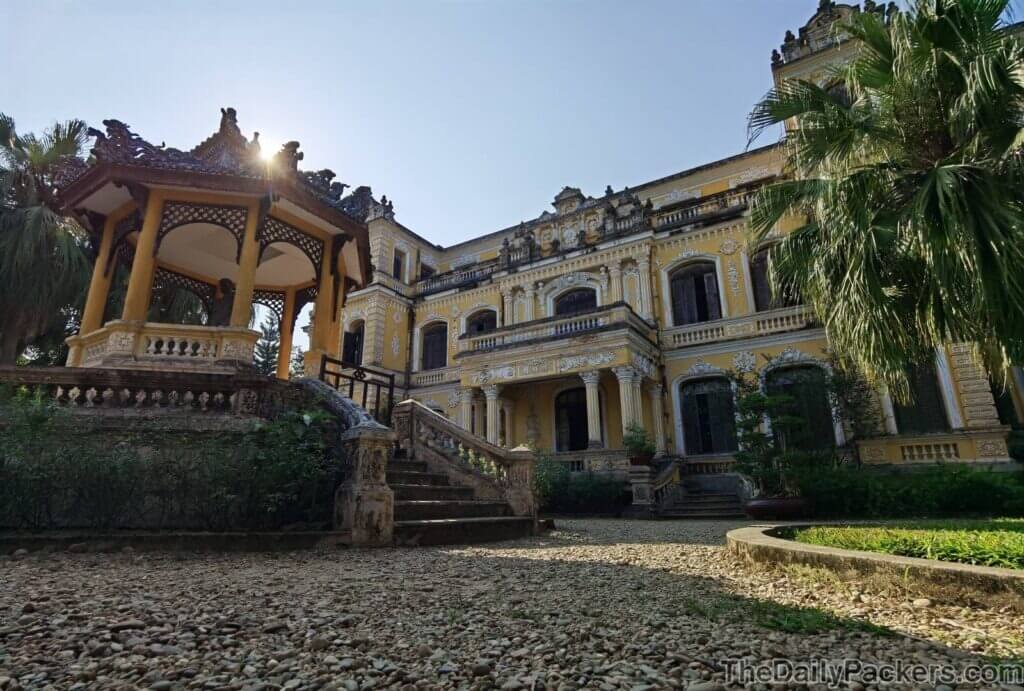
If you want to get a glimpse of Hue’s royal past beyond the citadel, make a stop at An Dinh Palace. Built in the early 20th century, it was once the residence of Vietnam’s last kings from the Nguyễn dynasty. The palace itself is a mix of European and traditional Vietnamese styles, which makes it quite unique compared to other royal sites in Hue.
Entrance costs 100,000 VND, and inside you’ll find faded but still beautiful painted walls and decorated halls. While the palace is not as grand or well-preserved as some of Hue’s other landmarks, it’s still worth a short visit if you’re curious about the city’s more recent history and want to see another side of imperial life.

Tip: We never travel without our DJI Mini 3 PRO drone anymore — it’s totally worth having to capture places from a whole new perspective.
Stroll the Night Walking Street
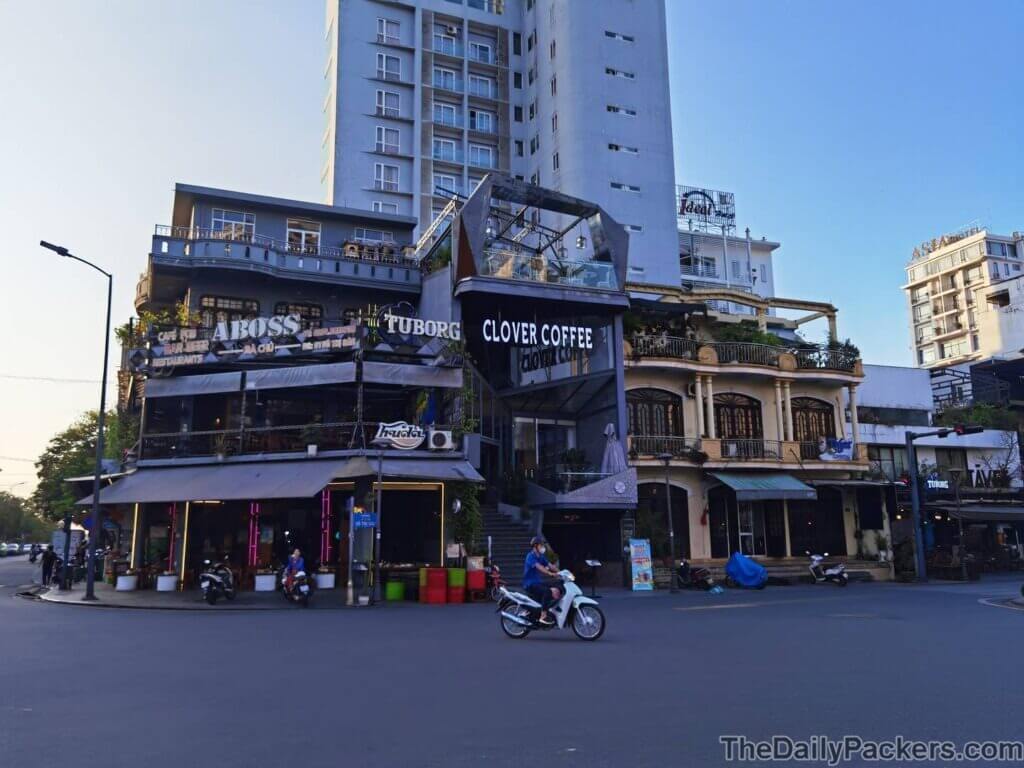
If you want to experience Hue after dark, the Night Walking Street is a great place to head. The area comes alive in the evening with shops, cafés, bars, and street vendors creating a lively but relaxed atmosphere. It’s the kind of place where you can simply stroll, soak in the vibe, and do a bit of people-watching.
You’ll find plenty of spots to sit down for a drink — from trendy coffee shops serving pandan tea or iced lychee tea to casual bars with local beers. Food is everywhere too, ranging from street snacks to sit-down restaurants. It’s not so much about a single must-try dish here, but rather about enjoying the energy of the city and seeing how locals and travelers alike unwind at the end of the day.
Visit the Mausoleum of Emperor Minh Mang
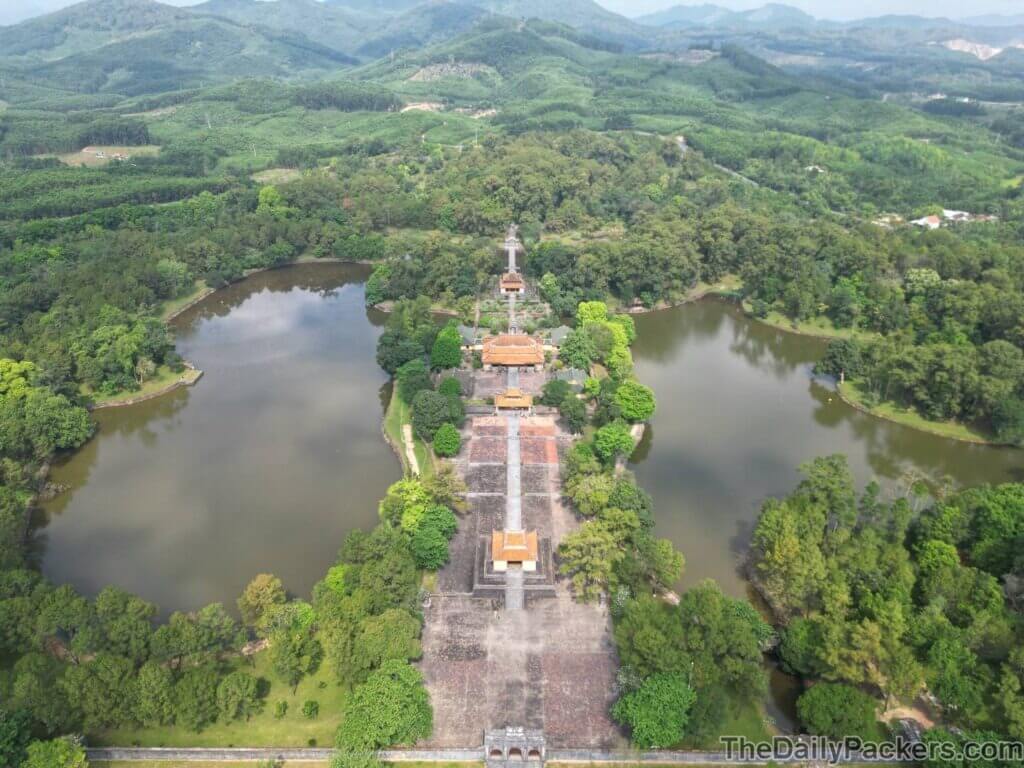
About 12 km outside Hue, you’ll find the Mausoleum of Emperor Minh Mang, one of the most impressive royal tombs of the Nguyen Dynasty. Built in 1840, this vast complex is often considered the most majestic of all the tombs around Hue.
The site stretches across a serene landscape, blending architecture and nature in perfect harmony. There are around 40 structures in total, including palaces, temples, pavilions, and courtyards, all connected by shaded walkways and set around lakes and gardens.
It’s a peaceful place to wander and reflect, with plenty of quiet corners to stop and take in the atmosphere. Many travelers see it as the finest example of how Hue’s imperial architecture was designed to complement its natural surroundings.
Check our Google Map of Vietnam
Explore the Mausoleum of Emperor Khai Dinh
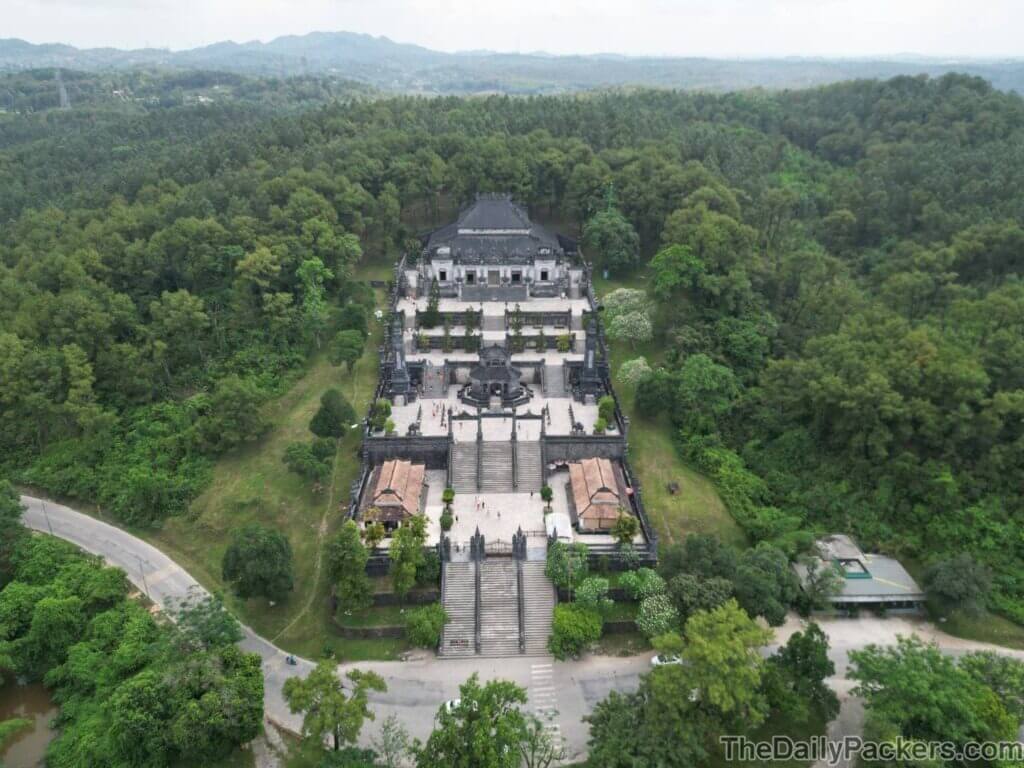
Not far from Minh Mang’s tomb lies the Mausoleum of Emperor Khai Dinh, one of the most unique royal tombs around Hue. Built over 11 years and completed in 1931, this site was designed for Khai Dinh, the twelfth Emperor of the Nguyen Dynasty.
What makes this tomb stand out is its unusual mix of traditional Vietnamese architecture with strong Western influences. From the outside, it looks darker and more compact than the other royal tombs, but once inside you’ll be struck by the incredible detail. The interior is decorated with colorful mosaics, intricate dragons, and a richly ornamented main hall where the Emperor’s statue and tomb are located.
It’s a fascinating contrast to the more traditional and spacious tombs, and that’s exactly why it’s a must-see when exploring Hue’s imperial heritage.
Tip: You can visit all the tombs with this private tour
Discover Thuy Tien Lake Abandoned Water Park
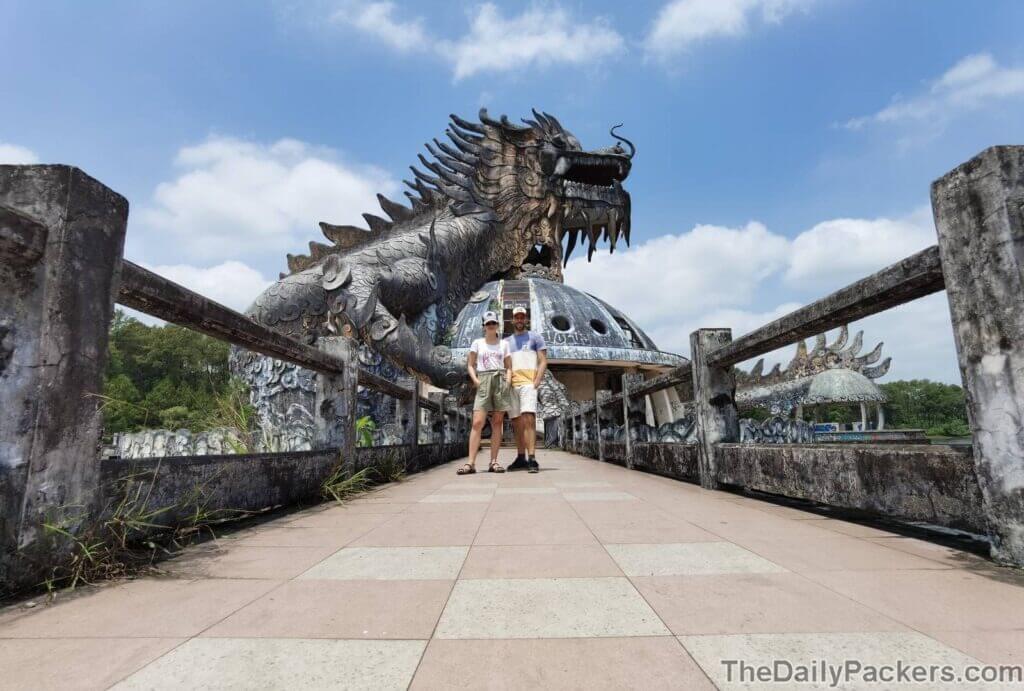
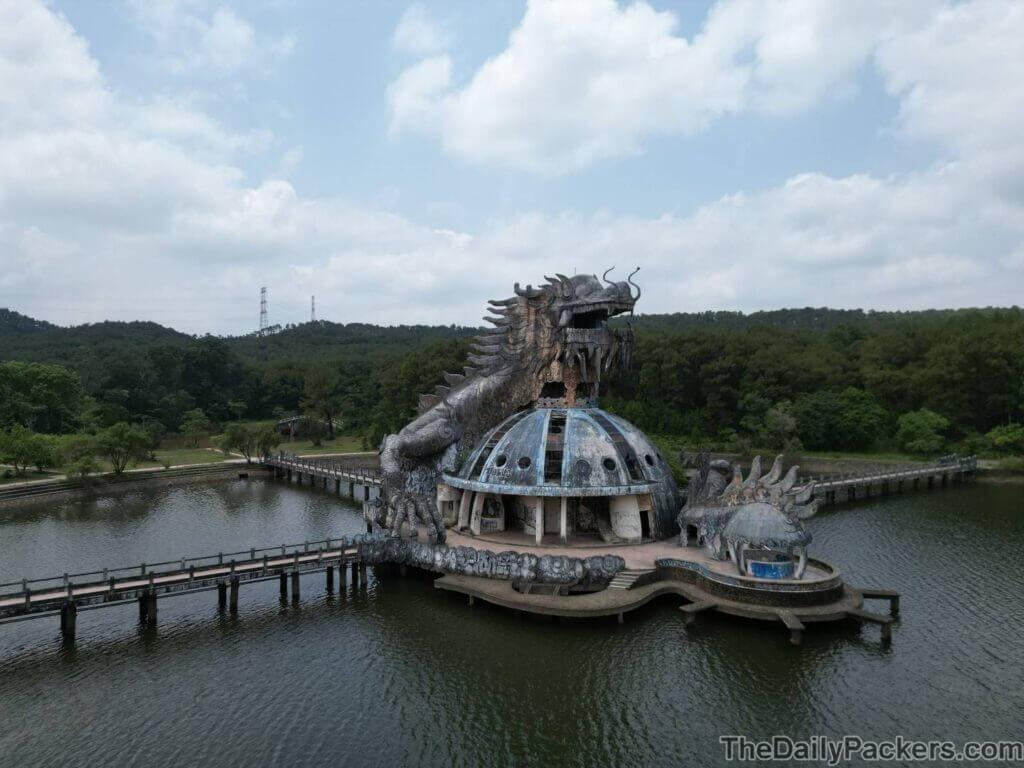
A short drive from Hue brings you to one of the city’s quirkiest sites — the Thuy Tien Lake Abandoned Water Park. Originally opened in the early 2000s, the park shut down shortly after and has since become a curiosity for travelers. What draws most people in is the giant dragon structure rising out of the lake, which has turned into an unofficial symbol of the place.
The site has a strange, eerie charm, with broken slides, overgrown paths, and graffiti-covered walls. It’s the kind of place where you can wander freely and imagine what it must have been like when it first opened.
There have been talks of reopening the park for years, but plans keep getting delayed, so for now it remains one of Hue’s most unusual attractions — a mix of urban exploration and history gone wrong.
Tip: We never travel without our DJI Mini 3 PRO drone anymore — it’s totally worth having to capture places from a whole new perspective.
Visit the Mausoleum of Emperor Tu Duc
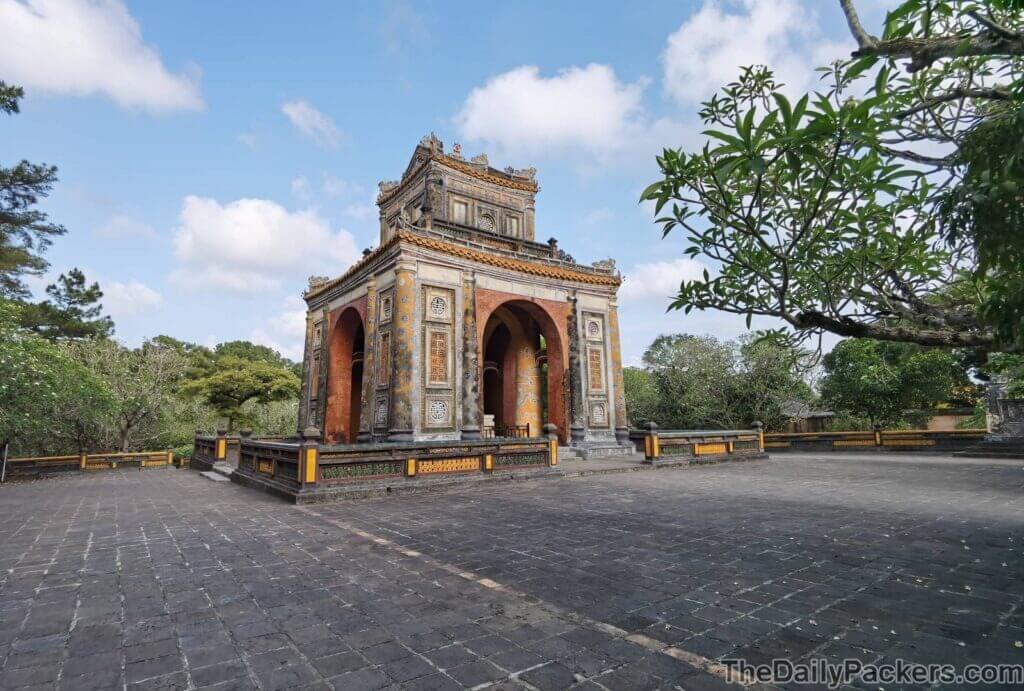
The Mausoleum of Emperor Tu Duc, built in 1867, is one of the most visited imperial tombs in Hue. Dedicated to Emperor Tự Đức of the Nguyễn dynasty, the site is divided into two main areas — the Temple Area and the Tomb Area.
The complex feels peaceful and beautifully designed, with shaded paths and traditional architecture. One of the highlights is the small lake with a wooden pavilion, a quiet spot where you can sit and take in the surroundings. Locals often bring food for the koi fish here, and you can even join in by buying a small bag of food for just a few đồng.
It’s an especially nice place to visit later in the day when the heat softens a little, as the lake and greenery give the area a more refreshing vibe.
Here are all your accommodation options in Hue
Climb Up to Vong Canh Hill
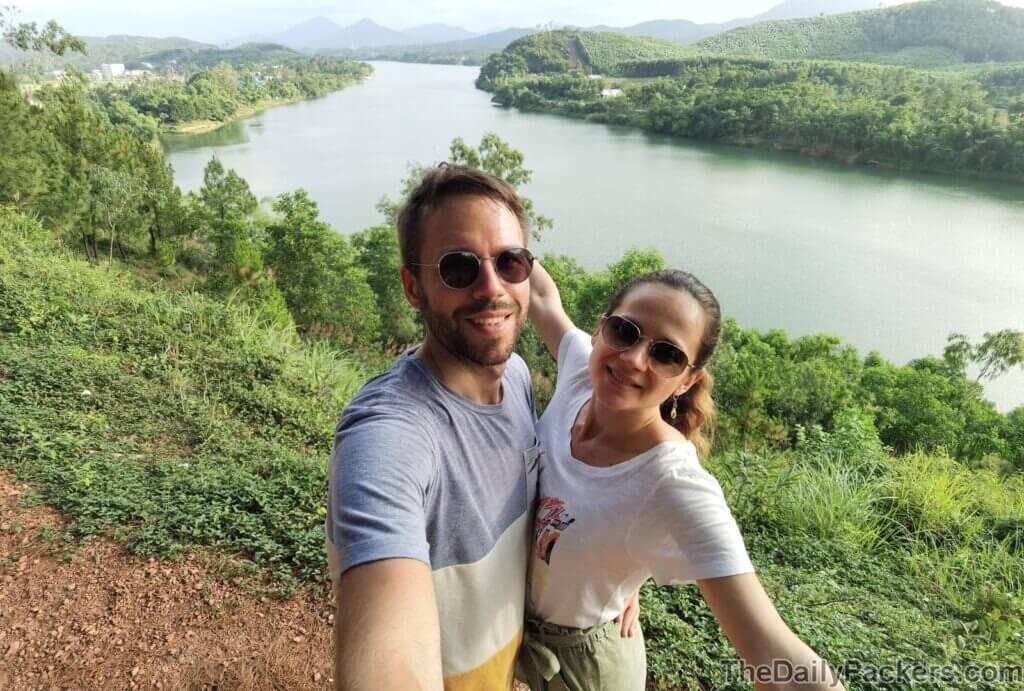
If you’re looking for one of the best viewpoints in Hue, head up to Vong Canh Hill. After a short ride and a quick walk from the parking area, you’ll be rewarded with sweeping views over the Perfume River and the surrounding countryside. It’s a calm and scenic spot, perfect for a break during your day of exploring.
The panorama is especially beautiful in the late afternoon when the light softens over the river and hills.
Tip: We use the DJI Action 4 to film our vlogs — compact, durable, and perfect for capturing every adventure.
Visit Từ Hiếu Pagoda
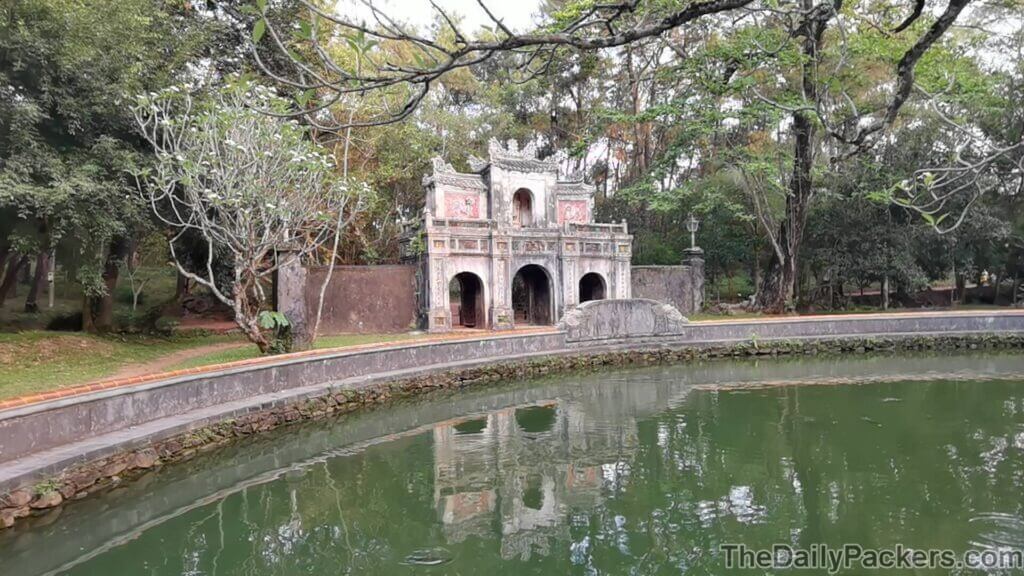
On your way back toward the center of Hue, don’t miss a stop at Từ Hiếu Pagoda. Surrounded by a peaceful garden and a serene pond, this pagoda is one of the calmest places you can visit in Hue. If you’re lucky, you might even catch a glimpse of young monks or local kids practicing martial arts nearby, which adds a really authentic touch to the visit.
It’s the perfect stop to end a day of exploring, offering a quiet moment before heading back into the busy streets of Hue.
More things to do in Hue
If you want more things to do in Hue, you can consider:
- Tiger Arena
- Museum of Royal Antiquities
- DMZ Tour with Vinh Moc Tunnels and Khe Sanh Base
Hue Itinerary
Day 1:
- Nguyen Dinh Chieu
- Imperial Citadel
- Dong Ba Market
- Thien Mu Pagoda
- Temple of Literature
- Tu Dam Pagoda
- Hue Archdiocese Cathedral
- An Dinh Palace
- Night Walking Street
Day 2:
- Mausoleum of Emperor Minh Mang
- Mausoleum of Emperor Khai Dinh
- Thuy Tien Lake Abandoned Water Park
- Mausoleum of Emperor Tu Duc
- Vong Canh Hill
- Từ Hiếu Pagoda
Read: Complete North and Central 3-week Vietnam Itinerary
About the authors
We are Alex and Tina, a French-Serbian couple who met in China back in 2014. We spent three incredible years there before making France our home. Our shared passion for travel has been the heartbeat of our relationship for over 12 years, taking us across 44 countries and counting.
We launched TheDailyPackers in 2019 as a way to document our adventures. In 2026, we reached a major milestone by officially turning our blog into our full-time job. While we are still growing toward financial independence through this platform, every article we write is fueled by our mission to make your voyages easier through in-depth guides, honest advice, and the lessons we’ve learned from our own mistakes.
Our journey has not been without its storms. In 2023, our world changed forever when our first son, Poppy, was stillborn on November 25th. It was, and remains, the hardest chapter of our lives. In 2025, we were blessed with our second little boy, Milo. He has since joined our traveling tribe, and you’ll be seeing him—and the reality of traveling with a little one-on the blog more and more.
We hope to inspire you to explore the world with curiosity and resilience. Thank you for being part of our story.
You may also like those related posts
3-week Vietnam Itinerary: The Best of north/central Vietnam
Zhujiajiao Water Town: A Perfect 1-Day Trip from Shanghai
5 Best Things to do in Remedios, Cuba, in 1 single day
8 Best things to do in Florianópolis, Brazil, in 2 days
How to get from Puerto Natales to Ushuaia by bus
13 Best things to do in Šibenik, Croatia, in 1 to 3 days
15 best things to do in the Gulf of Porto, Corsica, France
Masada, Ein Gedi & the Dead Sea: The Perfect 1-Day Trip from Jerusalem
Pssst, did you know that…
If you purchase something through our links, we earn a small fee. However, you still pay the same. Win-win! And one day we may get to be full-time travel bloggers =)
Find Hotels with Booking.com
Do Yoga with KVY
Buy us a Coffee
Rent a car with DiscoverCars
Find Attractions with GetYourGuide
Find Flights with Expedia
Buy an eSIM with Airalo
Get insured with World Nomads
Get ready with Amazon.com