

Introduction
After days on the road exploring Morocco’s coast and smaller towns, we finally arrived in Marrakech. Leaving Essaouira behind, we drove inland and spent two nights in the city—but honestly, you could easily stay a week or more here. Marrakech is Morocco’s most visited destination, and once you step inside the medina, it’s easy to see why.
The city is vibrant, busy, and full of contrasts. On one side, you have centuries of history, from the maze-like alleys of the old medina to the 12th-century Koutoubia Mosque. On the other, you’ll find modern neighborhoods, stylish riads, and rooftop cafés where the call to prayer mixes with the hum of daily life.
Marrakech also happens to be perfectly located between Morocco’s mountains, desert, and coastline, which makes it an ideal base for travelers who want a little of everything.
In this article, we’ll share the best things to do in Marrakech—from its historic sights to the hidden corners that make the city so unforgettable.

Read: Our complete 2-week Morocco Road Trip Itinerary
Getting there
Getting to Marrakech is quite easy, as the city is served by an international airport with direct flights from most major European cities. If you’re coming from outside Europe, the best option is usually to connect through one of Europe’s main hubs before flying into Marrakech. Another option is to fly into Rabat or Casablanca, which receive more long-haul flights, and then take a local flight onward.
Once you land in Marrakech, you have several ways to reach the city center:
- By taxi – The most convenient choice, though prices vary, so agree on the fare before getting in.
- By rental car – A good option if you’re planning a longer road trip through Morocco.
- By shuttle bus – The L19 airport shuttle runs every 20 minutes from 6 am to 11:30 pm. It stops at key places including Hivernage, Bab Doukkala, the railway station, Jemaa el-Fna, and Gueliz. The ride takes about 40 minutes, and a round-trip ticket costs 30 dh, which you can buy onboard.
- By private transfer – Most probably the most comfortable option.
Moving Around
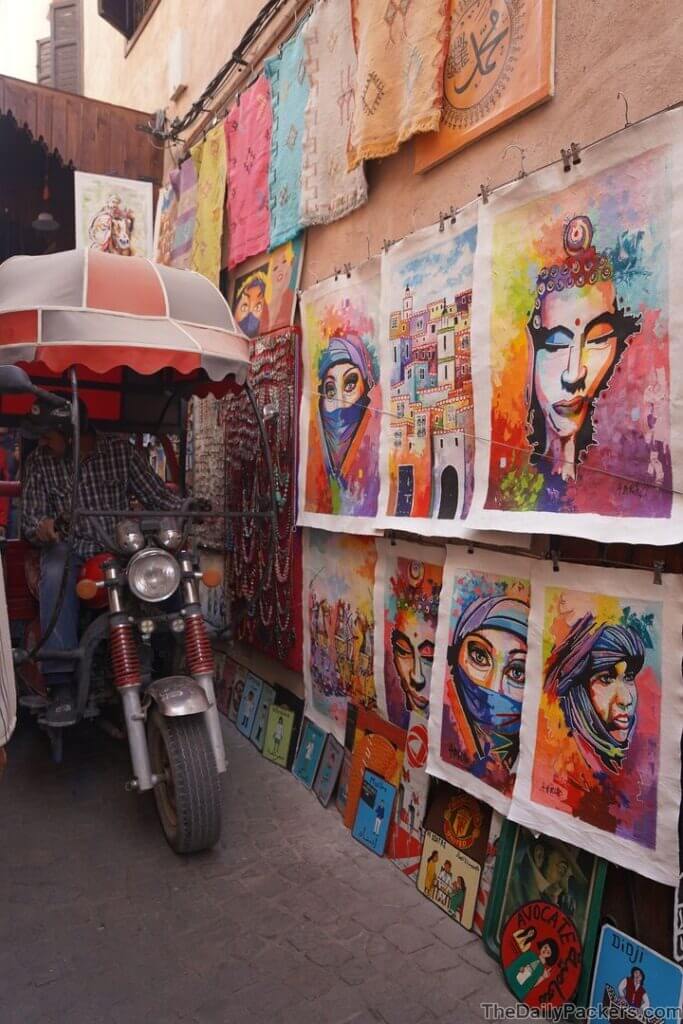
Once you’re in Marrakech, the best way to explore the medina is on foot. The narrow alleys are car-free, and walking is really the only way to experience the souks, hidden riads, and lively squares. Be ready to get lost—it’s part of the charm.
For longer distances or to get outside the old city, you have a few options:
- Petit taxis – Small, inexpensive, and everywhere. Always make sure the meter is running, or agree on a price before starting.
- Horse-drawn carriages (calèches) – A touristy but fun way to go between the main attractions, especially around Jemaa el-Fna and the Koutoubia Mosque.
- Buses – Local buses are cheap but not always straightforward for visitors.
- Rental car – Not recommended just for the city, as driving and parking in Marrakech can be stressful. Save the car for trips outside the city.
Most of the highlights are close enough together that you’ll be walking much of the time. For us, exploring the medina on foot was the most memorable way to experience Marrakech.


We recommend to rent a car through Discover Cars with free cancellation. Book your rental car here.
When to Visit
Marrakech has a desert climate, which means hot summers, mild winters, and lots of sunshine. You can visit all year, but some seasons are more comfortable than others.
- Spring (March – May): Spring is one of the best times to visit Marrakech. Temperatures range from 15°C to 28°C (59°F to 82°F), with warm days and cool evenings. The gardens are in bloom, the weather is pleasant for walking the medina, and it’s not yet too hot.
- Summer (June – August): Summers are very hot, with daytime highs often between 32°C and 40°C (90°F to 104°F). It’s less crowded since many travelers avoid the heat, but if you come at this time, plan sightseeing early in the morning or later in the evening and take breaks in shaded cafés or riads.
- Autumn (September – November): Autumn is another great season, with temperatures around 18°C to 30°C (64°F to 86°F). The days are warm without being overwhelming, and the evenings are comfortable. It’s perfect for both exploring the medina and taking day trips into the Atlas Mountains.
- Winter (December – February): Winters are mild, with daytime highs of 12°C to 20°C (54°F to 68°F) and cooler nights that can dip close to 5°C (41°F). It’s the quietest season for tourism, and while you’ll need a jacket in the evenings, it’s still a good time to visit if you want fewer crowds.
Tip: Spring and autumn are the most pleasant seasons, but Marrakech is lively year-round. Just avoid the peak of the day in summer.


Where to Stay
Marrakech is the kind of city where your accommodation becomes part of the experience, especially if you stay in a traditional riad inside the medina. If you’re planning several days in the city—up to 10 is a great amount—you can either immerse yourself in the old town or choose a modern apartment in the new city for more space and comfort.
For a unique stay in the medina, consider:
- (€): Riad Tahyra: A cozy and budget-friendly riad with authentic charm and warm hospitality.
- (€€): Riad Helen: Mid-range, beautifully decorated, and well located, with the kind of peaceful courtyard you’ll be grateful for after exploring the busy streets.
- (€€€): La Sultana: A luxury riad-hotel offering stunning design, a rooftop terrace, spa facilities, and impeccable service.
If you’d rather stay outside the medina, the modern city center (Gueliz) is another option. Here you’ll find larger apartments and a more contemporary vibe. Sweet Jacob’s Apartment is a good choice if you want extra space and independence while still being close to the main attractions.


Here are all your accommodation options in Marrakech
What to Eat
Morocco’s food is full of flavor, and Marrakech is one of the best places to try it. Everywhere you go, you’ll find traditional dishes that are simple, hearty, and delicious. Here are a few of the classics you shouldn’t miss:
- Tajine – Named after the clay pot it’s cooked in, this slow-cooked dish is full of flavor. It can be vegetarian with mixed vegetables or made with chicken, lamb, or beef. Expect rich spices and tender textures.
- Couscous – A Moroccan staple, usually served on Fridays. It’s made from steamed semolina, topped with vegetables, chickpeas, dried fruit, and sometimes meat.
- Harira – A comforting tomato-based soup with lentils and chickpeas. Traditionally eaten during Ramadan, but available year-round.
- Moroccan Salad – There’s no fixed recipe, but it often includes fresh vegetables like tomatoes, carrots, rice, and green peas.
These dishes can be found everywhere in Marrakech, from food stalls on Jemaa el-Fna square to traditional riad restaurants. Expect to eat them often during your trip—they’re staples of Moroccan cuisine, and each place has its own twist.

Alcohol isn’t widely available in Morocco and can only be served in licensed restaurants or bars, which are not very common. What you will find everywhere, though, is tea—especially the traditional Moroccan mint tea mixed with green tea. It’s more than just a drink; for many, it’s a ritual, enjoyed at any time of day.
During our stay, we mostly had breakfast and dinner in our accommodation, which was easiest since nights in November came early. Still, Marrakech has plenty of great spots to try if you want to eat out. A couple we recommend are:
- Mandala Society: A cozy café with a relaxed vibe, perfect for breakfast, brunch, or a light meal.
- Restaurant AYASO Gueliz: Located in the modern part of Marrakech, this spot serves healthy, fresh food in a stylish setting.


Tip: If you want to learn more about the local cuisine take the Moroccan Dishes Cooking Class with a Local Chef or go on the Street Food Tour with a Local Guide
Best things to do in Marrakech
Bab Agnaou
One of the most iconic landmarks in Marrakech is Bab Agnaou, a monumental gate built between 1188 and 1190 by the Almohad caliph Abu Yusuf Ya’qub al-Mansur. It once served as the main public entrance to the royal kasbah in the southern part of the medina.
The gate is a beautiful example of Almohad architecture, with its carved stonework and grand proportions. Today, it still stands as one of the city’s most striking historic gates, and walking through it gives you a sense of how impressive Marrakech must have felt centuries ago.


Check our Google Map of Morocco
Saadien’s Tombs
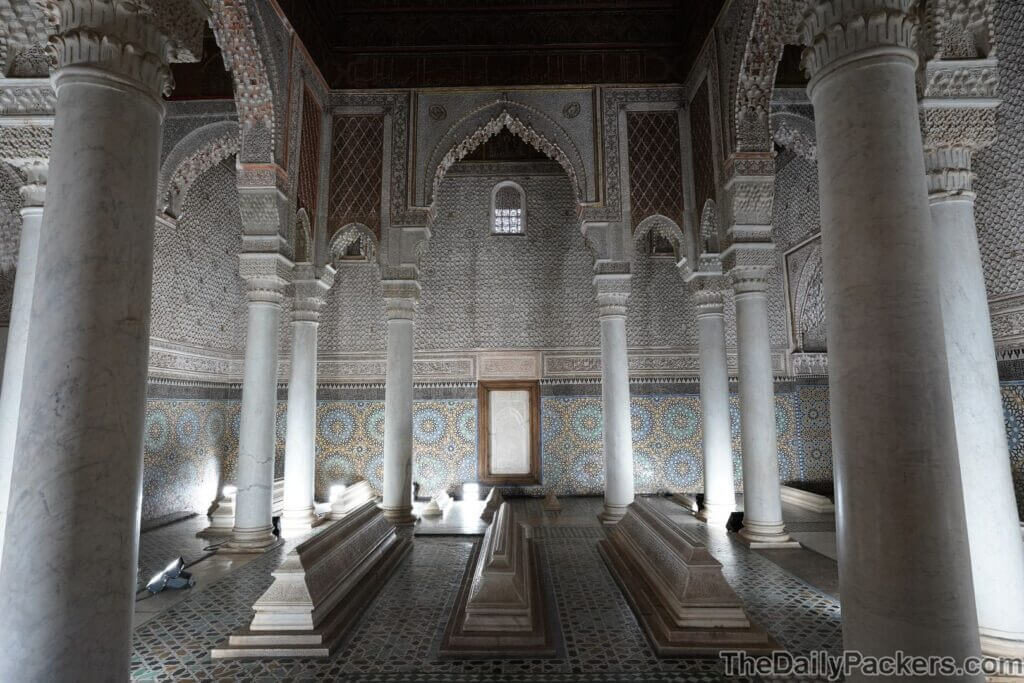
Just a short walk from Bab Agnaou, you’ll find the Saadian Tombs, located near the Kasbah Mosque. Entry costs 70 MAD per person, and while the site is fairly small, it’s one of the most fascinating historic stops in Marrakech.
The tombs date back to the 16th century and serve as the royal necropolis of the Saadian dynasty. Hidden for centuries and only rediscovered in 1917, the site now reveals beautifully decorated mausoleums with intricate tilework, Arabic calligraphy, and carved cedar wood. Walking through this serene space gives you a glimpse into Morocco’s royal past and the artistry of that period.
Tip: Be sure to check this out to learn more about the place: Bahia Palace, Saadian Tombs, & Koutoubia Mosque Tour
Place des Ferblantiers
On your way from the Saadian Tombs to El Badi Palace, you might pass through Place des Ferblantiers, a palm-lined square in the Mellah district. Even if you get a little lost in the medina, it’s worth stopping here for the atmosphere.
The square is known for its artisan shops, especially those selling handcrafted tin lamps and housewares that catch the light beautifully. It’s a relaxed spot where you can soak up the local culture, take a break in one of the cafés, or pick up a unique souvenir before continuing your visit.

Here are all your accommodation options in Marrakech
El Mellah (Jewish Quarter)
As you explore Marrakech, you might come across locals offering unsolicited guidance. For example, while we were looking for the Badi Palace, a man approached us, told us it was closed (it wasn’t), and tried to lead us instead to what he called a spice market in the Jewish quarter.
While following someone like this isn’t usually dangerous, it can feel uncomfortable and is rarely worth it. The Jewish quarter is a peaceful area you can easily explore on your own, without needing a guide. Trust your instincts—if something feels off, politely decline and continue at your own pace. Navigating on your own not only avoids pressure but also gives you the freedom to enjoy the city in your own way.

Bahia Palace
Next on your route is the Bahia Palace—though finding the entrance can be a little tricky within the medina. Entry costs 70 DH, and once inside you’ll quickly see why it’s one of Marrakech’s most popular attractions. The courtyards, intricate zellij tilework, and lush gardens make it a true showcase of Moroccan architecture.
The palace dates back to the 19th century, first built in 1859 by Si Musa, the grand vizier of Sultan Muhammad ibn Abd al-Rahman. His son, Si Ba Ahmed ibn Musa, expanded it between 1894 and 1900 during the reign of Sultan Moulay Abdelaziz. The result was a sprawling residence designed to be the greatest palace of its time, filled with ornate details and lavish spaces.
The only downside is that it can get very crowded, especially with large tour groups, which sometimes makes it feel overwhelming. Still, the beauty of the architecture and gardens makes it well worth a visit.

Tip: Be sure to check this out to learn more about the place: Bahia Palace, Saadian Tombs, & Koutoubia Mosque Tour
Jemaa el-Fna
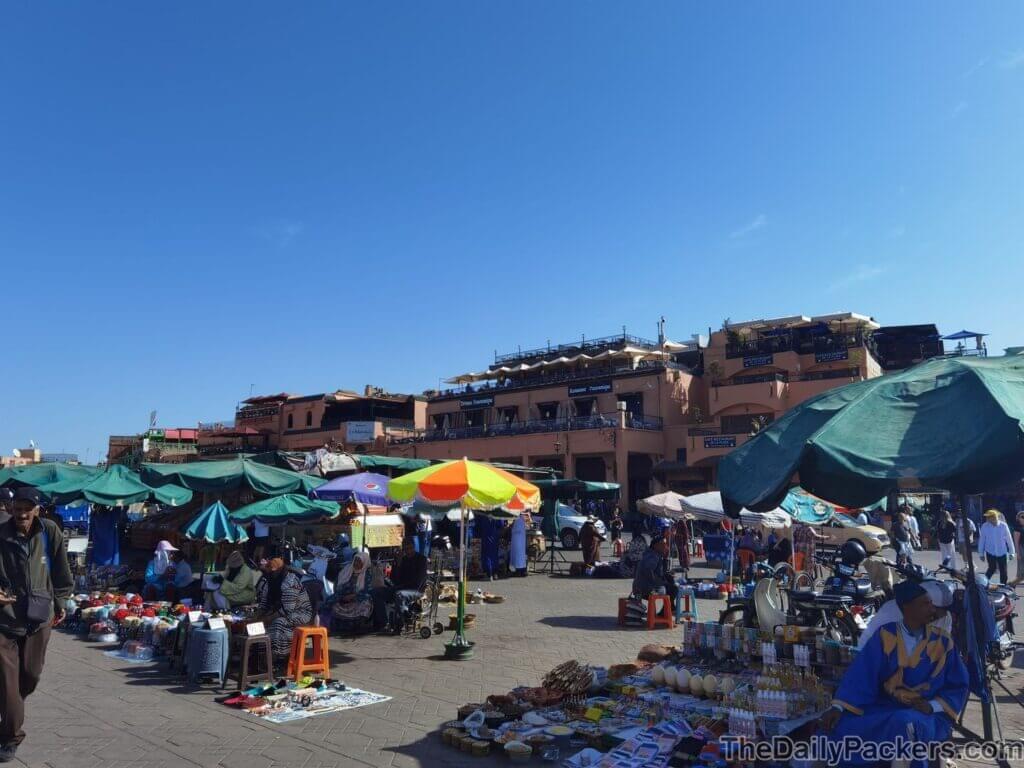
After visiting the Bahia Palace, take a stroll through the medina and make your way to Jemaa El Fna, the iconic main square of Marrakech. This lively space is the heart of the old town, always buzzing with activity. By day, you’ll find a mix of stalls, entertainers, and street vendors, but it’s in the evening that the square truly comes alive. The atmosphere is vibrant, with food stalls filling the air with spices and smoke, storytellers gathering crowds, and music echoing across the square.
You can watch it all unfold from one of the rooftop cafés around the square, though the food and service in these spots are often average at best—it’s really about the view and the experience.
The name Jemaa El Fna first appeared in the 16th century, referring to a mosque that was never completed and later destroyed by plague. Over time, the square became a hub for trade and public life. By the 20th century, institutions like the postal service and Morocco’s central bank had been established here. Today, it remains the beating heart of Marrakech’s cultural and social life, and no visit to the city feels complete without experiencing it.
Check our Google Map of Morocco
Koutoubia
Just a short walk from Jemaa El Fna, you’ll find the Koutoubia Mosque, the largest mosque in Marrakech and one of the city’s most important landmarks. Its 77-meter-high minaret towers above the medina and can be seen from many parts of the city, making it a true symbol of Marrakech.
Built in the 12th century during the Almohad dynasty, the mosque is a masterpiece of Moroccan-Andalusian architecture, with elegant proportions and intricate details that have inspired designs as far away as Seville and Rabat.
Non-Muslims can’t enter the mosque itself, but the exterior is spectacular and the gardens surrounding it are open to everyone. It’s a peaceful place to take a break, admire the view, and soak in the atmosphere of one of Marrakech’s most iconic sites.

Médina Marrakech
From the Koutoubia Mosque, you can head back into the medina and spend time exploring its famous souks. Compared to Fes, Marrakech’s medina feels a little less overwhelming—there are fewer people stopping you every few minutes—but you’ll still need to watch out for scooters weaving through the narrow lanes, which can get a bit annoying.

The medina itself is vast, with countless winding alleys filled with shops selling everything from spices and leather goods to lanterns and carpets. Getting lost is part of the experience, and around every corner you’ll find something new, whether it’s a hidden courtyard, a small mosque, or a craftsman at work. Take your time here—the medina is as much about the atmosphere as it is about the shopping.
Of course, you can also get more of it by taking a private tour of Marrakech.

Tip: Explore safely and with lots of easy the medina with the Medina Souks Guided Walking Tour
Ibn Youssef School
Heading north through the medina, one of the most impressive sites you’ll come across is the Ben Youssef Madrasa. Much larger than the medersas you might have seen in Fes, this former Islamic college is one of the highlights of Marrakech and a must for anyone interested in history and architecture.
The madrasa once served as the largest Islamic school in Morocco, housing hundreds of students who studied religion and law here. Built in the 14th century and later renovated by the Saadian dynasty, it’s a masterpiece of Moroccan craftsmanship, with intricate zellij tilework, carved cedarwood, and a central courtyard that feels both grand and serene.
The complex spans two levels, giving you a real sense of its scale, and it’s named after the nearby Ben Youssef Mosque, founded by the Almoravid Sultan Ali ibn Yusuf. Today, it stands as one of the city’s most beautiful historical monuments and offers a fascinating glimpse into Marrakech’s scholarly past.

Tip: If you want to learn more about this amazing building, consider the. Ben Youssef, Secret Garden, & Souks Walking Tour
Almoravid Koubba
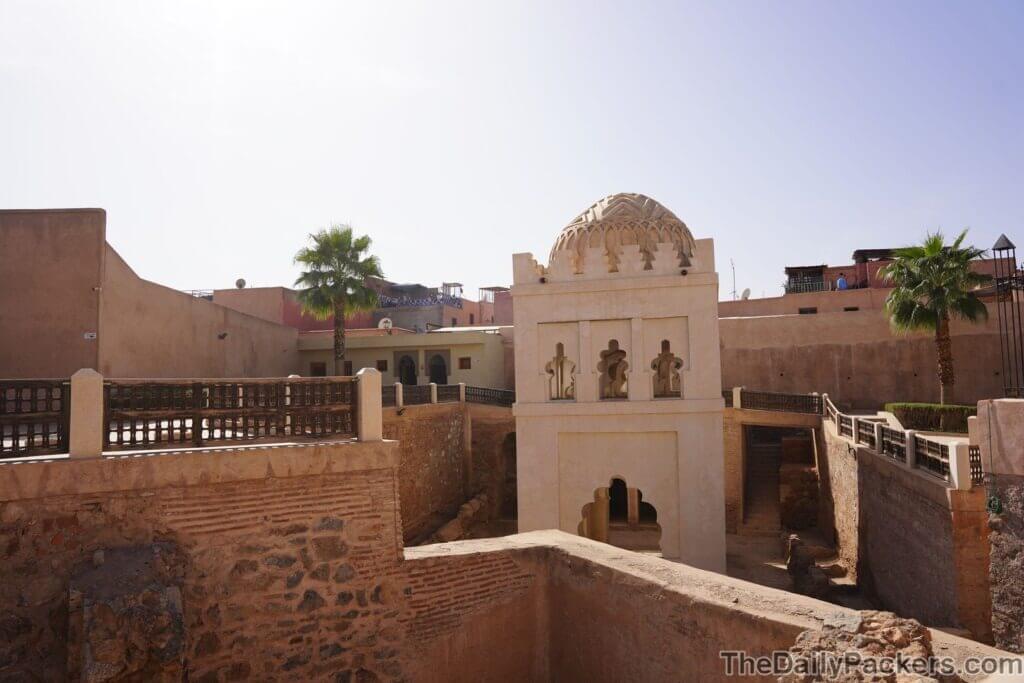
Right next to the Ben Youssef Madrasa stands the Almoravid Qubba, a small but important monument dating back to the early 12th century. Built during the Almoravid dynasty, it’s one of the very few surviving examples of Almoravid architecture in Marrakech.
The Qubba may not look very large, but it’s famous for its intricate decoration, with carved details that reflect the craftsmanship of the time. While most visitors view it from the outside, it remains a fascinating glimpse into the city’s early history and the architectural style that laid the foundation for later dynasties.
Here are all your accommodation options in Marrakech
Badi Palace
Not far from the Saadian Tombs, you’ll find the Badi Palace, one of the most impressive sites in Marrakech. Entry costs 70 dh per person, and unlike many other attractions, it often feels less crowded despite its size. The palace grounds are massive, so take your time exploring. You’ll find quiet benches to rest on, photo exhibitions, a TV room playing a documentary about the site, and even a terrace that offers a sweeping 360° view over Marrakech.
The palace was commissioned in 1578 by Sultan Ahmad al-Mansur of the Saadian dynasty, with construction continuing throughout his reign. Although much of it now lies in ruins after being stripped of its riches, the scale of the complex still gives you a sense of its former grandeur. Walking through its vast courtyards and walls, it’s easy to imagine the palace as it once was—one of the greatest architectural achievements of its time.

Anima (André Heller Garden)
One of our favorite things to do in Marrakech was visiting the Anima Garden, which we stopped at on our way from Imlil to the desert. Created by the Austrian artist André Heller, this garden is a colorful mix of art and nature, filled with sculptures, flowers, and winding paths that feel like stepping into a living artwork.
The entry fee is 120 dh per person, and it’s completely worth it. You can reach the garden by car, or if you’re staying in Marrakech, take advantage of their free One of our favorite things to do in Marrakech was visiting the Anima Garden, which we stopped at on our way from Imlil to the desert. Created by the Austrian artist André Heller, this garden is a colorful mix of art and nature, filled with sculptures, flowers, and winding paths that feel like stepping into a living artwork.
The entry fee is 120 dh per person, and it’s completely worth it. You can reach the garden by car, or if you’re staying in Marrakech, take advantage of their free shuttle service from the city center. It’s a peaceful and inspiring place to escape the busy medina for a few hours, and definitely one of Marrakech’s hidden gems. service from the city center. It’s a peaceful and inspiring place to escape the busy medina for a few hours, and definitely one of Marrakech’s hidden gems.

Tip: Get your André Heller’s ANIMA Garden Ticket online
Jardin Majorelle-Yves Saint Laurent Mansion
The Majorelle Garden in Marrakech is one of the most popular tourist spots in the city, and for good reason—it’s beautiful. However, it can also get incredibly crowded, so expect to wait in line if you haven’t purchased tickets online in advance.
The entrance fee is 120 MAD per person for access to the garden only (without the museum). While the garden itself is lovely and definitely a highlight of Marrakech, we found it to be a bit small considering the price. If you have time to spare, it’s worth a visit, but we personally recommend exploring the Anima Garden instead, which offers a more tranquil experience with stunning artwork and natural beauty.
If you’re in Marrakech, Majorelle Garden is a must-see, but don’t feel like you have to rush there if your time is limited.
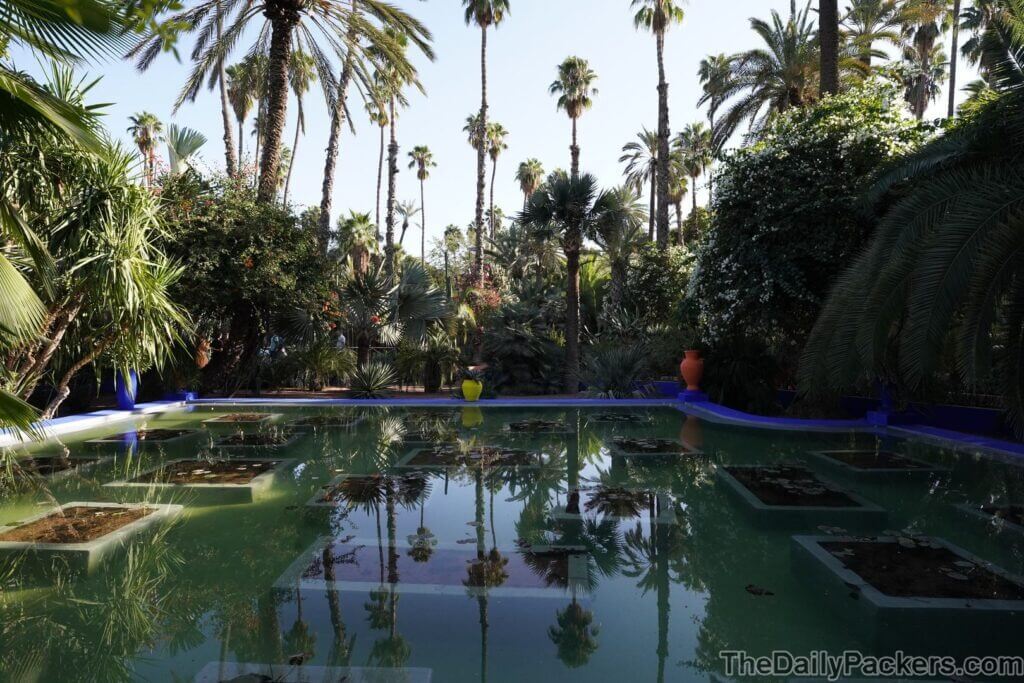
Tip: Skip the line by getting your Majorelle Garden, YSL, and Berber Museum Entry online
Gueliz Plaza
For a change of pace from the historic medina, head over to Gueliz, Marrakech’s modern district. Here, the atmosphere feels completely different—wider streets, contemporary architecture, and a mix of international shops, shopping malls, and trendy restaurants.
It’s not the most traditional side of Marrakech, but it gives you a glimpse of the city’s modern life and offers a nice balance to the old medina. Whether you want to browse boutiques, enjoy a coffee in a stylish café, or simply wander and people-watch, Gueliz is worth including in your visit.

Here are all your accommodation options in Marrakech
Things to do around Marrakech
Essaouira
Some of the best experiences during a trip to Marrakech are actually found outside the city. One of the most popular getaways is Essaouira, a seaside port town about three hours away. We arrived in Marrakech after spending time there, and it quickly became one of our favorite stops in Morocco.
Essaouira has a relaxed vibe, a charming medina, and fresh ocean air—making it the perfect place to escape the heat and hustle of Marrakech. You can wander the historic ramparts, explore the souks at a slower pace, and enjoy some of the best seafood in the country.
If you’d rather not organize the trip yourself, you can also join an Essaouira day tour from Marrakech, which includes transport and enough time to explore the highlights before returning in the evening.

Tip: Don’t miss Essaouira and escape the heat of Marrakesh for the breeze of the ocean.
Imlil
Another great escape from Marrakech is Imlil, a small village in the Atlas Mountains. For us, it was the next stop after Marrakech, and it turned out to be one of the most beautiful places on our trip. Surrounded by dramatic peaks and traditional Berber villages, Imlil is the perfect base for hiking and experiencing a quieter, more authentic side of Morocco.
If you’re not on a road trip, don’t worry—you can still get there easily with an organized tour from Marrakech. These tours usually include transport, a guided walk through the villages, and time to enjoy the stunning mountain scenery.
- From Marrakesh: Imlil and the Atlas Mountains Full-Day Hiking Trip
- If you want another location then Imlil, check this: From Marrakesh: Ourika Valley & Atlas Mountains Day Tour
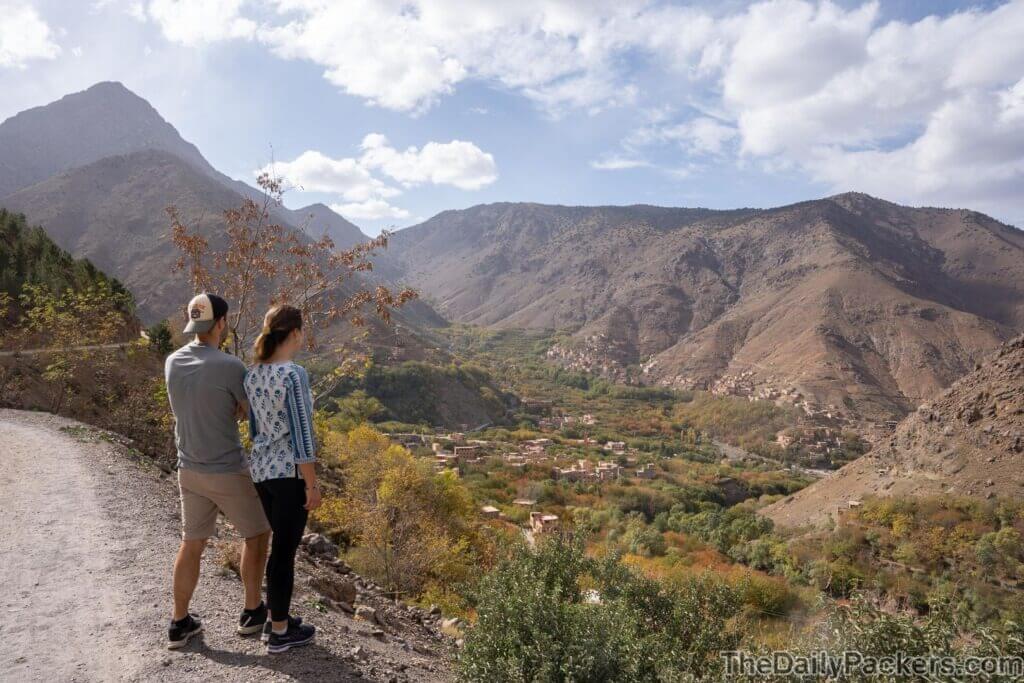
Tip: If you do not want to sleep in Imlil, get this Atlas Mountains Full-Day Hiking Trip
Ouarzazate
From Marrakech, another destination worth considering is Ouarzazate, known as the “Gateway to the Desert.” We visited it after our time in Imlil and only spent a day there, but we quickly realized it deserved more.
Ouarzazate is famous for its old fortified towns, desert landscapes, and of course, the Atlas Cinema Studios, where many famous movies and series have been filmed. Walking through the kasbahs and exploring the sets gives you the feeling of stepping straight into history—or onto a movie set.
If you don’t have a car, you can still make it here with an Ouarzazate day tour from Marrakech, which usually includes stops at Aït Ben Haddou and other highlights along the way.
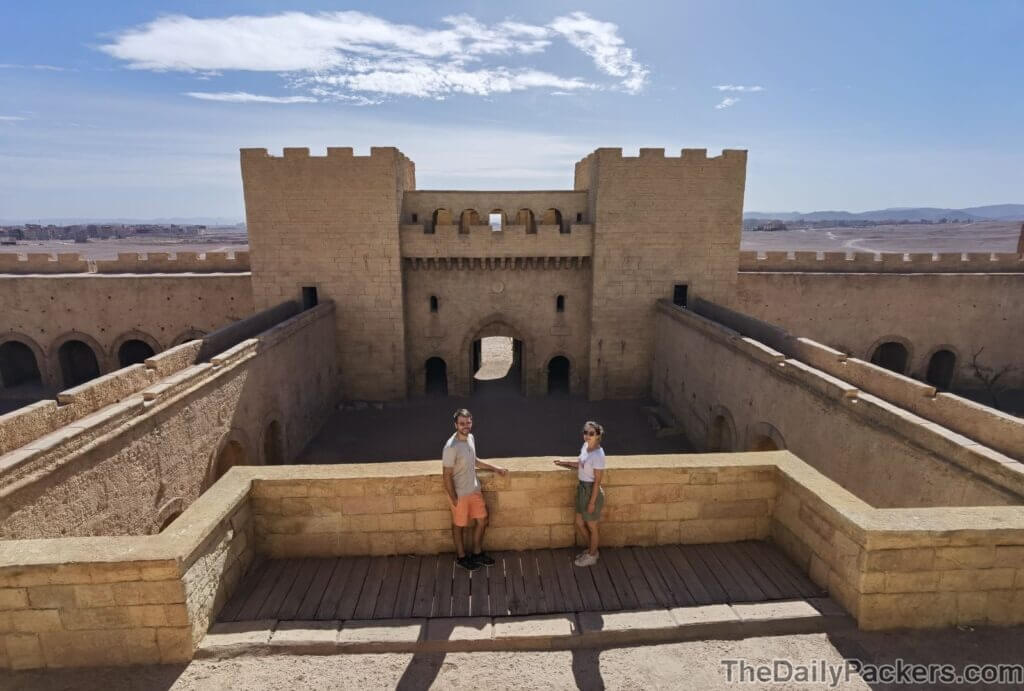
Tip: Get this Day Trip to Ouarzazate and Ait Benhaddou to enjoy one of our favorite places in Morocco.
Merzouga
And of course, one of the most unique experiences you can have in Morocco is spending time in the desert of Merzouga. For us, it was an unforgettable highlight—riding out into the dunes and spending the night in a luxury tent under the stars. The silence, the vastness of the sand, and the clear night sky make it something truly special.
Merzouga is quite far from Marrakech, so you’ll need a few days to make the trip. How you do it really depends on the time you have:
- 1-Day Agafay Desert Sunset, Camel Ride, and Dinner Show
- 2-Day Sahara Tour to Zagora & Ait Ben Haddou
- 3-Day Merzouga and Sahara Desert Tour
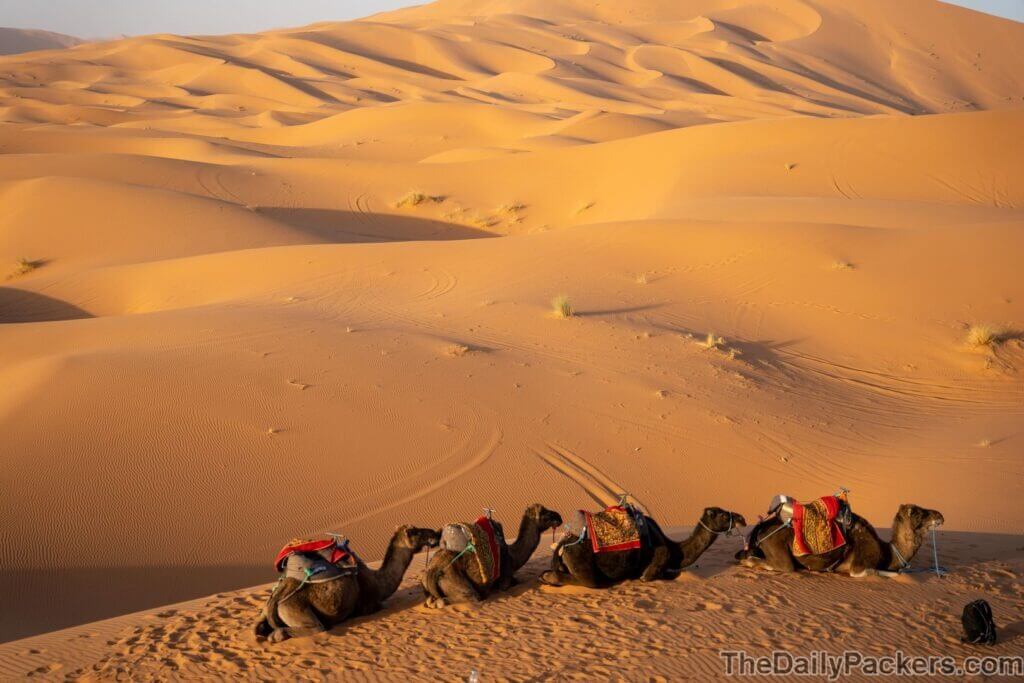
Tip: This is one of the best tours in Marrakesh: 1-Day Agafay Desert Sunset, Camel Ride, and Dinner Show
More things to do in Marrakech
To be honest, there are so many things to do in Marrakech that you could easily spend 10 days here without running out of places to see or experiences to try. The city is the central hub of Morocco, and beyond the main highlights, here are a few more ideas to add to your list:
- Dar Si Said: A museum of Moroccan arts and crafts set in a beautiful palace.
- Le Jardin Secret: A peaceful garden in the medina, perfect for a break from the crowds.
- House of Photography in Marrakech: A fascinating collection of old photos showcasing Moroccan history and culture.
- Royal Theatre: A striking building and cultural venue in the modern part of the city.
- Ouzoud Waterfalls Guided Hike and Boat Trip: A guided hike and boat ride at Morocco’s most famous waterfalls.
- Palm groove tour: Explore the vast palm groves around Marrakech, either by camel or quad bike.
- Marrakesh: Early Morning 40-Minute Balloon Flight: Watch sunrise over the Atlas Mountains from above.
- Casablanca Day Tour: Visit Morocco’s commercial capital and see the impressive Hassan II Mosque.
- Pottery Workshop with Moroccan Tea: Learn traditional pottery-making while enjoying mint tea.
- Dinner Show at Dar Essalam Restaurant: A cultural evening with music, dance, and Moroccan cuisine.
Here are all your accommodation options in Marrakech
Marrakech Itinerary
This is a bit modified compared to what we personally did. But it incorporate most of our best things to do in Marrakech. And of course you can make so many variation of it.
Day 1: Arrival
- Arrive in Marrakech
- Get to your accommodation
- Walk a bit around and enjoy a Moroccan dinner
Day 2: Explore the medina
- Bab Agnaou
- Saadien’s Tombs
- Badi Palace
- Place des Ferblantiers
- Bahia Palace
- El Mellah (antiguo barrio judío)
- Jemaa el-Fna
- Koutoubia
- Médina Marrakech
- Almoravid Koubba
- Ibn Youssef School
Day 3: Explore the Garden and the modern Marrakesh
- Gueliz Plaza
- Jardin Majorelle-Yves Saint Laurent Mansion
- Anima (André Heller Garden)
Day 4: Essaouira
Day 5: Trip to the Altlas
- Atlas Mountains Full-Day Hiking Trip
Day 6: Ourrzazate day tip
- Day Trip to Ouarzazate and Ait Benhaddou
- Or if you have more time: 3-Day Merzouga and Sahara Desert Tour
Day 7:
- 1-Day Agafay Desert Sunset, Camel Ride, and Dinner Show
Day 8:
Day 9:
- 1-Day trip from Marrakech: Ouzoud Waterfalls Guided Hike and Boat Trip
Read: Our complete 2-week Morocco Road Trip Itinerary
About the authors
We are Alex and Tina, a French-Serbian couple who met in China back in 2014. We spent three incredible years there before making France our home. Our shared passion for travel has been the heartbeat of our relationship for over 12 years, taking us across 44 countries and counting.
We launched TheDailyPackers in 2019 as a way to document our adventures. In 2026, we reached a major milestone by officially turning our blog into our full-time job. While we are still growing toward financial independence through this platform, every article we write is fueled by our mission to make your voyages easier through in-depth guides, honest advice, and the lessons we’ve learned from our own mistakes.
Our journey has not been without its storms. In 2023, our world changed forever when our first son, Poppy, was stillborn on November 25th. It was, and remains, the hardest chapter of our lives. In 2025, we were blessed with our second little boy, Milo. He has since joined our traveling tribe, and you’ll be seeing him—and the reality of traveling with a little one-on the blog more and more.
We hope to inspire you to explore the world with curiosity and resilience. Thank you for being part of our story.
You may also like those related posts
9 Best things to do in Nusa Penida, Bali, in 4 days
The perfect 2-Week Sri Lanka Itinerary: Culture & Beach
6 Powerful Reasons to switch to a Plant-based diet
7 best Resorts in the Maldives to stay at in 2025
12 best things to do in Osaka, Japan, in 4 days or more
6 Best Places to Visit in June
The perfect Croatia Itinerary: 7 to 10-day for first timers
How to Visit Iguazu Falls: Argentina and Brazil Side Guide
Pssst, did you know that…
If you purchase something through our links, we earn a small fee. However, you still pay the same. Win-win! And one day we may get to be full-time travel bloggers =)
Find Hotels with Booking.com
Do Yoga with KVY
Buy us a Coffee
Rent a car with DiscoverCars
Find Attractions with GetYourGuide
Find Flights with Expedia
Buy an eSIM with Airalo
Get insured with World Nomads
Get ready with Amazon.com