

Introduction
Our road trip around Corsica was slowly bringing us south, and so far, we can’t say it disappoints. Everything was amazing, from Cap Corse to the secluded beaches of Saleccia and Lotu, and to the Gulf of Porto.
Our next stop was Ajaccio, Corsica’s main and biggest city. As such, we didn’t plan on staying long there, and we were right about that. After having visited the villages of Balagne, Ajaccio felt too big, too crowded, too dirty, too much under construction, well, too much of a city.
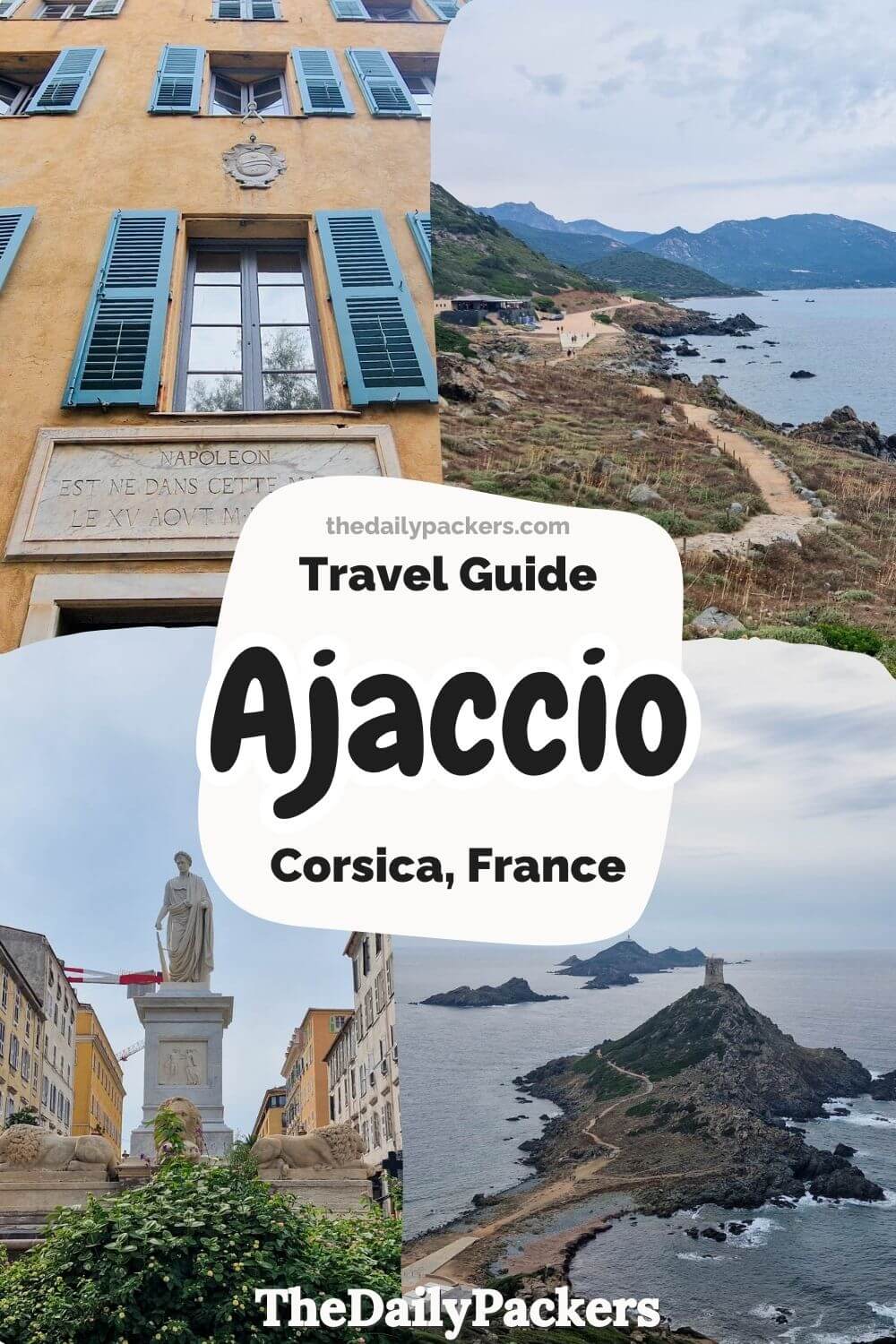
Yet a small part of the city center was cute, but the best part was the Sanginaire islands, which aren’t exactly in the city but are stunning. Those islands lie at the end of the Gulf of Ajaccio and can be reached by boat or viewed from a Genoese tower.

Ajaccio at a Glance & Top Travel Tips
If you’re planning a stop in Corsica’s capital, here is the quick breakdown of what you need to know.
- Vibe: Busy, imperial, and coastal. It feels much more like a “real” city than the quiet villages up north.
- Top Experience: Taking the short hike at Pointe de la Parata to see the Sanguinaires Islands at sunset.
- Best Time to Visit: May-June or September-October. You’ll get perfect weather (20-25°C / 68-77°F) without the suffocating summer crowds.
- Transportation: You can walk the old town, but a rental car is a must to explore the surrounding gulf and beaches.
- Pro Tip: Park at Parking du Diamant in the center; street parking is nearly impossible.
- Don’t Miss: A local treat from Maison Galeani bakery and a stroll down Rue Cardinal Fesch.
Getting there
Ajaccio is the capital of Corsica and is well-connected, making it one of the easiest places in Corsica to get to:
- By Plane: Ajaccio Napoléon Bonaparte Airport (AJA) offers direct flights from major French cities such as Paris, Marseille, and Nice, as well as to some European destinations. The airport is just 7 km from the city center, accessible by bus, taxi, or rental car.
- By Ferry: Regular ferries connect Ajaccio to Marseille, Toulon, and Nice, as well as several other Corsican ports, including Porto-Vecchio and Bastia. These ferries are operated by Corsica Linea and La Méridionale. The ferry terminal is conveniently situated in the city center, ensuring a seamless arrival.
- By Car: If you’re already in Corsica, you can drive to Ajaccio from various locations. We arrived by car from Calvi, and it was a beautiful road trip.
- By Train: Corsica’s narrow-gauge railway connects Ajaccio to Bastia and Calvi via Corte, offering one of the most scenic train rides in France. The Chemins de Fer de la Corse trains depart from Ajaccio’s central station.

Moving Around
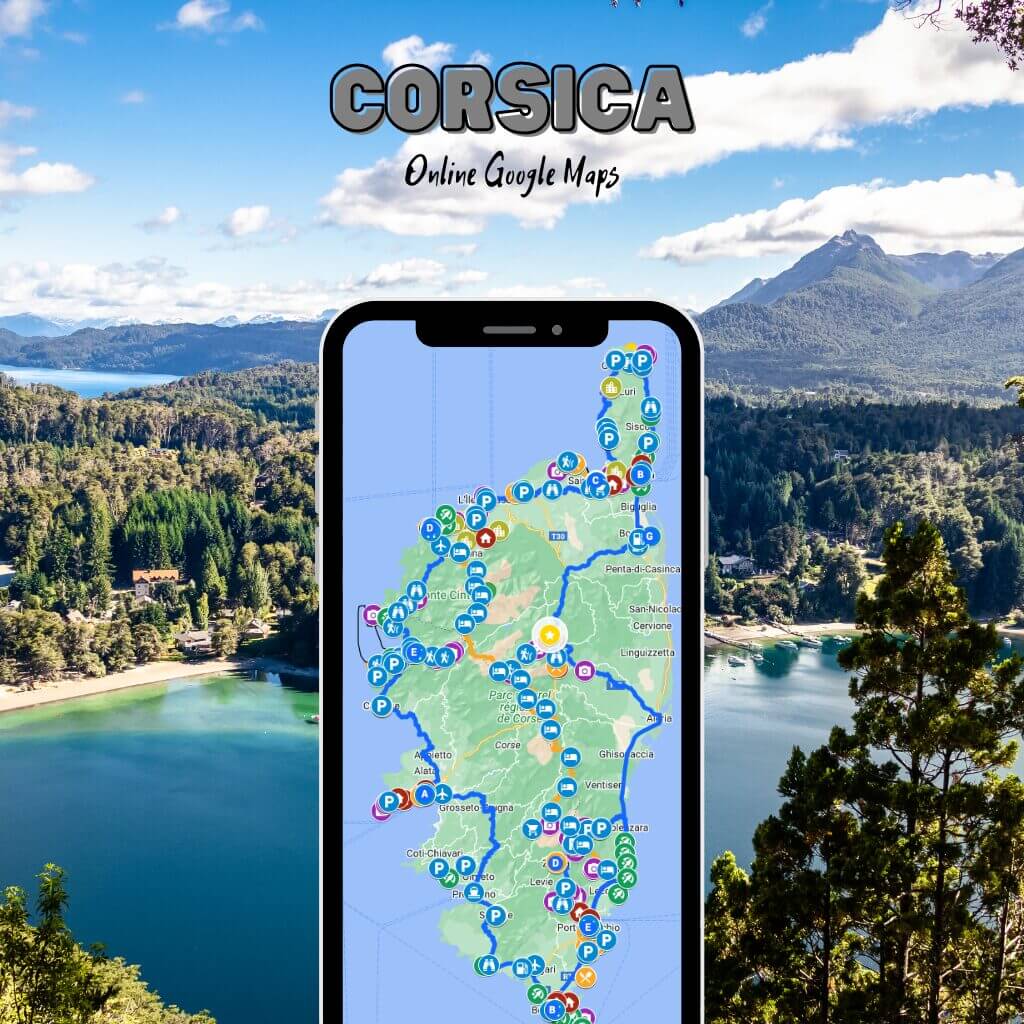
The best way to explore Ajaccio is on foot in the city center and by car to reach the end of the Gulf of Ajaccio. In any case, we would strongly advise having a rental car in Corsica.
Parking ain’t that easy in Ajaccio, but your best option is to try the Parking du Diamant, that’s where we parked. For the Sanguinaires Islands, there is a large parking lot right before the site entrance called “Parking des Iles Sanguinaires.”
Another easy way to get around is using the Open-Top bus tour.


We recommend to rent a car through Discover Cars with free cancellation. Book your rental car here.
When to Visit
Choosing the best time to visit Ajaccio really depends on what you want to do, but we’ve found that each season has its own vibe. If you’re like us and love exploring without the intense heat, spring is amazing because everything is in bloom, and it’s a comfortable 15–22°C (59–72°F).
Once summer hits, the city really comes alive with temperatures reaching 30°C (86°F). This is the time to go if you want to spend your days swimming or taking boat trips, though you should expect more crowds and higher prices. For a more relaxed feel, we’d suggest heading there in autumn. The sea is still warm enough for a dip, and at 20–27°C (68–81°F).
Winter is much quieter and cooler, around 10–15°C (50–59°F), which is great for slow travel and hiking, even if some tourist spots take a break.

Where to Stay
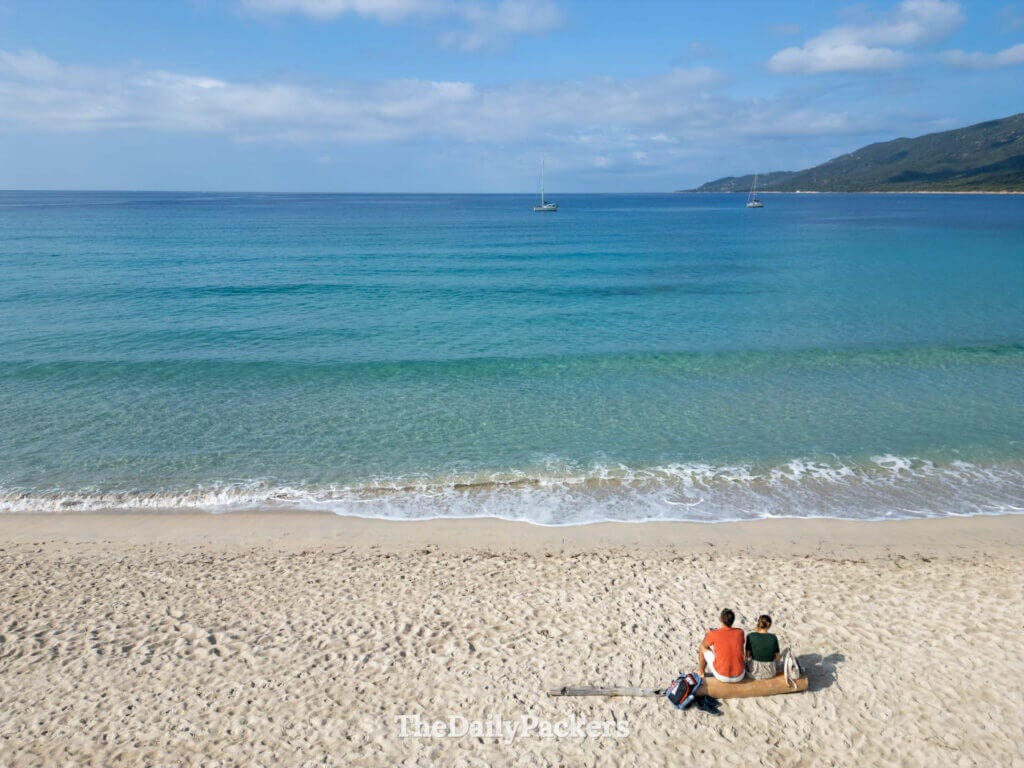
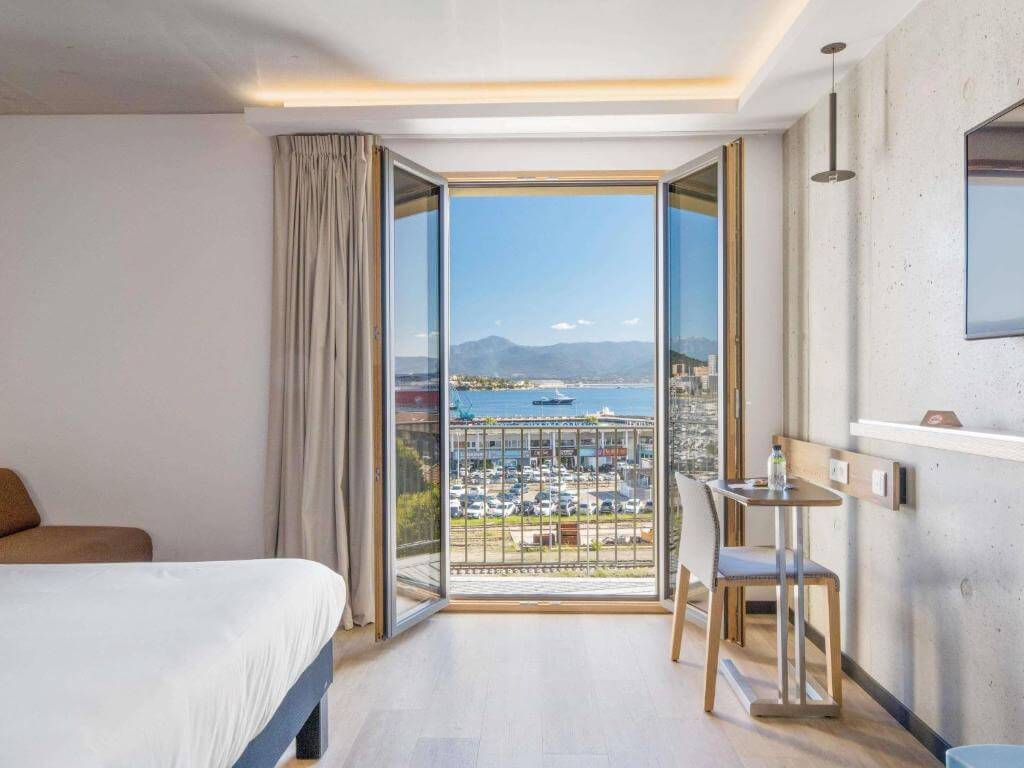
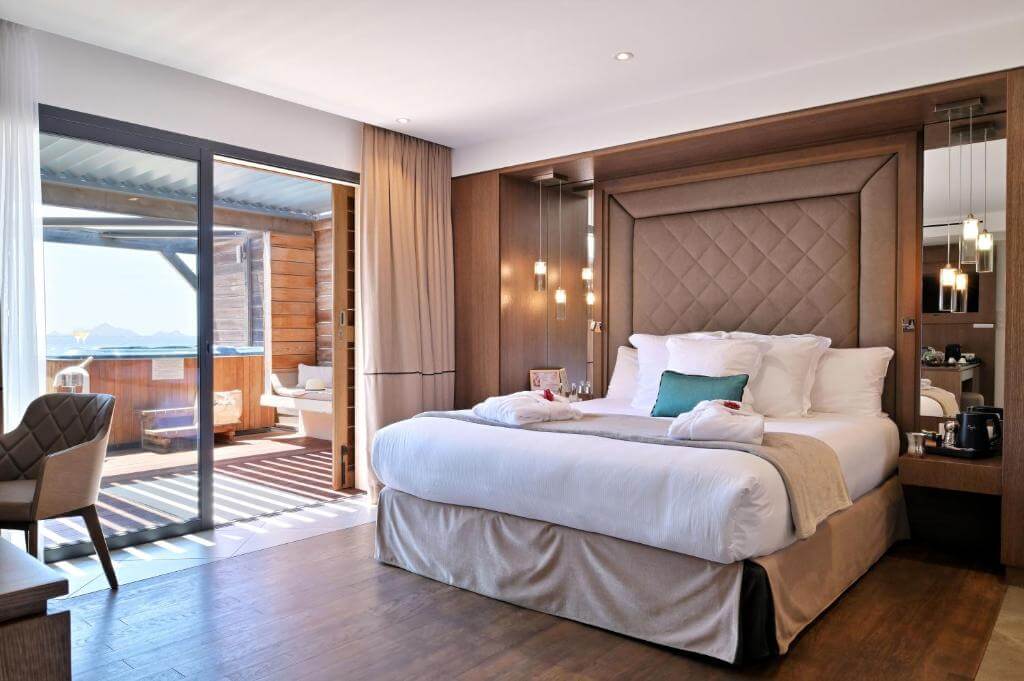
While in Ajaccio, we would recommend staying a bit outside of the city center, as it will be much easier to find a hotel with parking:
- (€)Ibis Styles Ajaccio Napoleon: A practical budget stay with modern design and a central location, perfect for a short stop in Ajaccio.
- (€€): Cala Di Sole: A comfortable mid-range hotel by the sea, offering beach access and beautiful views just outside the city.
- (€€€): Le Week-End: A boutique-style hotel with refined rooms and direct access to the beach, ideal for a relaxing and more upscale stay.

What to Eat
If you’re looking for a good place to eat in Ajaccio, try O Mà Cantinetta. It’s a cozy restaurant where you can taste fresh Corsican dishes with a creative twist. The menu changes with the seasons, but you’ll usually find local charcuterie, seafood, and homemade pasta. It has that casual, welcoming vibe that makes you want to linger a little longer over a glass of wine.
For something more local and authentic, stop by Maison Galeani, a bakery loved by the locals. This is the place to pick up fresh bread straight out of the oven, as well as traditional Corsican pastries like canistrelli or fiadone, a light ricotta cheesecake. It’s the kind of spot where everything smells so good you’ll want to take a bag full of treats with you.
And when the sun gets too hot, head to Glacier Neri for ice cream. This is the most famous ice cream shop in Ajaccio, and for a reason, creamy gelato in a wide range of flavors, from classic vanilla and chocolate to seasonal fruits and Corsican specialties. A scoop here is the perfect way to end a day of exploring the city.

Best things to do in Ajaccio
Cathedral Santa Maria Assunta
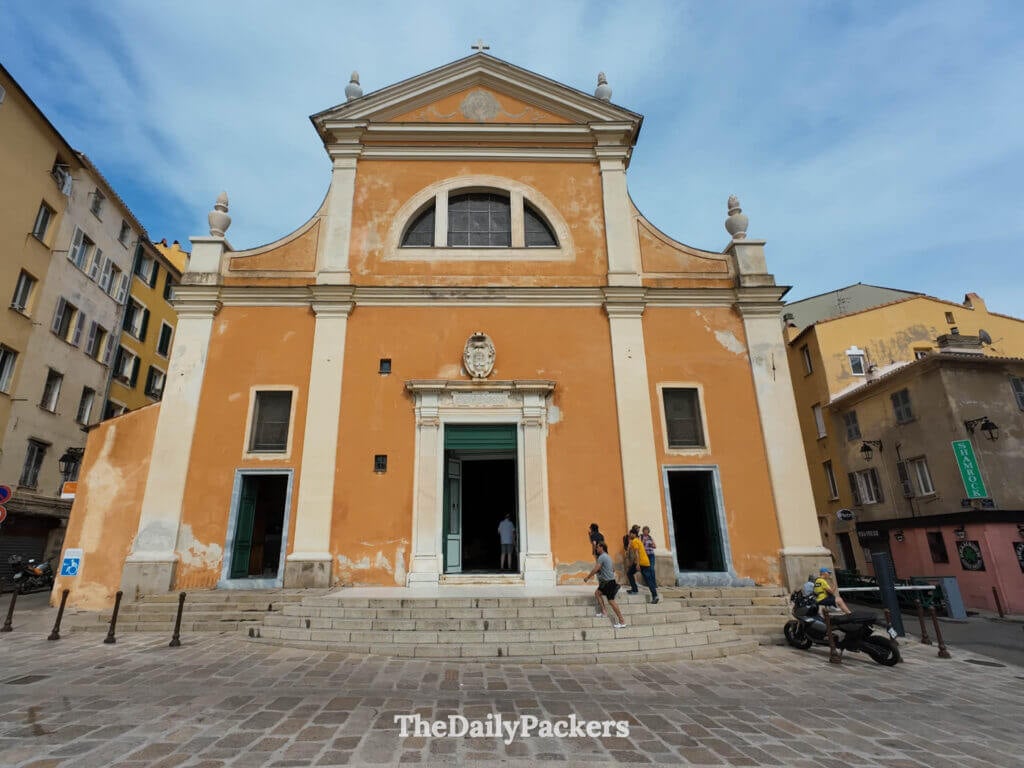
If like us you parked in the city center, then Ajaccio Cathedral will most probably be your first stop, built in the 16th century, is a beautiful Baroque church best known as the baptismal site of Napoleon Bonaparte in 1771. Inside, you can admire stunning frescoes and the Virgin of the Sacred Heart, a painting by Delacroix.
Ajaccio Citadel
The Ajaccio Citadel was built in the 16th century to protect Ajaccio from invasions, and it stands by the sea, offering a glimpse into the city’s military past. The citadel has been closed to the public for decades, but is now undergoing restoration, and you can now visit the inner court. There you will find some cute shops and exhibitions.

Maison Bonaparte
Maison Bonaparte is the birthplace of Napoleon Bonaparte and is now a museum that houses historical artifacts, furniture, and personal items of the Bonaparte family. We believe it is a nice place to see from the outside for its historical value; however, we are not too sure about visiting it, as we heard guides saying that it isn’t worth it.

From a Corsican point of view, Napoleon Bonaparte isn’t that important. For them, it is all about Pascal Paoli, a Corsican patriot, statesman, and military leader who was at the forefront of resistance movements against the Genoese and later French rule over the island


Tip: We never travel without our DJI Mini 3 PRO drone anymore — it’s totally worth having to capture places from a whole new perspective.
Place Foch
To connect to the main street and city center, you will have to go through Place Foch, a lively square lined with palm trees, and Ajaccio’s local market, where you can sample Corsican specialties.
At its center stands a statue of Napoleon Bonaparte depicted as a Roman emperor. The square also hosts

Ajaccio’s Central Market
Ajaccio’s Central Market is located in the heart of the imperial city and offers a wide range of local produce, from fruit and vegetables to charcuterie and flowers.
We weren’t lucky, and it was closed when we were there. If you want to visit it, be sure to remember that it is only open every morning from 7.30 am to 1 pm, except Mondays

Ajaccio Port
The port of Ajaccio is a nice waterfront where you can enjoy a leisurely walk. It is also the departure point for boat excursions to the Sanguinaires Islands and Scandola Nature Reserve.

Cardinal Fesch Street
At the end of the port, you can come back to the city center using Cardinal Fresch Street, the main street of the city center filled with boutiques, bookshops, and Corsican restaurants.
This is the street we preferred in Ajaccio

Fesch Museum
As you stroll through Cardinal Fesch Street, you will pop by the Fesch Museum. Founded by Napoleon’s uncle, Cardinal Fesch, this museum houses the largest Italian painting collection in France after the Louvre, featuring masterpieces from Renaissance and Baroque artists.

Imperial Chapel
And within the Museum is the Imperial Chapel. Built in 1857, it serves as the burial site of Napoleon’s parents and relatives. This solemn and beautifully decorated chapel is a significant landmark in Ajaccio’s imperial history.
To enter it, you must visit the Fesch Museum

Place de Gaulle
Place de Gaulle is where we parked our car, it is Ajaccio’s main square, known for its equestrian statue of Napoleon and its central role in the city’s festivals and events. Unfortunately for us, the square was under heavy construction at the time of our visit.

Pointe de la Parata
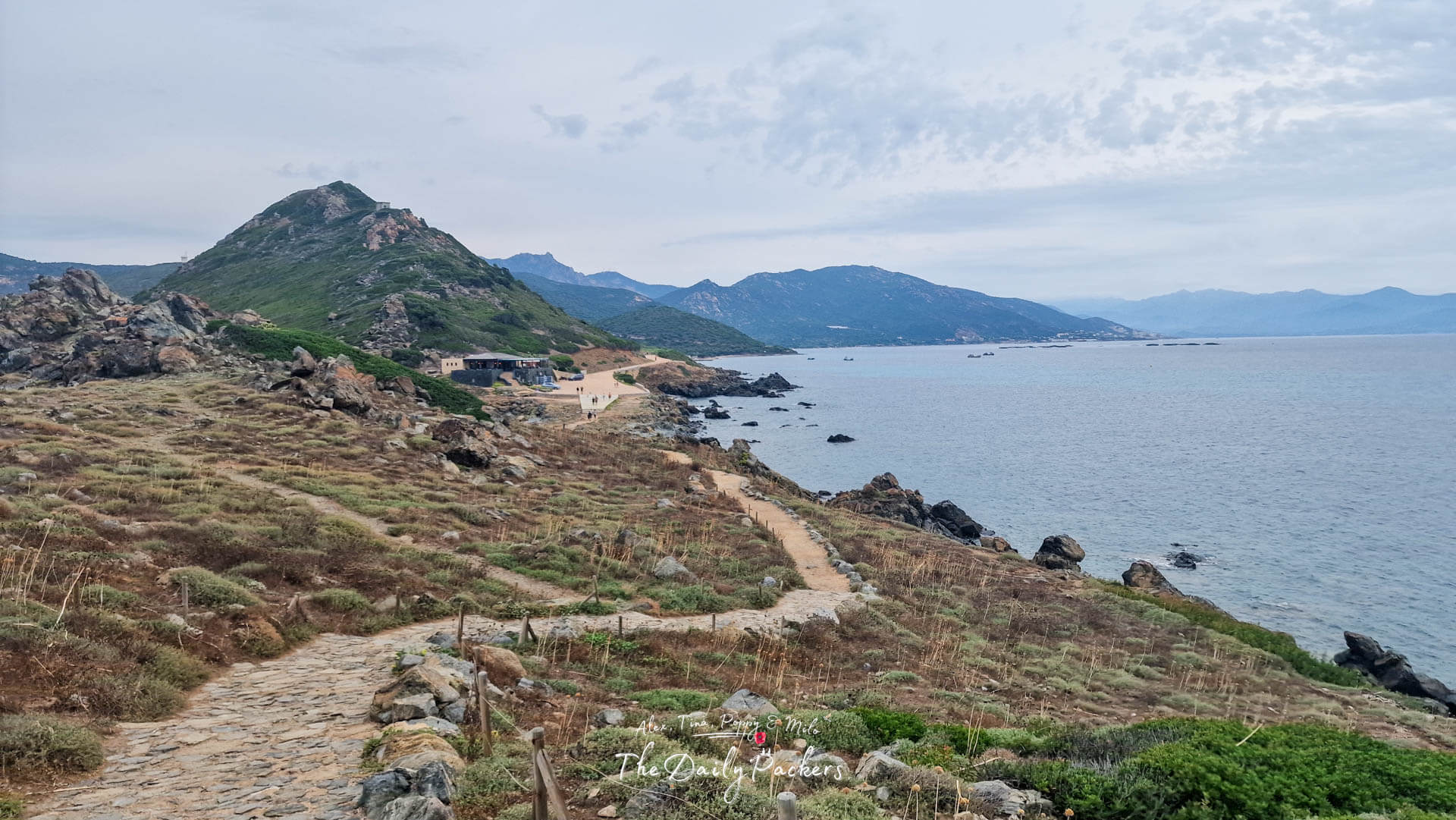
Now we are getting into our favorite things to do in Ajaccio. The Pointe de la Parata is a stunning coastal viewpoint offering panoramic views of the Sanguinaires Islands. This viewpoint is located on the hill before the Genoese tower and can easily be accessed by hiking for 20 minutes.

Parata Genoese tower
If you want to avoid hiking, you can simply walk from the parking lot to the Parata Genoese tower; it is a nice pedestrian walk along the coast. Once at the Parata Genoese Tower, you can walk around it to admire the Sanguinaires Islands

Sanguinaires Islands
And finally, during the peak season, you can take a boat tour to visit the Sanguinaires Islands. We would recommend checking out this highly rated tour or that one for the sunset tour.

Napoleon I Memorial Monument
If you want to visit more places in Ajaccio, you should consider the Napoleon I Memorial Monument, dedicated to Napoleon Bonaparte and paying tribute to Ajaccio’s most famous figure. The impressive statue stands in a strategic spot overlooking the city.
Sentier des crêtes
But also consider the Sentier des Crêtes, a scenic hiking trail offering breathtaking views of Ajaccio and the Mediterranean. The trail is particularly beautiful at sunrise or sunset. The trailhead is at the Bois des Anglais.
Things to do around Ajaccio
Scandola Nature Reserve
If you don’t have the time to go North of Corsica, you can consider visiting the Scandola Nature Reserve as a day trip from Ajaccio. This will allow you to discover the remarkable rock formations of the Calanche de Piana. Enjoy a 2-hour stopover in the secluded coastal village of Girolata for lunch.
If you want to know more about the Scandola Nature Reserve, you will find more information in our article about the Gulf of Porto.
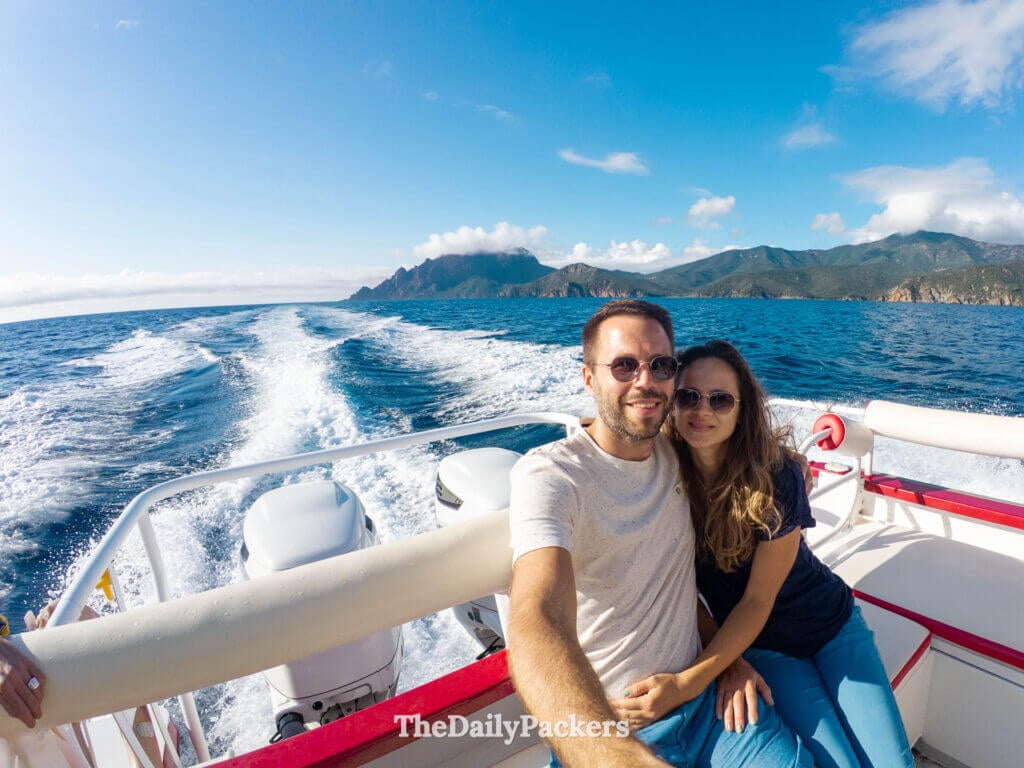

Read: Best things to do in the Gulf of Porto
Cupabia Beach
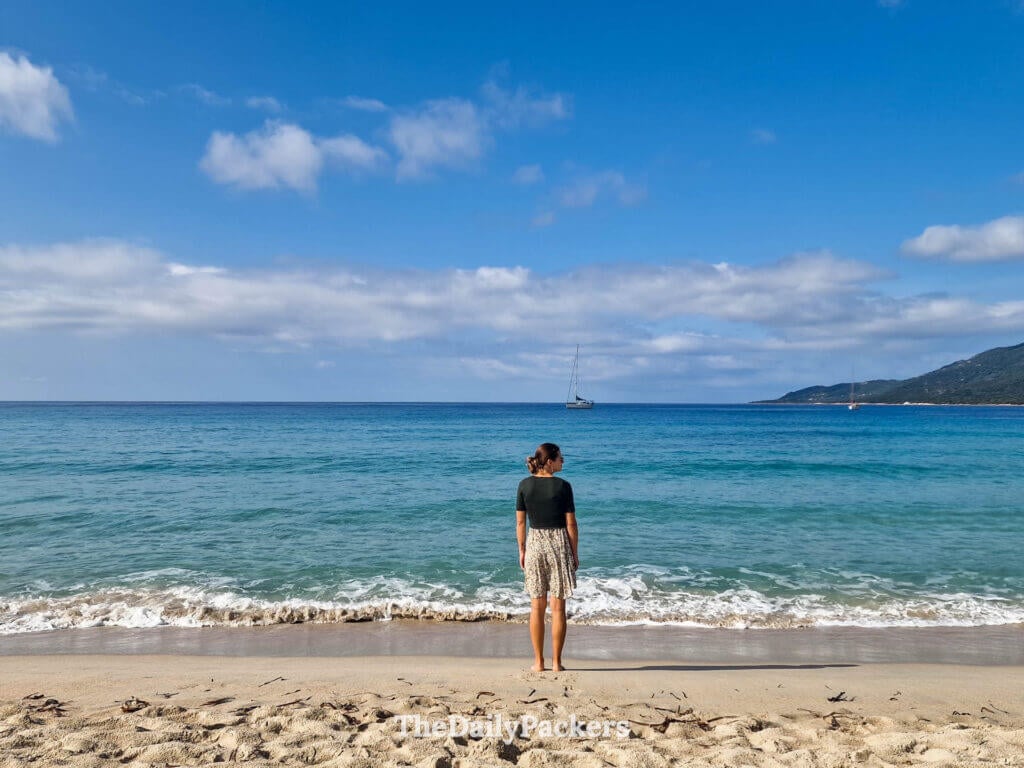
Cupabia Beach is one of the most beautiful beaches in Corsica, nestled between Propriano and Ajaccio. It was our first stop while road-tripping from Ajaccio to Bonifacio.
Cupabia Beach is a hidden gem known for its crystal-clear turquoise waters, fine golden sand, and unspoiled natural surroundings.
The shallow waters make it ideal for families, while the remote setting provides a tranquil escape from the crowds.
Filitosa
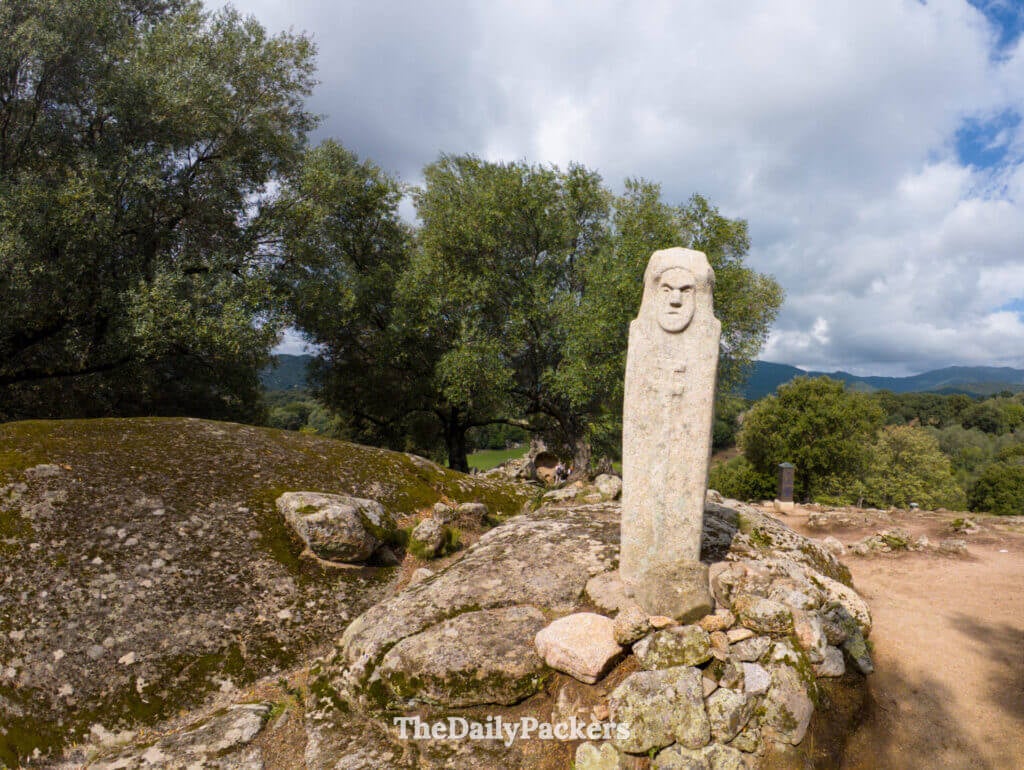
Filisota is one of Corsica’s most important prehistoric sites; it dates back over 8,000 years and features mysterious carved menhirs (standing stones). It was our second stop after Cupabia Beach on the way to Bonifacio.
These ancient statues, shaped into human-like figures, are believed to have religious or protective significance.
But for most of the site, we are still only guessing its purpose. The archaeological site is nice to see and offers circular stone structures, caves, huge trees, and a museum displaying artifacts found on-site
Sartène
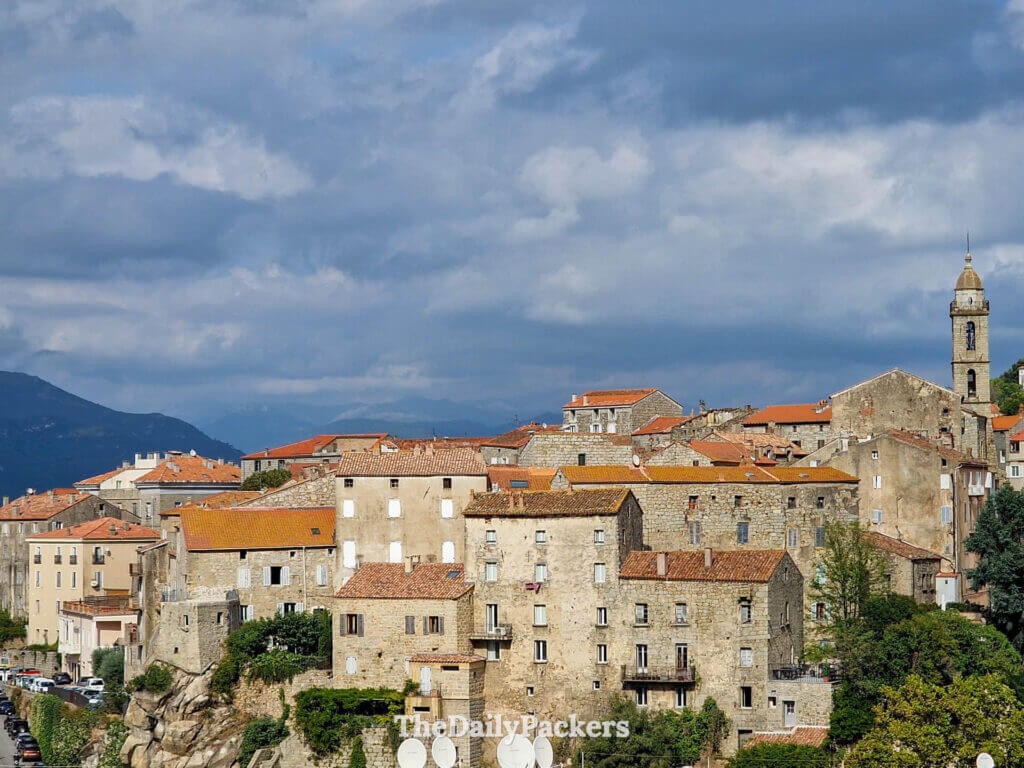
Sartène was our final stop before Bonifacio, and it is most probably our favorite small village of Corsica. Often called “the most Corsican of Corsican towns,” Sartène is a picturesque hilltop village with narrow medieval streets, stone houses, and a strong cultural identity.
This historic town was once a hub of Corsican vendettas (family feuds) and has retained its authentic charm.
It is also there that we found an amazing family restaurant (Le Palace) with delicious and fresh meals
Read: The Ultimate Corsica Road Trip & Travel Guide
Costs of Traveling in Ajaccio
Budgeting for Ajaccio is relatively straightforward, but as with most of Corsica, prices can vary by season. To give you a realistic idea of what to expect, here is a breakdown based on what we spent during our stay:
- Accommodation: You can expect to pay around € 129 per night at a mid-range hotel like Hôtel Cala di Sole. Prices will drop in the shoulder season and climb significantly in July and August.
- Food & Drink: A casual stop at a bakery for snacks or a light lunch will cost you about 20 € for two people. For smaller breaks, a local beer is around 5 €, while a coffee at a café is usually a very reasonable 2.20 €.
- Parking: This is a major expense to keep in mind. In the city center, we paid 3.60 € for just under two hours at the Parking du Diamant. If you head out to the Sanguinaires Islands, there is a flat fee of 4 € for the dedicated parking lot.
- Activities: Most natural sites are free, but historic or archaeological stops like Filitosa (on the way to Bonifacio) have an entrance fee of 9 € per person (18 € for a couple).
Budget Tip! If you want to save money, avoid eating every meal at the restaurants along the marina. Grab some fresh local charcuterie and bread from the central market or Maison Galeani and head to the Pointe de la Parata for a picnic with the best view in town.
Plan Your Trip to Corsica
If you are planning a full road trip around the island, you are in the right place. We have written detailed guides for every stop we made to help you plan the perfect itinerary:
- The Ultimate Itinerary: The Best 13-Day Corsica Road Trip
- Budgeting: Cost to Travel to Corsica: Our 2024 Budget Breakdown
- Essential Tips: 17 Things to Know Before Your Corsica Trip
- Where to Stay: 16 Best Hotels in Corsica for 2025
- The Best Beaches: 12 Most Beautiful Beaches in Corsica
Our Other Regional Guides:
- 11 Best Things to Do in Cap Corse: Our Perfect 1-Day Road Trip
- Saleccia & Lotu: The Agriates Desert’s Best Beaches
- 6 Stunning Places to Discover in Balagne
- 15 Best Things to Do in the Gulf of Porto
- 20 Best Things to Do in Bonifacio
- Lavezzi Islands: Corsica’s Best Secluded Escape
- 12 Best Things to Do in Porto-Vecchio
- 8 Best Things to Do in Corte
- 18 Most Beautiful Places in Corsica
About the authors
We are Alex and Tina, a French-Serbian couple who met in China back in 2014. We spent three incredible years there before making France our home. Our shared passion for travel has been the heartbeat of our relationship for over 12 years, taking us across 44 countries and counting.
We launched TheDailyPackers in 2019 as a way to document our adventures. In 2026, we reached a major milestone by officially turning our blog into our full-time job. While we are still growing toward financial independence through this platform, every article we write is fueled by our mission to make your voyages easier through in-depth guides, honest advice, and the lessons we’ve learned from our own mistakes.
Our journey has not been without its storms. In 2023, our world changed forever when our first son, Poppy, was stillborn on November 25th. It was, and remains, the hardest chapter of our lives. In 2025, we were blessed with our second little boy, Milo. He has since joined our traveling tribe, and you’ll be seeing him—and the reality of traveling with a little one-on the blog more and more.
We hope to inspire you to explore the world with curiosity and resilience. Thank you for being part of our story.
You may also like those related posts
How I got Deported From China: Unique 2016 Travel Experience
Walk With Penguins in Ushuaia: Everything You Need to Know
Ribeauvillé Christmas Market: The Best Medieval Market
Bus from Brazil to Uruguay: 23h journey through land borders
Shanghai Travel Guide: The Perfect 6-Day Itinerary
14 Best things to do in Arequipa, Peru, in 2 to 3 days
Half TMB Guide: Hike the Best of Tour du Mont Blanc
The Mezquita of Cordoba: Spain’s Most Iconic Monument
Pssst, did you know that…
If you purchase something through our links, we earn a small fee. However, you still pay the same. Win-win! And one day we may get to be full-time travel bloggers =)
Find Hotels with Booking.com
Do Yoga with KVY
Buy us a Coffee
Rent a car with DiscoverCars
Find Attractions with GetYourGuide
Find Flights with Expedia
Buy an eSIM with Airalo
Get insured with World Nomads
Get ready with Amazon.com