

Dubrovnik Travel Guide Introduction
We visited Dubrovnik in August 2021 during our Balkan road trip. It was our last stop in Croatia, and we drove there directly from Split.
Dubrovnik is famous for its stunning Old Town, enclosed by massive stone walls that were completed in the 16th century—which you can actually walk along. The city boasts well-preserved historical buildings, including the Baroque-style St. Blaise Church, the Renaissance Sponza Palace, and the Gothic Rector’s Palace, which now houses a history museum.
If you’re planning a trip to Dubrovnik, a minimum of 1 to 2 days is ideal to experience the city’s highlights. We explored it for a full day, and it was more than enough to see the main attractions and has we had been in Croatia for a while in was fine.
But of course, you could extend your stay to 4 or 5 days easily to explore at a slower pace or visit some of the nearby beaches, or use it as a base to visit the surrounding regions.
Get our complete Google Map
Our complete Google Map of Balkans features tons of pins, including things to do, dining spots, accommodations, points of interest, and a trip itinerary.
Getting there
Dubrovnik is well-connected by air, land, and sea, making it easy to reach whether you’re coming from within Croatia or from abroad.
- By plane: The Dubrovnik Airport (DBV), also known as Čilipi Airport, is located around 20 km (12 miles) southeast of the city center. It offers international and domestic flights, especially during peak tourist season. From the airport you can take the Airport Shuttle Bus thats between the airport and Pile Gate (Old Town), stopping at the Main Bus Station in Gruž. The journey takes 30-40 minutes and costs around 10€ or rent a car and be free.
- By Bus: If you’re traveling within Croatia or from neighboring countries, long-distance buses are a budget-friendly way to get to Dubrovnik. From Split, the journey takes 4-5 hours, and tickets cost around 15-25€. Buses arrive at Dubrovnik’s Main Bus Station in Gruž, about 3 km from the Old Town. From there, you can take a local bus or taxi to your accommodation.
- By Car: Driving to Dubrovnik is an amazing experience, especially if you’re road-tripping along the Adriatic Coast. From Split: 3-4 hours via the scenic D8 coastal road.
Important: When driving from northern Croatia to Dubrovnik, you’ll briefly cross Bosnia & Herzegovina at Neum. This requires passing two border checks, so bring your passport and check visa requirements if needed.
If you are coming by car, we recommend finding an accommodation with an parking lot because parking can be expensive in Dubrovnik. A good option is to park at “Dubrovnik City Parking – 10kn per hour” which is located 25min walking distance from the historical center
Moving Around
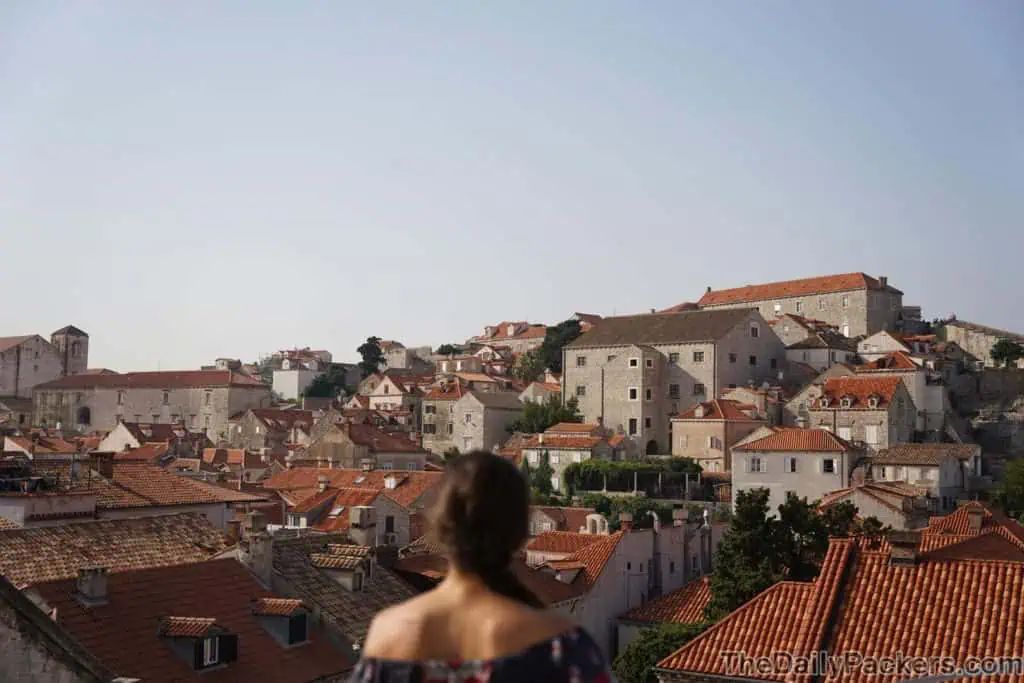
Once you’re in Dubrovnik, the Old Town is compact and entirely walkable. Most attractions, restaurants, and viewpoints are within a short distance, making it easy to explore on foot. However, if you’re planning to visit nearby beaches or other scenic spots outside the city center, you’ll need:
- Public transport: The local bus network (Libertas Dubrovnik) connects the Old Town (Pile Gate) with other parts of the city. Tickets cost 2€ if bought at kiosks or 2.5€ if purchased from the driver. Buses run frequently, especially to Lapad, Babin Kuk, and Gruž Port
- Taxis can be found at key locations like Pile Gate, Gruž Port, and the main bus station. Uber & Bolt are available and often cheaper than regular taxis
- Car rental: You don’t need a car for Dubrovnik’s Old Town, but if you plan to visit beaches like Pasjača Beach or Sunj Beach on Lopud Island, renting a car can be useful. Or if you’re staying outside the Old Town, and want to do day trips to Montenegro, Mostar, or Pelješac Peninsul

When to Visit
Dubrovnik is a year-round destination, but the best time to visit depends on what kind of experience you’re looking for. Whether you want to explore the historic Old Town, relax on the beaches, or avoid the crowds, each season offers something unique.
- Spring (March-May): A fantastic time for sightseeing and outdoor activities with mild temperatures (15–22°C / 59–72°F). Fewer tourists, making it easier to explore the Old Town and city walls. Prices for accommodation and flights are lower compared to peak summer.
- Summer (June-August): Peak tourist season with hot weather (25–32°C / 77–90°F). Perfect for beach lovers, boat trips, and island hopping (Lokrum, Elafiti Islands). Dubrovnik is extremely crowded, especially with cruise ship passengers. Accommodation prices are at their highest. Tip: Visit early in the morning or late in the evening to avoid the biggest crowds.
- Autumn (September-October): A great balance of warm temperatures (20–27°C / 68–81°F) and fewer crowds. The sea remains warm enough for swimming, and attractions are much less packed. A perfect time for a relaxed, authentic Dubrovnik experience with lower prices.
- Winter (November-February): A peaceful and quiet time to visit, with cooler temperatures (10–15°C / 50–59°F). Many tourist services close, but the Old Town remains charming, especially around Christmas. The cheapest time for accommodation and flights.
For the best mix of good weather, fewer crowds, and affordable prices, the ideal months to visit Dubrovnik are May, June, September, and early October.


Things to do in Dubrovnik
Lovrijenac
Lovrijenac Fortress, also known as St. Lawrence Fortress, is a stunning standalone fort just outside Dubrovnik’s Old Town walls. Perched 37 meters above the sea, it offers one of the most breathtaking panoramic views of the city and the Adriatic coastline. Built in the 11th century, it played a crucial role in defending Dubrovnik from Venetian invasions and strategically controlled both the land and sea entrances to the city.
The fortress is also famous for being a filming location for Game of Thrones, where it stood in for the Red Keep. While there isn’t much to see inside, the view from the top is spectacular and well worth the climb up the steep stairs. Entrance is included in the Dubrovnik City Walls ticket, making it an easy addition to your visit. To fully appreciate its beauty and avoid the crowds, it’s best to visit early in the morning or around sunset.
If yo are fan of Game of Thrones, then you shouldn’t miss this incredible experience.

Pile Gate, Dubrovnik
Pile Gate is one of the main entrances to Dubrovnik’s Old Town and a perfect starting point for exploring the city’s historic core. Built in the 15th century, it features a stone bridge that once spanned a defensive moat, adding to the fortified charm of the city. The gate itself consists of an outer and inner entrance, both adorned with impressive medieval and Renaissance architectural details. Above the archway, you’ll find a statue of St. Blaise, the patron saint of Dubrovnik, watching over those who pass through.
Walking through Pile Gate immediately immerses you in the Old Town’s atmosphere, leading directly onto Stradun, the city’s main street. This is one of the busiest areas of Dubrovnik, so if you want to take in the gate’s history and snap some great photos, consider visiting early in the morning or later in the evening when the crowds are thinner.
And if you want to enjoy a walking tour in the historic heart of Dubrovnik’s Old Town, then this walking tour is what we recommend

The old Wall
Walking along Dubrovnik’s city walls is one of the best ways to take in the city’s stunning medieval architecture and breathtaking coastal views. The walls, built between the 12th and 17th centuries, encircle the entire Old Town and stretch for over 2 km. Along the way, you’ll encounter key fortifications such as Tvrđava Minčeta, the highest point of the walls, and Fort St. Ivana, which offers incredible views over the Adriatic.
The entrance is not free, but if you’ve already visited Lovrijenac Fortress, you can get a discount on your ticket. You can start your walk from several points, including Inner Pile Gate, St. Lucas Fortress on St. Dominic’s Street, and St. John’s Fortress. While you can exit at multiple locations, we highly recommend doing the full loop to fully appreciate the beauty of Dubrovnik from above.
The best time to walk the walls is early in the morning or later in the afternoon to avoid the heat and crowds. Since not everyone does the complete circuit, continuing the full route can also help you find quieter moments to enjoy the views.

Franciscan Church and Monastery
The Franciscan Church and Monastery is a historic complex dating back to the 14th century, offering a peaceful retreat from Dubrovnik’s bustling streets. One of its most fascinating features is its pharmacy, established in 1317, making it one of the oldest continuously operating pharmacies in the world. Even today, you can still buy herbal remedies and skincare products made from traditional recipes.
Another highlight is the monastery’s library, which houses an incredible collection of 20,000 books, including 1,200 priceless manuscripts. The monastery also features a beautiful Romanesque cloister, a small museum with religious artifacts, and an elegant church with baroque interiors.
Located near Pile Gate, this is a must-visit for history lovers, offering insight into Dubrovnik’s medieval past and its long-standing intellectual and scientific traditions.

Dominikanski samostan
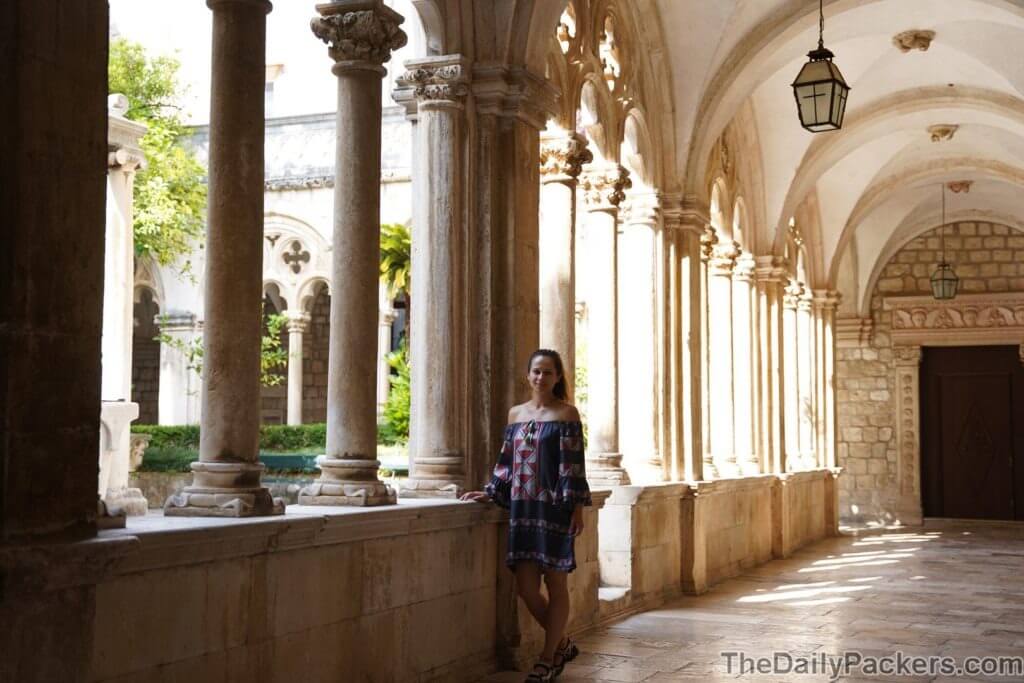
The Dominican Monastery is another architectural gem in Dubrovnik, offering a peaceful escape from the busy streets of the Old Town. Originally built in the 14th century, it was heavily damaged in the 1667 earthquake and later reconstructed, preserving its stunning Gothic-Renaissance style.
The highlight of the monastery is its inner courtyard, a serene space surrounded by elegant stone arches and lush greenery, making it one of the most picturesque spots in the city. Inside, the monastery houses an impressive collection of religious art, including works by renowned Croatian and Italian painters, as well as valuable manuscripts and relics.
Located near Ploče Gate, this monastery is well worth a visit for its tranquil atmosphere, historical significance, and stunning architecture.
Sponza Palace
Sponza Palace is a stunning rectangular palace featuring a beautiful loggia that reflects a blend of Gothic and Renaissance architecture. Built in the early 1500s, it has served various roles throughout history, making it one of Dubrovnik’s most significant secular buildings.
Originally, the atrium just beyond the entrance gate was a hub for merchants and traders, functioning as a customs house and marketplace well into the 20th century. Over the years, the palace has also housed a mint, a bank, a treasury, and even a school.
Today, Sponza Palace is home to Dubrovnik’s State Archives, where centuries-old manuscripts and documents are preserved. It also serves as a memorial to the defenders of Dubrovnik, honoring those who lost their lives during the Homeland War in the 1990s.
Located in Luža Square, right at the heart of the Old Town, this historic palace is a must-visit for those interested in Dubrovnik’s rich commercial and cultural past.

Orlando's Column
One of the best ways to experience Dubrovnik is simply by strolling through its charming streets and squares. The Old Town is compact, making it easy to explore on foot while uncovering its hidden corners and historical landmarks.
One must-see stop along the way is Orlando’s Column, a prominent landmark standing in Luža Square, right in front of Sponza Palace. Unveiled in 1418, this stone pillar features a statue of Orlando (Roland), a legendary knight and protector of the city. The column served as a symbol of freedom and was historically used as a flagpole to display the Libertas flag, representing Dubrovnik’s independence during the era of the Republic.
Over the centuries, Orlando’s Column has also played a practical role—it was used as a public announcement spot and a measuring unit for traders in the city. Today, it remains an iconic monument and a popular meeting point in Dubrovnik’s bustling Old Town.

Crkva sv. Ignacij
One of the most impressive Baroque landmarks in Dubrovnik is Crkva sv. Ignacij (St. Ignatius Church), located at the top of a grand staircase reminiscent of the Spanish Steps in Rome. This stunning church, completed in the 18th century, is part of a larger Jesuit complex that includes the Collegium Ragusinum, a former Jesuit college.
The Collegium Ragusinum was established in 1658 during the Republic of Ragusa and functioned as an elite educational institution for over a century before closing in 1773 with the Suppression of the Society of Jesus. The influence of the Jesuits in Dubrovnik is evident in the architectural grandeur of the church and the surrounding buildings.
Inside St. Ignatius Church, you’ll find magnificent frescoes depicting the life of St. Ignatius of Loyola, painted by Gaetano Garcia in the 18th century. The church is also home to a nativity scene that operates year-round, making it a unique stop for visitors interested in history, art, and religious heritage.
Cathedral of the Assumption of the Virgin Mary
Don’t forget to admire the magnificent Assumption Cathedral, a Roman Catholic cathedral and one of Dubrovnik’s most important religious sites. Built in the 17th century after an earthquake destroyed the previous medieval structure, the cathedral stands as a fine example of Baroque architecture.
One of its most remarkable features is the main altar, where you can find a stunning triptych of the Ascension of Mary, painted in 1550 by the Renaissance master Titian. This masterpiece adds to the cathedral’s rich artistic and cultural heritage.
For those interested in religious artifacts, the cathedral treasury is a must-see. It houses an extraordinary collection of precious liturgical items, some dating back to the 1000s, including an array of gold and silver relics. Among its most treasured pieces are the gold-plated bones of St. Blaise, the patron saint of Dubrovnik, revered for protecting the city throughout history.

Nishta
If you’re looking for a great place to eat in Dubrovnik, Nishta is our top recommendation. This cozy spot serves delicious vegan food right in the heart of the old town. The menu is creative, packed with fresh, flavorful dishes that even non-vegans will love.
Since it’s a small and popular restaurant, we highly recommend making a reservation in advance to secure a spot. If you’re strolling through the charming streets of Dubrovnik and craving a healthy, plant-based meal, Nishta is the place to go!

Smaller street
One of the best things to do in Dubrovnik is simply strolling around the old town and getting lost in its charming streets. Some of the most picturesque streets are located north of the city, where you’ll find Nishta and other hidden gems.
This quieter part of town offers narrow alleyways, stone staircases, and traditional houses, giving you a more authentic feel away from the busiest tourist spots. Take your time to explore, stop for a coffee or gelato, and soak in the unique atmosphere of Dubrovnik’s historic center.

Dubrava Observation Point & Srđ Hill
Dubrava Observation Point & Srđ Hill: One of the best panoramic viewpoints of Dubrovnik, Srđ Hill offers a breathtaking view of the old city, the Adriatic Sea, and the nearby islands.
To get to the viewpoint, you have a few options:
- Cable Car: The most popular and scenic way to reach the top. It takes just a few minutes and offers stunning aerial views.
- By Car: If you have a rental, you can drive up and park near the viewpoint.
- Taxi: A great option if you’re traveling in a group. You can arrange a ride up and back down.
- Hiking: If you’re up for some exercise, there’s a hiking trail leading up Srđ Hill. It takes around an hour but rewards you with incredible scenery along the way.
Once at the top, you can visit Fort Imperial, enjoy a drink at the Panorama Restaurant, or simply soak in the stunning sunset views over Dubrovnik.

Beach
If you have more time, you might want to check out some of Dubrovnik’s local beaches. While some are just rocky spots near the old walls, others a bit further out offer more space and a proper beach experience.
We tried Jakob Beach on the day we arrived. Getting there was an adventure in itself, as the path led us down a small hill through an abandoned hotel resort. The beach itself was small but scenic, with clear waters and a nice atmosphere. However, being a hidden gem also means it gets very crowded, so don’t expect a secluded spot unless you go early.
If you prefer something more central, Banje Beach is the closest to the old town and offers beautiful views of Dubrovnik’s walls, but it can also be quite busy, especially in peak season.

Mostar
If you’re looking for a completely different cultural experience, Mostar is an amazing day trip. This charming town is famous for its iconic bridge, Ottoman-style architecture, and vibrant markets. It’s a unique mix of East and West, making it one of the most interesting places to visit near Split.
Here again you could be going there on your own with a rental car, but if you prefer avoid driving, check this highly rated tour.

More things to do
If you have more time, you can consider those other things to do:
- Panorama Zipline Tour
- Sea Kayaking Morning, Daytime, or Sunset Tours
- Montenegro Boat Tour from Perast to Kotor
- Elaphite Island Cruise w/ Drinks & Optional Lunch
- Montenegro Day Trip
- Blue Cave & Sunj Beach Boat Tour with Drinks
Dubrovnik itinerary
Day 1: Exploring Dubrovnik’s Old Town & Scenic Views• Visit Lovrijenac Fortress, the “Gibraltar of Dubrovnik,” for stunning views over the old town.
- Pass through Pile Gate, the grand entrance to Dubrovnik’s Old Town.
- Walk along the City Walls and visit Tvrđava Minčeta or Fort St. Ivana for panoramic views over the Adriatic.
- Explore one of Dubrovnik’s monasteries—either the Franciscan Monastery with its ancient pharmacy or the Dominican Monastery with its beautiful courtyard.
- Stroll around Sponza Palace and Orlando’s Column, soaking in Dubrovnik’s Renaissance charm.
- Visit the Cathedral of the Assumption of the Virgin Mary and admire its historic relics.
- Enjoy a delicious vegan meal at Nishta, a highly recommended restaurant in the heart of the old town.
- Get lost in Dubrovnik’s smaller hidden streets, especially those north of the city, for a more peaceful experience.
- Before sunset, head up to Dubrava Observation Point & Srđ Hill. You can take the cable car, drive, or hire a taxi for breathtaking views over Dubrovnik as the sun sets.
Day 2: Relaxing & Beach Time
- Revisit the old town, stopping at places you may have missed or simply enjoying another coffee in a charming square.
- Visit more historical landmarks, such as the Rector’s Palace or Gundulić Square for a local market vibe.
- Head to one of Dubrovnik’s beaches for a relaxing afternoon.
- Have a relaxed dinner at a waterfront restaurant, enjoying fresh seafood and local specialties.
Day 3: Day Trip to Mostar, Bosnia & Herzegovina
- Leave early (around 7–8 AM) for Mostar. The drive takes about 2.5 hours.
- Arrive in Mostar and start by exploring the Old Bridge (Stari Most), the city’s most iconic landmark.
- Walk through the Bazaar and see the Koski Mehmed Pasha Mosque for amazing views of the bridge from its minaret.
- Visit Kravica Waterfalls (if time allows) or explore more of Mostar’s cultural and historic spots.
Drive back to Dubrovnik in the late afternoon.
You may also like
About the authors
We are Alex and Tina, a French-Serbian couple who met in China back in 2014. We spent three incredible years there before making France our home. Our shared passion for travel has been the heartbeat of our relationship for over 12 years, taking us across 44 countries and counting.
We launched TheDailyPackers in 2019 as a way to document our adventures. In 2026, we reached a major milestone by officially turning our blog into our full-time job. While we are still growing toward financial independence through this platform, every article we write is fueled by our mission to make your voyages easier through in-depth guides, honest advice, and the lessons we’ve learned from our own mistakes.
Our journey has not been without its storms. In 2023, our world changed forever when our first son, Poppy, was stillborn on November 25th. It was, and remains, the hardest chapter of our lives. In 2025, we were blessed with our second little boy, Milo. He has since joined our traveling tribe, and you’ll be seeing him—and the reality of traveling with a little one-on the blog more and more.
We hope to inspire you to explore the world with curiosity and resilience. Thank you for being part of our story.
You may also like those related posts
Self‑Drive Husky Sledding in Tromso: The Ultimate Day Trip
11 Best things to do in Maafushi, Maldives, in 3 days
One Day in Seville: How to See the Best of Seville in 24 Hours
Los Arrayanes National Park: The Best of Villa La Angostura
19 best things to do in Strasbourg, France, in 3 days
16 Best things to do in Oslo, Norway, in 3 days or more
5 Best Places to Visit in October
Seville Cathedral: Visit the World’s Largest Gothic Cathedral
Pssst, did you know that…
If you purchase something through our links, we earn a small fee. However, you still pay the same. Win-win! And one day we may get to be full-time travel bloggers =)
Find Hotels with Booking.com
Do Yoga with KVY
Buy us a Coffee
Rent a car with DiscoverCars
Find Attractions with GetYourGuide
Find Flights with Expedia
Buy an eSIM with Airalo
Get insured with World Nomads
Get ready with Amazon.com