
Introduction
Some days on Easter Island stay with you long after you’ve left—and this is one of them. If you wake up around 7 a.m. and wonder for a second if it’s still the middle of the night, don’t worry. Sunrise on Rapa Nui comes late, and early mornings often feel slow and dreamy, especially in July when the sky is wrapped in clouds.
After a relaxed breakfast and a moment taking in the calm view of the island, you’ll feel that familiar pull to get out and explore. Easter Island has a way of calling you outside—toward the cliffs, the volcanic craters, the quiet dirt roads, and the ancient Moai standing silently across the landscape.
Today is all about a full day of adventure with an Easter Island road trip. You’ll wander into volcanic caves, follow coastal paths, stand before the seven Moai of Ahu Akivi, and climb toward the island’s highest point at Terevaka for a panoramic view that feels endless.
It’s the kind of day where you pack sandwiches, bring water, and head out without rushing. A day filled with wild scenery, powerful ocean views, gentle winds, and that unique feeling of being both far from everything… and exactly where you’re meant to be.
If you’re spending more time on Rapa Nui, we also have a complete 5-day Easter Island itinerary, but for now, let’s dive into this perfect one-day adventure—your ideal road trip across Easter Island.


Renting a scooter/car
Renting a scooter or a car is one of the best ways to explore Easter Island. It gives you total freedom—you can stop wherever you want, take detours, enjoy the breeze, and reach even the most remote archaeological sites without relying on tours or taxis.
You’ll find several rental shops in Hanga Roa, and most offer very similar prices. Expect around 30 to 45€ for 24 hours for a scooter, and around 90€ for a car, which is the standard rate across the island. You usually don’t need a passport—your valid driver’s license is enough. Just pick the scooter you prefer, sign a quick form, and off you go.
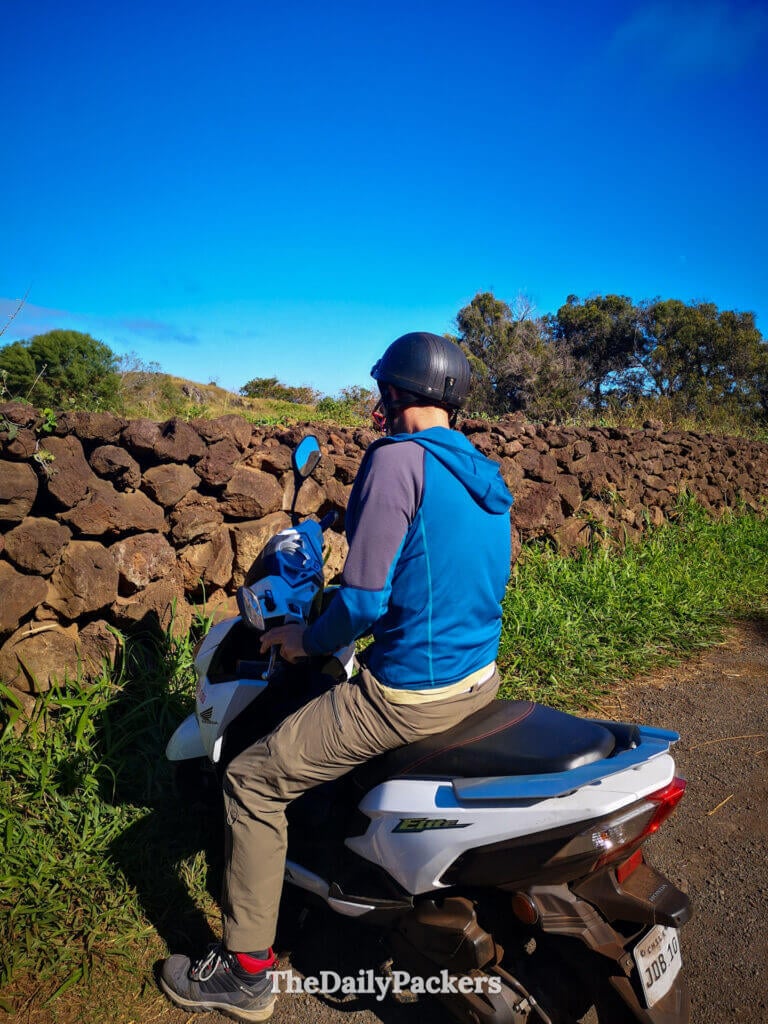
The road conditions on Easter Island might surprise you—they’re actually pretty good. Compared to many Southeast Asian islands, the roads here feel safe and well-maintained, making the scooter the perfect balance between convenience, fun, and flexibility.
Whether you’re tracing the coastline, heading toward Rano Raraku, or jumping between beaches and archaeological sites, having your own set of wheels turns the entire island into one giant open-air museum.


Easter Island Road Trip Step-by-step
Stop 1: Visit Ahu Huri a Urenga
Your first stop is Ahu Huri a Urenga, a fascinating and often overlooked moai site that quietly sets the tone for the rest of your road trip. It’s just a short ride from Hanga Roa, and because fewer travelers visit this spot, you often have it almost entirely to yourself.
What makes this moai unique is its two pairs of hands—an unusual feature that archaeologists still debate. Some believe the extra hands were carved later to reinforce the statue after erosion. Others think they represent a physical trait of an important ancestor the Rapa Nui people wanted to honor.
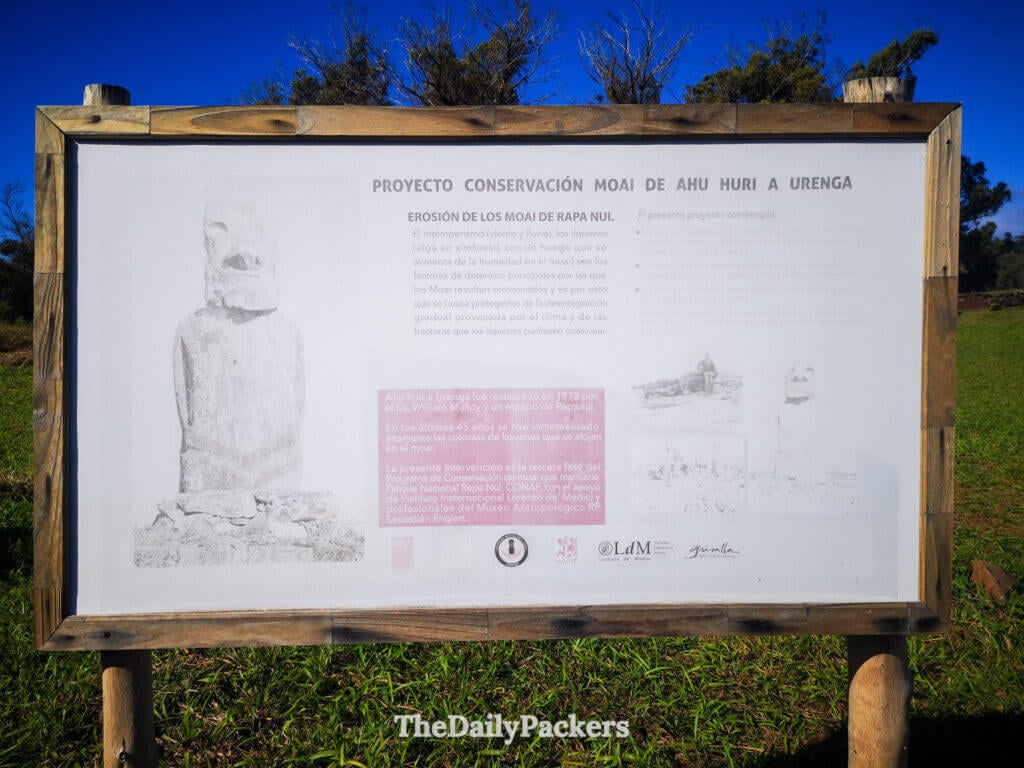
In front of the moai, you’ll also find a small stone well once used as a solar observation point, helping ancient inhabitants track celestial events. This gives Ahu Huri a Urenga an added layer of mystery, blending astronomy, culture, and artistry.
It’s a quiet but meaningful beginning to your Easter Island adventure—a reminder that moai aren’t just statues; they’re stories. And this is the perfect warm-up before visiting the island’s more iconic sites.


Stop 2: Explore Vaihu (Ahu Hanga Te’e)
Your road trip continues with a short ride to Vaihu, also known as Ahu Hanga Te’e—one of the most atmospheric stops on the island. Here, eight moai lie facedown, exactly as they were left after tribal conflicts toppled them centuries ago. Seeing them scattered across the ground gives you a raw, unfiltered glimpse into a turbulent chapter of Rapa Nui history.

Right in front of the fallen statues, you’ll notice a large circular paina platform, once the stage for commemorative rituals and communal ceremonies. It’s easy to imagine the gatherings that once animated this quiet bay.

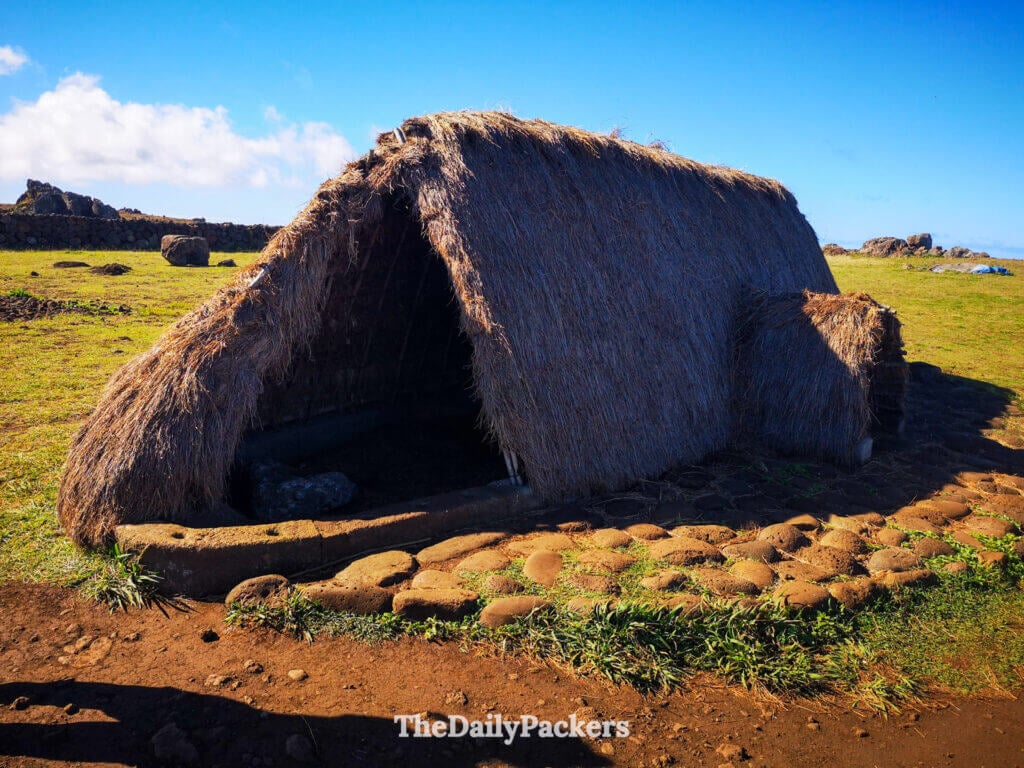
Just a few steps further, you’ll find remains of ancient stone houses and farming areas that belonged to the community who once lived here. The combination of archaeology, ocean views, and complete silence makes Vaihu one of the most moving stops on the island.

Tip: We use the DJI Action 4 to film our vlogs — compact, durable, and perfect for capturing every adventure.
Stop 3: Visit Akahanga
A few minutes down the road, you’ll reach Akahanga, another fascinating archaeological site—and one of the most impressive in terms of sheer scale. Here, 13 moai lie toppled across the ground, some measuring between 5 and 7 meters long. Seeing so many fallen giants in one place really highlights how dramatic the island’s internal conflicts once were.

Akahanga is also believed—according to oral tradition—to be the burial place of the island’s first king, Hotu Matu’a. Whether legend or truth, it adds an extra layer of meaning to the site.
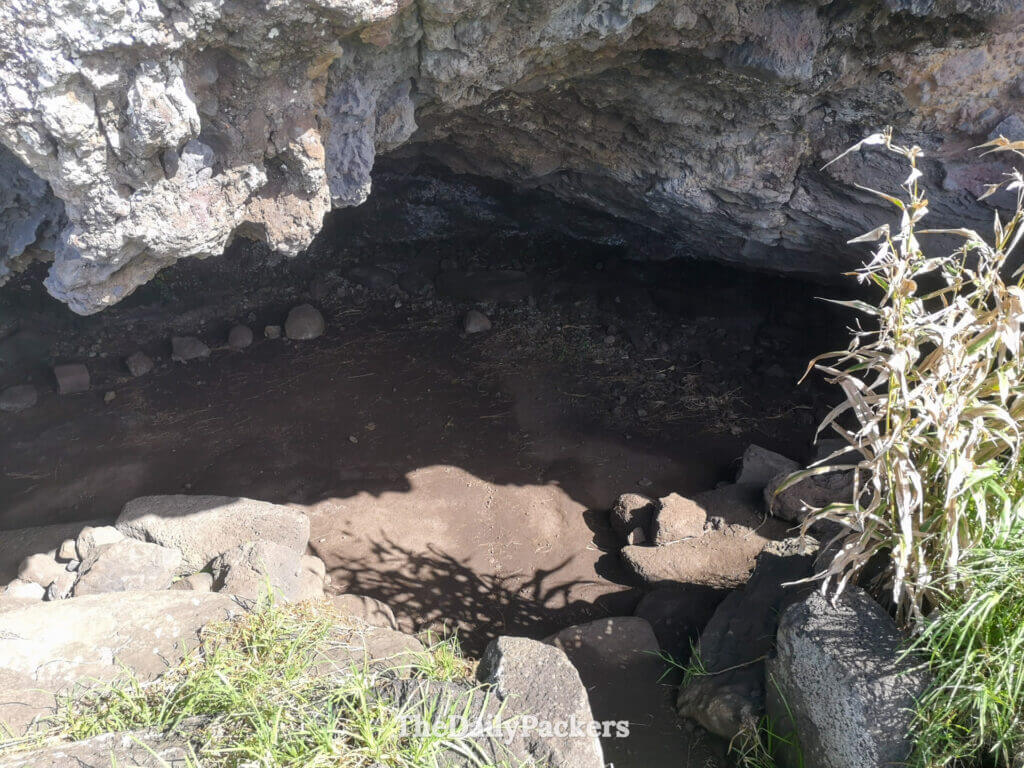
Wander around the stone foundations of ancient houses, peek into the small coastal cave, and take in the wild, untouched coastline.

Stop 4: Explore Rano Raraku
No Easter Island road trip is complete without Rano Raraku, the legendary quarry where nearly all of the island’s moai were carved. This is one of the most fascinating places you’ll visit—not just on the island, but anywhere in the world.
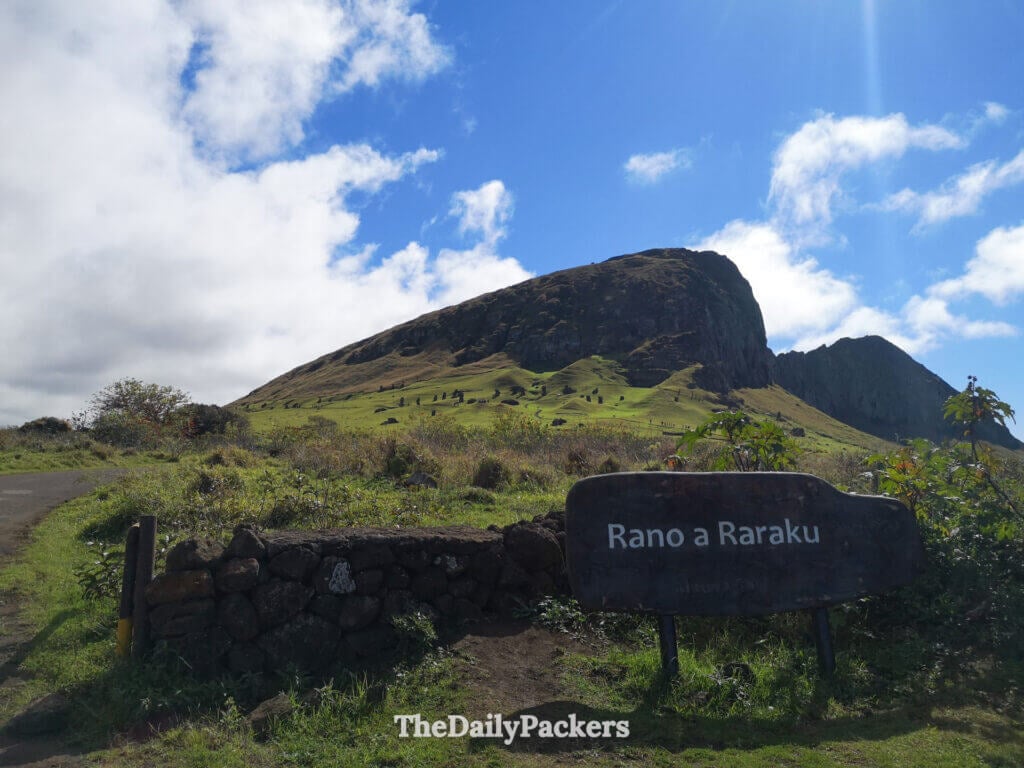
As you approach, you’ll immediately spot dozens of moai scattered across the slopes, some standing tall, others half-buried, and many still partially carved into the bedrock. This volcanic crater of lapilli tuff (a soft, workable stone formed from compressed volcanic ash) made it the perfect place for ancient sculptors to create their statues.

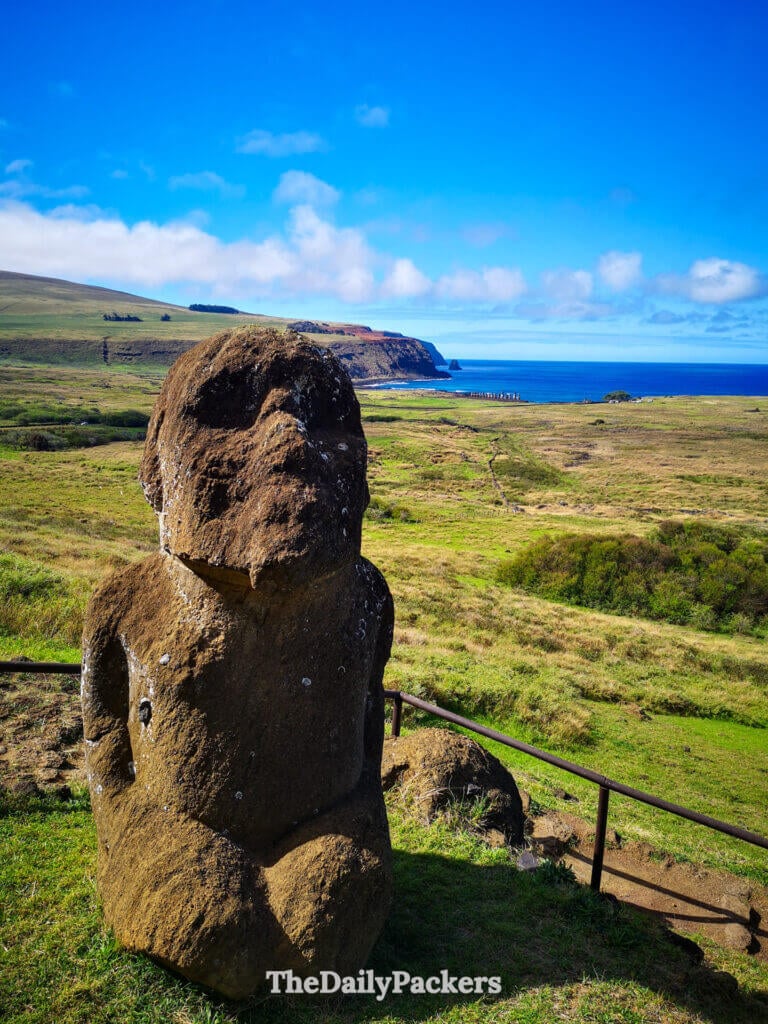
Take your time walking the loop trail—you’ll pass moai of all shapes and sizes, including unfinished figures still attached to the rock. Don’t miss the Tukuturi Moai, the only kneeling statue on the island with a distinctly more human form, facing toward the crater instead of the sea.
Before entering the site, you’ll find a sheltered area with benches—an ideal spot for a picnic lunch if you brought one. There are also restrooms available.

After exploring the quarry, continue the path another 10 minutes to reach the edge of the crater lake. Surrounded by tall grasses and dotted with more half-buried moai, this peaceful spot feels worlds away from the rest of the island.

Rano Raraku is a must-see—an open-air museum that tells the story of how the moai were born.

Stop 5: Visit Ahu Tongariki
Just a short ride from Rano Raraku, you’ll reach Ahu Tongariki, the most awe-inspiring ceremonial platform on Easter Island — and the largest in all of Polynesia. This iconic site features 15 towering moai standing shoulder to shoulder on a 200-meter-long ahu, all facing inland to watch over the island.

Originally toppled during tribal conflicts and later swept inland by a 1960 tsunami, Ahu Tongariki was fully restored in the 1990s. Today, the moai rise proudly again, each one with unique facial features, height, and build. Some are slim and elegant; others are massive and powerful — the tallest reaches 14 meters. Only one statue has its pukao (red stone topknot) re-placed after the reconstruction.

As you enter the site, you’ll also spot the famous “Travelling Moai,” the statue that once toured Japan for an exhibition before returning home. Behind the ahu, dramatic cliffs and open ocean create one of the island’s most photogenic backdrops.

If you’re lucky with the schedule and weather, Ahu Tongariki is also one of the best sunrise spots on Easter Island — but even during the day, it’s nothing short of breathtaking.

Tip: We never travel without our DJI Mini 3 PRO drone anymore — it’s totally worth having to capture places from a whole new perspective.
Stop 6: Papa Vaka
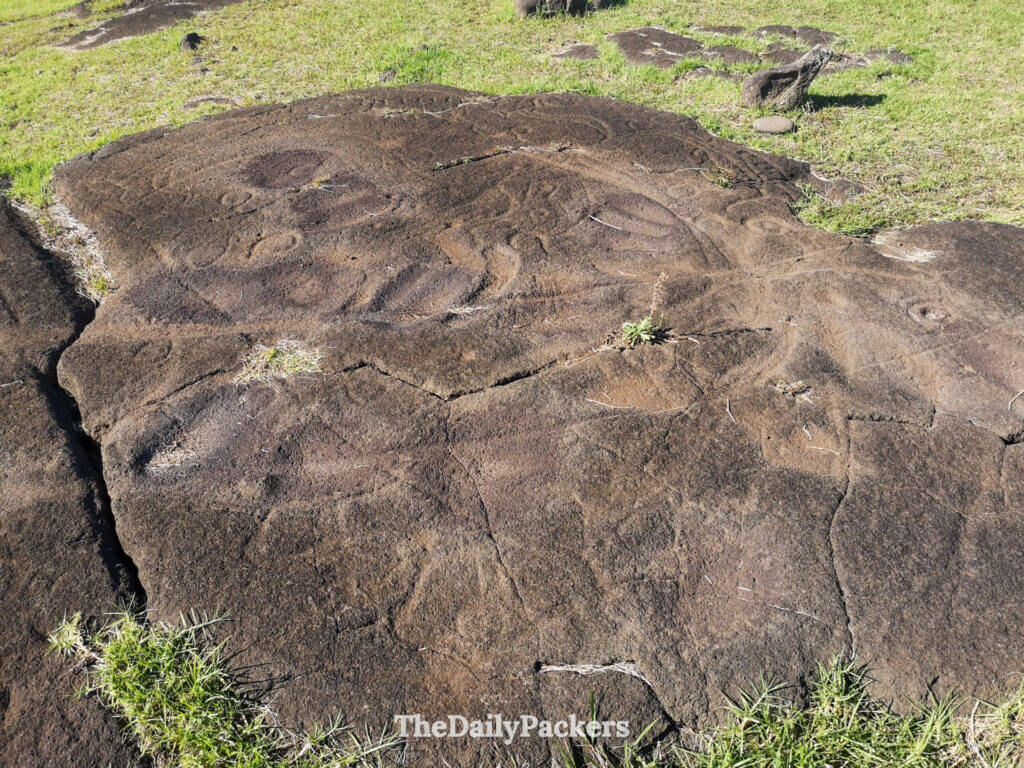
Papa Vaka is one of those places that doesn’t look like much when you first park the scooter, but once you step onto the site and start noticing the carvings, it becomes surprisingly captivating. This large lava slab is covered with ancient petroglyphs, many of them linked to fishing and daily life. You’ll see shapes like tuna, sharks, octopuses, and even long Polynesian canoes carved directly into the rock.

The engravings aren’t always easy to spot at first, so take your time. Walking slowly across the area helps you catch the details as the light hits the rock from different angles. It’s a small reminder that Easter Island isn’t only about moai—there’s a whole layer of storytelling carved into the island itself.
Stop 7: Ahu Te Pito Kura
Next to Papa Vaka brings you will find Ahu Te Pito Kura, a spot known for two things: its enormous fallen moai and the legendary “navel of the world” stone. The moai here is the tallest one ever transported and raised on a platform, which makes it even more impressive when you’re standing beside it. Even lying face down, it’s huge, and you can’t help wondering how they moved something that size across the island without any modern tools.
Just a few steps away, a small fenced circle protects Te Pito o Te Henua, a perfectly round stone that locals say carries a strong magnetic energy. Some people try placing their hands on it or checking their compass just for fun. Whether you feel anything or not, it’s a nice little moment that adds to the overall atmosphere of the place.

Stop 8: Anakena Beach
Before reaching Anakena, make a quick detour to Ovahe Beach, a small cove tucked between rugged cliffs and often overlooked by most visitors. The beach itself is narrow, with pinkish sand and bright turquoise water, and because it’s harder to access, it usually stays quiet even during the day.
To reach the shore, you’ll need to walk down a short rocky path, so it’s better to wear proper shoes rather than flip-flops. Once you’re down there, you’ll see how different Ovahe feels compared to the rest of the island—wild, intimate, and completely surrounded by nature. Swimming can be nice when the sea is calm, but waves and currents change quickly here, so always check conditions before jumping in.

Stop 9: Anakena Beach
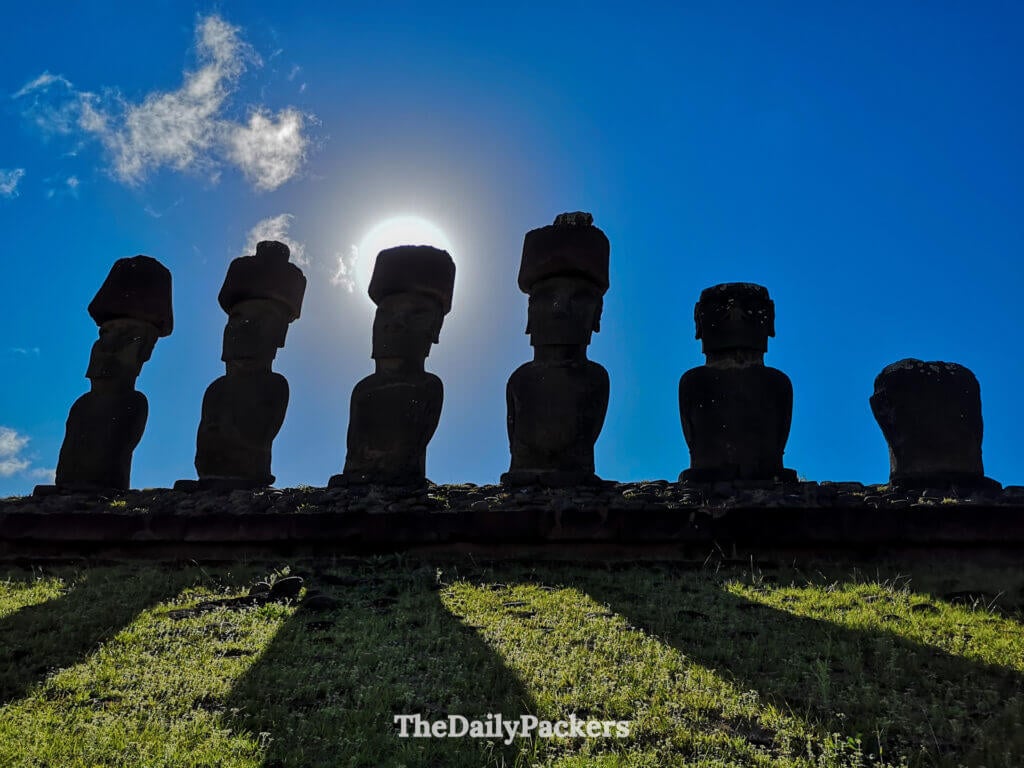
Right after Ovahe, the road leads you to Anakena, the island’s most famous beach and one of those places that instantly slows you down. The white sand, the palm trees, and the gentle waves make it feel like a different world compared to the volcanic landscapes you’ve been exploring all day.

Anakena is also home to Ahu Nau Nau, one of the best-preserved ceremonial platforms on the island. The moai here have beautifully defined features, and several still wear their pukao, which gives you a clearer idea of how striking these statues must have looked when they were all standing. It’s one of the few places where you can admire moai with the Pacific Ocean right behind them.
It’s a great spot for a swim, and the water is usually calm and warm. If you’re hungry, there are a few small food stalls where you can grab something simple—perfect for a late lunch or a break before continuing your loop around the island. Shade is easy to find under the palm trees, so you can relax for a while before getting back on the scooter.


Here are all your accommodation options in Hanga Roa
Stop 10: Puna Pau
Before heading back to Hanga Roa, stop at Puna Pau, the small volcanic crater where all the pukao — the red stone topknots placed on top of certain moai — were carved. It’s a place many people miss, but it adds an important piece to the story of how the statues were made.

The walk up to the crater is easy and gives you a nice view over the surrounding hills. Along the way, you’ll see several unfinished or abandoned pukao lying on the ground, which helps you imagine the work that went into shaping and transporting them all the way to the platforms.
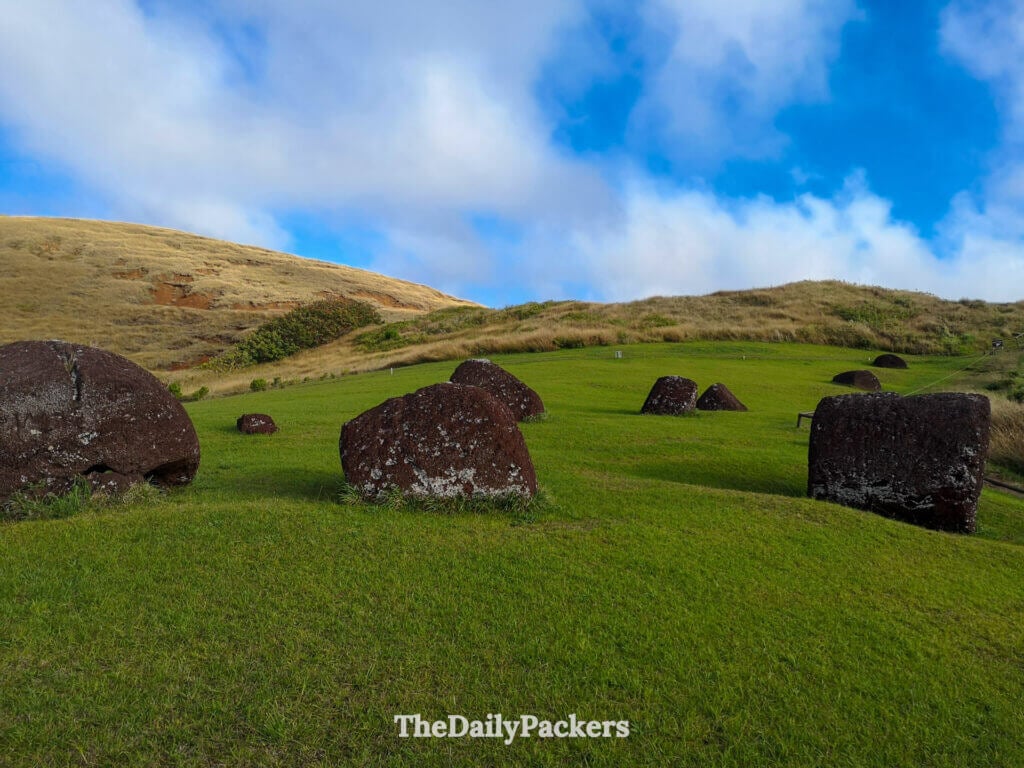
Once you reach the top, the crater opens up in front of you with its warm red tones, a big contrast compared to the darker volcanic rock used for the rest of the moai. The whole area feels calm, even a bit hidden, and it’s interesting to think about the craftsmen who used to work here.

What to bring for your Easter Island road trip
A road trip on Easter Island is easy to organize, but having the right things in your backpack makes the day a lot smoother. The island can switch from strong sun to sudden winds pretty quickly, and once you leave Hanga Roa, there aren’t many places to buy water or snacks. Here’s what’s worth taking with you:
- Water. At least one large bottle per person. There’s nowhere to refill outside of town.
- Snacks or a lunch box. Most people bring simple sandwiches or fruit to eat at Rano Raraku or Anakena.
- Sunscreen. The sun is strong here, even when it’s cloudy.
- A light jacket or windbreaker. Coastal winds can surprise you, especially on the scooter.
- Comfortable shoes. You’ll walk a lot at Rano Raraku and around the platforms.
- Swimsuit and towel. For Ovahe or Anakena if the weather is good.
- Sunglasses and a hat. You’ll be thankful for them after an hour on the scooter.
- Cash. Some small stalls don’t take cards.
- Your driver’s licence. You’ll need it for the scooter rental.
- Power bank. Good to have if you’re using your phone for photos all day.
It’s a simple list, but it really helps to have everything ready before leaving Hanga Roa. Tell me when you want the next section.

Where to stay on Easter Island
Choosing the right place to stay in Hanga Roa makes your whole experience so much better. The town is small, so you’ll never be far from restaurants, shops, or the coastal sunset spots — but comfort, views, and style vary a lot.
Here are three great options depending on your travel style:
Cabaña del Mar Rapanui: A super charming, cozy stay right by the ocean. Perfect if you want your own space, a kitchen, and that easy “home on the island” feeling. Great for couples or slow travelers who want peace and privacy.
Hare Nua Hotel Boutique: A beautiful boutique hotel with a warm atmosphere and lovely décor. They have a wellness vibe, friendly staff, and one of the best breakfasts in town. Ideal if you want comfort without going full luxury.
Nayara Hangaroa: If you’re looking for a stunning, eco-luxury stay — this is the one. Gorgeous architecture, beautiful ocean views, spa services, and high-end comfort. A splurge, but absolutely memorable.

Here are all your accommodation options in Hanga Roa
About the authors
We are Alex and Tina, a French-Serbian couple who met in China back in 2014. We spent three incredible years there before making France our home. Our shared passion for travel has been the heartbeat of our relationship for over 12 years, taking us across 44 countries and counting.
We launched TheDailyPackers in 2019 as a way to document our adventures. In 2026, we reached a major milestone by officially turning our blog into our full-time job. While we are still growing toward financial independence through this platform, every article we write is fueled by our mission to make your voyages easier through in-depth guides, honest advice, and the lessons we’ve learned from our own mistakes.
Our journey has not been without its storms. In 2023, our world changed forever when our first son, Poppy, was stillborn on November 25th. It was, and remains, the hardest chapter of our lives. In 2025, we were blessed with our second little boy, Milo. He has since joined our traveling tribe, and you’ll be seeing him—and the reality of traveling with a little one-on the blog more and more.
We hope to inspire you to explore the world with curiosity and resilience. Thank you for being part of our story.
You may also like those related posts
Sainte Marie de la Mer : The heart of the French Camargue
Mont Saint Michel: Everything you need to know
8 Best things to do in Corte, Corsica, in 2 days or more
15 Best Things to Do in El Chaltén, Argentina, in 3 to 5-Day
23 Best things to do in Zlatibor, Serbia, in 4 days or more
6 Best Tourist destinations in Uruguay in 2026
15 Best things to do in Kaunas, Lithuania, in 1 day
8 Best things to do in Florianópolis, Brazil, in 2 days
Pssst, did you know that…
If you purchase something through our links, we earn a small fee. However, you still pay the same. Win-win! And one day we may get to be full-time travel bloggers =)
Find Hotels with Booking.com
Do Yoga with KVY
Buy us a Coffee
Rent a car with DiscoverCars
Find Attractions with GetYourGuide
Find Flights with Expedia
Buy an eSIM with Airalo
Get insured with World Nomads
Get ready with Amazon.com