

Introduction
The Great Wall of China, known as 長城 (Chángchéng) in Mandarin, is a vast series of fortifications stretching across northern China. Originally built to protect the Chinese empire from invasions and raids by nomadic tribes and rival states, the wall served as both a military defense system and a symbol of unity.
When most people refer to the Great Wall today, they’re usually speaking about the sections constructed during the Ming Dynasty (1368–1644), which are the best preserved and most accessible.
However, the history of the wall dates back much further. The earliest segments were built as early as the 7th century BC, and later extended during the rule of Qin Shi Huang (221–206 BC), the first emperor of unified China. Unfortunately, very little remains of those earliest constructions today.
If you’re planning to explore Beijing, don’t miss our full travel guide: The Ultimate Beijing Travel Guide.

About the Great Wall of China
Map

Beyond the defences
The Great Wall of China wasn’t solely a defensive structure — it also played a vital role in regulating trade and controlling borders. Beyond protecting against invasions, it served as a checkpoint to impose duties on goods transported along the Silk Road, helping to manage commerce between China and the rest of the world.
Additionally, the wall functioned as a controlled gateway for immigration and emigration, allowing the empire to monitor movement in and out of its territory. Remarkably, the wall itself also acted as a transportation corridor, enabling the efficient movement of troops, goods, and information across vast distances.

The evolution of the walls
Over the centuries, the Great Wall was continually expanded and reinforced. What began as a simple barrier evolved into a sophisticated defense system featuring watchtowers, troop barracks, garrison stations, and signaling towers that used smoke and fire to relay messages across vast distances.
According to the most recent surveys and archaeological studies, the sections built during the Ming dynasty measure around 8,850 km. This includes 6,259 km of actual wall, 2,232 km of natural barriers such as hills and rivers, and 359 km of trenches. This is the part most commonly referred to today as the Great Wall of China.
Another broader survey revealed that the entire network of walls, including earlier and less-preserved sections, stretches over an astonishing 21,196 km. Many experts agree that it is one of the most remarkable architectural and defensive feats ever built.

Did you know
The Great Wall stretches across 17 Chinese provinces, making it the longest manmade monument in the world. Along its length, you’ll find 723 signal towers, 3,357 wall platforms, and an incredible 7,062 watchtowers — a testament to its massive scale and historical importance.
Despite its impressive size, contrary to popular belief, this wonder of the world cannot be seen from space or the moon with the naked eye.
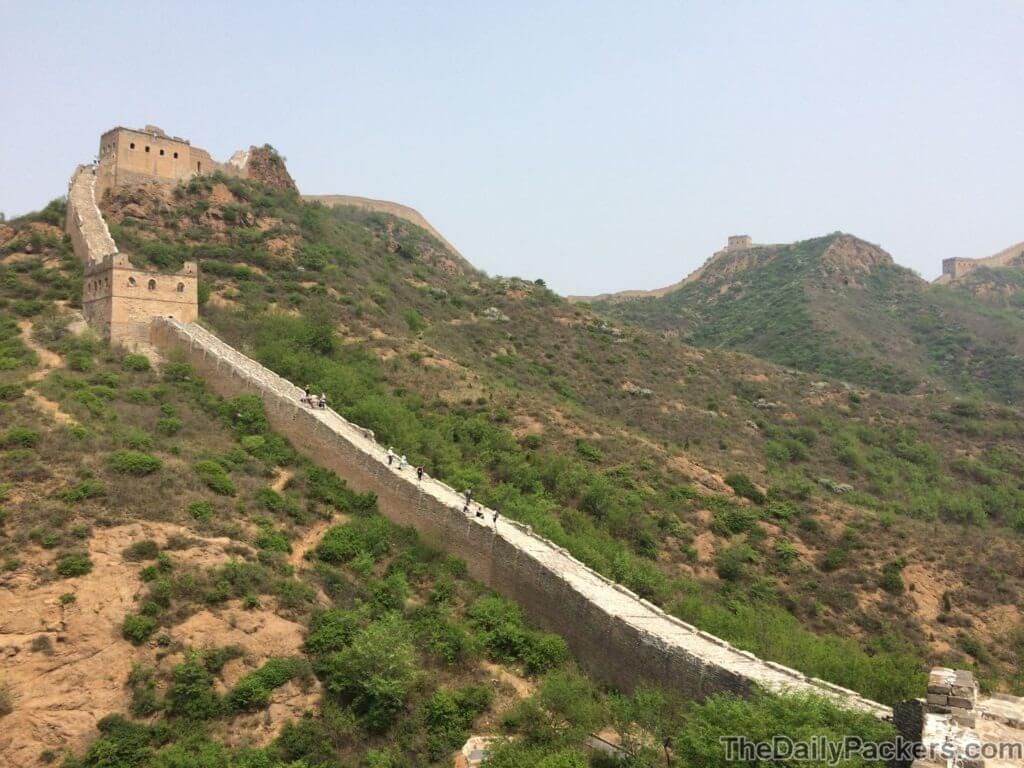
The Great wall of China (Beijing)
The most well-known sections of the Great Wall are located near Beijing, China’s capital. Many of them are open to visitors and each offers a different experience:
- Mutianyu – The best-restored and most family-friendly
- Jinshanling – The most beautiful and scenic
- Jiankou – The wildest and most rugged
- Simatai – One of the only sections open at night
- Huanghuacheng – A stunning mix of wall and water
- Gubeikou – Rich in history and less visited
- Juyongguan – Easily accessible, but often busy
- Huangyaguan – Known for its strategic design and Marathon
- Shanhai Pass – Where the wall meets the sea
- Badaling – The most famous and, by far, the most crowded

If you want breathtaking views with fewer tourists, Jinshanling is one of the best choices. It’s a bit farther from Beijing, but that distance rewards you with a more peaceful and authentic experience.
In the following section, we’ll focus on this section of the wall, as this is the part we personally chose to explore — and we absolutely loved it.
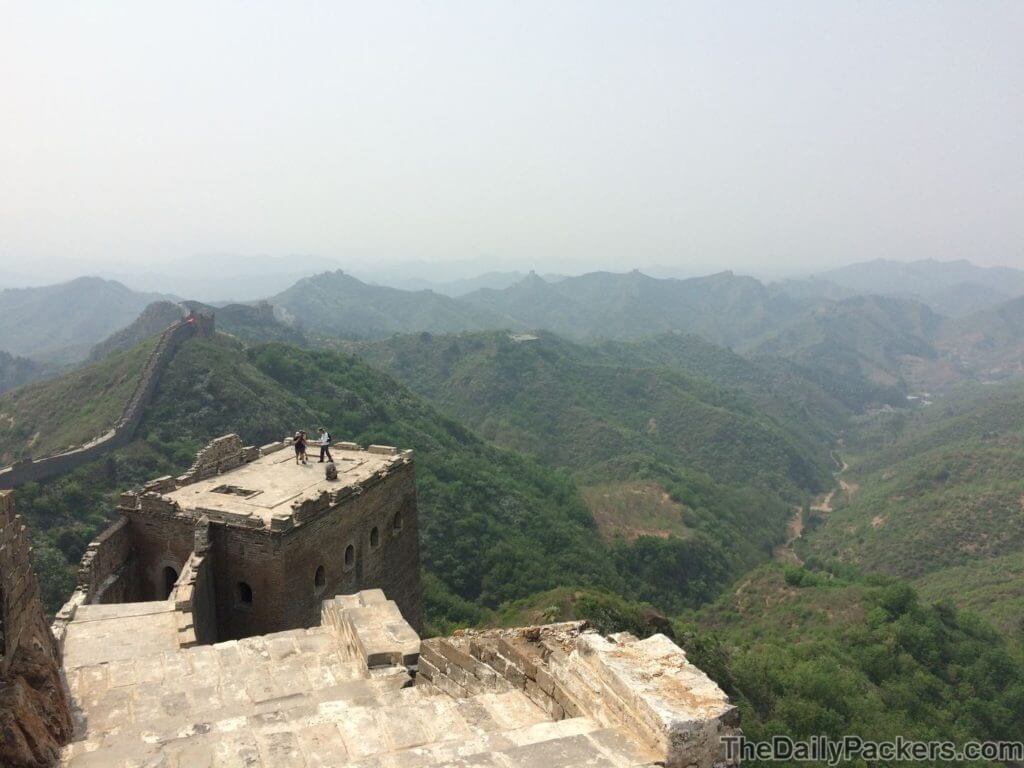
Jinshanling
About Jinshanling
Originally constructed between 1368 and 1389 during the Ming dynasty, the Jinshanling section of the Great Wall was later reinforced and improved in 1567 and 1570. Its name, 金山岭 Jīnshānlǐng, meaning Gold Mountain Ridge, comes from the mountain it was built upon — the majestic Gold Mountain.
This section is only partially restored, offering a unique blend of both wild and renovated wall segments. It’s ideal for travelers who want to experience a more authentic and less crowded part of the Wall.
Jinshanling connects eastward to the Simatai section and westward to Gubeikou, making it a favorite for hikers seeking panoramic views and historical depth.

There are 31 watchtowers along this stretch, each with its own character — some are tall, others small; some square, others rectangular. Most have two floors, but one rare tower features three levels, located near the western edge. Sadly, this particular tower lies within a military restricted zone and cannot be accessed.
Jinshanling truly stands out as one of the most scenic and rewarding parts of the Great Wall.

Hiking Jinshanling
The Jinshanling section has preserved much of its original appearance, making it one of the most authentic sections to explore. Set against a backdrop of rolling hills and dramatic ridgelines, it offers some of the most stunning landscapes along the entire wall. Despite its beauty and fame, Jinshanling remains relatively uncrowded and peaceful, especially compared to the more popular sections near Beijing.
Entrance fees are reasonably priced: 65 RMB during peak season and 55 RMB in the low season.

The most popular route is a 7 km hike from the West Gate (main entrance) to the East Gate, which typically takes 3.5 to 4 hours to complete. It’s a moderate to challenging trek, with uneven steps and steep sections — but it’s doable for most people with a basic level of fitness and is incredibly rewarding.
If you’re looking for a memorable Great Wall experience without the crowds, Jinshanling is one of the best choices.
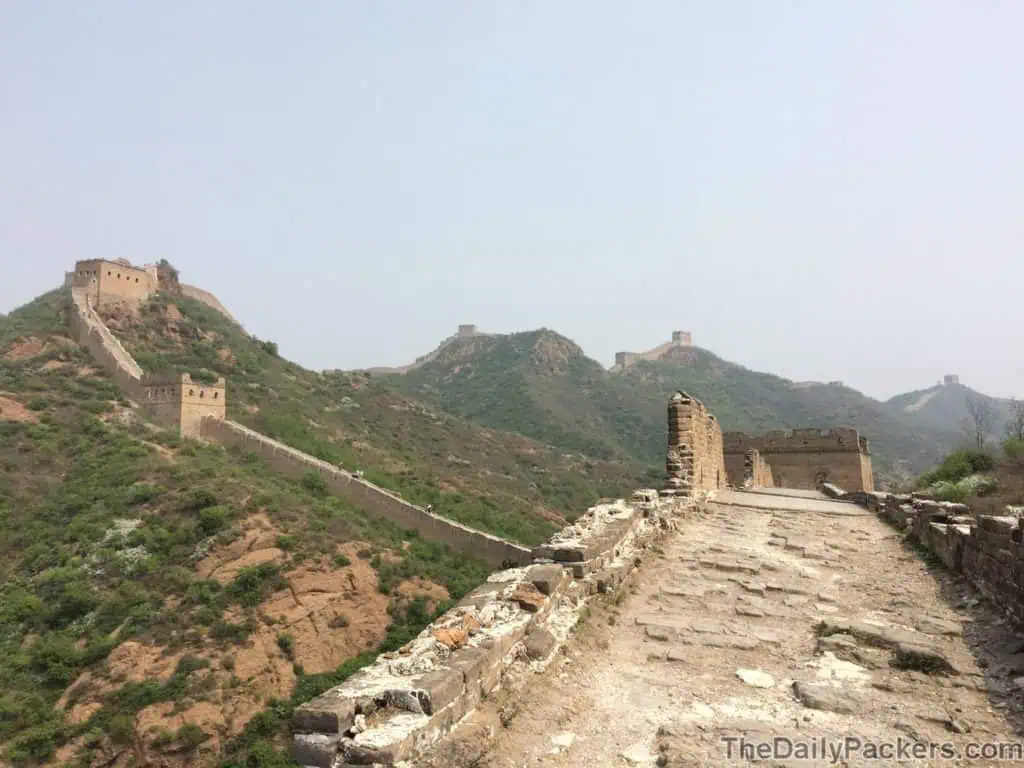
When to visit
The Jinshanling section of the Great Wall can be explored all year round, with each season offering a different atmosphere and landscape. However, the experience you’ll have depends greatly on the time of year you go.
- Spring (March to May): One of the best times to visit. The weather is mild, the mountains begin to bloom, and the skies are often clear. May, in particular, is ideal — not too hot, not too crowded, and nature is at its greenest. This is our top recommendation for hiking the Jinshanling section.
- Summer (June to August): Expect hot and humid conditions, especially in July and August. While the views are still amazing with vibrant greenery all around, the midday sun can be intense. Bring plenty of water, sun protection, and consider hiking early in the morning. Avoid Chinese school holidays and national holidays when crowds surge.
- Autumn (September to early November): A fantastic time for photography and cooler hikes. The mountains turn shades of red, gold, and orange, creating a dramatic contrast against the ancient stones of the wall. This is the second-best season to visit and a favorite among many local hikers.
- Winter (late November to February): Quiet and peaceful, but much colder. Snow occasionally covers the wall, adding a magical touch. This season is ideal if you want to avoid crowds completely and don’t mind bundling up. Just be cautious, as some parts can be slippery and windy.
Important Tips:
- Avoid Chinese national holidays (especially the first week of October and Chinese New Year), as the wall gets extremely crowded.
- Jinshanling is open daily from 8:00 AM to 5:00 PM. Arriving early ensures a quieter trail and better light for photos.
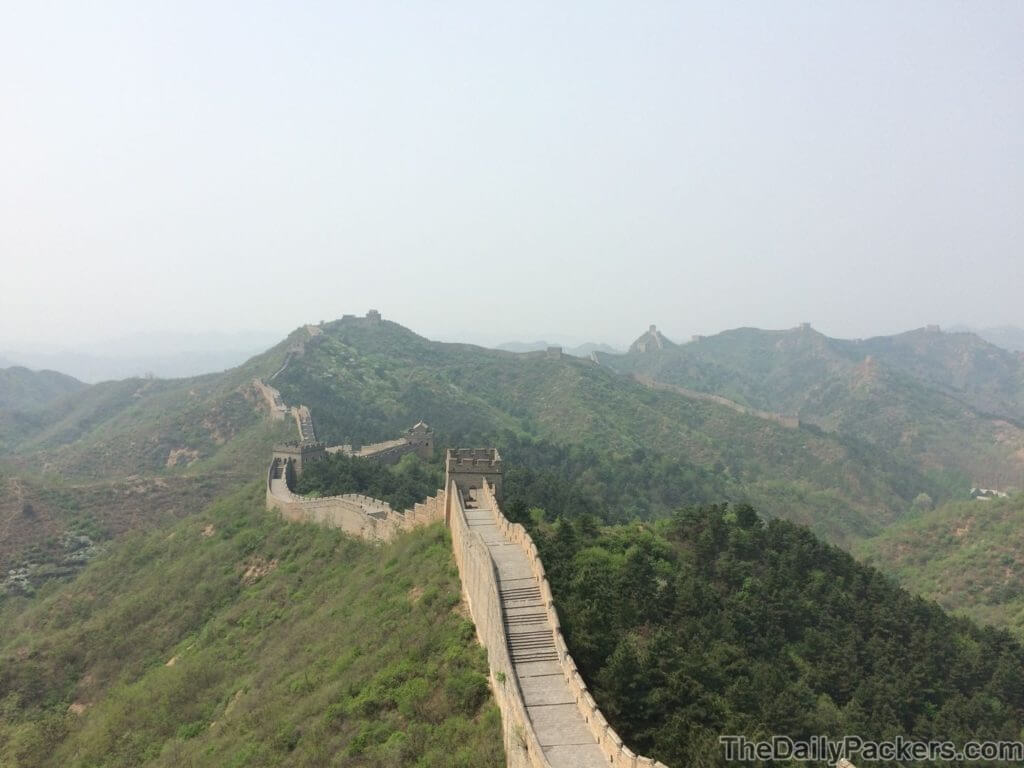
Getting to Jinshanling
Tour
The easiest way to visit the Great Wall at Jinshanling is by joining a tour.
It saves you the hassle of figuring out transportation, especially since this section is farther from Beijing and not as well connected by public transit. Many reputable tour companies offer day trips with guides, transportation, and sometimes even meals included. You can also ask your hotel for recommendations — they often work with trusted local agencies and can help you book directly.
If you’re not keen on logistics and want a smooth experience, this is definitely the most convenient option.
Direct Bus
You can also visit Jinshanling on your own — it just takes a bit more planning.
Start by taking Beijing Metro Line 2 and exit at Dongzhimen Station. From there, walk along Dongzhimen Wai Dajie (东直门外大街), then turn left onto Dongzhimen Wai Xiejie (东直门外斜街). After a short walk, you’ll find an open-air bus station on your left. A direct bus to Jinshanling departs here at 7:40 AM, and returns at 3 PM. The round-trip costs 50 RMB and this service runs seasonally from April 2nd to November 14th.
Alternatively, you can catch the same bus one stop later at Wangjing West Station, which departs at 8 AM — perfect if you happen to miss the earlier stop. Take Metro Line 13 to Wangjing West, exit via Exit B, walk down the bridge, turn left, and after about 100–200 meters, you’ll see another open-air bus stop.
Tip: Information can change quickly, so we highly recommend confirming the bus schedule with your hotel or hostel before your trip.

City bus
Missed the direct bus? No worries — you can still get to Jinshanling by public transport.
From Wangjing West Station, take a city bus heading toward Luanping Bus Station (滦平) and ask the driver to drop you off at Jinshanling Highway Service Station (金山岭高速服务区). The ride costs 32 RMB and takes you about 1.5 km from the East Gate of the Jinshanling Great Wall.
From there, hop on the free shuttle bus to reach the East Gate of the wall. If your goal is to reach the Main Gate (West Gate) instead, you’ll need to transfer to another shuttle bus from the East Gate, which costs 10 RMB.
Shuttle Bus Times:
- Pick-up (to the Wall): 10:00 AM, 11:00 AM, 1:00 PM, 3:30 PM
- Return (from the Wall): 10:30 AM, 11:30 AM, 1:30 PM, 3:00 PM
Tip: This route gives you more flexibility, but make sure to keep an eye on the return schedule and plan ahead.

Private Car
If you missed the direct bus and don’t want to wait for the next city bus, private drivers are usually waiting near the station and are more than willing to take you to Jinshanling.
The price will naturally be higher than public transport, and it’s not fixed — so be ready to bargain. If you’re traveling with others, sharing the ride can help split the cost. Always agree on the fare before getting in and double-check that the driver is heading to the right gate (East or Main).

Food Options
There aren’t many places to eat around this section of the Great Wall, but you’ll find a couple of small restaurants near the West Gate (the main entrance). They’re convenient if you need something basic before or after your hike.
That said, bringing your own food and water is the best idea. Not only does it give you more flexibility, but it also means you can enjoy a scenic picnic right on the wall — some of the watchtowers make perfect lunch spots with amazing views. Just pack easy-to-carry items like sandwiches or fruit, and don’t forget to bring plenty of water.
There are few trash bins, so please be mindful and take everything back with you to help preserve this incredible site.

Where to stay
Staying in Beijing for 3 to 4 days will give you a great introduction to the city’s rich history, culture, and modern energy. Whether you’re looking for stylish comfort, luxury, or something atmospheric and central, there are plenty of excellent places to stay. Here are some of our favorites:
(€) Happy Dragon Saga Hotel Beijing Tian’AnMen Forbidden City: A charming and affordable boutique hotel just a short walk from the Forbidden City. The rooms are modern, and the rooftop terrace is a peaceful bonus in such a busy city. It’s a great pick if you want comfort, convenience, and good value.
(€€) Legendale Hotel Beijing: Located near Wangfujing shopping street, Legendale Hotel is full of character, with French-style decor, grand staircases, and opulent touches throughout. This hotel blends luxury with old-world charm — ideal for travelers wanting a unique, elegant experience.
(€€€) Waldorf Astoria Beijing: If you’re in the mood to splurge, the Waldorf Astoria offers exceptional service and stunning interiors. Tucked into the heart of the city, it’s a quiet retreat from the urban buzz, with luxurious rooms, an indoor pool, and one of the best breakfasts in town.

Final Thoughts on Visiting Jinshanling Great Wall
Visiting the Jinshanling section of the Great Wall offers a truly unforgettable experience. With its dramatic views, quiet trails, and preserved architecture, it’s one of the most beautiful and rewarding parts of the wall to explore.
Whether you join an organized tour or go independently, you’ll find that the effort to reach this remote stretch is well worth it. Pack smart, start early, and give yourself time to soak in the history, scenery, and serenity — it’s one of the most remarkable things to do during any trip to China.
“The journey of a thousand miles starts with a single step.” Lao Tzu
You may also like
About the authors
We are Alex and Tina, a French-Serbian couple who met in China back in 2014. We spent three incredible years there before making France our home. Our shared passion for travel has been the heartbeat of our relationship for over 12 years, taking us across 44 countries and counting.
We launched TheDailyPackers in 2019 as a way to document our adventures. In 2026, we reached a major milestone by officially turning our blog into our full-time job. While we are still growing toward financial independence through this platform, every article we write is fueled by our mission to make your voyages easier through in-depth guides, honest advice, and the lessons we’ve learned from our own mistakes.
Our journey has not been without its storms. In 2023, our world changed forever when our first son, Poppy, was stillborn on November 25th. It was, and remains, the hardest chapter of our lives. In 2025, we were blessed with our second little boy, Milo. He has since joined our traveling tribe, and you’ll be seeing him—and the reality of traveling with a little one-on the blog more and more.
We hope to inspire you to explore the world with curiosity and resilience. Thank you for being part of our story.
You may also like those related posts
Cost to Travel in Morocco, Our 2022 Budget breakdown
7 Best Things to do in Cayo Santa Maria, Cuba, in 2 to 4 days
18 Best things to do in Hong Kong, China, in 4 days
Discover Belle Ile en Mer: Brittany’s Hidden Island Gem
Tam Coc Boat Tour: Exploring Vietnam’s Ha Long Bay on Land
The Mezquita of Cordoba: Spain’s Most Iconic Monument
19 Best things to do in Marrakech, Morocco, in up to 10 days
Yampupata trail: An unforgettable 1-day hike from Copacabana
Pssst, did you know that…
If you purchase something through our links, we earn a small fee. However, you still pay the same. Win-win! And one day we may get to be full-time travel bloggers =)
Find Hotels with Booking.com
Do Yoga with KVY
Buy us a Coffee
Rent a car with DiscoverCars
Find Attractions with GetYourGuide
Find Flights with Expedia
Buy an eSIM with Airalo
Get insured with World Nomads
Get ready with Amazon.com