

Introduction
Traveling to Jerusalem is unlike visiting any other city in the world. It’s intense, fascinating, emotional, and sometimes confusing—all at once. You’re walking through layers of history, religions, and politics, often on the same street, within a few meters of each other.
Before you arrive, it helps to understand how the city works, what daily life looks like, and how religion, history, and politics quietly shape everything around you. These Jerusalem travel tips are here to help you feel prepared, respectful, and comfortable — not overwhelmed.
This isn’t about rules or warnings. It’s about knowing what to expect so you can actually enjoy the experience, slow down, and focus on what really matters: discovering Jerusalem with an open mind.
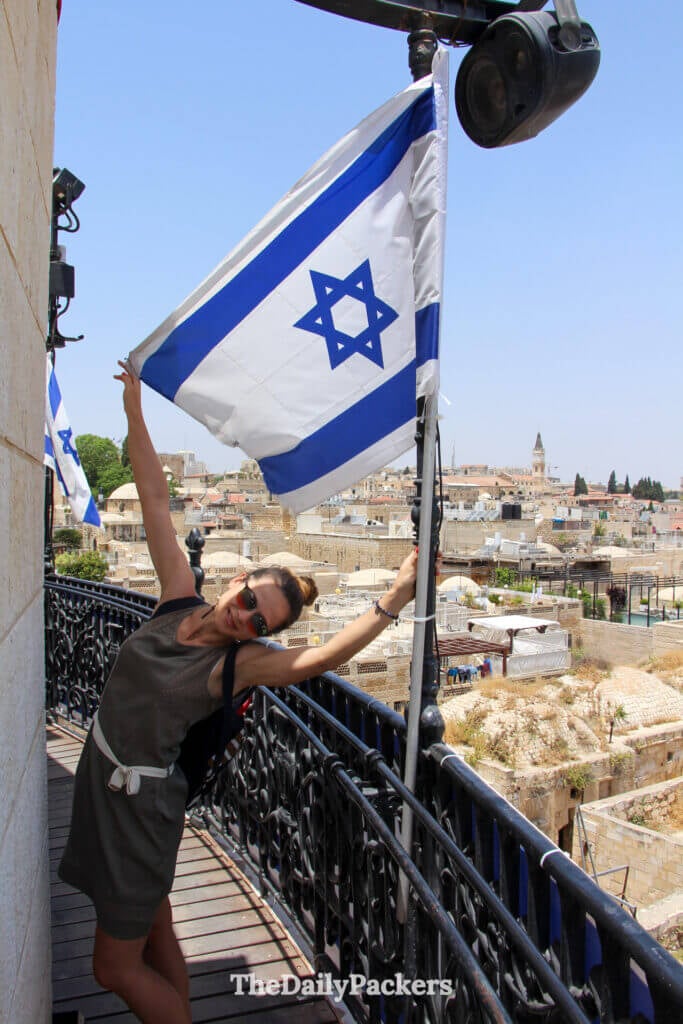

Jerusalem Travel Tips
Where Is Jerusalem & How the City Is Organized
Before diving into churches, markets, and viewpoints, it really helps to understand where Jerusalem is and how the city is laid out. This is one of those Israel travel tips that sounds obvious… until you’re there and suddenly feel lost without realizing why.
Jerusalem is located in the central part of Israel, between the Mediterranean coast and the Dead Sea. It sits on a plateau at around 800 meters above sea level, which explains why evenings can feel surprisingly cool, even after a hot day.

The city is broadly split into two main parts:
- The Old City, enclosed within ancient stone walls
- Modern Jerusalem, spreading west and north of those walls
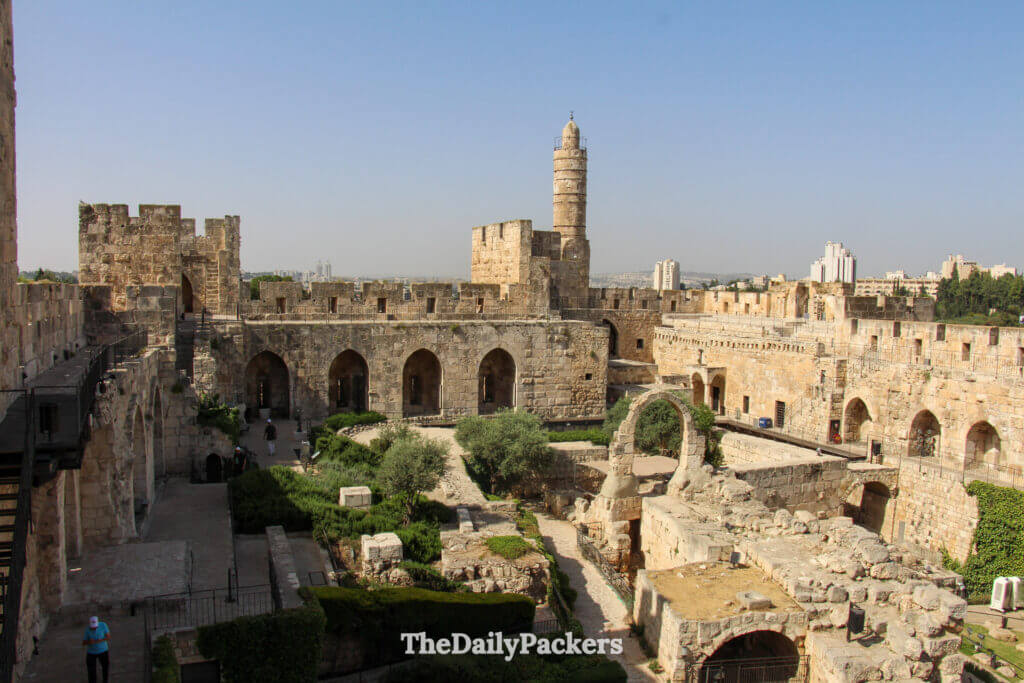
The Old City (the heart of everything):
The Old City is small — you can walk across it in about 20 minutes — but it holds an incredible concentration of history, religion, and emotion. This is where most things to do in Jerusalem are located, and where first-time visitors usually spend most of their time.
Inside the walls, the Old City is divided into four quarters:
- Muslim Quarter – lively, busy, and full of markets and local life
- Christian Quarter – home to the Church of the Holy Sepulchre
- Jewish Quarter – quieter streets, synagogues, and the Western Wall
- Armenian Quarter – smaller, calmer, and often overlooked
You don’t cross borders or gates between these quarters. You simply drift from one to another, often without noticing — and that’s part of what makes Jerusalem so unique.

Outside the Walls
Just beyond the Old City, you’ll find many key sites like Mount Zion, the City of David, the Mount of Olives, and vibrant areas such as Jaffa Street and Mahane Yehuda Market. This is also where most hotels, cafés, and public transport are located.
Tip: When planning your days, think in terms of zones, not distances. Jerusalem isn’t big, but it’s mentally and emotionally dense. Seeing less in one area is often more rewarding than rushing across the city.


Shabbat in Jerusalem: What You Need to Know Before You Plan Your Days
One of the most important Jerusalem travel tips—and one that can genuinely shape your experience—is understanding Shabbat. It’s not just a religious concept; it directly affects how the city functions for almost 24 hours every week.
What Is Shabbat?
Shabbat is the Jewish day of rest. It starts at sunset on Friday and ends at sunset on Saturday. During this time, large parts of Jerusalem slow down dramatically.

Think of it as more intense than a Sunday in Europe.
What Changes During Shabbat: From Friday afternoon onward, you’ll notice the city gradually closing:
- Most shops, markets, museums, and attractions shut down
- Public transport stops completely, including trams and most buses
- Many restaurants close, especially outside tourist areas
- Streets in religious neighborhoods become very quiet
When we were there, places already started closing around early Friday afternoon, even though Shabbat officially began later in the evening. By nightfall, large parts of the city felt almost frozen in time.

What Still Works. Not everything stops:
- Some cafés and restaurants remain open, mainly in more secular areas
- Hotels operate normally
- Walking is obviously still possible—and sometimes very pleasant
- Certain tourist areas near the Old City stay active, but limited
If you plan to eat out on Friday night or Saturday, don’t improvise. Either book ahead or eat early. We managed to get a table once, but only for a short time slot, and options were limited.

How to Plan Around It:
Shabbat isn’t something to fear—it just requires planning.
- Use Friday morning for major sightseeing
- Plan walking-based activities on Saturday
- Avoid moving cities or relying on transport during Shabbat
- Stock up on snacks or groceries in advance

Why It’s Still Worth Experiencing
Despite the limitations, Shabbat can be one of the most interesting times to be in Jerusalem. The atmosphere shifts completely. Streets empty, families gather, and the city feels more introspective, calmer—even spiritual.
Tip: Treat Shabbat as a cultural experience, not an obstacle. Slow down, walk more, and let the city show you a different rhythm.

Is Jerusalem Safe for Travelers?
For most visitors, yes. Jerusalem is a heavily visited city with strong security, especially around major sites like the Old City, markets, and religious landmarks. You’ll see police and military presence—this can feel intense at first, but it’s normal here and generally reassuring.
When we visited, we never felt unsafe walking around, even in busy areas. That said, Jerusalem isn’t a place to switch off completely.
Basic Common-Sense Rules. These simple habits make a big difference:
- Avoid demonstrations, protests, or large political gatherings
- Stay informed about local news during your stay
- Follow security instructions calmly if checks occur
- Keep your passport stored safely; carry a copy when out
- Be patient and respectful at checkpoints—they’re part of daily life

Dress Code & Cultural Respect. Jerusalem is deeply religious, and how you dress matters—especially in the Old City.
- Cover shoulders and knees when visiting religious sites
- Carry a scarf at all times (useful more often than you expect)
- At the Western Wall, men and women pray in separate areas
- Men may be offered a kippah—it’s polite to accept and wear it
You don’t need to dress ultra-conservatively everywhere, but modest clothing will make your experience smoother and more respectful.

Photography Etiquette
- Always ask before photographing people, especially religious figures
- Some sites forbid photos entirely—signs are not optional
- Be discreet around security or military personnel
We saw more than one uncomfortable moment caused by ignored photo rules—better to observe than explain yourself later.

Travel Warnings & Perspective
You’ll likely see an Israel travel advisory before your trip. These are often broad and cautious by nature. While situations can change, daily life in Jerusalem continues steadily, and tourism remains active.
Tip: Stay informed, not anxious. Jerusalem rewards travelers who come prepared, respectful, and open-minded.
Prayer in Public: What You’re Seeing Is Normal
As you walk through Jerusalem—especially around the Old City and the Jewish Quarter—you’ll notice people gently swaying back and forth, sometimes standing still, sometimes walking, often murmuring quietly to themselves. At first, it can feel surprising if you’ve never seen it before.
What you’re witnessing is shuckling, a traditional form of Jewish prayer. The movement is intentional and deeply symbolic. It’s believed to help with concentration, express devotion, and physically engage the body in prayer. For many, it’s a natural rhythm that comes without thinking—like breathing.

You might see this:
- Near the Western Wall
- In streets close to synagogues
- On public benches or even sidewalks
- Early in the morning or before sunset

This is completely normal in Jerusalem. There’s nothing to worry about—and nothing to interrupt. Just walk around respectfully and let the moment pass. It’s one of those quiet cultural details that reminds you how deeply faith is woven into everyday life here.
Tip: If you’re taking photos, be discreet. Prayer is personal, even when it happens in public spaces.


Psst, you can join Tina’s Yoga Studio and get access to hundreds of Yoga, Meditation, and Well-being videos.
Kippah & Tefillin: What You’re Seeing
As you explore Jerusalem, you’ll notice some specific religious items worn in public, especially around holy sites. Seeing them up close is part of understanding the city’s daily rhythm.
- Kippah (or yarmulke): This small, round cap is worn by Jewish men as a sign of respect and reverence toward God. You may be asked to wear one when entering certain religious sites, particularly near the Western Wall. Don’t worry—kippahs are usually provided for free at entrances.
- Tefillin: These are small black leather boxes worn during morning prayers, one placed on the arm and one on the forehead, connected by leather straps. Inside are biblical texts. You’ll most commonly see people wearing tefillin near the Western Wall or in quiet corners of the Old City early in the day.
You’re not expected to participate or know the rituals. Simply observe respectfully, give people space, and carry on. Moments like these are part of what makes Jerusalem feel so alive—faith here isn’t hidden away, it’s lived openly.

Money, Payments & Practical Stuff
Getting around Jerusalem is fairly easy once you know a few basics. Nothing complicated here—just a few practical things that make daily life smoother.
- Currency: The local currency is the Israeli Shekel (ILS). Prices are almost always shown in shekels, even in very touristy areas.
- Cards vs Cash: Credit and debit cards are widely accepted, including in hotels, restaurants, and shops. That said, cash is still useful in markets, small street food stalls, and local buses.
- ATMs: You’ll find ATMs everywhere, especially around Jaffa Street, the Old City entrances, and shopping areas. Withdrawing cash is easy and reliable.
- Language: English is widely spoken, particularly in Jerusalem. Between English, a bit of Arabic, and Hebrew, you’ll rarely struggle to communicate.
Overall, logistics are simple here—you can focus on exploring, wandering, and soaking in the city instead of worrying about the basics.
Psst, you can join Tina’s Yoga Studio and get access to hundreds of Yoga, Meditation, and Well-being videos.
Orthodox Jews: Who They Are & What to Know
As you explore Jerusalem, especially around the Old City and certain neighborhoods, you’ll likely encounter Orthodox Jewish communities. Understanding a bit about them helps avoid awkward moments—and adds context to what you’re seeing.
Orthodox Jews follow traditional interpretations of Jewish law very closely. You’ll often recognize them by their clothing: men may wear black suits, long coats, wide-brimmed hats, and sometimes side curls (payot), while women usually dress modestly, covering shoulders, knees, and sometimes their hair with scarves or wigs.
A few things to keep in mind:
- Photography: Avoid taking photos of Orthodox Jews, especially on Shabbat (Friday sunset to Saturday sunset). It can be considered disrespectful.
- Shabbat behavior: In Orthodox areas, shops close, phones aren’t used, and even things like pressing elevator buttons may be avoided. Walk quietly and respectfully.
- Gender separation: In some spaces (like prayer areas), men and women are separated. This is normal and part of religious practice.
You’re not expected to change who you are—but being aware, discreet, and respectful goes a long way. Jerusalem is deeply layered, and these encounters are part of what makes the city so fascinating to experience beyond just the landmarks.

About the authors
We are Alex and Tina, a French-Serbian couple who met in China back in 2014. We spent three incredible years there before making France our home. Our shared passion for travel has been the heartbeat of our relationship for over 12 years, taking us across 44 countries and counting.
We launched TheDailyPackers in 2019 as a way to document our adventures. In 2026, we reached a major milestone by officially turning our blog into our full-time job. While we are still growing toward financial independence through this platform, every article we write is fueled by our mission to make your voyages easier through in-depth guides, honest advice, and the lessons we’ve learned from our own mistakes.
Our journey has not been without its storms. In 2023, our world changed forever when our first son, Poppy, was stillborn on November 25th. It was, and remains, the hardest chapter of our lives. In 2025, we were blessed with our second little boy, Milo. He has since joined our traveling tribe, and you’ll be seeing him—and the reality of traveling with a little one-on the blog more and more.
We hope to inspire you to explore the world with curiosity and resilience. Thank you for being part of our story.
You may also like those related posts
16 best things to do in Bled, Slovenia, in 3 days or more
Bus from Brazil to Uruguay: 23h journey through land borders
Yala National Park Safari: A memorable Experience in 2025
19 Best Things to do in Brussels, Belgium, in 1 to 3 days
How to Start Yoga and Why It Changed Travelling
3 Weeks South America Itinerary: Peru, Bolivia & Chile Travel Route
10 Best places in Argentina You Shouldn’t Miss on Your Next Trip
W-Trek Day 1: From Puerto Natales to Grey Glacier
Pssst, did you know that…
If you purchase something through our links, we earn a small fee. However, you still pay the same. Win-win! And one day we may get to be full-time travel bloggers =)
Find Hotels with Booking.com
Do Yoga with KVY
Buy us a Coffee
Rent a car with DiscoverCars
Find Attractions with GetYourGuide
Find Flights with Expedia
Buy an eSIM with Airalo
Get insured with World Nomads
Get ready with Amazon.com