

Introduction
During our 10-day trip through Andalusia, Spain, we made several unforgettable stops — starting in Seville, followed by a quick visit to Córdoba, then Granada, and finally Málaga, our last stop before heading home.
Málaga is the capital of the province of Málaga, located along Spain‘s stunning Costa del Sol (“Coast of the Sun”), right on the Mediterranean Sea. With around 578,000 inhabitants, it’s the second-largest city in Andalusia after Seville and the sixth-largest in Spain — yet it feels laid-back and full of charm.
What’s incredible about Málaga is how ancient it is. The city’s history stretches back over 2,800 years, making it one of the oldest cities in Europe and among the oldest continuously inhabited cities in the world. It was founded by the Phoenicians around 770 BC, later ruled by the Carthaginians, Romans, Visigoths, and Muslims, before becoming part of Christian Spain.
Today, Málaga is a vibrant mix of beach life, culture, and history. From its Roman theater and Moorish fortress to its modern art scene and lively seaside promenades, it offers the perfect balance between relaxation and discovery.
So, let’s dive into the best Málaga attractions and how to explore this sun-soaked Andalusian gem.


Read: Our complete 10-day Andalusia Itinerary: The best of the south of Spain
Getting there
Getting to Málaga is incredibly easy, whether you’re traveling from elsewhere in Spain or flying in from abroad. The city is a major transportation hub in southern Spain, well connected by plane, train, bus, and car.
By Plane: Málaga–Costa del Sol Airport (AGP) is one of Spain’s busiest airports and the main gateway to Andalusia. It’s located just 8 km from the city center and has direct flights from most European capitals and many international destinations. From the airport to the city center:
- Train: The C1 commuter train connects the airport to Málaga Centro-Alameda station in just 12 minutes.
- Bus: The A Express Line runs every 25–30 minutes to the city center for about 4€.
- Taxi or Uber/Bolt: Around 20–25€ depending on traffic.
By Train: If you’re coming from elsewhere in Spain, Málaga María Zambrano Station is served by high-speed AVE trains:
- Seville → Málaga: about 2 hours
- Granada → Málaga: around 1 hour 20 minutes
- Madrid → Málaga: about 2 hours 30 minutes on the AVE
The station is centrally located, and you can easily reach your hotel by taxi, bus, or on foot if you’re staying nearby.
By Bus: For budget travelers, long-distance buses are a great alternative. ALSA operates frequent routes between Málaga and most Andalusian cities:
- Seville → Málaga: around 2h 30m
- Granada → Málaga: around 2h
- Córdoba → Málaga: about 2h 15m
Buses arrive at the Málaga Bus Station, conveniently located next to the train station.
By Car: Driving to Málaga is straightforward, with well-maintained highways connecting it to the rest of Andalusia:
- From Seville: A-92, approx. 2h 15m
- From Granada: A-92 and A-45, around 1h 30m
- From Córdoba: A-45, around 1h 45m
Parking in the old town can be tricky, so it’s better to stay in an accommodation with parking or use one of the public car parks near the city center.


Check all your bus options on Busbud — it’s simple to compare routes, prices, and book your tickets in advance.
Moving Around
Málaga is a compact and walkable city, especially if you’re staying near the historic center. Most of the main attractions – like the Alcazaba, the Cathedral, and the Roman Theatre – are within walking distance of each other, making it perfect for slow-paced exploration. Here’s how to get around efficiently during your trip:
On Foot: Walking is by far the best way to explore Málaga. The old town is pedestrian-friendly, filled with charming alleys, lively squares, and small cafés at every corner. You’ll be able to feel the city’s atmosphere much better on foot.
By Bike or E-Scooter: Málaga has an excellent bike path network along the coast and through the city. You can easily rent bikes or electric scooters from local companies or use shared mobility apps. Cycling along the seaside promenade from the port to Pedregalejo is one of the best ways to spend a sunny afternoon.
By Bus: The EMT city bus network covers the entire city and its surroundings, including beaches and the airport. Tickets cost around 1.40€ (or 0.83€ with a rechargeable card). You can pay directly to the driver in cash or use a prepaid travel card available at kiosks.

By Metro: The Málaga Metro is small but useful, especially if you’re staying outside the center. There are two main lines (L1 and L2) connecting the western districts to downtown. It’s clean, safe, and inexpensive.
By Taxi or Ride-Sharing: Taxis are widely available and reasonably priced, especially for short trips across the city. You can also use Uber, Bolt, or Cabify, which operate throughout Málaga.
By Car: If you plan to explore beyond Málaga — like visiting Nerja, Frigiliana, or Ronda — renting a car is a great idea. However, within the city, a car is more of a hassle than a convenience due to limited parking and pedestrian streets.
Tourist Bus: For those short on time, the City Sightseeing Hop-On Hop-Off Bus is an easy way to cover the main highlights. You can hop off at places like the Castillo de Gibralfaro, Alcazaba, or Port of Málaga, and hop back on whenever you’re ready.

When to Visit
Málaga enjoys over 300 days of sunshine a year, making it one of Europe’s best year-round destinations. The ideal time to visit depends on what kind of trip you’re looking for — whether it’s sightseeing, beach time, or simply avoiding the crowds.
- Spring (March to May) – Best time to visit Málaga overall: Spring is the perfect season to explore Málaga. Temperatures range between 18–25°C, the air feels fresh, and the city is in full bloom. It’s comfortable for walking, sightseeing, or hiking to the Gibralfaro viewpoint without the summer heat. The beaches are quieter, and accommodation prices are still reasonable.
- Summer (June to August) – Lively and hot: Summer in Málaga is ideal for those who want to enjoy the Costa del Sol beaches and vibrant nightlife. Expect temperatures between 28–35°C and busy streets, especially in July and August. This is also when the city hosts its biggest celebration, the Málaga Fair in mid-August, with music, dance, and fireworks filling the streets.
- Autumn (September to November) – Warm and peaceful: Autumn feels like an extended summer in Málaga. The sea remains warm for swimming, and daytime temperatures stay around 22–28°C. It’s a great time for a relaxed visit — still sunny, but with fewer tourists and lower prices.
- Winter (December to February) – Mild and quiet: Winter in Málaga is mild compared to most of Europe. With daytime temperatures between 15–20°C, it’s perfect for cultural sightseeing and exploring the old town without crowds. It’s not beach season, but the clear skies and calm pace make it ideal for discovering local life.
Best time to visit: From March to June and September to early November, when the weather is warm, prices are moderate, and the atmosphere feels just right.
Where to Stay
Staying 3 to 5 nights in Málaga is a great choice — enough to explore the main attractions, enjoy the beaches, and take a few day trips along the Costa del Sol. Whether you’re looking for a stylish stay or something more budget-friendly, Málaga has plenty of great options.
(€) Coeo Hernán Ruiz Rooftop Pool Hostel – A modern and social hostel located in the heart of Málaga’s historic center. It offers a rooftop pool, shared kitchen, and comfortable private or dorm rooms. Perfect for budget travelers who still want great amenities and atmosphere.
(€€) Soho Boutique Equitativa – A beautifully designed boutique hotel overlooking the port, just a short walk from Calle Larios and the old town. The rooms are stylish, bright, and comfortable, and the location is ideal for exploring the city on foot.
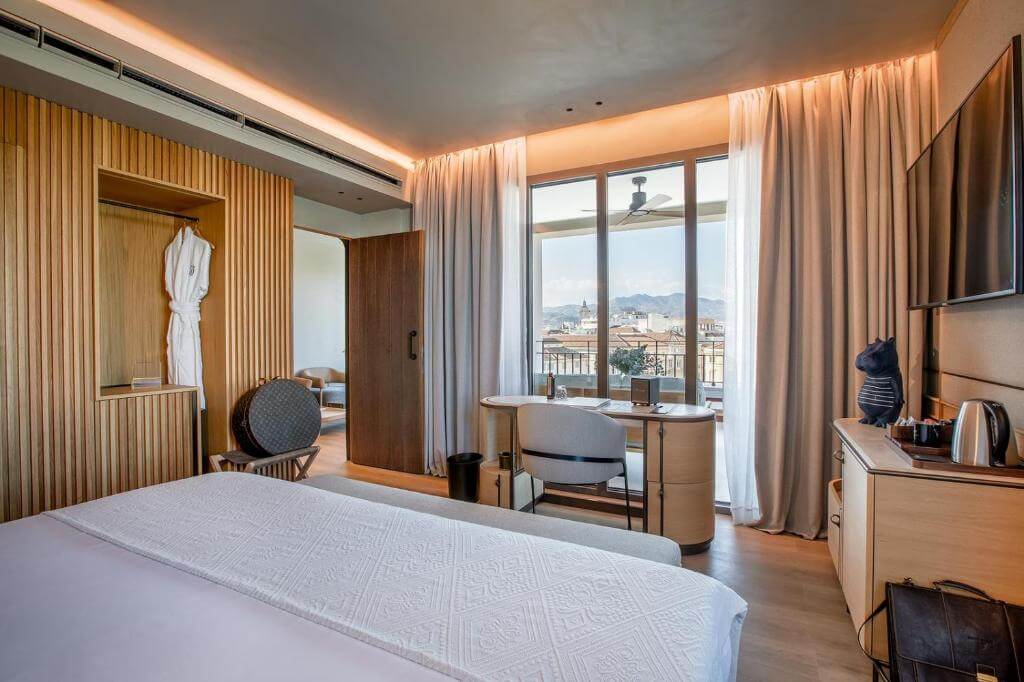
(€€€) Only YOU Hotel Málaga – One of the best luxury hotels in the city. With a rooftop pool, panoramic sea views, and elegant design, it’s perfect for couples or travelers looking for a refined experience. Located right on Alameda Principal, you’ll be within walking distance of all major attractions.
Our tip: Stay near the historic center or the Soho district — you’ll be close to most sights, restaurants, and nightlife while still within walking distance of the beach.

Here are all your accommodation options in Malaga
What to Eat
Spain isn’t always the easiest country to travel through on a plant-based diet — traditional cuisine leans heavily on meat, seafood, and dairy. Still, there are a few classic Spanish dishes worth trying or adapting to your taste:
- Sangria – A refreshing wine-based drink mixed with fruit, perfect for warm evenings.
- Spanish Omelette (Tortilla Española) – Usually made with eggs and potatoes, though some restaurants offer vegan alternatives.
- Smoked Ham / Prosciutto (Jamón Ibérico) – One of Spain’s most famous specialties for non-vegans.
- Paella – A must-try Spanish rice dish. You can find delicious vegetable or vegan paella versions in many coastal cities, including Málaga.
Luckily, Málaga has embraced the plant-based movement quite well. The city has several amazing vegan and vegetarian-friendly spots that make eating out a real pleasure.

We loved MIMO Vegan Bistrot, a cozy restaurant offering creative vegan dishes and delicious desserts in a laid-back setting. BYOKO, another favorite, serves beautiful and healthy bowls, plant-based burgers, and raw cakes — all in a stylish café atmosphere.
If you’re looking for more vegan-friendly options, you can also check out:
- Reviv Café – For organic breakfasts and smoothie bowls.
- Vegetariano El Calafate – One of the oldest vegetarian restaurants in Málaga, offering hearty and homemade Mediterranean dishes.
- La Vegana Tapería – A local favorite serving traditional Spanish tapas in a fully vegan version.
Whether you’re vegan or not, Málaga’s food scene has something for everyone — from fresh seafood by the port to colorful plant-based creations in the old town.


Tip: If you want to learn more about the local food, try the Wine & Tapas Tour
Best Things to do In Malaga
Explore the Teatro Romano de Málaga
Let’s start this guide with one of the most fascinating historic sites in the city — the Teatro Romano de Málaga. This ancient Roman theatre, standing right at the foot of the Alcazaba, is actually the oldest monument in Málaga, dating back to the 1st century AD. Built during the reign of Emperor Augustus, it was once used for public performances before being transformed into a cemetery and eventually abandoned.

Today, it’s beautifully restored and easy to visit. You can simply admire it from the main square in front, which offers a great view of the ruins with the Alcazaba rising just behind — a perfect spot for a quick photo stop and a glimpse into Málaga’s Roman past.

Tip: To learn more about those historical places, take the Alcazaba and Roman Theatre Guided Tour With Entry
Visit the Alcazaba of Málaga
Right behind the Roman Theatre stands the Alcazaba, an impressive 11th-century Moorish palace that once served as both the residence of Muslim rulers and a fortress defending the city. It’s one of Málaga’s most iconic landmarks and a must-visit for anyone interested in Andalusian history and architecture.

The entry ticket costs €5.50 and includes access to both the Alcazaba and the Castillo de Gibralfaro, making it one of the best-value attractions in all of Andalusia. During your visit, you can use an audio guide on your phone and explore the ramparts, courtyards, gardens, patios, and fountains that give this fortress its enchanting atmosphere.
Once inside the main area, start by exploring the right side first before heading back to visit the left wing of the palace — both parts reveal beautiful details and panoramic views over the city.

Tip: To learn more about those historical places, take the Alcazaba and Roman Theatre Guided Tour With Entry
Climb Up to Castillo de Gibralfaro
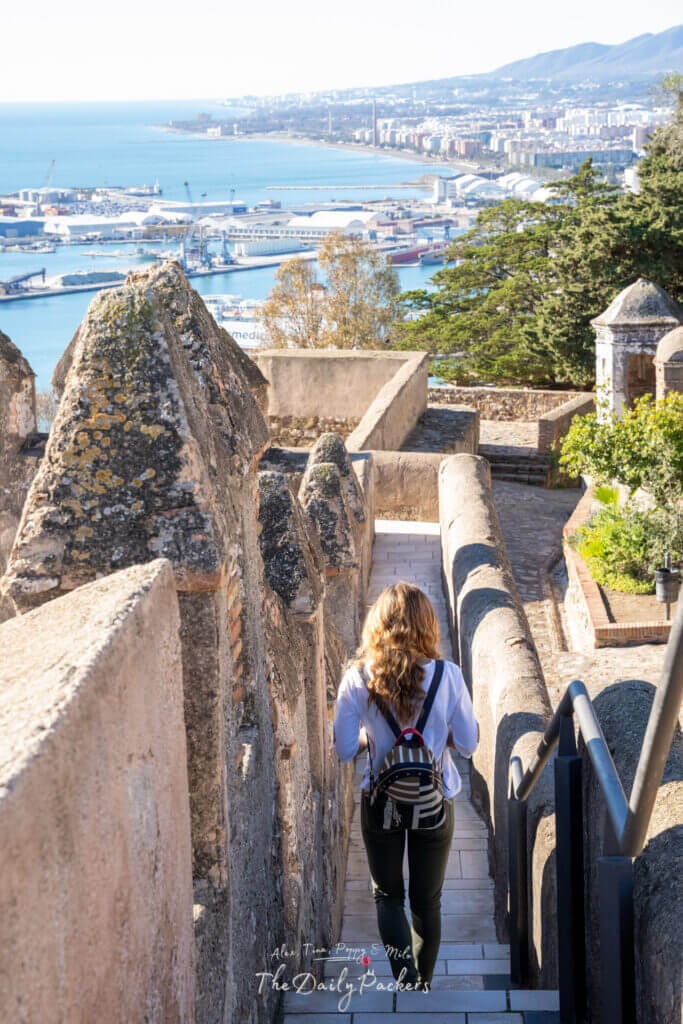
After visiting the Alcazaba, make your way out and turn to the right side to start walking up to the Castillo de Gibralfaro. The path is steep but scenic — you’ll pass a beautiful viewpoint overlooking Málaga before reaching the castle itself. If you prefer to skip the climb, you can also take bus 35, which drops you off right at the entrance.

Built in the 14th century, the castle was designed to protect the Alcazaba below and served as a military garrison. Its name, Gibralfaro, comes from Arabic and Greek roots meaning “mountain of light,” referencing the lighthouse that once stood here.
Once inside, walk along the ramparts for some of the best panoramic views of Málaga and the Mediterranean Sea, then take a stroll through the inner courtyard for a peaceful break before heading back down.


Stop by the Museo Casa Natal de Picasso
Right in the heart of Málaga’s old town, you’ll find the Museo Casa Natal de Picasso, the actual house where Picasso was born. We’re not huge museum people, but we wanted to mention this one because it’s in such a lovely square — and more importantly, it’s right next to BYOKO, one of our favorite plant-based cafés in Málaga.
After enjoying a delicious lunch there (their bowls and smoothies are amazing!), take a few minutes to wander around the square and admire the building from the outside. The museum itself is small and mostly for Picasso enthusiasts, but even just passing by gives you a nice glimpse into Málaga’s connection with its most famous artist.
It’s a calm little spot to slow down, grab a bite, and feel the creative spirit of the city.

Tip: Don’t forget to buy your Museo Picasso Málaga Entry Ticket
Walk Along the Pérgolas de la Victoria
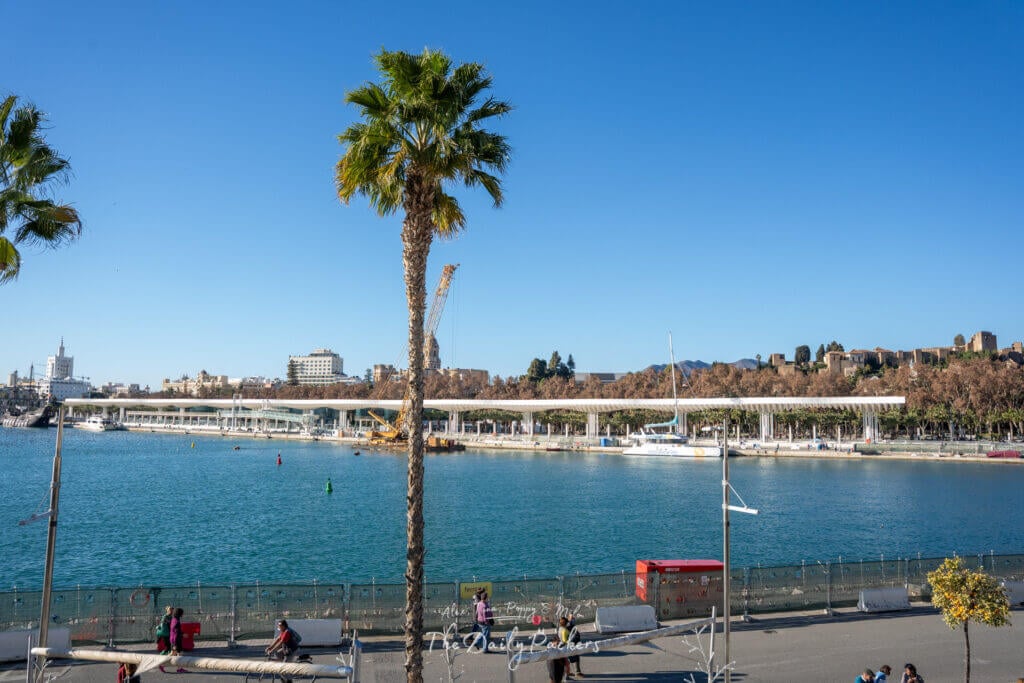
On your way to Malagueta Beach, take a stroll through the Pérgolas de la Victoria, one of Málaga’s most modern waterfront landmarks. The white wave-like structure creates a beautiful shaded promenade that stretches along the coast, making it a great place to walk, shop, or grab a drink by the sea.

You’ll find plenty of restaurants, cafés, and boutiques tucked beneath the pergolas — perfect for a relaxed stop before heading to the beach. It’s also one of the nicest areas in Málaga to enjoy a sunset walk, especially when the light hits the sea and the architecture glows.

Here are all your accommodation options in Malaga
Relax at Playa la Malagueta
Just a short walk from the Pérgolas de la Victoria, you’ll reach Playa la Malagueta, Málaga’s main city beach. It’s the perfect spot to kick off your shoes, soak up the sun, and breathe in the salty sea air. The atmosphere is relaxed, with both locals and travelers enjoying the warm weather year-round.

Even though it’s right in the city, the beach feels surprisingly calm — great for a quick swim or an afternoon nap under a palm tree.
If you’re spending more time in Málaga and have access to a car, we’ve also pinned a few other beautiful beaches on our Spain Google map. They’re a bit further out, but totally worth the drive if you’re looking for quieter or more scenic spots along the coast.

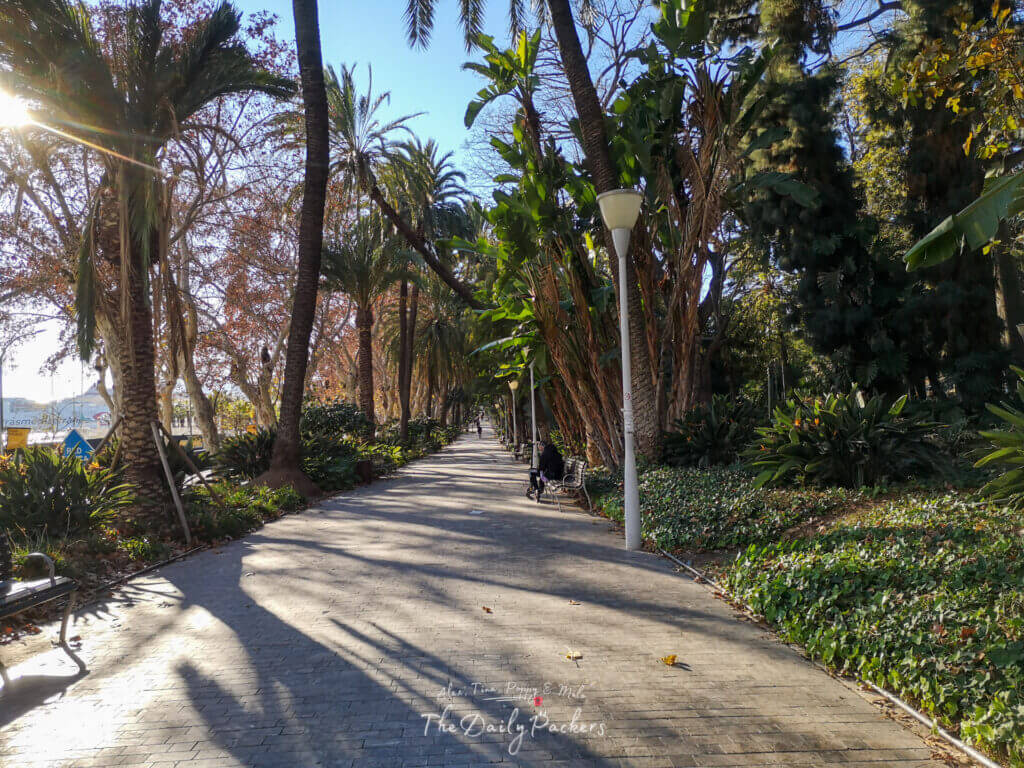
Stroll Through Málaga Park
On your way back to the city, take a different route and walk through Málaga Park instead of retracing your steps. It’s a lush green oasis right in the middle of the main roads — yet somehow, it’s peaceful and quiet despite the traffic around it.

You’ll walk under tall palm trees, past fountains, sculptures, and colorful flowerbeds. It’s one of those places where you can slow down for a moment, enjoy the shade, and take in a bit of calm before diving back into the busy old town.
Visit the Jardín Botánico-Histórico La Concepción
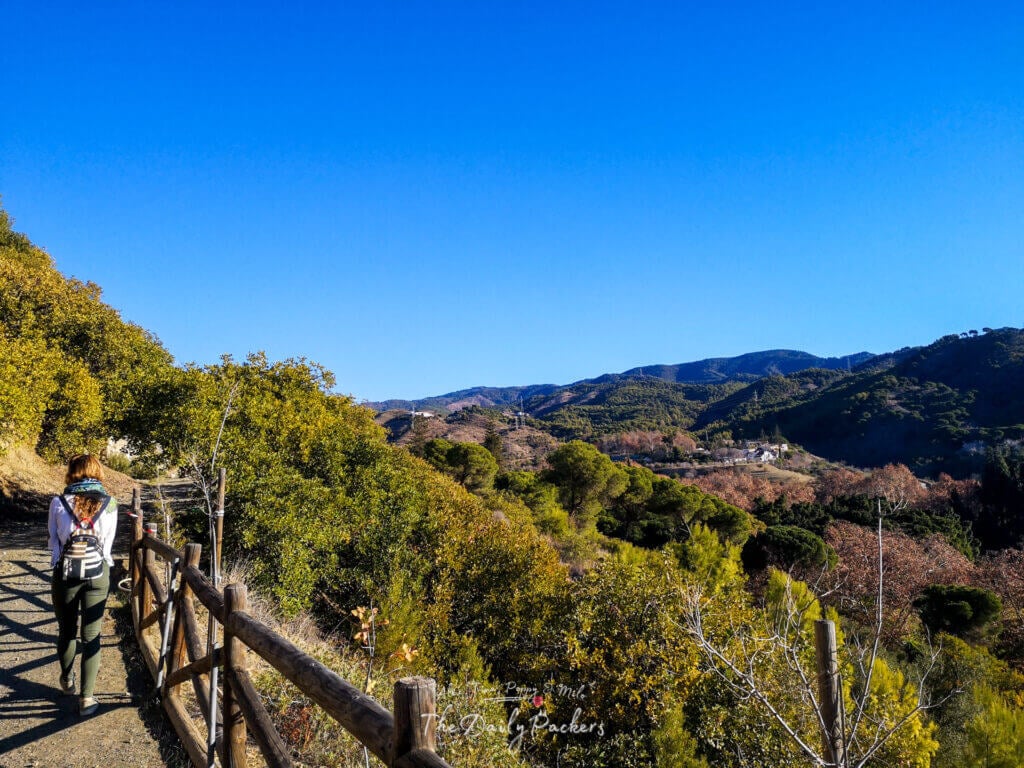
If you have a bit more time in Málaga, it’s worth heading north to visit the Jardín Botánico-Histórico La Concepción. You can easily get there by taking bus number 2, followed by a short 15-minute walk to reach the entrance.

Spread across more than 250,000 m², this is one of the largest tropical and subtropical gardens in Spain — and even in Europe. It’s home to over 2,000 species of trees and plants, with winding paths, waterfalls, and shaded corners that make it the perfect escape from the city.
The only downside? The nearby highway can be a bit noisy at times — but the lush greenery and beautiful views more than make up for it. It’s a peaceful spot to slow down and reconnect with nature for a couple of hours.
Here are all your accommodation options in Malaga
Explore the Mercado Central de Atarazanas
After your visit to the botanical garden, hop back on bus number 2 and head straight to the Mercado Central de Atarazanas — one of Málaga’s liveliest spots and a must-visit for food lovers.

Set inside a beautifully restored 19th-century building with colorful stained-glass windows, this market is bursting with local flavors and energy. You’ll find everything from fresh fruits and veggies to olives, beans, spices, dried fruits, fish, and cured meats. Even if you’re not planning to buy much, it’s a joy to wander through the aisles and soak up the atmosphere.
The market is open Monday to Saturday, from 8 a.m. to 3 p.m., and mornings are when it’s at its best — vibrant, noisy, and full of life.


Tip: We use the DJI Action 4 to film our vlogs — compact, durable, and perfect for capturing every adventure.
Wander Through the Soho District
Next, take a little walk through Soho, Málaga’s creative neighborhood. Once a neglected area, it has completely transformed into a vibrant open-air gallery thanks to the work of local and international street artists.
Spend some time wandering through the narrow streets, spotting colorful murals and graffiti — every corner hides something new and unexpected. It’s the kind of place that makes you want to grab your camera and just get lost for a while.

When you’re done exploring, head over to Mimo Vegan Bistrot for lunch. It’s a cozy little spot serving delicious plant-based dishes (open from 1:30 p.m.) and definitely worth booking ahead — it’s small, and locals love it too.

Visit the Catedral de la Encarnación de Málaga
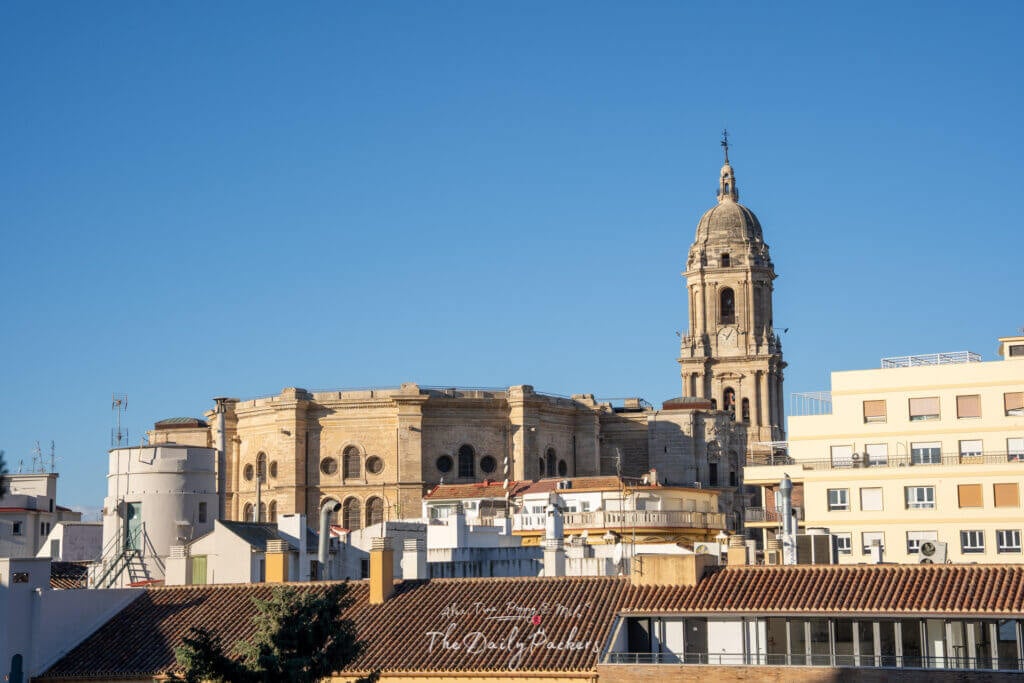
You can’t visit Málaga without stopping by its impressive Cathedral of the Incarnation, one of the city’s most iconic landmarks. The entrance costs €6, or €10 if you also want to access the rooftop, which offers stunning views over the old town and the sea.

Built in the 16th century on the site of a former mosque, the cathedral is truly breathtaking inside and out. Its grand façades, intricate details, and towering columns make it a masterpiece of Renaissance architecture.
Interestingly, the cathedral was never fully completed due to lack of funds, leaving it with only one bell tower — which earned it the local nickname La Manquita, meaning “the one-armed lady.”

Discover Málaga’s Best Museums
Málaga has a surprisingly rich cultural scene, and if you love museums, you’ll have plenty to explore here. Beyond the beaches and sunny terraces, this city is actually one of the most artistic in Spain.
A great museum is the Centre Pompidou Málaga, an eye-catching glass cube by the port filled with modern and contemporary art. It’s a smaller branch of the Paris museum and offers a mix of permanent and temporary exhibitions — perfect for an hour or two indoors.
If you’re more into history, check out the Museo de Málaga, located in the old Customs Palace. It combines fine arts and archaeology, and the building itself is stunning.
And for something completely different, there’s the Museo Automovilístico y de la Moda, where classic cars and high-fashion pieces are displayed side by side — definitely one of the most unique museum experiences in town.


Watch a Live Flamenco Show at Teatro Flamenco Málaga
For an authentic taste of Andalusian culture, don’t miss a flamenco show in Málaga. The intimate Teatro Flamenco Málaga is one of the best places to experience the passion of live flamenco up close — from the powerful dance to the emotional singing and guitar. The venue is small, making the performance feel incredibly personal and intense. Book your tickets early, as the evening shows usually sell out quickly.

Tip: Get your Teatro Flamenco Malaga Live Flamenco tickets here
Walk the Famous Caminito del Rey
Once known as one of the most dangerous trails in the world, the Caminito del Rey is now a safe and spectacular walkway along the steep walls of the Gaitanes Gorge. The path stretches for about 7.7 km, offering breathtaking views of cliffs, rivers, and canyons. It’s an easy half-day trip from Málaga and a must if you love nature and a bit of adventure. You can visit on your own or book a tour that includes transport and entrance tickets.

Tip: This Caminito Del Ray tour has a 4,8/5 rating out of over 14,000 reviews.
Visit Ronda and Setenil de las Bodegas
If you have time for a day trip, head to Ronda and Setenil de las Bodegas, two of the most picturesque towns in Andalusia. Ronda is perched dramatically on top of a gorge, connected by the impressive Puente Nuevo bridge, one of Spain’s most iconic landmarks. The old town is full of charm and history, perfect for a slow wander and a coffee with a view.
A short drive away, Setenil de las Bodegas is a whitewashed village literally built into the rock — houses, cafés, and shops hidden under huge stone overhangs. It’s a unique and photogenic place you won’t forget.

Tip: The easiest way to reach Ronda and Setenil if you don’t want to drive it with this highly-rated tour.
Take a Day Trip to Gibraltar
Fancy a quick escape to another country? From Málaga, you can easily visit Gibraltar, a small slice of Britain on the southern tip of Spain. The famous Rock of Gibraltar offers incredible views all the way to Africa, and you can even meet the island’s mischievous Barbary macaques at the top. Wander the streets lined with red phone boxes, visit the St. Michael’s Cave, and enjoy the mix of British and Mediterranean vibes — all in one day.

Join a Full-Day Trip to Granada
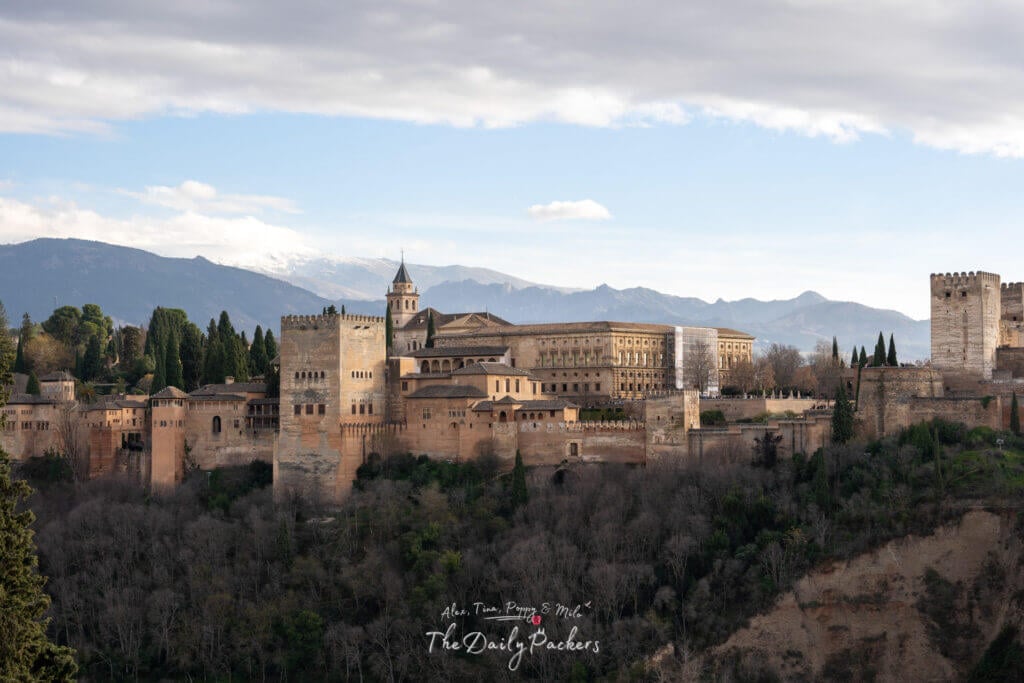
If you have an extra day in Málaga, make sure to visit Granada — home to the breathtaking Alhambra Palace, one of the most beautiful landmarks in Spain. Wander through its ornate halls and peaceful gardens, then explore the Albaicín district with its narrow alleys and whitewashed houses. The city’s mix of Moorish and Spanish influences makes it truly magical. Most tours include skip-the-line tickets and transport from Málaga, so it’s an easy and stress-free way to experience it all in one day.


5-Day Malaga Itinerary
If you’re planning a few days in Málaga, here’s how we’d recommend exploring the city and its surroundings. We spent five days here and felt it was the perfect amount of time to soak in the history, relax by the sea, and explore a few incredible spots nearby.
Day 1 – Explore Málaga’s Historic Heart: Start your trip by diving into Málaga’s history and its most iconic landmarks.
- Teatro Romano de Málaga – Begin your day at the Roman Theatre, the oldest monument in the city, standing right below the Alcazaba.
- Alcazaba – Continue uphill to explore this impressive Moorish fortress with beautiful gardens, patios, and panoramic views.
- Castillo de Gibralfaro – Hike or take bus 35 up to the castle for one of the best viewpoints over Málaga and its harbor.
- Museo Casa Natal de Picasso – Visit the square where Picasso was born, or simply enjoy lunch at BYOKO, right next to the museum.
- Pérgolas de la Victoria – Stroll through this modern promenade filled with cafés and shops as you head towards the sea.
- Playa la Malagueta – Take a break and unwind by the beach, the most famous one in town.
- Málaga Park – Walk back through this peaceful green oasis to end your first day surrounded by tropical plants and quiet corners.
Day 2 – Gardens, Markets, and Art: Your second day is all about slowing down and enjoying Málaga’s creative and local side.
- Jardín Botánico – Histórico La Concepción – Take bus N°2 and enjoy a morning surrounded by tropical and subtropical plants in one of Europe’s most beautiful botanical gardens.
- Mercado Central de Atarazanas – Head back downtown to explore the local market and try some fresh fruits or tapas.
- Soho – Wander around this once-forgotten neighborhood now transformed by colorful street art, and stop for lunch at MIMO Vegan Bistrot (reservations recommended).
- Catedral de la Encarnación de Málaga – End your day with a visit to the city’s stunning cathedral, or head up to the rooftop for sunset views over the old town.
Day 3 – Walk the Caminito del Rey: Take a day trip to the world-famous Caminito del Rey, a spectacular walkway built along the cliffs of the Gaitanes Gorge. It’s about 1 hour from Málaga and easily reachable by train or guided tour. The hike itself is around 7.7 km, and the views are absolutely worth it.
Day 4 – Visit Ronda:
- On your fourth day, head inland to discover the dramatic town of Ronda. Perched high above a gorge and linked by the famous Puente Nuevo bridge, it’s one of the most photogenic spots in Andalusia. Take your time to stroll through the old town, enjoy a glass of local wine, and soak in the view.
- If you have time, stop in Setenil de las Bodegas, the village built directly into the cliffs — it’s unlike anywhere else.
Day 5 – Choose Your Adventure: For your last day, you have two great options depending on what kind of traveler you are:
- Day Trip to Gibraltar – Cross the border to see the iconic Rock of Gibraltar, enjoy British vibes under the Spanish sun, and spot the famous monkeys.
- Or day Trip to Granada – Visit the magical Alhambra Palace, explore the Albaicín district, and experience the rich Moorish history of Granada.
Read: Our complete 10-day Andalusia Itinerary: The best of the south of Spain














Last month I visited Malaga and decided to indulge in an Arab bath experience. It transported me to a realm of relaxation – the ambiance, adorned with intricate tiles and soft lantern light, set the tone for serenity.
It was more than a bath — it was a cultural immersion. Highly recommend!
David