

Introduction
The Seville Cathedral, officially known as the Catedral de Santa María de la Sede, is one of Spain’s most spectacular landmarks and a true masterpiece of Gothic architecture. Built on the site of a former mosque, it’s not just a religious monument — it’s a symbol of Seville’s rich history, where Islamic, Christian, and Renaissance influences blend perfectly.
We visited the cathedral during our 10-day Andalusia road trip and were blown away by its scale and beauty. It’s the largest Gothic cathedral in the world, home to stunning chapels, intricate altarpieces, and even the tomb of Christopher Columbus.
Climbing its famous Giralda Tower, once a minaret, rewards you with some of the best panoramic views of Seville — and it’s surprisingly easy to reach since there are no stairs, only ramps.


Read: 22 Best things to do in Seville, Spain, in 3 to 5 days
Why visit?
The Seville Cathedral, officially the Catedral de Santa María de la Sede, is one of Spain’s most extraordinary landmarks — a place where centuries of faith, power, and culture converge. Declared a UNESCO World Heritage Site in 1987 alongside the Alcázar of Seville and the Archivo de Indias, it stands as one of the most remarkable architectural achievements in Europe.
Construction began in 1401, right on the foundations of Seville’s former Great Mosque, which dated back to the 12th century under the Almohad dynasty. The mosque’s courtyard (Patio de los Naranjos) and minaret (La Giralda) still remain today, seamlessly woven into the cathedral’s Christian redesign.
The cathedral was built at the height of Seville’s prosperity, following the Christian Reconquest of the city in 1248. The city’s leaders wanted to build a monument that would proclaim Seville’s wealth and devotion — and legend says that the original architects declared, “Let’s build a church so beautiful and so grand that those who see it finished will think we are mad.”

Over the next century, thousands of artisans worked on it, blending Gothic, Mudejar, Renaissance, and Baroque influences. The result was a cathedral that not only symbolizes the religious devotion of Spain’s Golden Age but also the ambition of a city that had become the gateway to the New World.
Inside, you’ll find the Capilla Mayor, one of the most spectacular altarpieces ever made, with over 1,000 figures carved in wood and covered in gold leaf. You can also visit the Royal Chapel, the resting place of several Castilian monarchs, and the Tomb of Christopher Columbus, whose remains — or at least part of them — are said to rest here.
From the Giralda Tower, climb its gentle ramps (not stairs!) to enjoy a breathtaking panoramic view over Seville. Once the mosque’s minaret, the tower was later topped with a Renaissance-style belfry and a weather vane known as El Giraldillo, which represents faith and victory.


How to get there
The Seville Cathedral is right in the heart of the city, in the historic district of Santa Cruz, just a few minutes’ walk from most major attractions like the Alcázar of Seville and the Archivo de Indias. Its central location makes it incredibly easy to reach on foot, by public transport, or even by bike.
If you’re staying anywhere near the city center, you’ll likely reach the cathedral on foot by wandering through the charming cobblestone streets of the old town — it’s well-signposted and impossible to miss once you’re close.

Here are a few ways to get there:
- By tram: Take Line 1 and stop at Archivo de Indias — it drops you right next to the cathedral.
- By bus: Several city buses stop nearby, including lines 5, C3, C4, and 41, with the Prado de San Sebastián station being the most convenient.
- By bike: Seville is a bike-friendly city, and there are several Sevici (public bike) stations around Plaza del Triunfo.
- By taxi or Uber: A quick and easy option if you’re coming from further out or carrying luggage.
The cathedral’s official entrance is located on Avenida de la Constitución, directly across from the Alcázar. If you’re visiting both sites on the same day, it’s best to start with one in the morning and the other after lunch to avoid the crowds.
Address: Av. de la Constitución, s/n, Casco Antiguo, 41004 Sevilla, Spain


Here are all your accommodation options in Seville
When to visit
The Seville Cathedral can be visited year-round, but your experience will differ greatly depending on the season and time of day. Seville’s weather plays a big role — summers are scorching, while spring and autumn are perfect for sightseeing.
Here’s what to expect throughout the year:
- Spring (March to May): This is hands down the best time to visit Seville. The city is in full bloom, the temperatures are pleasant (20–28°C), and the streets are filled with the scent of orange blossoms. It’s also when Seville’s biggest events take place — Semana Santa (Holy Week) and Feria de Abril (April Fair) — which fill the city with parades, traditional dresses, and music. It’s the most atmospheric time to visit the cathedral, though crowds are at their peak.
- Summer (June to August): Seville can be brutally hot in summer, with daytime temperatures often exceeding 40°C. If you visit during this time, plan your cathedral visit early in the morning (right at opening time) or later in the afternoon. Inside the cathedral, it stays cooler thanks to the thick stone walls, but walking around outside can be tough.
- Autumn (September to November): Autumn is another excellent time to visit, with mild weather and fewer tourists. The temperatures drop back to a comfortable range (around 25°C), and the lighting inside the cathedral is gorgeous in the late afternoon.
- Winter (December to February): Winter in Seville is mild, with daytime temperatures between 12°C and 18°C. It’s the quietest time of year — perfect if you prefer a slower, calmer visit without the crowds. The festive lights around the city and the Christmas market by the cathedral add a nice seasonal touch.

Best Time of Day
- Morning (10 a.m. to 11 a.m.) is best for cooler temperatures and smaller crowds.
- Late afternoon (around 4 p.m.) offers incredible lighting for photography — the sun hits the stained glass just right, creating warm golden tones across the stone walls.
How Long to Spend
Plan at least 1.5 to 2 hours for a general visit, including the Giralda Tower. If you like taking photos or reading about the artwork and history, set aside 2.5 to 3 hours — especially if you also explore the Patio de los Naranjos and smaller chapels.


Tip: If you’re short on time or want to learn more, book the Priority Access Cathedral, Giralda & Alcázar Tour to see the city’s main landmarks with a guide and skip the lines — a great way to experience Seville’s history in one go.
How to Visit
Visiting the Seville Cathedral is one of the highlights of any trip to Andalusia. It’s a UNESCO World Heritage Site, the world’s largest Gothic cathedral, and a masterpiece that deserves at least a few hours of exploration. To make the most of your visit, it helps to know how the experience is organized and which ticket option is best for you.

The Regular Visit — Cathedral & La Giralda Tower
The standard ticket gives you access to both the Seville Cathedral and the Giralda Tower — the two main highlights of the site. This is the option we recommend, as it covers everything you need for a complete visit without overcomplicating things.

Once inside, start by exploring the main nave, where the immensity of the Gothic vaults and the golden Capilla Mayor (Main Chapel) immediately take your breath away. The altarpiece is one of the largest in the world, made up of over a thousand carved scenes depicting the life of Christ.

Continue toward Christopher Columbus’s tomb, guarded by four statues symbolizing the kingdoms of Spain. Don’t miss the choir and organ, the side chapels, and the Treasury, where you’ll find stunning religious artworks and relics.

Then, climb the Giralda Tower — 35 ramps (no stairs!) lead you to the top, where you’ll be rewarded with panoramic views of Seville.

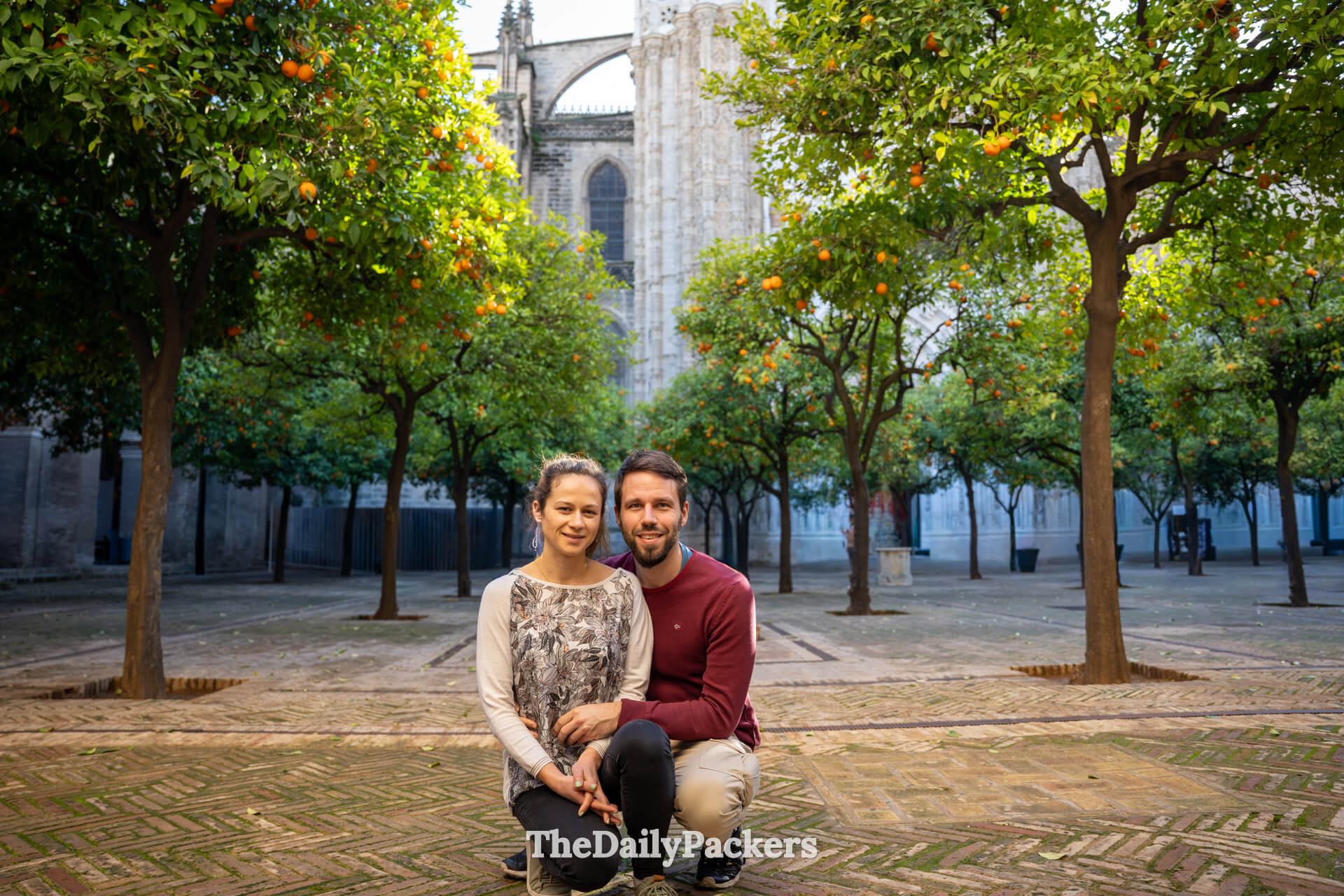
Before you leave, take a quiet moment in the Patio de los Naranjos, the former courtyard of the mosque that once stood here.

Other Visit Options
If you want to go beyond the standard ticket, the Seville Cathedral also offers several special guided tours that can be booked directly on the official website. Here are the main ones available:
- Visit to the Cathedral and Giralda (standard ticket)
- Guided tour to the Cathedral and Giralda – includes a professional guide and skip-the-line access.
- Guided tour “De Profundis” (Spanish only) – a deeper, symbolic exploration of the cathedral’s sacred meaning.
- Rooftops tour – one of the most impressive options, giving access to the upper terraces and unique city views.
- Guided tour of the Stained-Glass Windows – focused on the art, technique, and preservation of these medieval masterpieces.
- Guided tour “Footprint of the Sacred” (Spanish only) – includes the crypt, chamber, and the nearby Church of El Salvador.
- The Wooden Gospel: Nights at the Cathedral – a nighttime tour offering a quieter, more atmospheric experience
There’s also a free visit available exclusively online on Sundays from 4:30 p.m. to 6:00 p.m., though re-entry is not allowed.

Tip: Secure your spot and visit to the Seville Cathedral by buying your tickets online in advance
Tickets & Opening Hours
The Seville Cathedral is one of the most visited landmarks in Spain, so planning your visit ahead is key — especially if you’re traveling during weekends or holidays.
Ticket Prices (2025): Here’s a breakdown of the most common tickets available:
- General Admission (Cathedral + Giralda): €18
- Children (under 13): Free
- Official Guided Tour (Cathedral + Giralda + Alcazar): around €50 to €65.
Tickets can be purchased:
- On the official Seville Cathedral website, or
- Through GetYourGuide for skip-the-line access or combined tours with the Alcázar.
We recommend purchasing tickets at least a few days in advance of your visit, as same-day entry slots (especially for the Giralda climb) often sell out.

Opening Hours (subject to change)
- Monday to Saturday: 10:45 a.m. – 6:00 p.m.
- Sundays: 2:30 p.m. – 6:00 p.m.

Tip: If you’d rather skip the logistics and learn more about the site’s deep history, architecture, and film connections, consider joining a guided tour like the “Seville: Priority Access Cathedral, Giralda & Alcázar Tour.” It’s a great option if you want to experience Seville’s main landmarks in one go without worrying about tickets or lines.
Is it Worth It?
Absolutely — the Seville Cathedral is one of those landmarks that genuinely lives up to its reputation. Whether you’re into architecture, history, or just love beautiful places, this Gothic masterpiece is a must-see.
Walking through the cathedral feels like stepping into another era. The sheer size of it — the world’s largest Gothic cathedral — is astonishing, but it’s the details that make it unforgettable: the golden altarpiece, the echoing choir, the towering columns, and of course, the climb up La Giralda, where Seville unfolds beneath your feet.

Even if you’ve already visited the Alcázar, the cathedral offers a completely different experience. It tells the story of Seville’s Christian reconquest, its maritime wealth, and its artistic devotion — all in one place. And if you’re a fan of panoramic views, few spots in the city rival the top of the Giralda Tower, especially at sunset.
It’s also worth noting that the cathedral’s architecture reflects layers of history — built on the foundations of a former mosque, it merges Islamic, Gothic, Renaissance, and Baroque elements seamlessly. This mix is what gives the Seville Cathedral its unique identity, making it one of Spain’s true architectural marvels.
If you’re spending at least 2 or 3 days in Seville, don’t skip it. The visit easily fits into any Seville itinerary and takes around 1.5 to 2 hours (a bit longer if you climb the tower or linger in the courtyards).
In short — yes, it’s absolutely worth it, both for what it represents and how breathtaking it is to see in person.

Travel Tips
To make the most of your visit to the Seville Cathedral, here are a few practical tips based on our own experience and what we wish we’d known before going:
- Buy tickets in advance: Don’t wait until the day of your visit — especially during spring and fall when Seville is busiest. Online tickets let you skip the long lines and go straight in.
- Visit early or late in the day: If you go right after opening, the cathedral is quieter, and the light streaming through the stained glass is beautiful. Late afternoon visits are also great, especially if you plan to climb the Giralda for sunset views.
- Don’t rush the Giralda climb: It’s not stairs — just 35 ramps — so it’s easy to walk, but it can still take 10–15 minutes to reach the top. Take your time and enjoy the changing views through the small windows as you go up.
- Dress comfortably: Like most major churches, modest clothing is appreciated (cover shoulders if possible). Also, wear good shoes — the stone floors and ramps are hard on your feet after a while.
- Combine it with the Alcázar or Barrio Santa Cruz: The cathedral is right next to both, so it’s easy to visit them on the same or consecutive days. If you’d rather not plan, consider the Seville: Priority Access Cathedral, Giralda & Alcázar Tour, which includes both landmarks and a guide.
- Bring water, especially in summer: Even though it’s cooler inside, the Giralda climb and walking around the city afterward can be hot. There’s a small courtyard (the Patio de los Naranjos) where you can take a quick break in the shade.
- Allow at least 1.5 to 2 hours: Between exploring the cathedral, listening to the audio guide, and climbing the Giralda, time goes quickly. Give yourself enough space to enjoy it without rushing.

Where to stay
Staying near the Seville Cathedral is a great choice — it puts you right in the heart of the city, within walking distance of the Alcázar, Santa Cruz district, and most of Seville’s best tapas bars. Here are a few options depending on your budget and travel style:
(€) Hotel Giralda Center – A modern and comfortable hotel located near the city center, perfect if you’re looking for good value and easy access to main attractions. The rooms are spacious, and the rooftop terrace is a nice touch for sunset views.
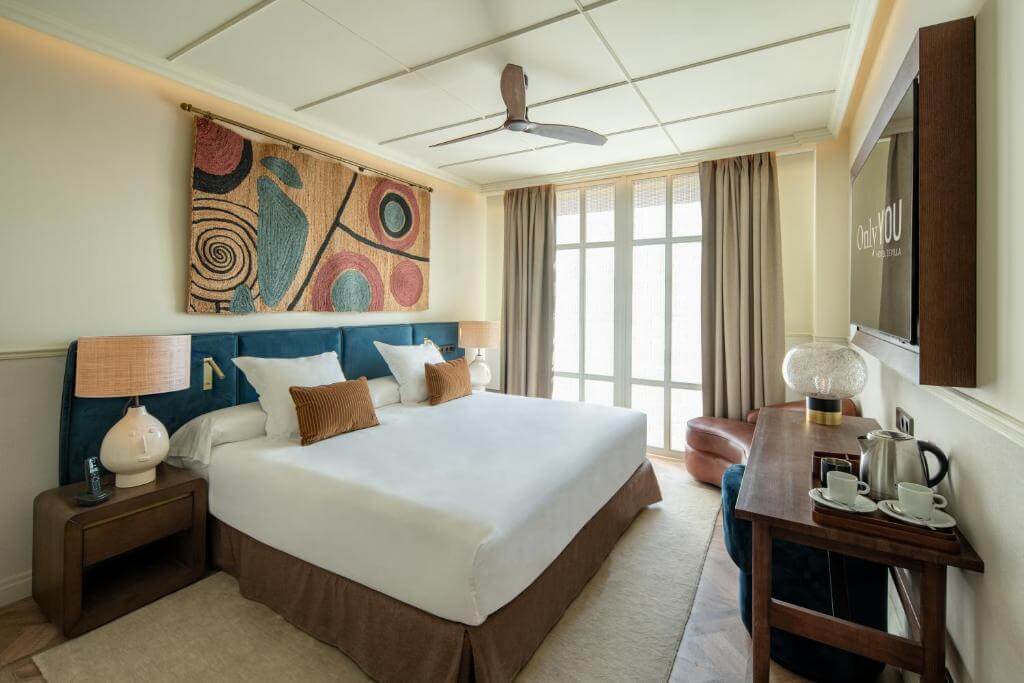
(€€) Only YOU Hotel Sevilla – A stylish boutique hotel with elegant design, cozy rooms, and excellent service. It’s close to Santa Justa Station, making it ideal if you’re arriving by train.
(€€€) Hotel Alfonso XIII, a Luxury Collection Hotel, Seville – Seville’s most iconic hotel. This masterpiece of Moorish-inspired architecture sits between the Cathedral and Plaza de España. It’s a true Andalusian gem — luxurious, historic, and unforgettable.

About the authors
We are Alex and Tina, a French-Serbian couple who met in China back in 2014. We spent three incredible years there before making France our home. Our shared passion for travel has been the heartbeat of our relationship for over 12 years, taking us across 44 countries and counting.
We launched TheDailyPackers in 2019 as a way to document our adventures. In 2026, we reached a major milestone by officially turning our blog into our full-time job. While we are still growing toward financial independence through this platform, every article we write is fueled by our mission to make your voyages easier through in-depth guides, honest advice, and the lessons we’ve learned from our own mistakes.
Our journey has not been without its storms. In 2023, our world changed forever when our first son, Poppy, was stillborn on November 25th. It was, and remains, the hardest chapter of our lives. In 2025, we were blessed with our second little boy, Milo. He has since joined our traveling tribe, and you’ll be seeing him—and the reality of traveling with a little one-on the blog more and more.
We hope to inspire you to explore the world with curiosity and resilience. Thank you for being part of our story.
You may also like those related posts
W-Trek Day 1: From Puerto Natales to Grey Glacier
Hue to Hoi An: 1st Class Luxury Sleeper Train experience
7 Best Things to do in Cayo Santa Maria, Cuba, in 2 to 4 days
10 best things to do in Singapore, in 3 days for first timers
The Best Tour du Mont Blanc Packing list 2025
19 Best things to do in San Sebastian, Spain, in 3 days
TMB Stage 9: Guide from Trient to Tre-le-champs
Lorient La Base:The Complete Submarine Guide
Pssst, did you know that…
If you purchase something through our links, we earn a small fee. However, you still pay the same. Win-win! And one day we may get to be full-time travel bloggers =)
Find Hotels with Booking.com
Do Yoga with KVY
Buy us a Coffee
Rent a car with DiscoverCars
Find Attractions with GetYourGuide
Find Flights with Expedia
Buy an eSIM with Airalo
Get insured with World Nomads
Get ready with Amazon.com