

Introduction
Split, a stunning coastal city on the Dalmatian coast, is one of Croatia’s top destinations and the country’s second-largest city. Originally founded by the Greeks in the 3rd or 2nd century BC, it later became a significant Roman settlement, best known for Emperor Diocletian’s Palace. Over the centuries, Split has evolved into a fascinating blend of ancient history and modern Mediterranean charm.
The city’s well-preserved architecture, vibrant atmosphere, and picturesque old town make it a must-visit. Plus, Split serves as a gateway to some of Croatia’s most beautiful islands, making it an ideal base for island-hopping adventures.
But that’s not even all, Split has a central location along the coast, making it ideal as a base to visit the region’s most beautiful places.
We spent two nights in Split and loved it. We were coming from Zadar and had done a stunning road trip along the coast and if we had more time, we would have stayed even longer!

Read: Our Ultimate 3-Week Balkans Itinerary
Getting there
Getting to Split is easy, as it is Croatia’s second-largest city and a major transportation hub. Whether you’re flying in, driving, or using public transportation, there are several ways to reach Split.
From Split Airport (Resnik) – 25 km from the city center
- Airport Shuttle Bus – Takes 30-40 minutes to the Split Bus Terminal (near the old town). Fare: 40 HRK.
- Local Bus (Lines 37 & 38) – Cheapest option, takes up to 1 hour and costs 17 HRK.
- Taxi – Fastest and most convenient, takes around 10 minutes, costing 250 HRK.
- Car Rental – Available at the airport if you plan on road-tripping.
If you are coming by bus, Split has a well-connected bus station located near the ferry terminal, with frequent services from major Croatian cities:
- From Zagreb: ~4-5 hours (€15-€25)
- From Zadar: ~2.5-3 hours (€10-€15)
- From Dubrovnik: ~4-5 hours (€15-€25)
- From Šibenik: ~1.5-2 hours (€8-€12)
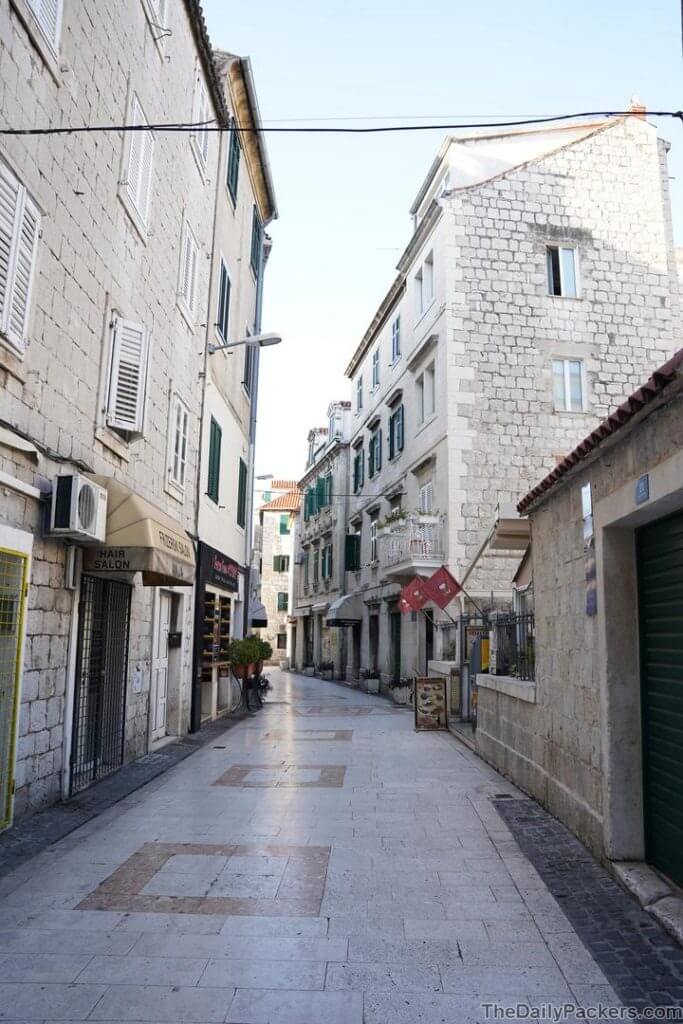
While train travel in Croatia isn’t the fastest, Split is connected to Zagreb via a direct train (~6-8 hours). Trains are less frequent than buses but offer a scenic journey through the countryside.
Split has a major ferry port, making it an excellent base for island hopping. Ferries connect Split to:
- Hvar (1 hour)
- Brač (50 min)
- Vis (2.5 hours)
- Korčula (3-4 hours)
- Dubrovnik (4-5 hours)
Ferries also connect Italy to Split, with routes from Ancona (~10-12 hours, overnight ferry).
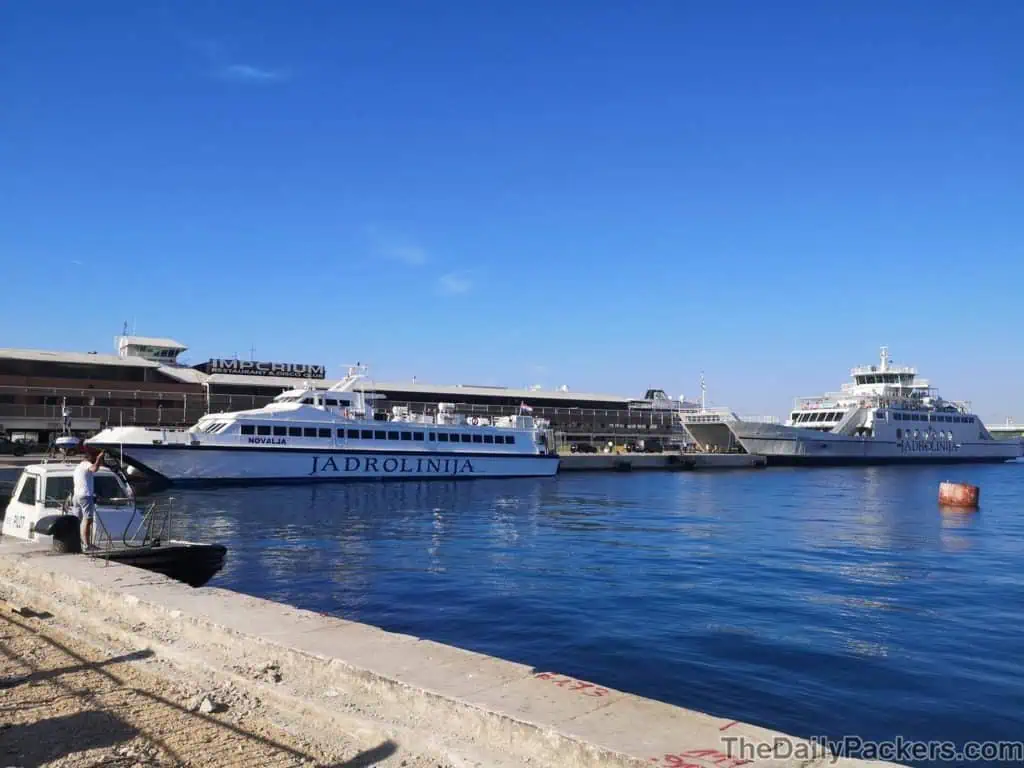

Check all your transportation options online — from buses to trains and ferries — it makes planning so much easier.
If you’re on a road trip, driving to Split is a great option:
- From Zagreb: ~4 hours (via A1 highway)
- From Zadar: ~2 hours
- From Dubrovnik: ~3.5-4 hours (via the coastal road with stunning views)
- From Šibenik: ~1 hour
Renting a car is a fantastic option if you plan to explore Dalmatia, national parks, or nearby islands. You can find rentals at the airport or in the city using Rentalcars.com.

We recommend to rent a car through Discover Cars with free cancellation. Book your rental car here.
Moving Around
Once you’re in the city center, everything is within walking distance. Split’s Old Town is compact, making it easy to explore its historical landmarks, charming streets, and waterfront on foot.
If you’re looking to visit nearby islands, there are plenty of boats, catamarans, and shuttle transfers available from the harbor. Regular ferries connect Split to Hvar, Brač, Vis, and other stunning Croatian islands, making island-hopping a breeze.
For trips outside the city, buses, taxis, and rental cars are available, depending on your itinerary.


Check our Google Map of the Balkans
When to Visit
The best time to visit Split depends on what kind of experience you’re looking for, whether it’s lively summer vibes, pleasant sightseeing weather, or a quiet retreat.
- Spring (March – May): A great time to visit with mild temperatures (15–22°C / 59–72°F) and fewer crowds. The Old Town is pleasant to explore, and day trips to islands and national parks are much more relaxed. Prices are lower, and hiking trails around Marjan Hill are at their best with blooming nature.
- Summer (June – August): Peak season, perfect for beach lovers, nightlife, and island hopping. Expect hot temperatures (25–35°C / 77–95°F), crowded streets, and busy ferries to Hvar, Brač, and Vis. While it’s the best time for swimming and water activities, accommodation prices are at their highest, and the city gets packed with tourists.
- Autumn (September – October): The best balance between warm weather (20–27°C / 68–81°F) and fewer crowds. The sea is still warm for swimming, but you won’t have to deal with the overwhelming summer rush. It’s also a great time for wine tasting, visiting Diocletian’s Palace, and enjoying outdoor cafes without long waits.
- Winter (November – February): A quiet and peaceful time to visit Split. With cooler temperatures (10–15°C / 50–59°F), the beaches and islands are much quieter, and many tourist services shut down. However, it’s a great time for budget-friendly travel, enjoying local culture, and experiencing Split without the crowds.
May and September are the ideal months, offering great weather, fewer crowds, and more affordable prices while still being warm enough to enjoy the beaches and islands.

Where to Stay
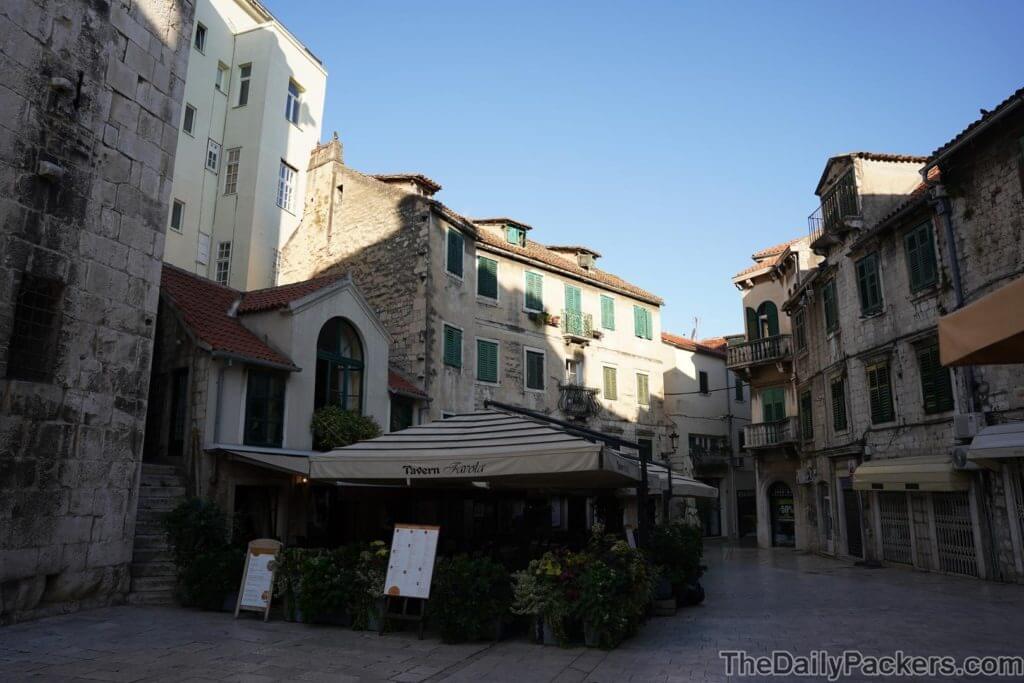
Split offers a wide range of accommodations, from charming boutique hotels in the Old Town to beachfront resorts and budget-friendly hostels. Staying in the Old Town puts you right in the heart of Split, surrounded by ancient Roman ruins, lively squares, and top attractions and that’s where we recommend staying:


Here are all your accommodation options in Split
Things to do in Split
Take a Cruise From Split & Discover Croatia
One of the best things you can do in Split is start your journey on the water. Split is Croatia’s main cruise departure point, making it the perfect place to explore Croatia by cruise and discover the country’s islands, coastal towns, hidden bays, and national parks in a relaxed, scenic way.
From daily island-hopping cruises to multi-day sailing trips covering Hvar, Brač, Vis, Korčula, and even Dubrovnik, this is one of the most enjoyable and memorable ways to experience the Adriatic. Cruises departing from Split let you sit back and enjoy turquoise waters, charming port towns, and breathtaking sunsets—without needing to plan logistics or transportation.
Whether you want a short half-day cruise or a full 7-day coastal adventure, Split offers endless options to discover Croatia directly from the sea.

Marjan
Located on the western side of Split, Marjan Hill is a peaceful escape from the city’s bustling streets. This green oasis is covered with lush pine forests and offers a network of hiking and cycling trails. After climbing several steps (reaching an elevation of 170 meters), you’ll be rewarded with stunning panoramic views of Split, the Adriatic Sea, and nearby islands.
Marjan Hill is a perfect place to reconnect with nature, whether you’re up for a scenic hike, a relaxing picnic, or just want to admire the view. It’s also home to small medieval churches, hidden lookouts, and quiet spots to enjoy a moment away from the crowds.

Republic Square
Republic Square, also known as Prokurative, is a beautiful Venetian-style square located on the west side of Split’s old town. This open gallery-like space is surrounded by elegant red neo-Renaissance buildings and is a popular gathering spot.
The square serves as a transition point between the modern part of Split and the historic old town, with its main street leading directly into the heart of the city. It frequently hosts cultural events, concerts, and festivals, making it a lively spot to visit, whether you’re enjoying a coffee at one of the surrounding cafés or simply soaking in the architecture.

Here are all your accommodation options in Split
Voćni trg
Voćni Trg (Fruit Square) is one of the most picturesque squares in Split, known for its charming atmosphere and historic significance. The square gets its name from the fruit market that once took place here, but today, it’s more of a scenic spot surrounded by beautiful buildings and monuments.
One of the most notable landmarks in the square is the Milesi Palace, a stunning Baroque-style building, and the statue of Marko Marulić, a famous Croatian writer and humanist.
While there isn’t much to do in Voćni Trg, it’s the perfect place for a photo stop or a moment of relaxation. In truth, the best part of exploring Split is simply strolling through its old streets, especially in the early morning when they’re quiet or at night when the city comes alive with its vibrant atmosphere.


Tip: We use the DJI Action 4 to film our vlogs — compact, durable, and perfect for capturing every adventure.
People’s Square or Pjaca
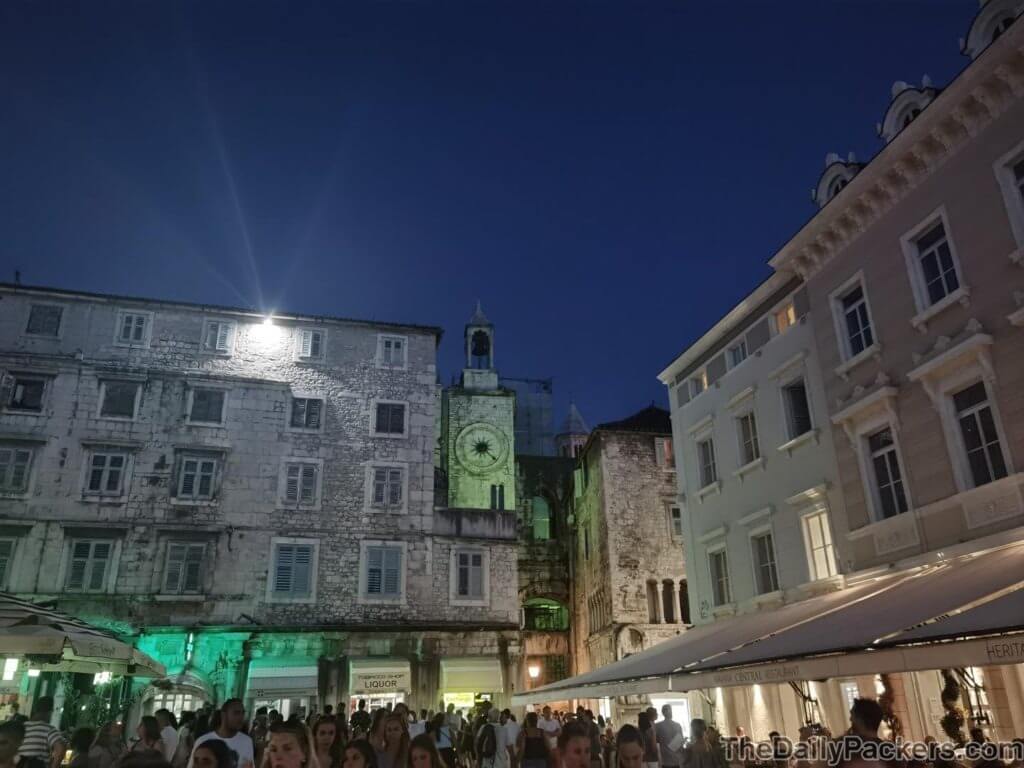
The People’s Square (Narodni Trg) is the heart of Split’s old town, dating back to the 15th century. It is surrounded by a mix of Renaissance, Venetian, and Gothic buildings, once built by the city’s nobility, giving it a unique architectural charm.
The square is always lively, whether you visit in the morning for a coffee or in the evening when the restaurants fill up with both locals and tourists. If you’re looking for a great place to eat, we highly recommend BEPA!, a fantastic spot to enjoy local cuisine in a beautiful setting.
Check our Google Map of the Balkans
Riva
Riva is Split’s iconic waterfront promenade, perfect for a leisurely stroll along the coast. Lined with palm trees, cafes, and restaurants, it’s a great spot to soak in the city’s lively atmosphere.
You can start your day here with breakfast overlooking the port or simply enjoy a scenic walk toward the harbor, where boats and ferries depart for the nearby islands. Whether in the early morning or at sunset, Riva is always a pleasant place to unwind and watch the city come to life.

Here are all your accommodation options in Split
Diocletian’s Palace
Diocletian’s Palace is the true heart of Split’s historic center and a must-visit during your stay. Whether you’re returning from a day trip to Hvar or simply exploring the city, this well-preserved 4th-century monument will transport you back in time.
Built as a residence for the Roman Emperor Diocletian, the palace also served as a large military camp. Today, it’s a vibrant part of the city, filled with charming alleyways, ancient ruins, shops, cafes, and hidden courtyards. Wandering through its labyrinth of streets is an experience in itself, offering a unique mix of Roman, medieval, and modern influences.

Tip: We recommend the Old Town and Diocletian Palace Walking Tour
Saint Domnius Cathedral
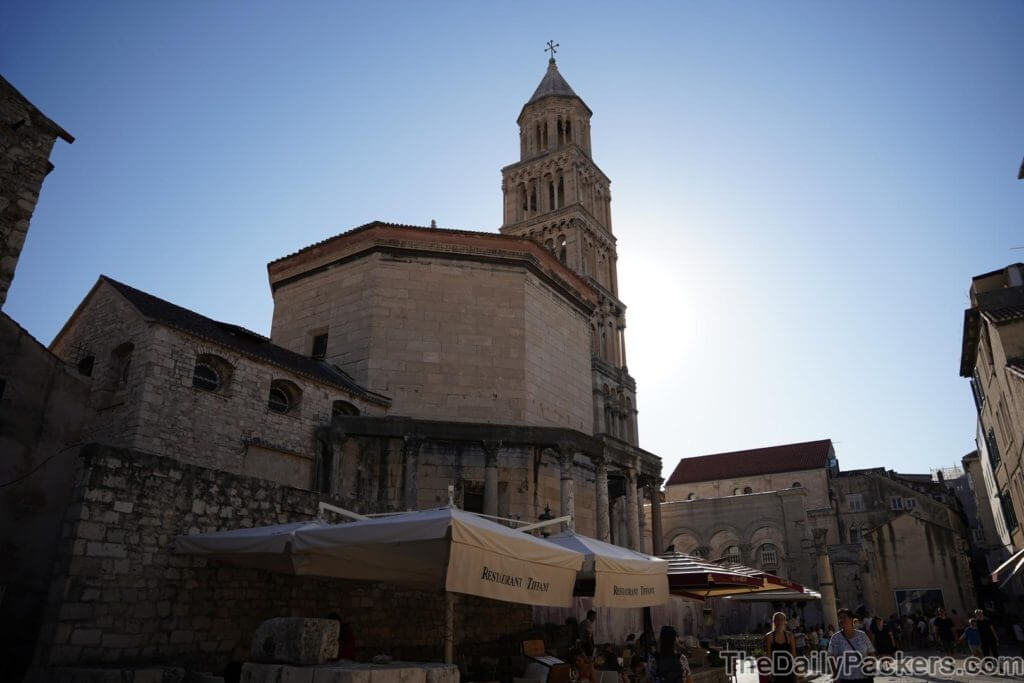
In the same area, you can admire the Saint Domnius Cathedral with its striking bell tower, one of Split’s most iconic landmarks. Originally built around 305 AD as the mausoleum of Emperor Diocletian, it was later converted into a cathedral in the 7th century.
This remarkable structure holds the title of the oldest Catholic cathedral in the world that still functions in its original form, without undergoing near-complete reconstruction. While the bell tower offers stunning panoramic views of Split, access to the cathedral itself is not permitted for visitors. However, its exterior architecture, Romanesque design, and historical significance make it a must-see when exploring the heart of Split.
Tip: We use the DJI Action 4 to film our vlogs — compact, durable, and perfect for capturing every adventure.
Vestibul
The Vestibul is one of the most fascinating parts of Diocletian’s Palace, serving as the entrance hall to the emperor’s residential area. This impressive circular structure, built in the 4th century, features a large open dome, allowing natural light to filter in, creating a stunning visual effect.
Often mistaken for St. Duje’s Cathedral, which was originally Diocletian’s Mausoleum, the Cathedral of Saint Domnius holds the title of the oldest Catholic cathedral building in continuous use. Dating back to around 305 AD, it has remained largely intact, making it a unique architectural and historical landmark in Split.
The Vestibul is an incredible spot for photography, and if you’re lucky, you may catch a Dalmatian a cappella (klapa) performance, as the acoustics in the space are exceptional!

Here are all your accommodation options in Split
Peristil
Peristil Square is the heart of Diocletian’s Palace and one of the most iconic spots in Split. This ancient Roman court, dating back to 305 AD, showcases the grandeur of the Roman Empire with its impressive columns and steps that once led into the emperor’s private quarters.
It’s the perfect place to sit and relax with a cup of coffee or a cold beer while soaking up the atmosphere of old Split. The square is also a lively spot at night, where music performances often take place, adding to the magical ambiance of this historical site.

Check our Google Map of the Balkans
Hvar
One of the best day trips from Split is to Hvar Town, an island often considered the most beautiful in Croatia. With its charming old town, stunning beaches, and vibrant atmosphere, it’s an easy escape from the city.
You can take an early ferry from Split and return in the afternoon, making it a perfect one-day adventure. The ferry ride itself offers beautiful coastal views, and once on the island, you can explore its historic streets, climb to the fortress for panoramic views, or relax by the crystal-clear waters.

Beaches
Split is not just about history and architecture—it’s also home to some stunning beaches with crystal-clear waters and scenic surroundings. Whether you’re looking for a lively beach with bars or a quiet cove for relaxation, here are some of the best beaches around Split:
- Bačvice Beach: Located just a short walk from the old town, Bačvice is the most famous beach in Split. It’s a sandy beach, making it quite unique for Croatia, and is popular for playing picigin, a local water sport. It has bars, restaurants, and a vibrant atmosphere, making it great for both day and night.
- Kasjuni Beach: If you prefer a more peaceful and scenic setting, Kasjuni Beach is a great choice. Located at the foot of Marjan Hill, this pebble beach offers a relaxed vibe, clear waters, and amazing views of the surrounding hills. There’s also a beach bar where you can rent sunbeds and umbrellas.
- Bene Beach: Also located in Marjan Park, Bene Beach is a hidden gem. This beach is surrounded by pine trees, offering plenty of shade and a laid-back atmosphere. It’s perfect for families and those who prefer a more natural setting away from the crowds.
- Trstenik Beach: A quieter alternative to Bačvice, Trstenik Beach is a pebble beach with clear waters and a more modern, resort-like vibe. The nearby Radisson Blu Resort offers sunbeds and beachside service, making it a great spot for relaxation.
- Žnjan Beach: Žnjan is a large, family-friendly beach located east of Split. It’s popular for water sports, beach bars, and plenty of space. It’s not as scenic as Kasjuni or Bene, but it’s a good option if you’re looking for a mix of activities and relaxation.
- Stobreč Beach: Located about 7km from Split, Stobreč Beach is a great escape from the city crowds. It has both sand and pebbles, shallow waters, and plenty of cafés and restaurants nearby. Ideal for families and those who enjoy a more laid-back coastal experience.
- Kašjuni Bay & Beach Clubs: For a more luxurious beach experience, head to Kašjuni Beach Bar or Joe’s Beach Lounge & Bar. These spots offer sunbeds, cocktails, and a chilled-out vibe right by the sea.
Here are all your accommodation options in Split
Trogir
Trogir, is a charming small town on Croatia’s central Adriatic coast, located between Zadar and Split. A must-visit along the Croatian coast, it’s famous for its well-preserved mix of Renaissance, Baroque, and Romanesque architecture. Trogir sits on a small island, connected to both the mainland and Čiovo Island by bridges.

Sibenick
Šibenik is a small coastal city in Croatia, nestled between Zadar and Split. A stop here is a must when exploring the Croatian coast. We visited during our road trip from Plitvice to Split in August 2021 and found it to be a charming and historic gem.
Known as the gateway to the Kornati Islands, Šibenik also boasts a stunning old town with cobblestone streets, ancient stone buildings, and impressive fortresses. Simply strolling through its winding alleys is an experience in itself, with history at every turn.

Here are all your accommodation options in Split
Plitvice Lakes
Plitvice Lakes National Park is Croatia’s oldest and largest national park, located in the mountainous region between the Mala Kapela mountain range to the west and northwest and the Lička Plješivica mountain range to the southeast.
Established as Croatia’s first national park, it has been a UNESCO World Heritage Site since 1979. The park is predominantly covered in dense forests, with smaller areas of grasslands, while its most famous feature—the lakes—cover less than 1% of its total area.

Tip: Check the Plitvice Lakes Guided Tour with Entry Tickets for a hassle-free experience
Dubrovnik
Dubrovnik, the Pearl of the Adriatic, is one of the most beautiful cities in the world, known for its impressive medieval walls, charming old town, and breathtaking coastal views. A UNESCO World Heritage site, this city is a must-visit for anyone traveling to Croatia.
If you don’t have to time to stay there, you can make a 1-day trip from Split. Drive along the scenic Dalmatian and enjoy a full-day tour exploring one of the most remarkable medieval walled cities in the world.
The journey there takes 230 km (~3-4 hours by car)
If you don’ t have your own car or prefer avoid driving, check this highly rated tour.

Tip: This highly rated tour. allows you to visit Dubrovnik in one day.
Mostar
If you’re looking for a completely different cultural experience, Mostar is an amazing day trip. This charming town is famous for its iconic bridge, Ottoman-style architecture, and vibrant markets. It’s a unique mix of East and West, making it one of the most interesting places to visit near Split.
Here again you could be going there on your own with a rental car, but if you prefer avoid driving, check this highly rated tour.

Tip: This highly rated tour. allows you to visit Mostar in one day.
Blue Cave
The Blue Cave (Modra Špilja) is one of the most famous natural attractions in Croatia, located on Biševo Island, near Vis. Known for its mesmerizing blue glow, the cave is a must-visit if you’re in Split and looking for an unforgettable boat tour experience.
If you are interested in the Blue Cave, you can combine it with Mamma Mia, Hvar and 5 Island with this incredible tour.
Krka Waterfalls & National Park
If you have enough time, visit to Krka National Park is a must. This stunning natural reserve follows the Krka River as it cascades down, forming breathtaking lakes and waterfalls. The most famous attraction is Skradinski Buk, a spectacular series of waterfalls surrounded by lush greenery.
Unlike Plitvice Lakes, some areas of Krka allow swimming (depending on current regulations), making it a perfect spot to cool off in nature. You can reach the park by boat, car, or bus from Šibenik,
Itinerary
Split is an incredible city with a rich history, stunning coastline, and access to some of Croatia’s best islands and day trips. Whether you have two days or a full six-day stay, here’s an itinerary to help you make the most of your time.
Day 1: Explore the Old Town & Enjoy the Coast
- Start your day with breakfast at Riva, the beautiful promenade along the waterfront.
- Visit Diocletian’s Palace, the heart of Split’s old town and a UNESCO World Heritage Site.
- Explore Peristil Square, the ancient Roman court, and enjoy a coffee while soaking up the atmosphere.
- Admire the Saint Domnius Cathedral and its impressive bell tower.
- Step inside the Vestibul, the former entrance to the emperor’s residence.
- Lunch Break
- Walk up Marjan Hill for an amazing panoramic view of Split.
- Have lunch in Pjaca (People’s Square), one of Split’s most historic squares.
- Stroll through Voćni trg (Fruit Square) and check out the Renaissance architecture.
- Visit the Republic Square, where the modern part of Split meets the old town.
- Take a sunset walk along the Riva promenade and enjoy dinner with a view of the sea.
Day 2: Day Trip to Hvar Island or Blue Cave Tour
- Take an early ferry to Hvar Town, known for its stunning architecture and nightlife.
- Visit Hvar Fortress for a breathtaking view of the coastline.
- Explore Hvar’s old town, packed with charming stone streets and historic squares.
- Spend the afternoon at Dubovica Beach, one of the most beautiful beaches on the island.
- Take the ferry back to Split in the evening.
Day 3: Beaches & Local Culture
- Head to Bačvice Beach, the most famous sandy beach in Split, and take a morning swim.
- If you prefer something quieter, visit Kašjuni Beach on the southern side of Marjan Hill.
- Have a relaxed brunch at one of the beachfront cafés.
- Visit Galerija Meštrović, an art gallery featuring works from Croatia’s most famous sculptor.
- Walk around Poljud Stadium, home of Hajduk Split, if you’re a football fan.
- In the evening, enjoy dinner in one of Split’s traditional konobas (taverns).
Day 4: Plitvice Lakes National Park
- Take an early morning drive (approx. 2.5 hours) or a guided tour to Plitvice Lakes, a UNESCO-listed national park.
- Explore the Upper and Lower Lakes, connected by stunning waterfalls and turquoise waters.
- Walk the scenic trails or take a boat ride across Kozjak Lake.
- Return to Split in the evening.
Day 5: Krka National Park & Šibenik
- Visit Skradinski Buk, one of Croatia’s most famous waterfalls.
- Walk the scenic wooden trails and enjoy the lush surroundings.
- Visit the small town of Skradin, known for its relaxed vibe and great seafood.
- Explore Šibenik’s Old Town, a charming medieval city with cobblestone streets.
- Visit St. James Cathedral, a UNESCO-listed gem with unique architectural details.
- If you have time, head up to St. Michael’s Fortress for stunning coastal views.
- Return to Split in the evening.
Day 6: Mostar & Bosnia & Herzegovina
- Drive (2.5 hours) or take a tour to Mostar, a town famous for its Ottoman architecture.
- Walk across Stari Most (Old Bridge), the most iconic landmark.
- Explore the old bazaar, filled with traditional crafts and Bosnian coffee shops.
- Visit Koski Mehmed Pasha Mosque for a panoramic view of Mostar.
- If time permits, stop by Kravica Waterfalls, a hidden gem near Mostar.
- Return to Split in the evening.
Day 7: Trogir – A Charming Coastal Town &. Chill
- Drive 30 minutes or take a boat to Trogir, a stunning UNESCO-listed town.
- Walk through the Old Town, filled with Venetian, Romanesque, and Baroque architecture.
- Visit the Cathedral of St. Lawrence, famous for its intricate portal.
- Stroll along the Riva waterfront and admire Kamerlengo Castle.
- Enjoy lunch in Trogir before heading back to Split for a relaxed evening.
Day 8: Dubrovnik – The Pearl of the Adriatic🏰 Full-Day Trip
- Drive (3 hours) or take a guided tour to Dubrovnik, one of the most beautiful cities in the world.
- Walk the ancient city walls for breathtaking views of the Adriatic.
- Explore Stradun (Main Street) and Rector’s Palace.
- Visit Lovrijenac Fortress, a famous Game of Thrones filming location.
- Take the cable car up to Srđ Hill for panoramic views.
- Return to Split in the evening.
Day 9: Free Day & Final Exploration
- If you missed anything in Split, this is your chance to revisit a favorite spot.
- Relax at a beach, take a boat ride, or go shopping for souvenirs.
- Enjoy a leisurely lunch at a seaside restaurant.
- Visit Riva promenade one last time before heading to the airport or your next destination.
We would say that the minimum is 2 days if you are on a road trip along Croatia, to have time to visit Split and Hvar.
Read: The Ultimate Corsica Road Trip & Travel Guide
About the authors
We are Alex and Tina, a French-Serbian couple who met in China back in 2014. We spent three incredible years there before making France our home. Our shared passion for travel has been the heartbeat of our relationship for over 12 years, taking us across 44 countries and counting.
We launched TheDailyPackers in 2019 as a way to document our adventures. In 2026, we reached a major milestone by officially turning our blog into our full-time job. While we are still growing toward financial independence through this platform, every article we write is fueled by our mission to make your voyages easier through in-depth guides, honest advice, and the lessons we’ve learned from our own mistakes.
Our journey has not been without its storms. In 2023, our world changed forever when our first son, Poppy, was stillborn on November 25th. It was, and remains, the hardest chapter of our lives. In 2025, we were blessed with our second little boy, Milo. He has since joined our traveling tribe, and you’ll be seeing him—and the reality of traveling with a little one-on the blog more and more.
We hope to inspire you to explore the world with curiosity and resilience. Thank you for being part of our story.
You may also like those related posts
7 Best things in Josselin, France, in 1 day or more
Southern Thailand: The Perfect 2-week Itinerary
Hellbrunn Palace and Gardens: A Complete Visiting Guide
15 Best things to do in Saint-Tropez, France, in 3 to 4 days
12 Best things to do in Sao Paulo, Brazil, in 1 to 2 days
Salzburg Fortress: Complete Guide to Visiting Hohensalzburg
13 Best things to do in Lucerne, Switzerland, in 4 days
23 Best things to do in Zlatibor, Serbia, in 4 days or more
Pssst, did you know that…
If you purchase something through our links, we earn a small fee. However, you still pay the same. Win-win! And one day we may get to be full-time travel bloggers =)
Find Hotels with Booking.com
Do Yoga with KVY
Buy us a Coffee
Rent a car with DiscoverCars
Find Attractions with GetYourGuide
Find Flights with Expedia
Buy an eSIM with Airalo
Get insured with World Nomads
Get ready with Amazon.com