

Introduction:
In April 2023, we spent three weeks traveling through Vietnam. Initially, the plan was to travel the entire country from north to south, but as we began planning, we realized that would mean rushing through everything. Instead, we chose to slow things down and focus on the north and center of Vietnam — and it turned out to be the best decision we made.
Even with three weeks, we couldn’t see it all, which is why we’ve reworked our experience into a smoother, easier 2-week Vietnam itinerary. This version skips the endless back-and-forth and focuses on what’s really worth it, with enough time to enjoy each stop without feeling like you’re constantly packing and unpacking.
Our recommended route starts in Hanoi, Vietnam’s buzzing capital, and takes you through Sapa, Halong Bay (or Lan Ha Bay), Tam Coc (Ninh Binh), Hue, and Hoi An. It’s a mix of cities, nature, culture, and a few day trips to save time without missing out.
If you’re dreaming of visiting Vietnam and only have two weeks, this 2-week Vietnam itinerary is for you. Here’s how to make the most of those 14 days.

Check our Google Map of Vietnam
Getting there
Most international travelers will land in Hanoi or Ho Chi Minh City. Since this 2‑week Vietnam itinerary starts in the north, flying directly into Hanoi (Noi Bai International Airport) is your best option.
Hanoi is well connected with direct flights from major hubs in Asia and the Middle East (Bangkok, Singapore, Seoul, Dubai) and some European cities. If you’re coming from further away, you might have a layover, but connections are usually smooth.
If you can only find better flights to Ho Chi Minh City, you can still follow this 2-week Vietnam itinerary by taking a quick domestic flight (about 2 hours) up to Hanoi on arrival. Vietnam has several reliable low‑cost airlines like VietJet Air and Bamboo Airways, which make internal flights affordable and easy to book.
Tip: Book your international and domestic flights early if you’re traveling during Vietnamese holidays like Tet (Lunar New Year) — seats sell out fast.

Moving Around
Traveling around Vietnam is easier than it looks on the map, but it’s still a long country, so planning how you’ll get from one place to another matters.
For this 2-week Vietnam itinerary, we’ve kept things simple by combining trains, buses, and a few short flights.
- Trains – Vietnam’s Reunification Express line connects the north and the center of the country. Overnight trains from Hanoi to Hue or Da Nang are comfortable and save you a night on accommodation.
- Domestic flights – Perfect for covering longer distances without wasting time. For example, Hanoi to Hue is just over an hour by plane versus 13 hours by train.
- Buses & Minivans – Ideal for shorter trips like Hanoi to Tam Coc or Sapa. Most are modern and fairly comfortable, though rides can be bumpy.
- Taxis & Grab – Grab (the Southeast Asian version of Uber) works in most cities and is cheap for short hops.
- Scooters – Renting one is common for exploring smaller towns like Hoi An or Tam Coc, but only if you’re confident on two wheels.
We’ve built this 2-week Vietnam itinerary to limit long travel days by adding day trips and balancing train rides with short flights so you can spend more time enjoying Vietnam and less time just getting there.

When to Visit
Vietnam stretches over 1,600 km from north to south, so the weather changes a lot between regions. For this 2‑week Vietnam itinerary, which focuses on Hanoi, Sapa, Halong Bay, Tam Coc, Hue, and Hoi An, the timing matters if you want to avoid heavy rain or stifling heat.
- Spring (March to May): One of the best times to visit. The north (Hanoi, Sapa, Halong Bay) is pleasantly warm at 20–28°C (68–82°F), and the center (Hue, Hoi An) is dry with comfortable temps.
- Summer (June to August): Expect heat and humidity, 30–35°C (86–95°F) in most regions, plus frequent downpours in the north. Sapa stays cooler in the mountains, but the coast can feel sticky.
- Autumn (September to November): Another sweet spot. Skies are clear in the north, with mild temperatures (20–28°C / 68–82°F), and central Vietnam is just past its rainy peak.
- Winter (December to February): Northern Vietnam cools down, especially Sapa (sometimes below 10°C / 50°F), while Hue and Hoi An remain mild and pleasant around 18–24°C (64–75°F).
Our tip: For this 2-week Vietnam itinerary, March–May or September–November are the most balanced months, with good weather across the regions and fewer tourists than in peak summer.


Where to Stay
Finding the right place to stay in Vietnam makes a big difference to how smoothly your trip goes. From homestays in the mountains to boutique hotels in the cities, there’s something for every style and budget. For this 2-week Vietnam itinerary, we’ve picked spots that are well‑located and make it easy to explore without too much hassle.


Don’t forget to book your accommodations in advance – the best places always fill up quickly.
What to Eat
Vietnam is a dream for food lovers, and eating your way through the country is half the experience. Each region has its own specialties — from steaming bowls of pho in Hanoi to cao lau in Hoi An. Street food is where Vietnam really shines, with flavors that are fresh, bold, and unforgettable.
Be sure to try:
- Pho – the iconic noodle soup, best enjoyed for breakfast in Hanoi.
- Banh Mi – Vietnam’s famous baguette sandwich, a perfect on‑the‑go snack.
- Cao Lau – a noodle dish unique to Hoi An.
- Fresh spring rolls (Goi Cuon) – light and packed with herbs, shrimp, or pork.


Tip: We use the DJI Action 4 to film our vlogs — compact, durable, and perfect for capturing every adventure.
2-week Vietnam itinerary Overview
Let’s start our 2-week Vietnam itinerary with a complete overview of what it will look like:
- Day 1: Hanoi (Arrival)
- Day 2: Hanoi (Old town, Water Puppets, Food Tour)
- Day 3: Hanoi (History, Lake, Temple)
- Day 4: 3-Day Ninh Binh, Ha Long, & Lan Ha Bay
- Day 5: 3-Day Ninh Binh, Ha Long, & Lan Ha Bay
- Day 6: 3-Day Ninh Binh, Ha Long, & Lan Ha Bay
- Day 7: 2-Day Sa Pa Ethnic Homestay
- Day 8: 2-Day Sa Pa Ethnic Homestay
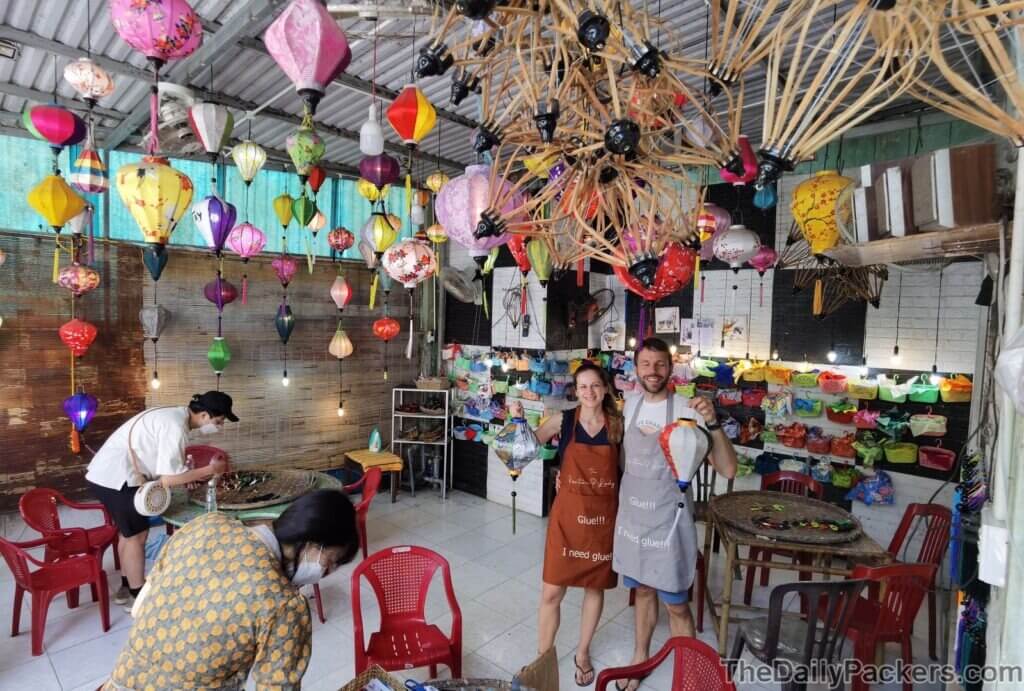
- Day 9: Hoi An (Arrival, Old town, Lantern Making Class, Food Tour, boat tour)
- Day 10: Hoi An (My son sanctuary, Basket boats)
- Day 11: Hoi An (daytrip to Hue)
- Day 12: Hoi An (Lady Buddha, Marble Mountains, Am Phu Cave Tour)
- Day 13: Hoi An (Ba Na Hills SunWorld with the Golden Bridge)
- Day 14: Return to Hanoi and flight out

Check our Google Map of Vietnam
2-week Vietnam itinerary: Day by day
Day 1: Arrive in Hanoi
Let’s kick off this 2-week Vietnam itinerary by flying into Hanoi, crossing the border, and heading straight to your accommodation. After a much‑needed shower and a little time to settle in, step outside for your first stroll around the capital’s buzzing streets. Soak in the atmosphere, watch the scooters zip by, and maybe stop for your first Vietnamese coffee.
When hunger kicks in, grab an early dinner — we liked Hanoi Social Club, which has a cozy vibe and even live music in the evenings. And one quick tip: get an eSIM before you arrive, so you can stay connected from the moment you land.
Where to stay, (€): Emerald Waters Hotel & Spa, (€€): San Grand Hotel, (€€€): Peridot Grand Luxury Boutique Hotel


Read: Best things to do in Hanoi
Day 2: Explore Hanoi (Old town, Water Puppets, Food Tour)
Now we can properly dive into this 2-week Vietnam itinerary. After breakfast, start your day at St. Joseph Cathedral, the oldest church in Vietnam, before heading to one of Hanoi’s quirkiest coffee shops — The Note Coffee. It’s hard to miss and absolutely worth a stop for its walls covered in colorful sticky notes left by travelers from all over the world.
From there, just wander. Stroll through the narrow streets, peek into little shops, visit a few temples, and maybe grab lunch at Hoang’s Restaurant — a solid spot for a good meal.
In the afternoon, make your way to Ngoc Son Temple, sitting right on Hoàn Kiếm Lake, then take a break with Hanoi’s signature treat: an egg coffee at Café Giang (another essential for this 2-week Vietnam itinerary).
Later on, catch a water puppet show — it lasts about 50 minutes and is a great peek into a unique local tradition. To wrap up the day, join a guided food tour with Train Street included, so you don’t miss out on the famous (and now heavily restricted) spot.
Tip: While wandering the Old Quarter, treat yourself to a manicure or pedicure. Prices are surprisingly low, and the service is excellent — a small indulgence that’s easy to fit into your day.

Day 3: Explore Hanoi (History, Lake, Temple)
To keep your 2-week Vietnam itinerary moving, this day is all about Hanoi’s history and culture. Start your morning at the Temple of Literature, one of the city’s most beautiful landmarks and Vietnam’s very first university.
When you’re ready for a break, grab a seat at Cong Café and try their famous coconut coffee — sweet, creamy, and a little addictive.
From there, head over to the Imperial Citadel of Thang Long, a UNESCO site packed with centuries of history. For lunch, we loved Veggies Castle, an all-you-can-eat vegan buffet that’s fresh, flavorful, and perfect to recharge before the afternoon.
Spend the afternoon wandering around West Lake, stopping at the Tran Quoc Pagoda, the oldest Buddhist temple in Hanoi, which sits beautifully on a small islet. Continue your walk south, passing by Quán Thành Temple, until you reach the Ho Chi Minh Mausoleum, an important historical site and one of Hanoi’s most visited monuments.
Before the day ends, hop on a Grab and head to Loading T Café — it’s tucked inside a colonial building and serves one of the best fresh herb teas we’ve had. Then, slowly make your way back to the Old Quarter for a laid-back evening. If you’re craving something different for dinner, 4P’s Pizza Bao Khanh makes some of the best pizzas in Vietnam — a surprising but welcome change after a day of sightseeing.
Where to stay, (€): Emerald Waters Hotel & Spa, (€€): San Grand Hotel, (€€€): Peridot Grand Luxury Boutique Hotel

Day 4: 3-Day Ninh Binh, Ha Long, & Lan Ha Bay
On day 4 of this 2-week Vietnam itinerary, the trip slows down a little as you leave Hanoi behind and head into the countryside. The next three days are going to be a highlight.
Start by making your way to Ninh Binh province, a place often called “Ha Long Bay on land” for its dramatic limestone karsts. Your first stop is the Bai Dinh Temple Complex, the largest Buddhist temple complex in all of Vietnam. It’s a sprawling site with endless statues, courtyards, and sweeping views — plan to take your time wandering here.
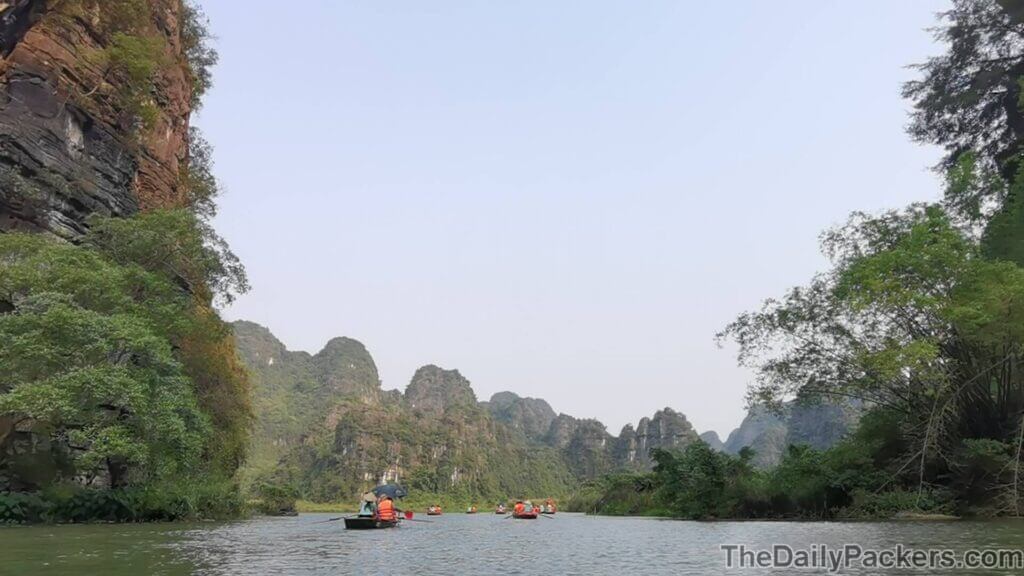
After lunch at a local spot, continue to Trang An, a UNESCO World Heritage Site and one of the prettiest boat rides you’ll ever take. You’ll sit in a small wooden boat, rowed by hand, drifting past rice paddies and under low cave ceilings as the landscape unfolds around you.
To wrap up the day, climb the steps up to Mua Caves for a breathtaking panorama over Tam Coc — the view is the reward after the climb. Once you’ve soaked it all in, head to your homestay for the night.
Before the evening settles, hop on a bicycle and ride through the quiet village roads. It’s the perfect way to end the day, with the sun dropping low over the rice fields and the air turning soft and cool.

Tip: 3-Day Ninh Binh, Ha Long, & Lan Ha Bay
Day 5: 3-Day Ninh Binh, Ha Long, & Lan Ha Bay
After breakfast, keep the momentum of this 2-week Vietnam itinerary going and catch the bus toward the coast. Today is all about the magic of Halong Bay.
By midday, you’ll check in to your cruise ship and sit down for lunch as the boat slowly glides out into the bay. The scenery starts right away — you’ll sail past Con Vit Islet, Thumb Islet, Gia Luan Harbor, and into the quieter waters of Lan Ha Bay, where limestone cliffs rise straight from the emerald sea.
In the afternoon, the ship drops anchor and the adventure begins. Depending on the weather, you’ll either kayak or swim at the peaceful Ba Trai Dao Beach, or take a smaller boat to explore the mysterious Dark and Bright Caves.
As the day softens into evening, head up to the deck to watch the sunset turn the bay golden. A quick spring roll‑making class adds a fun touch before dinner is served.
The night is yours to enjoy: sip a cocktail at the panoramic bar, play a board game, watch a film, or even try your luck at squid fishing under the stars.

Read: 9 Best things to do in Tam Coc
Day 6: 3-Day Ninh Binh, Ha Long, & Lan Ha Bay
Start your day slowly with an early morning Tai Chi session on the deck — the kind of calm moment that makes being on the bay unforgettable. As the sun rises over the limestone peaks, sip a coffee or tea and enjoy a light breakfast while watching the mist lift off the water.
Before the cruise ends, there’s one last stop: Trung Trang Cave on Cat Ba Island. The walk through its impressive chambers is a great way to wrap up your time on the bay.
Back on board, a final Vietnamese lunch is served as the boat makes its way toward the harbor.
By midday, it’s time to say goodbye. You’ll disembark, take a speedboat back to Tuan Chau Marina, and then hop on the bus for the return journey to Hanoi. Expect to be dropped off in the Old Quarter around 3 PM, with the evening free to rest or explore more of the city.

Read: 3-Day Luxury Cruise in Halong Bay
Day 7: 2-Day Sa Pa Ethnic Homestay
For us, Sapa is a must while in Vietnam — and that’s exactly why we built it into this 2-week Vietnam itinerary. The easiest (and most time‑efficient) way to visit is by joining a 2‑Day Sa Pa Ethnic Homestay experience.
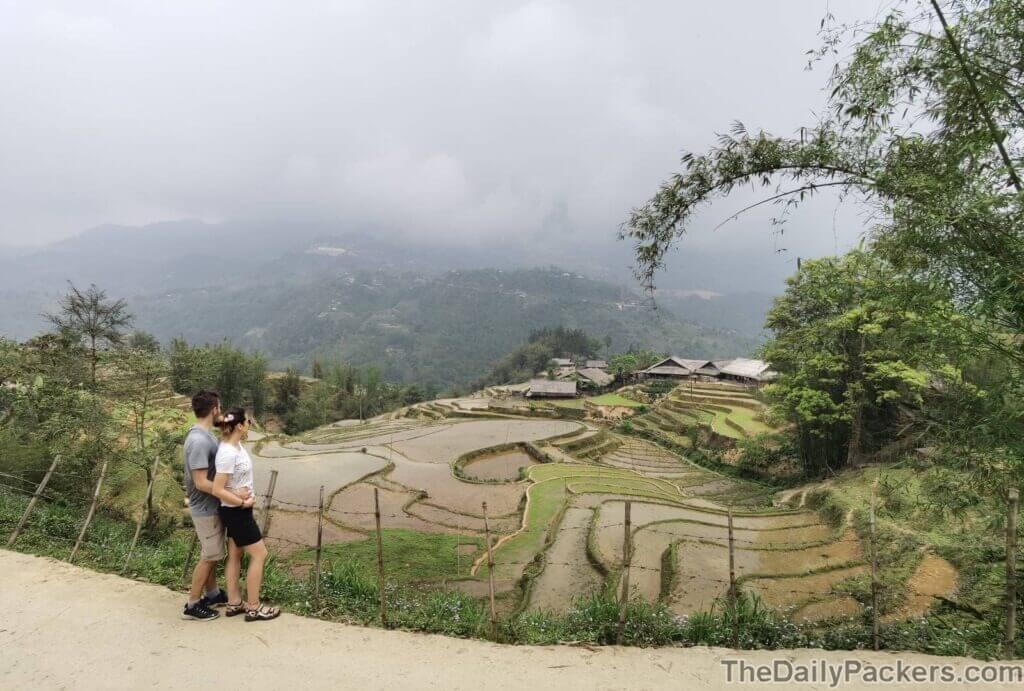
In the morning, hop on a sleeper bus bound for Sapa. It’s a long ride, but you’ll arrive with plenty of time for lunch before heading out on your first trek. The trail takes you through endless rice terraces and along the Muong Hoa Stream, with views that make every step worth it.
By late afternoon, you’ll reach Lao Chai, a Black Hmong village framed by the Hoang Lien Son Mountains. From there, continue to Ta Van, an ethnic village where you’ll check into your homestay for the night. It’s the perfect chance to meet your host family, share stories, and get a glimpse of daily life in the mountains before settling in for a cozy evening.
Read: Best things to do in Sapa
Day 8: 2-Day Sa Pa Ethnic Homestay
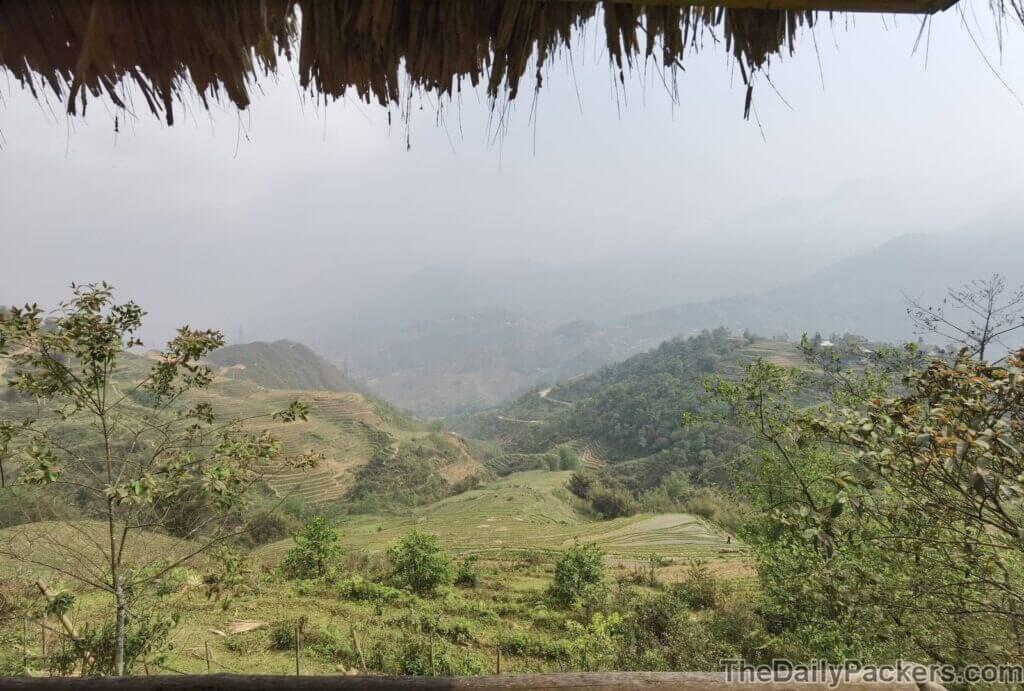
Continue your 2‑Day Sa Pa Ethnic Homestay with a simple but delicious breakfast, freshly prepared by the family you stayed with. There’s something special about waking up in the mountains, sharing a morning meal, and watching the mist slowly lift over the rice terraces.
After saying your goodbyes, the trek carries on — this time through lush rice paddies and into a quiet bamboo forest. Along the way, the scenery keeps shifting, and before long you’ll reach a stunning viewpoint overlooking Giang Ta Chai village.
From here, it’s a gentle walk down to the Giang Ta Chai Bridge, where a bus will be waiting. You’ll head back to Sapa for a well‑deserved lunch (and, thankfully, a shower) before catching your ride back to Hanoi, tired but happy from two incredible days in the mountains.
Day 9: Hoi An (Arrival, Old town)
To keep this 2-week Vietnam itinerary rolling, it’s time to head south to Hoi An. The fastest way is to fly from Hanoi to Da Nang — the flight takes about an hour and a half. Once you land, it’s an easy 40–45‑minute taxi or shuttle ride to Hoi An.
One of the first things you should do here is visit a tailor. Hoi An is famous for its custom clothes, and there’s nothing cooler than walking away with a perfectly fitted shirt or dress made just for you.
Once you’ve picked your fabrics and placed your order, head into Hoi An’s old town. Stop for a quiet break at Reaching Out Tea House, where you can taste local teas or coffee in one of the most peaceful settings in town.
In the afternoon, join a lantern‑making class — it’s fun, hands‑on, and you’ll end up with your own handmade lantern to take home.
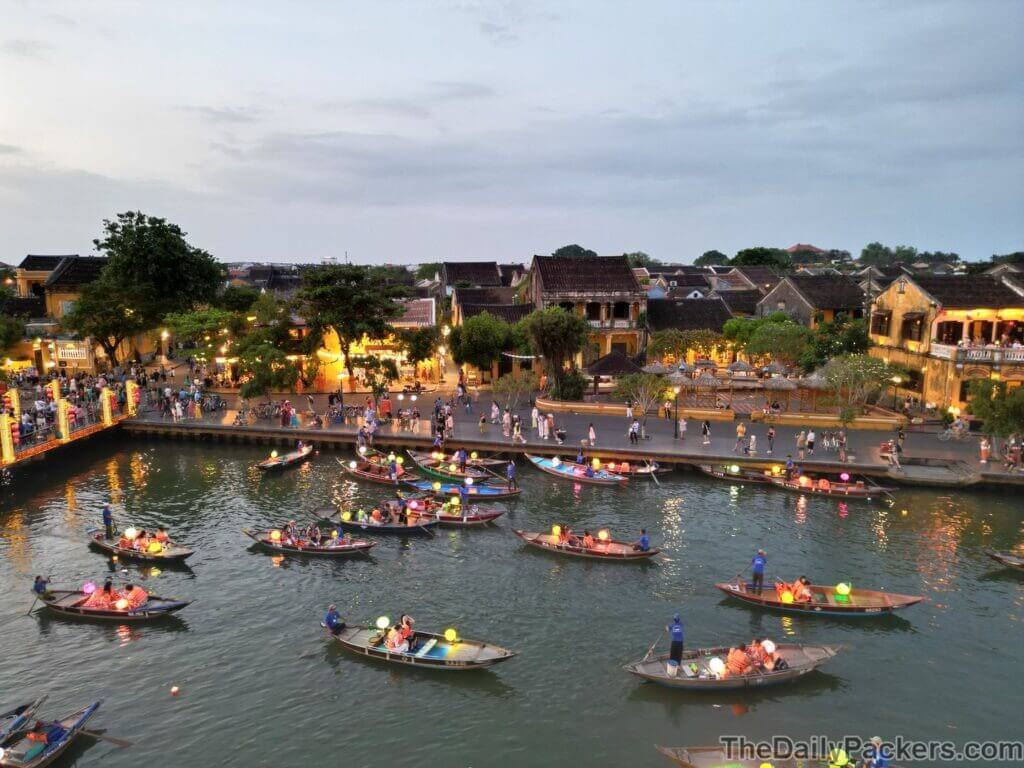
As the sun sets, Hoi An’s magic really kicks in. The old town lights up with thousands of lanterns, making it the perfect time to take an evening food tour. Taste your way through local dishes, then wrap up the day with a boat ride on the Thu Bon River, watching the reflections of the lanterns dance on the water.
Where to stay: (€): Hoi An Merrily De Art Hotel (€€): Cozy Savvy Boutique Hotel Hoi An (€€€): Allegro Hoi An . A Little Luxury Hotel & Spa
Read: 1st Class Sleeper Train From Hue to Hoi An
Day 10: Hoi An (My Son sanctuary, beach, old town)
We suggest staying in Hoi An for a few nights as you have time in your 2-week Vietnam itinerary and it’s the perfect base for visiting all the sights in the area without constantly packing and unpacking.
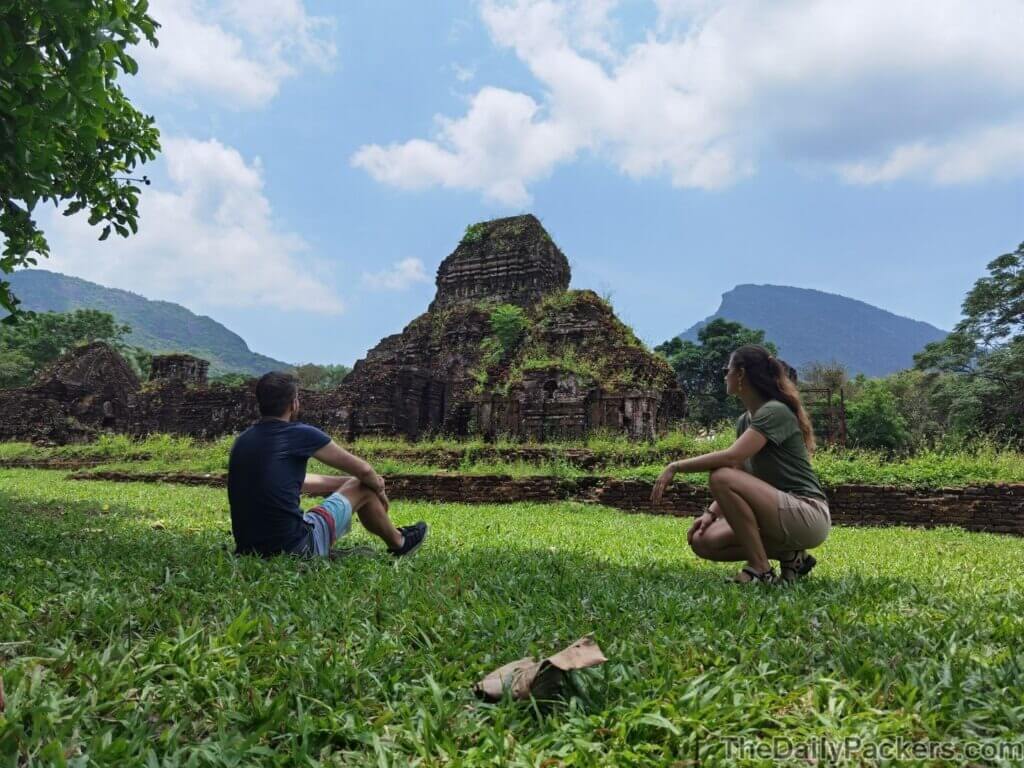
On this second day, set the alarm early and join an Early Morning My Son Sanctuary tour. Getting there before the heat (and before most of the crowds) makes all the difference. You’ll wander among the ancient ruins, hear stories about the Champa civilization, and soak in the peaceful morning atmosphere. Afterward, enjoy a simple but delicious noodle breakfast and coffee before heading back to Hoi An.
Once you’re back, stroll through the old town again and grab lunch — there’s no shortage of good spots.
In the afternoon, switch gears and head out for some fun on the water with a basket boat tour. You’ll spin around in the famous round boats, try fishing for crabs, and even cast a fishing net — it’s touristy but genuinely fun.
When evening rolls around, wander back into Hoi An’s lantern‑lit streets. No matter how many times you’ve seen it, the old town at night is pure magic and never gets old.
Where to stay: (€): Hoi An Merrily De Art Hotel (€€): Cozy Savvy Boutique Hotel Hoi An (€€€): Allegro Hoi An . A Little Luxury Hotel & Spa
Read: 9 Best Things to Do in Hoi An
Day 11: Hoi An (Day trip to Hue)
We really loved our time in Hue, and honestly, it’s a must‑see — even if you’re on a tight 2-week Vietnam itinerary. To save time, we’d suggest doing it as a day trip from Hoi An rather than changing hotels again.
The day kicks off with a scenic drive over the Hai Van Pass, one of the most beautiful coastal roads in the world. Even if you’ve seen photos, nothing compares to being up there with the sea on one side and the mountains on the other.
Your first stop is the Khai Dinh Tomb, a fascinating mix of Western and Eastern influences that feels almost surreal — like a blend of a European palace and a Vietnamese temple.
Next, you’ll sit down for a Hue‑style lunch at a local spot. Hue’s food is some of the best in Vietnam, and trying the regional specialties here feels like a must.
With lunch out of the way, it’s time for the highlight — the Imperial Citadel. Once the home of the Nguyen emperors, this walled city also hides the remains of the Forbidden Purple City, which still carries an air of mystery despite the damage it endured over the years.
The last stop is the Thien Mu Pagoda, perched on a hill overlooking the Perfume River. Built in 1601, it’s not just Hue’s largest pagoda but also an iconic symbol of the city.
By the time you head back to Hoi An, you’ll feel like you’ve stepped back through centuries of Vietnamese history — and you’ll be glad you made the trip.

Day 12: Hoi An (Lady Buddha, Marble Mountains, Am Phu Cave Tour)
If you don’t feel like renting a scooter and figuring it all out on your own, it’s worth booking a half‑day tour to take you around some of the best spots near Hoi An.
Start with Son Tra Mountain, better known as Monkey Mountain. The views alone make the trip worthwhile, but the real star here is the Lady Buddha statue — the tallest Buddhist statue in Vietnam, standing at an incredible 67 meters (220 feet).
From there, you’ll stop by a few local stone factories and sculpture shops, which is surprisingly interesting even if you’re not shopping — you get to see how the intricate carvings are made.
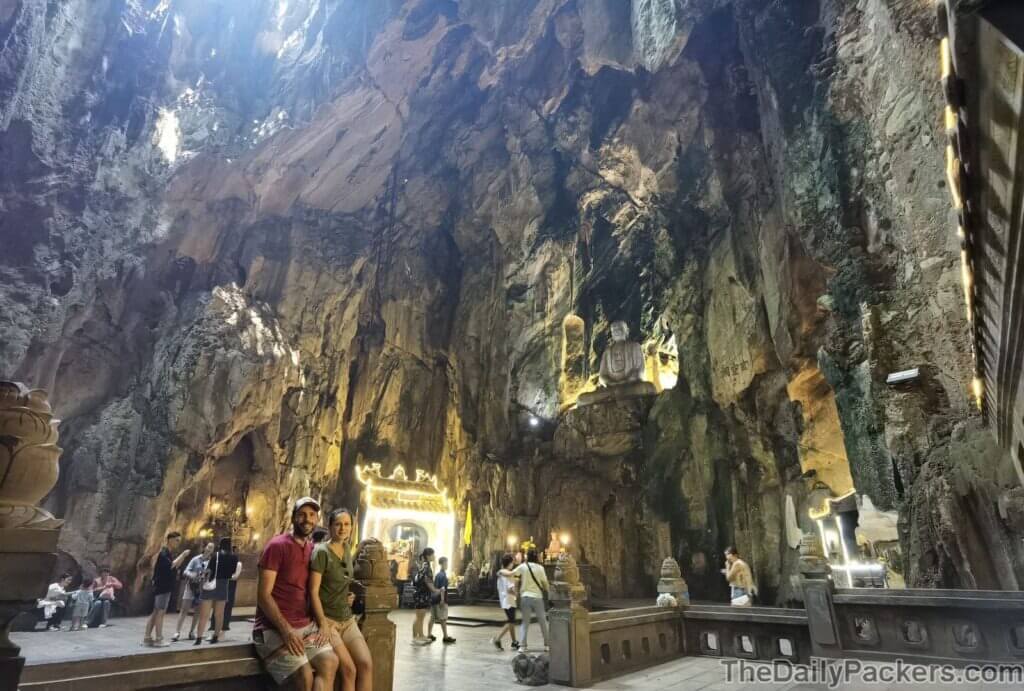
The next highlight is Marble Mountains, a cluster of limestone and marble hills dotted with pagodas, caves, and shrines. Don’t skip the Âm Phủ Cave — a walk through it is like stepping into a re‑creation of Buddhist hell, eerie and fascinating at the same time.
By midday, it’s time for lunch at a local restaurant, with authentic Vietnamese dishes that hit the spot after a busy morning.
Once you’re dropped back in Hoi An, the rest of the day is yours — and there’s no better way to spend it than relaxing at the beach, letting the morning’s adventure sink in.
Check our Google Map of Vietnam
Day 13: Hoi An (Ba Na Hills SunWorld with the Golden Bridge)
Spend a full day exploring one of Vietnam’s most famous attractions — the Golden Bridge and Ba Na Hills SunWorld.
The day starts with a cable car ride — not just any cable car, but one of the longest in the world. As you glide up the mountain, the views over the forest and valleys are incredible.
Your first stop is the Golden Bridge, the iconic walkway seemingly held up by two giant stone hands. Take your time here — stroll, snap a few photos, and soak up the surreal setting. From there, wander through the Flower Garden, stop by the Linh Ung Pagoda, and check out the old Wine Cellar before continuing your adventure.
Next, hop on a second cable car to reach the French Village, a quirky mountaintop world of European‑style streets and squares. Lunch is included — a buffet with more than 80 dishes — so you’ll have no trouble refueling before exploring more.
After lunch, spend some time in Fantasy Park, where you can try thrill rides, adventure games, or even a few 4D and 5D movies.
When you’re ready, take the cable car back down the mountain. Once you’re back in Hoi An, end the day however you like — maybe strolling the old town again or unwinding with your feet in the sand at the beach.
Day 14: Return to Hanoi and flight out
And just like that, it’s time to wrap up this 2-week Vietnam itinerary. Catch a flight back to Hanoi, giving yourself one last look at the country before heading home.
Two weeks go by quickly, but this trip packs in so much — from the buzzing streets of Hanoi to the lantern‑lit nights of Hoi An, misty mountains of Sapa, and the emerald waters of Ha Long Bay. It’s the kind of journey that leaves you both full of memories and already planning your return.
About the authors
We are Alex and Tina, a French-Serbian couple who met in China back in 2014. We spent three incredible years there before making France our home. Our shared passion for travel has been the heartbeat of our relationship for over 12 years, taking us across 44 countries and counting.
We launched TheDailyPackers in 2019 as a way to document our adventures. In 2026, we reached a major milestone by officially turning our blog into our full-time job. While we are still growing toward financial independence through this platform, every article we write is fueled by our mission to make your voyages easier through in-depth guides, honest advice, and the lessons we’ve learned from our own mistakes.
Our journey has not been without its storms. In 2023, our world changed forever when our first son, Poppy, was stillborn on November 25th. It was, and remains, the hardest chapter of our lives. In 2025, we were blessed with our second little boy, Milo. He has since joined our traveling tribe, and you’ll be seeing him—and the reality of traveling with a little one-on the blog more and more.
We hope to inspire you to explore the world with curiosity and resilience. Thank you for being part of our story.
You may also like those related posts
15 Best things to do in Carcassonne, France, in 1 day
Prague Bunker Tour: Inside a Real Communist-Era Nuclear Shelter
11 Best things to do in Maafushi, Maldives, in 3 days
15 Best things to do in Kyoto, Japan, in 1 to 5 days
Roussillon: Discovering Provence’s Stunning Red Village
14 Best Things to do in Prague, Czech Republic, in 3 days
Masada, Ein Gedi & the Dead Sea: The Perfect 1-Day Trip from Jerusalem
Hill of Crosses: Lithuania’s most incredible site in 2025
Pssst, did you know that…
If you purchase something through our links, we earn a small fee. However, you still pay the same. Win-win! And one day we may get to be full-time travel bloggers =)
Find Hotels with Booking.com
Do Yoga with KVY
Buy us a Coffee
Rent a car with DiscoverCars
Find Attractions with GetYourGuide
Find Flights with Expedia
Buy an eSIM with Airalo
Get insured with World Nomads
Get ready with Amazon.com